







Shreveport wrecks happen on I-20 and I-49, the Inner Loop, Youree Drive, and Bert Kouns, and the people in them end up at Ochsner LSU Health, Willis-Knighton, or CHRISTUS Highland. The Shreveport Police or the Caddo Parish Sheriff writes the report, and within a few days an adjuster from the other driver’s insurer has it and is on the phone. Trey Morris Injury Lawyers is at 509 Milam Street downtown, across the street from the Caddo Parish Courthouse, where Caddo suits are filed and tried in the First Judicial District Court. If you cannot get downtown, we come to the hospital or your house anywhere in Caddo Parish, from Highland and Broadmoor to Southern Hills and Ellerbe Road.
The law that governs the claim is Louisiana law and it is the same in every parish. Your claim runs on a two-year clock under La. C.C. Art. 3493.1 if the injury happened after July 1, 2024. If the wreck happened on or after January 1, 2026, a finding that you were 51% or more at fault under La. C.C. Art. 2323 ends the case, so the insurer’s first job is to push your share of the fault toward that line. On I-20 and I-49 wrecks we secure the crash report, the vehicles, and the witnesses before the adjuster writes a version of events that puts the fault on you. The same two-year clock and the same fault rule apply when someone else’s carelessness hurts you at a plant, an oilfield site, or on unsafe property.
Results for Louisiana Clients
- $409 MillionWrongful Death
A tragic case where an impaired driver of a commercial vehicle ran a red light, then collided with our client, causing serious bodily injury to the mother and the loss of life of her daughter.
- $49 MillionMotor Vehicle Accident
An impaired driver of a stolen vehicle driving the wrong way collided with our client head-on, resulting in brain injury and multiple broken bones.
- $32.2 MillionIndustrial / Workplace
Failure to maintain proper safety protocols led to an explosion at an industrial plant causing a series of catastrophic injuries from broken bones, burns, spinal injury, and mental anguish.
- $31.5 MillionIndustrial / Workplace
Brain and spinal injuries followed an oil-field company failing to maintain equipment and provide a safe work site.
- $17.2 MillionCommercial Vehicle Accident
Client was struck head-on by a disconnected load of an 18-wheeler that crossed the median causing broken bones and amputation.
- $13 MillionCommercial Vehicle Accident
On the interstate, an 18-wheeler failed to yield right of way then made an unsafe lane change causing the accident which resulted in major bone breaks, damaged organs, and ultimately a leg amputation.
Past results do not guarantee future outcomes; each case is decided on its own facts.
How Personal Injury Claims Work in Louisiana
Think of a personal injury claim as an accounting of what the wreck took from you. The medical bills from Willis-Knighton or Ochsner LSU. The paychecks you missed. The mornings you could not pick up your kid or get through a shift at the plant. Louisiana law calls all of that damages, and the point of the claim is to put a dollar figure on it and make the person who caused it, usually through their insurer, pay it.
Local Office. Statewide Record.
- Across the Street
From the 1st JDC
Our 509 Milam St office sits across the street from the First Judicial District Court, where Shreveport injury suits are filed and tried.
- 11
Trial attorneys, one team
Your case is handled by the firm's own trial attorneys, and we respond in minutes, 24/7.
- 24/7
We come to you
Hospital, home, or the office at 509 Milam St. Free case review, and no fee unless we win.
- 125
Cases resolved over $1 million
Verdicts and settlements of $1 million or more, won by the same trial team that handles Shreveport cases.
What Types of Cases We Handle in Caddo Parish
We represent people across Caddo Parish and the parishes around it. If your situation is on this list, we have handled one like it:
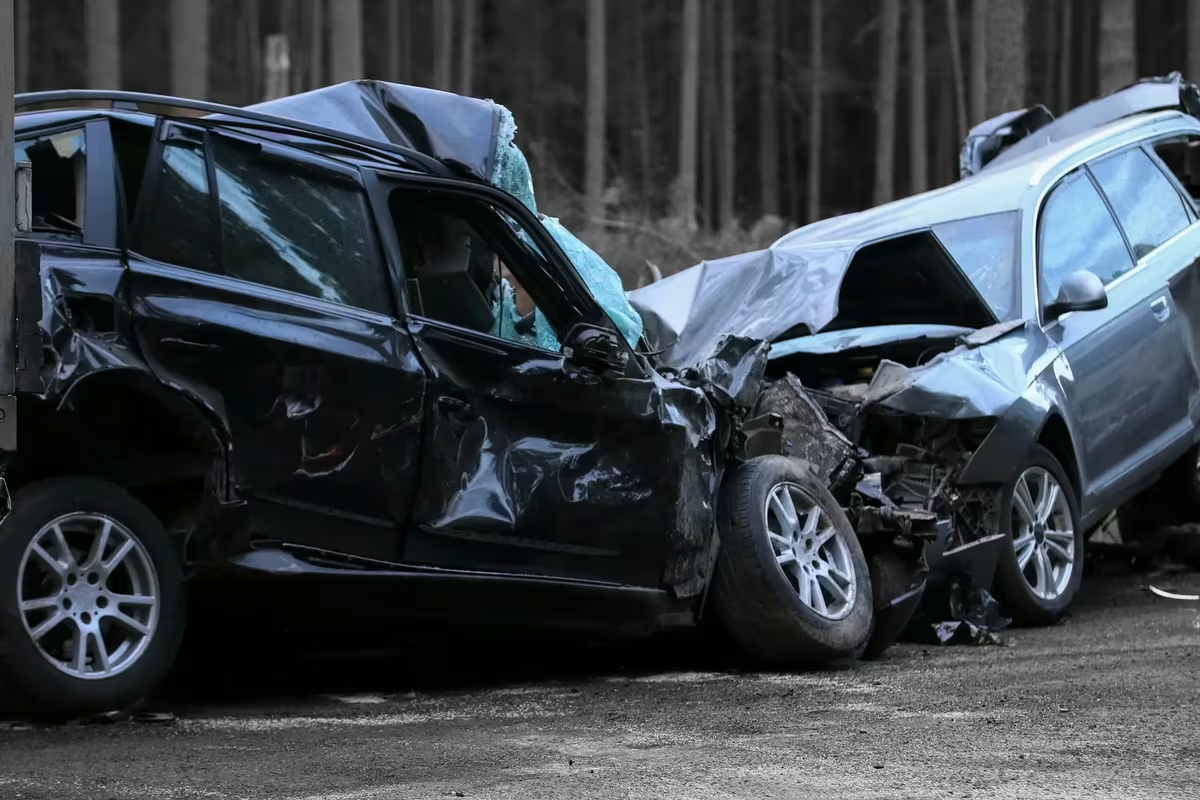
- Car accidents
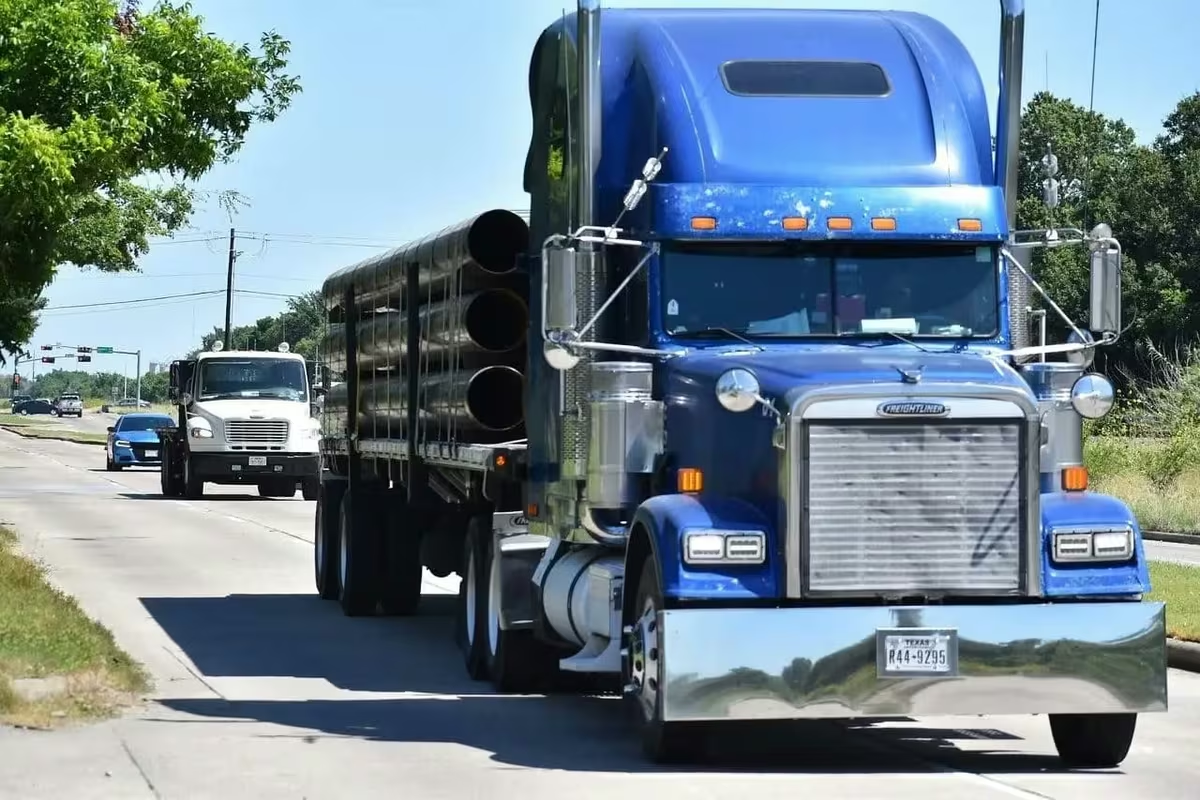
- Truck and 18-wheeler accidents
- Motorcycle accidents
- Pedestrian accidents
- Bicycle accidents
- Bus accidents
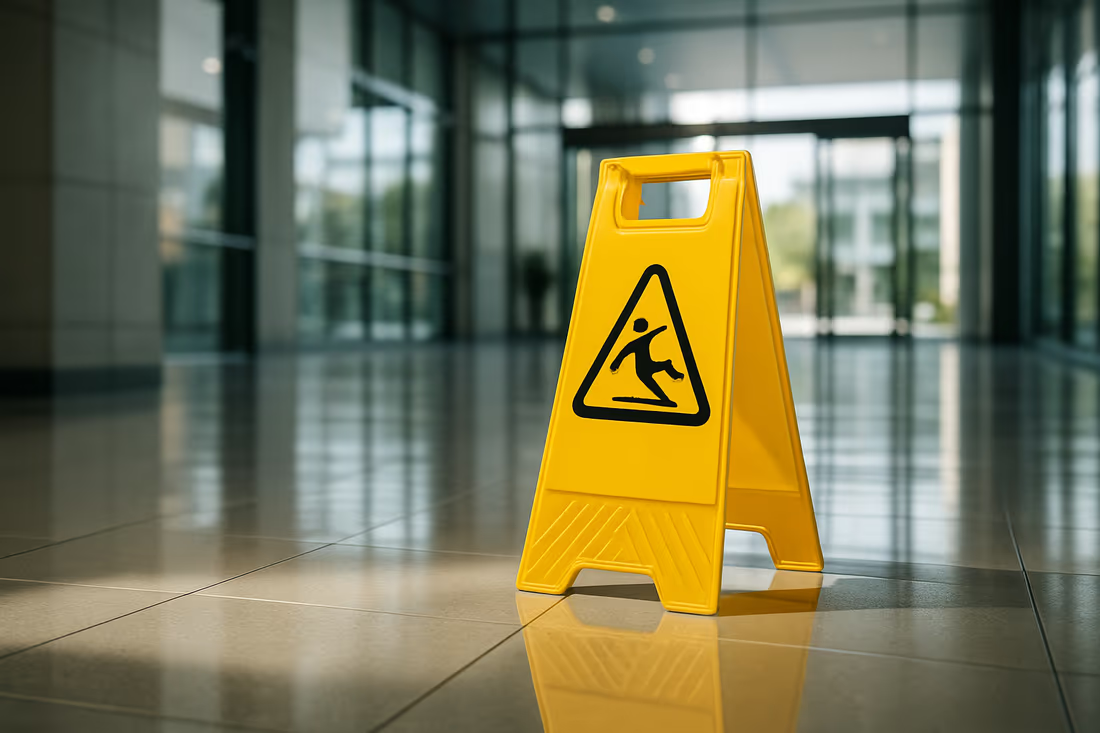
- Slip and fall accidents
- Premises liability
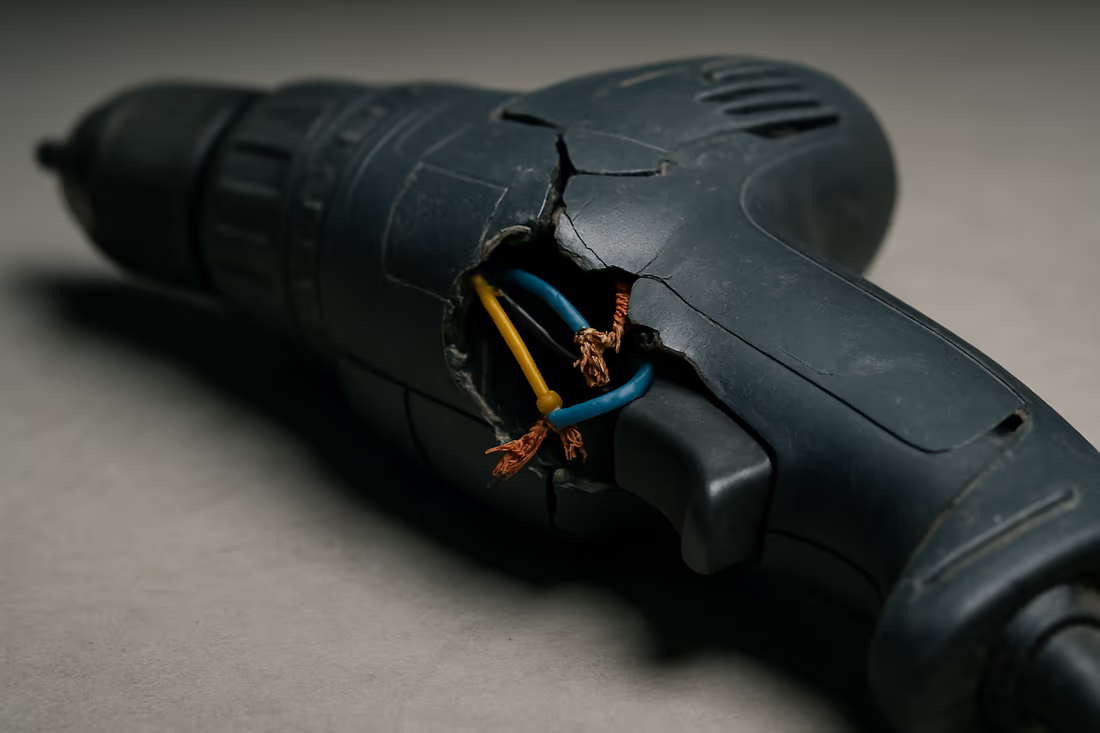
- Product liability
- Workplace and industrial accidents
- Oilfield accidents
- Wrongful death
Your case will be filed at the First Judicial District Court for Caddo Parish on Texas Street, or in federal court when the facts call for it. We know which courtroom you will be sitting in.
Most Caddo Parish injury cases stay in state court. Federal court comes into play when you and the defendant live in different states and more than $75,000 is at stake, or when a federal law such as the Federal Employers’ Liability Act for railroad workers governs the claim. One thing that trips people up: if your wreck happened across the river in Bossier Parish, your case goes to the 26th Judicial District Court in Benton, not to Caddo. We handle cases in the First Judicial District Court and in the Western District of Louisiana, so wherever your file belongs, we have been there.
The way this town earns its living shapes the injuries we see. Barksdale Air Force Base is the region’s largest single employer. Healthcare is one of the largest private employment sectors, anchored by Willis-Knighton Health System, CHRISTUS Health, and LSU Health Shreveport. Caddo Parish has the highest historical oil and gas well count in Louisiana at 28,132 wells (Louisiana DNR SONRIS), and oil and gas service crews work in industrial settings across the parish and the parishes next door. The casinos along the Red River and in Bossier City put a lot of people on commercial floors and in parking garages every night. Warehouses and trucking terminals round it out.
Each of those industries hurts people in its own way. Oilfield and plant workers deal with chemical exposure, heavy equipment, and pressure. Truckers run the freight corridors on I-20 and I-49. If you were hurt on the job because of someone other than your employer, Louisiana law (La. R.S. 23:1101) lets you bring a civil claim against that third party on top of your workers compensation benefits. People leave that money on the table all the time because nobody told them.





Proving Negligence
To collect compensation, you have to prove the other side was negligent. Negligence is a plain idea dressed in legal clothes: somebody failed to use reasonable care. There are four pieces to it, and you need all four.
Duty. The other person owed you a duty of care. Every driver on Youree Drive owes one to everyone else on Youree Drive. A store owner owes one to the people walking its aisles.
Breach. They failed that duty. Running the light at Line Avenue and Kings Highway is a breach. Leaving a wet floor with no sign is a breach.
Causation. The breach is what hurt you. We have to draw a straight line from what they did to what happened to your body.
Damages. You actually suffered a loss. No measurable injury, no claim.
Our job is to gather the evidence that proves each of those four, one at a time.
When the Other Side Broke a Safety Law
Some states treat a broken safety law as automatic proof of negligence, a doctrine called negligence per se. Louisiana does not (Faucheaux v. Terrebonne Consol. Gov’t, 615 So.2d 289 (La. 1993)).
Traffic laws are the everyday example. If a driver ran a red light and hit you, the law they broke tells the court what they should have done. Liability still depends on whether that law was meant to prevent the kind of harm you suffered and whether the violation legally caused your injury. That is why we build the causation proof from the start instead of resting on the ticket.
Intentional Torts
Not every injury is an accident. When someone deliberately hurts you, the law calls it an intentional tort: assault, battery, false imprisonment, intentional infliction of emotional distress. If your own carelessness played a part, it does not reduce what you can recover from the person who hurt you on purpose (La. C.C. Art. 2323(C)). That protection covers carelessness, not a fight you started.
Louisiana’s Comparative Fault Law
Louisiana uses comparative fault. It is the rule for what happens when more than one person contributed to a wreck. Since January 1, 2026, it can decide whether you recover anything at all.
For causes of action arising on or after January 1, 2026, Louisiana applies a modified comparative fault system under La. C.C. Art. 2323. If you are found 51% or more at fault, you collect nothing. If you are 50% or less at fault, your damages are reduced by your share.
In real numbers: say you were 20% at fault and your damages total $100,000. You collect $80,000. At 51% fault, you collect zero.
That is the 51% bar, and one percentage point is the whole game. Insurance companies now have a direct financial reason to argue you were more than half responsible. The way you beat that argument is with evidence gathered early: photos, the crash report, witness names, and the black box data from the other vehicle before it gets scrapped.
If your injury happened before January 1, 2026, the old rule applies. Your damages are reduced by your fault percentage, however high, but you are never barred outright.
Louisiana Tort Reform: What Changed and When
Louisiana rewrote a good chunk of its injury law between 2024 and 2026. These are the changes that touch a Caddo Parish claim.
Filing deadline. For injuries after July 1, 2024, you have two years to file suit (La. C.C. Art. 3493.1). That replaced a one-year deadline that had stood since 1825. Product liability claims get the same two years. If you were hurt on or before July 1, 2024, the one-year deadline still governs you. Being under 18 does not stop the clock for most claims, so a parent or tutor has to file within the same two years (La. C.C. Art. 3468). Louisiana calls this a prescriptive period. Miss it and the case is usually dismissed no matter how clear the fault.
No Pay, No Play. Since August 1, 2025, if you were driving without insurance when you were hit, you cannot collect the first $100,000 in bodily injury damages or the first $100,000 in property damage, even when the wreck was entirely the other driver’s doing (La. R.S. 32:866). Fault allocation does not change that.
Causation standard. For injuries on or after May 28, 2025, the fact that you had no similar symptoms before the wreck no longer creates a presumption that the wreck caused your injury (La. Code Evid. Art. 306.1). You now need medical or expert testimony to prove it. Getting seen quickly, and going back when the doctor says to, carries more weight than it used to.
Medical expenses. In lawsuits filed on or after January 1, 2026, past medical bills paid by health insurance or Medicare are limited to what was actually paid, plus your own deductibles and co-pays. The old rule that added 40% of the difference between the billed and paid amounts is gone (La. R.S. 9:2800.27). This change turns on when the suit is filed, so it reaches 2025 wrecks that are filed in 2026.
Seat belt evidence. Since January 1, 2021, the defense can tell the jury you were not wearing a seat belt and argue that you share fault or made your own injuries worse.
The filing deadline, the fault rule, No Pay, No Play, and the causation rule follow the date you were hurt. The medical-expense rule follows the date your lawsuit is filed.
Claims Against a City, Parish, or State Agency
Wrecks with city, parish, or state vehicles, and injuries caused by a defect on a public road or public property, follow extra rules.
- Same deadline. A public body gets no shorter clock. The ordinary two-year period applies (La. R.S. 13:5108).
- Service within 90 days. After the suit is filed, service on the public body has to be requested within 90 days, or the case against it is dismissed (La. R.S. 13:5107).
- Damages cap. Total damages other than medical care, lost earnings, and property damage cannot exceed $500,000 per injured person (La. R.S. 13:5106).
- Road and property defects. The agency is liable only if it knew, or should have known, about the defect and had a reasonable chance to fix it (La. R.S. 9:2800).
Damages You May Recover
Once negligence is proven, there are two main kinds of damages you can collect.
Economic damages are the losses with a receipt attached: bills, pay stubs, repair estimates.
- Past and future medical costs
- Rehabilitation costs
- Lost wages and income
- Lost earning capacity
- Property damage
Non-economic damages cover the harm that does not come with an invoice. The pain when you get out of bed. The anxiety at the intersection where it happened. Not being able to hunt, fish, or hold your grandchild the way you did.
- Pain and suffering
- Mental anguish
- Emotional distress
- Loss of enjoyment of life
- Loss of companionship and support
Punitive damages are a separate category meant to punish, not to compensate. Louisiana allows them only when a statute authorizes them (Ross v. Conoco, Inc., 828 So.2d 546 (La. 2002)), so they are not on the table in most claims. In a car or truck wreck, the statute that matters is La. C.C. Art. 2315.4. It allows punitive damages against a drunk or impaired driver when the intoxication helped cause the crash and the driving showed wanton or reckless disregard for other people’s safety.
Most personal injury claims in Louisiana have no damages cap, but two common ones do. Medical malpractice recovery against qualified providers is capped at $500,000 plus interest and costs, not counting future medical care (La. R.S. 40:1231.2). Claims against the state, a parish, a city, or another public body are capped too: total damages other than medical care, lost earnings, and property damage cannot exceed $500,000 per injured person (La. R.S. 13:5106). Car wrecks, truck wrecks, and premises cases against private defendants fall under neither cap.
What Shreveport Clients Say
- Victoria McMahon
Very professional and very easy to work with throughout the whole case!Lane and Mena helped make the whole process go smoothly with no stress.
- Ronald Sloan
I have been treat very professionally and respectfully throughout this entire process.I didn't have to call them, they kept in contact with me!!! So, with that being said GREAT JOB WELL DONE!!!
- Aim Tax
I will recommend Mr Townsend and Lizzie to anyone looking for a lawyer to represent them.Lizzie is wonderful she keeps you informed on everything going on with your case. She is the BEST!!!❤️
- Marilyn Smith
I have heard great things about this law firm!It's so good to know that there resources available to those who find themselves in situations beyond their resources to handle alone!
- charlene williams
These people are amazing.They are empathetic to your experience and work hard to get you the help you need. I recommend them to anyone who has had an any misfortune in an accident.
- William Jones
My grandson jonquarius told if I was to get a lawyer y'all will be my best option to go with because y'all very good
- Christina Weber
Trey and his team were referred to us by a friend and we are so thankful.We will definitely refer them to anyone who is need of an injury attorney.
- mary McFerren
Responsive, customized, affordable service that is always professional!Every detail is thoroughly examined to ease you through any personal injury process.
- Colin Pilcher
Everyone I worked with was very helpful and made the process as easy as possible.I would recommend these professionals to anyone.
- Victoria Adams
Now I can see why there are so many positive testimonials about this law firm!I HIGHLY recommend this law firm! Great service and amazing employees!
- john morton
Trey Morris is a good ol'country boy who is down to earth.He has his clients interestest at heart!! He is also extremely knowledgeable!
- Sherard Brown
The best law firm in town.I'd send everybody I know to this firm. I've been a customer for 20 years with no problems. Every case I've had has been taken care of professionally and quickly. I would recommend everybody in town to use this law firm.
Uninsured and Underinsured Motorist Coverage
About 12% of Louisiana drivers carry no auto insurance, according to Insurance Research Council data. Look around you at the light on Mansfield Road: roughly one car in eight has no coverage. Uninsured motorist (UM) coverage is the part of your own policy that pays when the driver who hit you has nothing. Underinsured motorist (UIM) coverage kicks in when their policy is too small to cover what happened to you.
Louisiana requires insurers to offer UM coverage, and it lets you waive it in writing. A lot of people signed that waiver at a kitchen table years ago without knowing what it meant.
If an uninsured driver hit you, read your own policy before you decide there is nothing to collect. Your own coverage is often the main source of compensation.
The single most useful thing you can do this week is pull the declarations page for every policy in your household and find out, in writing, whether UM/UIM was accepted or rejected and at what limits. That one document lets us find the coverage before the hospital bills and the missed paychecks push you toward a fast, low settlement.
Common Injuries
Physical injuries run from soft tissue strains to injuries that change the rest of your life. The ones we see most:
- Traumatic brain injury
- Spinal cord injury
- Neck and back injuries, including herniated discs
- Broken bones
- Amputation
- Severe burns
- Internal injuries
- Scarring and disfigurement
Not every injury shows up at the scene. Concussion symptoms, internal bleeding, and disc injuries can take days to surface. Get checked even if you walked away feeling fine.
Psychological injuries count under Louisiana law too. Anxiety, depression, post-traumatic stress disorder, and adjustment disorder all follow serious wrecks. To support a claim, they need a diagnosis and documentation, usually from a licensed mental health professional.
What to Do After an Accident in Shreveport
1. Get medical attention
- Get evaluated even if you do not think you were seriously hurt.
- Medical records dated the day of the wreck are some of the strongest evidence you will have.
- Keep every follow-up appointment and do what the doctor tells you.
Seeing a doctor right away does two things. It protects your health, and it creates a dated record that ties your injuries to the wreck. A gap in treatment is one of the first things an adjuster will point to. For the worst injuries, traumatic brain injury, spinal cord damage, severe burns, multiple fractures, the Level I trauma center at Ochsner LSU Health Shreveport on Kings Highway is where you want to be.
2. Report the incident
- In a car wreck, call the police.
- At work, tell your supervisor in writing.
- A formal report proves the accident happened.
The police report is one of the first documents we pull. It fixes the date and place, names the at-fault driver, lists any citations, and records the officer’s read on what happened. The Louisiana State Police work crashes on the interstates and state highways, including I-20 and I-49. City streets belong to the Shreveport Police Department, and parish roads to the Caddo Parish Sheriff’s Office.
3. Gather evidence
- Photograph the scene, your injuries, and the damage to your car if you are able.
- Get the names and numbers of anyone who saw it.
4. Talk to a lawyer before you talk to the other side’s insurance company
- Adjusters call fast, sometimes the same day.
- Their job is to close your claim for as little as possible.
- A recorded statement given before you know how badly you are hurt can be used against you later.
- A lawyer can walk you through that call before it happens.
5. Track deadlines and preserve claim documents
- Put the towing invoice, pharmacy receipts, mileage log, and every letter or email from an insurer in one folder.
- Ask your providers for complete records and itemized bills, not just visit summaries.
- Getting organized early helps us value the claim and keeps a deadline from sneaking up on you.
Why Choose Trey Morris Injury Lawyers
We have practiced personal injury law in Shreveport since 2002. We handle cases in Caddo Parish, Bossier Parish, and across Northwest Louisiana.
The firm is a member of the Multi-Million Dollar Advocates Forum, a national organization that recognizes trial attorneys for significant case results, and it holds national and statewide recognition for motor vehicle and personal injury verdicts across several consecutive years. Our case results are public, and you should read them before you decide who to call.
We work on a contingency fee. You pay no attorney fee unless we collect compensation for you. The percentage is agreed in writing at the start, and we advance the court costs and take them out of the settlement or verdict at the end.
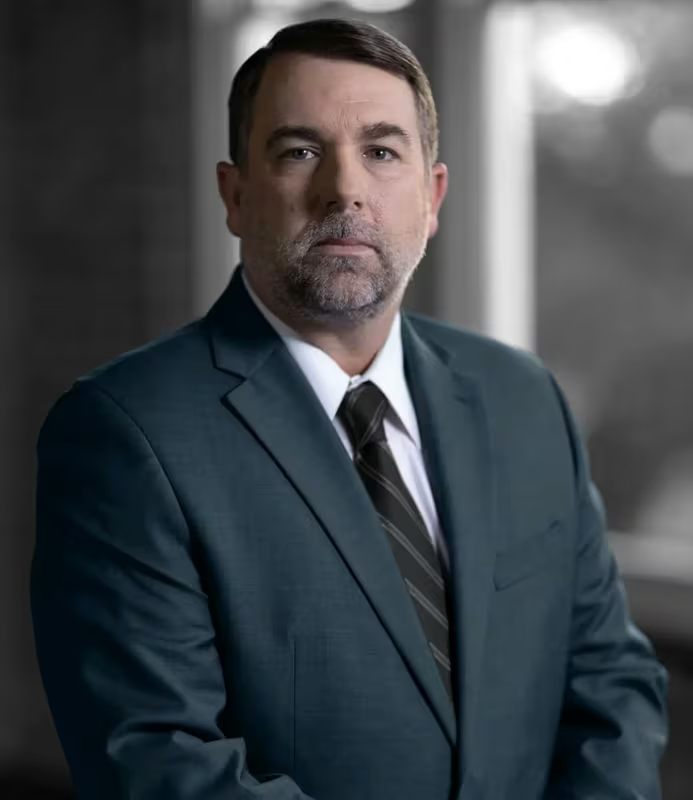
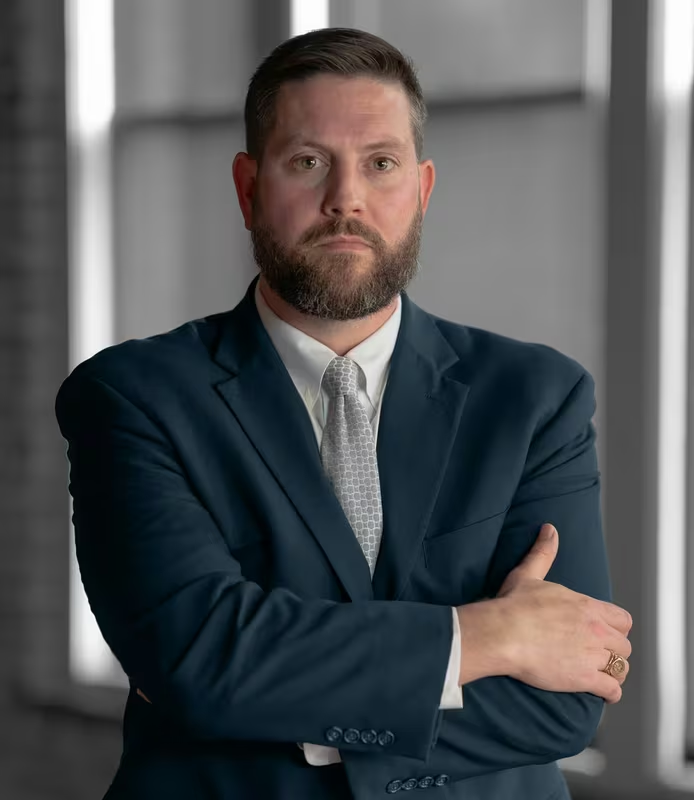
Your Shreveport Trial Team
The lawyers who work your file. Every Shreveport case is handled by the firm's own trial attorneys.









How to Request Records in Caddo Parish
The hospitals, police agencies, and courts that touch a Shreveport injury claim are listed in the sidebar and in the steps above. This is how you actually get the paper out of them.
Accident reports. The Shreveport Police Department releases reports through the LexisNexis portal or the NextRequest portal for $10. Give it 48 hours after the wreck, and call (318) 673-7085 for the records line if you get stuck. The Louisiana State Police, who work I-20, I-49, and the other state highways, post reports at crashreports.dps.la.gov for $11.50, usually 10 to 15 business days after the crash. For parish roads outside those two, the Caddo Parish Sheriff’s Office records division handles it. If you are not sure which agency showed up, give us the date, the location, and the names, and we will pull the report.
Court filings. Civil suits go to the First Judicial District Court, Caddo Parish at 501 Texas Street. Civil filings run through (318) 226-6776 or civil@caddoclerk.com. Bossier Parish wrecks file at the 26th Judicial District Court in Benton, (318) 965-2336.
Driving records. Driving and vehicle registration records come from the Louisiana OMV ExpressLane portal. The Shreveport OMV office is at 1700 Buckner Street, Suite 240, (318) 676-7900. The other driver’s violation history can matter in some cases, and it is worth knowing early.