







Bossier City wrecks happen on I-20 and I-220, on Airline Drive, Benton Road, and Barksdale Boulevard, and the people in them are taken to Willis Knighton Bossier or across the Red River to Ochsner LSU Health Shreveport, the Level I trauma center. Trey Morris Injury Lawyers is at 1815 Benton Road in Bossier City. We send written preservation requests to the businesses along Airline Drive whose cameras write over last week’s footage, once the facts give us an honest basis for one. That footage, along with the other driver’s vehicle data, can show how fast each car was going, what the signal showed, and who had the right of way.
Results for Louisiana Clients
- $409 MillionWrongful Death
A tragic case where an impaired driver of a commercial vehicle ran a red light, then collided with our client, causing serious bodily injury to the mother and the loss of life of her daughter.
- $49 MillionMotor Vehicle Accident
An impaired driver of a stolen vehicle driving the wrong way collided with our client head-on, resulting in brain injury and multiple broken bones.
- $32,195,000Industrial / Workplace
Failure to maintain proper safety protocols led to an explosion at an industrial plant causing a series of catastrophic injuries from broken bones, burns, spinal injury, and mental anguish.
- $31.5 MillionIndustrial / Workplace
Brain and spinal injuries followed an oil-field company failing to maintain equipment and provide a safe work site.
- $17.25 MillionCommercial Vehicle Accident
Client was struck head-on by a disconnected load of an 18-wheeler that crossed the median causing broken bones and amputation.
- $13 MillionCommercial Vehicle Accident
On the interstate, an 18-wheeler failed to yield right of way then made an unsafe lane change causing the accident which resulted in major bone breaks, damaged organs, and ultimately a leg amputation.
Past results do not guarantee future outcomes; each case is decided on its own facts.
What Does a Bossier City Louisiana Injury Lawyer Do?
A personal injury lawyer represents you, the person who got hurt, and not the company that has to write the check. The job is to prove fault, document what the injury cost you, and make the responsible party or its insurer pay that amount. It covers car and truck wrecks on I-20, falls on unsafe property, injuries on the job, and any other situation where someone else’s carelessness put you in a doctor’s office.
The adjuster who has been calling you works for the insurer and is measured on what the company pays out. That structural conflict is the reason representation matters even when the other driver plainly ran a red light on Benton Road.
At Trey Morris Injury Lawyers, the attorneys who handle Bossier City and Bossier Parish claims do the work you cannot do from a treatment table. While you keep your appointments, we pull the crash report from the agency that worked the scene, collect records and itemized bills from Willis Knighton Bossier or wherever you were treated, track down witnesses, identify every policy that might cover the loss, take the insurer’s calls, and hold the Louisiana filing date.
What Makes Louisiana Injury Claims Different
Louisiana runs on a civil law system built on the Civil Code, not the common law used in the states around us. The words, the deadlines, and the rules on fault and damages come from Louisiana’s own statutes, and they do not change from parish to parish. A lawyer fluent in that framework reads your facts differently than one working from a national playbook.
Local Office. Statewide Record.
- 26th JDC
Where your case is filed
Bossier City injury suits are filed in the 26th Judicial District Court. We file and try cases there from our Bossier City office.
- 11
Trial attorneys, one team
Your case is handled by the firm's own trial attorneys, and we respond in minutes, 24/7.
- 24/7
We come to you
Hospital, home, or the office at 1815 Benton Rd. Free case review, and no fee unless we win.
- 127
Cases resolved over $1 million
Verdicts and settlements of $1 million or more, won by the same trial team that handles Bossier City cases.
What Should You Do Immediately After an Injury in Bossier City?
The first hours and days shape your case more than anything that comes later. Get medical care, get the incident reported, save what you can, and be careful about what you say to an adjuster.
Seek Medical Treatment and Document All Injuries
See a doctor the same day if you can, even if you felt fine walking away from the car. Adrenaline hides pain, and concussions and soft-tissue injuries often surface a day or two later. The emergency department at Willis Knighton Bossier on Hospital Drive handles much of what happens inside the city, and a severe injury usually goes across the river to Ochsner LSU Health Shreveport on Kings Highway. A record created close in time to the wreck ties your injury to the wreck. A gap gives the insurer room to say you got hurt some other way.
Then follow the plan you were given. Keep the appointments, fill the prescriptions, and tell every provider how it happened and what hurts. Sporadic treatment is one of the most common reasons a claim’s value drops.
File a Police or Incident Report in Bossier Parish
For a vehicle crash, call the police and let officers work the scene. Wrecks inside the Bossier City limits, from Downtown Bossier out through Shady Grove, Stockwell Place, and Golden Meadows, are usually worked by the Bossier City Police Department at 620 Benton Road. Out in the unincorporated parish, toward Haughton, Princeton, or Plain Dealing, it is the Bossier Parish Sheriff’s Office at 204 Burt Boulevard in Benton. Collisions on I-20, I-220, and the state highways are frequently handled by Louisiana State Police, Troop G, which covers Northwest Louisiana. Find the paperwork the officer handed you, note the agency name and the case number on it, and send that to your lawyer this week, because that number tells us which parish record system to open.
For a fall on someone’s property, ask the manager to write an incident report and ask for a copy before you leave. Get the names of the employees who saw it or filled out the paperwork. A report written that day fixes the date, the place, and the basic facts before the story changes.
Preserve Evidence: Photos, Witnesses, and Surveillance Footage
Photograph the scene if you are able to: vehicle positions, damage to every vehicle, skid marks, the signal, the puddle or the broken step, and your visible injuries. Conditions change quickly. The floor gets mopped, the car goes to the body shop or gets sold for parts, the pothole on Barksdale Boulevard gets patched.
Get contact information from anyone who stopped. An independent witness carries weight because they have nothing to gain, and a name and phone number collected at the scene are worth more than a statement gathered five months later, because people move and memory dulls. Footage from a store camera, a dashcam, or a gas station lot can settle a fault dispute, and many systems record over themselves within days or weeks.
Avoid Recorded Statements to Insurance Adjusters
The at-fault driver’s insurer may call within days and ask for a recorded statement. You are not required to give one.
Contact a Bossier City Injury Attorney Before Accepting Any Offer
The first offer usually arrives before anyone knows what the injury will cost, often before you know whether the neck pain is a strain or a disc. Sign the release and the claim is closed for good, even if you need surgery two months later. Having a lawyer read the offer tells you whether it accounts for future care, the paychecks you missed, and what the injury took from you permanently.
A consultation also locks in the steps that are hard to undo: the preservation letter for the video, the witness who has not moved yet, the photographs of the intersection while the sightline is the same. Talking to an attorney does not commit you to a lawsuit. Before you sign anything this week, get the offer in writing and put it in front of a lawyer.
What Evidence Strengthens a Bossier City Personal Injury Case?
Your claim is only as strong as the proof behind it. The proof falls into five groups: the official report, the medical record, the physical and visual proof from the scene, the people who saw it, and the record of what the injury took from you in money and in ordinary life. Bring all five and the adjuster has very little room to argue.
Police reports, incident reports, and crash reports
The official report is usually the first written account of the event. For a wreck, the investigating officer records the date, the location, the vehicles, the drivers, apparent contributing factors, and any citation written, and the officer’s narrative, diagram, and citation become central to the fault analysis. For an injury in a store, the facility’s incident report does the same job. Neither one settles fault, but both anchor the timeline and name the parties and witnesses while details are still fresh.
Each agency releases reports its own way, on its own schedule, in its own format. Get the report number at the scene if you can and request the report as soon as it is filed, because holes in the report are easier to fill while the wreck is recent.
Medical records, bills, and treatment history
Medical records connect the wreck to the injury and put a number on it. The emergency note, the imaging results, the physician’s findings, the therapy notes, and the itemized bills together show what was hurt, how it was treated, and what the care cost. A complete file follows the referral chain from the emergency visit at Willis Knighton Bossier through every orthopedic or neurology specialist, imaging center, and physical therapy office that visit sent you to, because a missing referral gives the insurer room to call the injury minor or unrelated. Future care that your treating physician documents as medically necessary belongs in the file too, because some injuries need treatment long after the case is over. Knowing which local providers release records quickly, and which ones need a follow-up call, is half the speed of a claim.
Scene evidence, witnesses, and insurance communications
Visual proof is hard to argue with. Damage patterns let a reconstruction expert explain the direction of the impact and how much force was in it, and surveillance and dashboard video is the strongest evidence available and the most perishable. A neutral witness’s account usually fills in the sequence the official report only summarizes.
Your communications with the insurer become evidence too. Save every letter, email, and claim number. Note the date and the substance of every phone call. An adjuster’s early comment on fault, an offer, or a request can matter later, and a written record keeps the conversation honest.
Lost wage records and proof of daily-life limitations
Economic loss has to be proven, not asserted. Pay stubs, an employer wage statement, tax records, and your doctor’s off-work note establish what the missed time cost you, and your employment history and the medical file support any loss of earning capacity.
The harder loss to capture is what the injury did to ordinary life. A short journal noting pain levels, sleep, the things you skipped, and the tasks you can no longer do turns an abstract injury into something a person can picture. Statements from family or coworkers who watched the change add weight. Start that journal tonight, one or two lines a day, because it reads far better written as life happens than reconstructed at the end.
What Types of Personal Injury Cases Do Bossier City Lawyers Handle?
Bossier City injury lawyers handle claims that share one thread: someone got hurt by another party’s negligence, and Louisiana law gives that person a path to compensation. The work runs from a fender-bender on Airline Drive to a fatal collision on I-20.
These categories overlap more than people expect. One crash can involve a commercial truck, a rideshare driver, and a question about who controlled the lot it started in. Sorting those threads early matters, because each one points to a different defendant and a different insurance policy.
Car, Truck, Motorcycle, Pedestrian, and Rideshare Accidents
Motor vehicle collisions are the bulk of injury work in Bossier City and Bossier Parish. Car wrecks are the baseline. Commercial truck and 18-wheeler cases add federal motor carrier regulations and a corporate defendant, which changes both the evidence and the parties. Motorcycle and pedestrian cases tend to bring severe injuries, because the rider or the person walking has nothing around them. Bus crashes can put a public transit body or a commercial carrier on the other side.
Rideshare accidents add a third layer. When an Uber or Lyft driver is involved, the coverage available depends on whether the app was on and whether a passenger was in the car.
Slip-and-Fall, Premises Liability, and Negligent Security Claims
Premises liability covers an injury caused by an unsafe condition on someone else’s property. Falls in stores, restaurants, casinos, and parking lots are the common version, and Louisiana sets a specific merchant liability standard: you have to show the owner knew or should have known about the hazard and failed to fix it.
Negligent security is the related claim. It applies when an owner fails to put reasonable safety measures in place and someone is harmed by criminal activity the owner could have foreseen. These cases turn on what the owner knew about earlier incidents on the property and what precautions a reasonable owner would have taken.
Workplace and Construction Injury Claims
A workplace injury can run on two tracks at once. Louisiana workers’ compensation pays benefits regardless of fault for most on-the-job injuries. Separately, if someone other than your employer hurt you, a subcontractor, an equipment manufacturer, or the property owner, you may have a negligence claim on top of the comp benefits.
Construction sites concentrate the problem. Several contractors, heavy equipment, and safety duties that shift by the day create situations where the at-fault party is not the company that signs your check. Working out who owed the duty and who breached it is the case. Plant, refinery and warehouse injuries are covered on our industrial accident page. If you travel to the coast for a vessel or offshore hitch, federal maritime and offshore law usually governs; see our maritime and offshore accident pages.
Dog Bites, Defective Products, and Dangerous Property Claims
Dog bite claims hold the owner responsible when the animal injures someone, unless the person hurt provoked it or the owner could not have prevented the injury. Defective product claims go after the manufacturer when a design flaw, a manufacturing defect, or a missing warning causes the injury. Dangerous property conditions beyond the usual slip-and-fall include neglected maintenance, structural hazards, and conditions a visitor had no way to anticipate.
What ties them together is the duty owed by whoever was in control: the dog’s owner, the company that put the product on the shelf, the owner of the building. Each one needs its own proof of who was responsible and how the failure caused the harm.
Catastrophic Injury and Wrongful Death Cases
Catastrophic injuries are the life-altering ones: traumatic brain injury, spinal cord damage, amputation, severe burns, and injuries that require care for life. These cases live on careful documentation of future medical need and lost earning capacity, because the consequences run out across the rest of a life.
Wrongful death is the hardest category. When negligence causes a death, Louisiana law lets certain surviving family members bring a claim. Families usually pursue two kinds of loss: what the person suffered before death, and what the survivors carry afterward, including the relationship, the support and services, and the grief. Eligibility follows a defined order of relatives under Louisiana law, and who is eligible to file gets answered first, so the people closest to it know early where they stand. Write down every party who might have had a hand in what happened, including any business that owned the property or the truck, and bring that list with you.
Bossier City Practice Areas
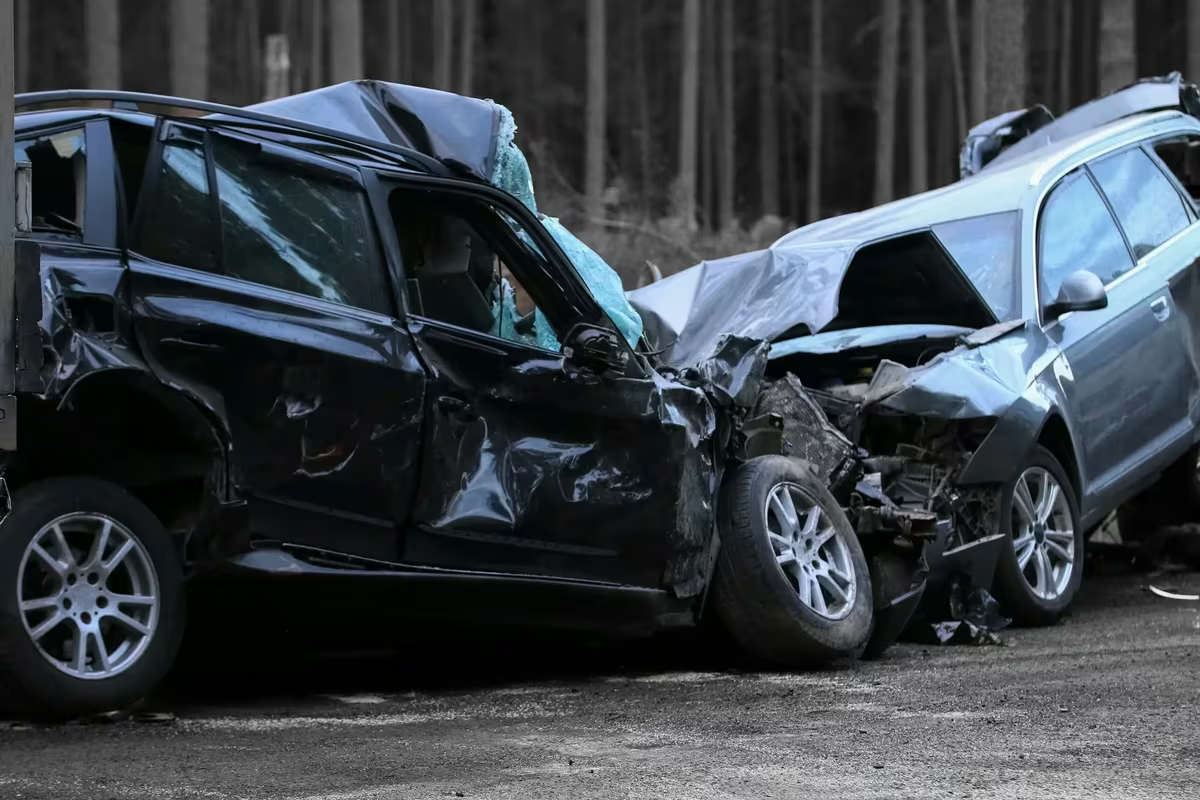 Car AccidentsRear-end, intersection, and highway collisions across Louisiana.
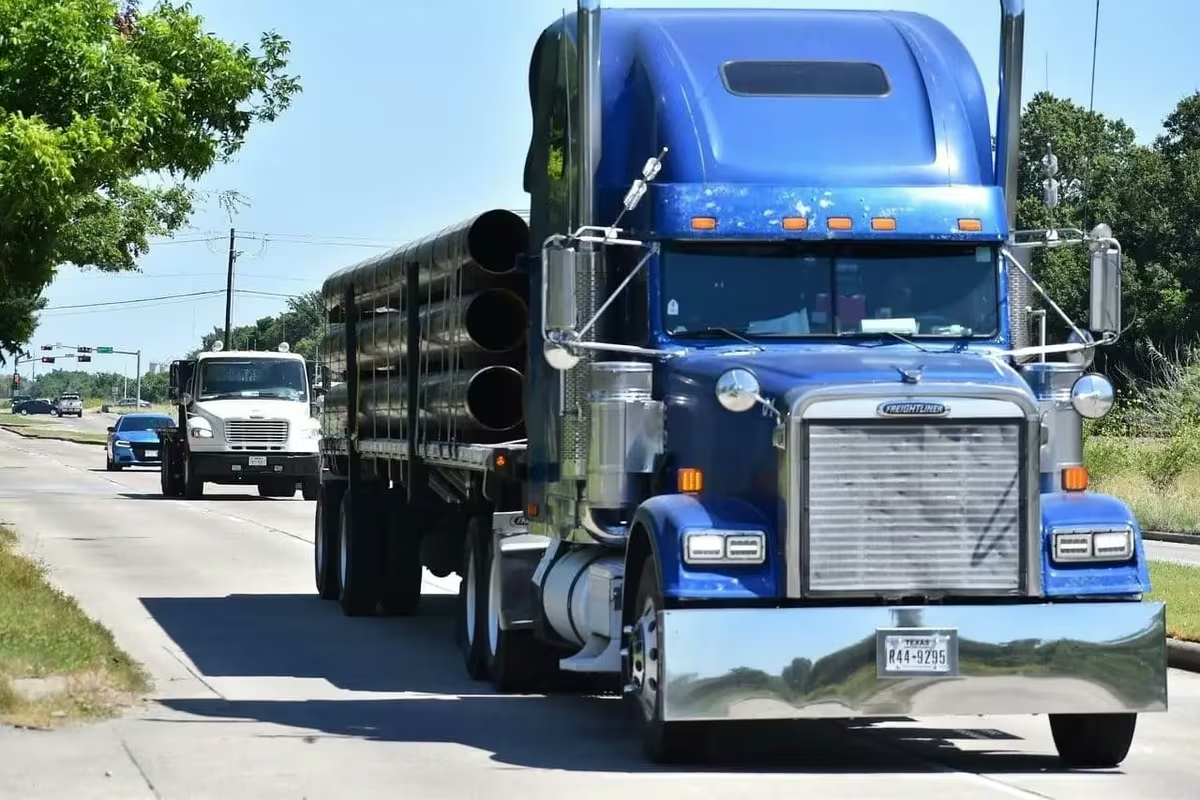 Truck Accidents18-wheeler and commercial-vehicle wrecks governed by federal trucking rules.
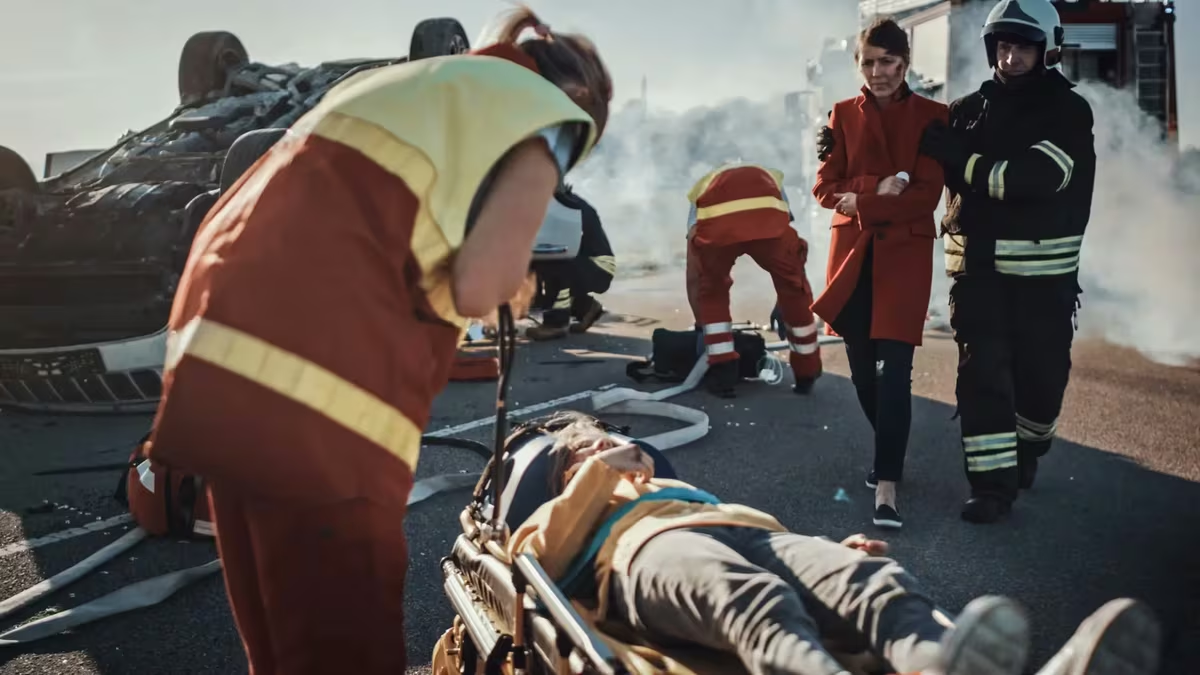 Catastrophic InjuryBrain, spinal-cord, amputation, and severe-burn injuries that change a life.
 Wrongful DeathClaims brought by families after a fatal accident or act of negligence.
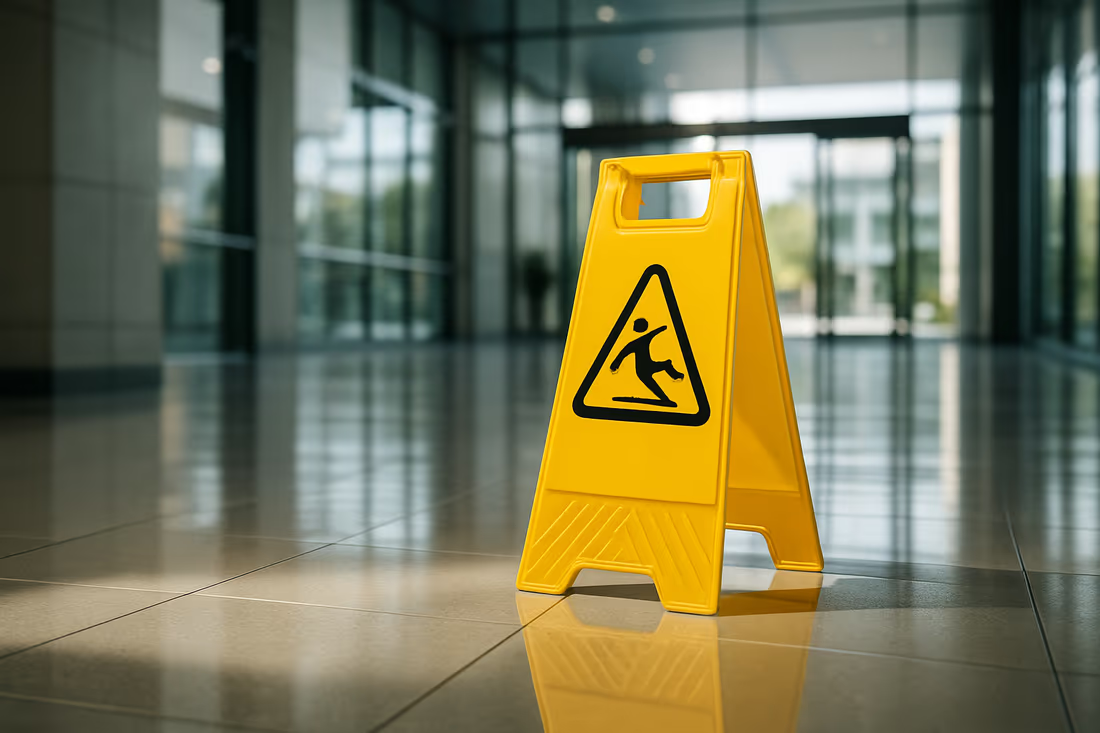 Premises LiabilitySlip-and-fall and unsafe-property injuries on someone else's premises.
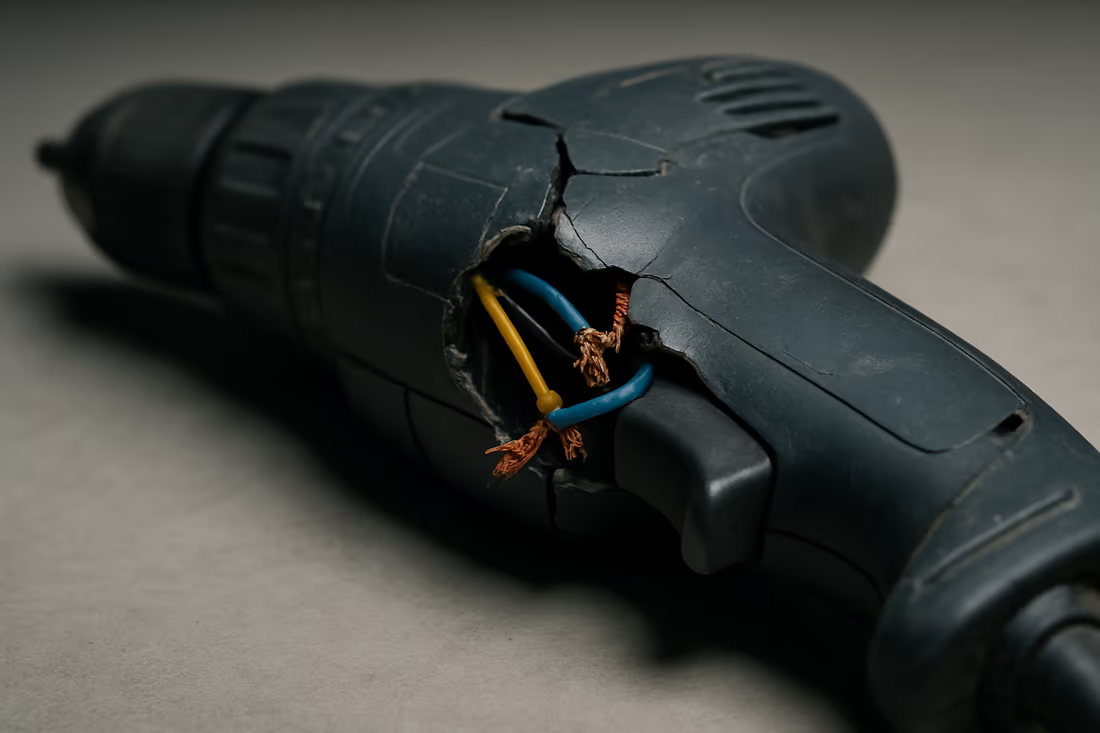 Product LiabilityInjuries caused by defective or unreasonably dangerous products.
 Oilfield AccidentsDrilling, pipeline, and refinery injuries across the energy sector.
 Industrial AccidentsPlant, warehouse, and heavy-equipment injuries in industrial settings.
 Offshore AccidentsRig, platform, and vessel injuries beyond the shoreline.
What Local Bossier City and Bossier Parish Factors Affect an Injury Claim?
Where you were hurt shapes how the claim gets built. Bossier City sits in Bossier Parish along the Red River, across the bridges from Shreveport in Caddo Parish. That geography decides which agency wrote your report, which records have to be gathered, and where the case can be filed if it does not settle.
I-20, I-220, US 80, Airline Drive, and Local Traffic Routes
Bossier City carries heavy traffic on corridors that produce serious collisions. I-20 runs east and west through town and across the Red River into Shreveport. I-220 loops north around the metro. US 80 and Airline Drive carry dense commercial and commuter traffic, and Benton Road, Barksdale Boulevard, and East Texas Street see frequent intersection wrecks.
The route shapes the proof. Interstate crashes bring commercial trucks, multiple lanes, and speed, which changes the physics and the evidence. A wreck on Airline Drive or Benton Road usually turns on a signal, a left turn, or a car pulling out of a business entrance. Knowing the road tells your lawyer where the cameras are, whether signal timing data exists, and who was in a position to see it.
Where a Bossier City Injury Case Can Be Filed
Benton, north of Bossier City up Benton Road, is the Bossier Parish seat. A Bossier Parish suit can be filed in the 26th Judicial District Court, which sits with the Bossier Parish Clerk of Court in the courthouse at 204 Burt Boulevard in Benton rather than in Bossier City.
The Red River puts you a bridge away from Caddo Parish, so the wreck, the treatment, and the parties often straddle two parishes. You can be rear-ended on Barksdale Boulevard and treated in Shreveport, or hit by a Caddo Parish driver at a Bossier Parish intersection. An at-fault driver who lives in Caddo Parish, or an insurer defended out of Shreveport, can affect where suit is filed and which jury pool hears the fault question.
Some injury cases belong in federal court, typically when the parties are from different states and the amount in dispute is large enough, or when a federal question is involved. The federal district court for the Western District of Louisiana sits in Shreveport and hears qualifying cases from this area. Which court fits your particular suit is a question your attorney confirms against your facts, and the other side can dispute it. Sorting that out at the start heads off a procedural fight later.
What Is the Statute of Limitations for Injury Claims in Bossier City, Louisiana?
Under the deadline to file an injury lawsuit in Louisiana, you have two years from the day you were hurt to file suit (La. C.C. art. 3493.1). Louisiana law calls this deadline liberative prescription. A fall on someone’s property runs on the same prescription as any other negligence case.
Exceptions: Minors and Government Entity Claims
By its terms, the two-year prescription under La. C.C. art. 3493.1 does not run against minors or interdicts in actions involving permanent disability and brought pursuant to the Louisiana Products Liability Act or state law governing product liability actions in effect at the time of the injury or damage.
Claims against the state of Louisiana or its political subdivisions follow special procedural rules under La. R.S. 13:5101 et seq. Those rules include a second deadline after you file: under La. R.S. 13:5107(D), service on the public body must be requested within 90 days of filing suit. Missing one of those procedural steps can defeat a claim against a public entity even when the underlying facts are strong. Public entity defendants come up more often than people expect around here: a parish truck, a fall on government property, a city vehicle at an intersection.
What Happens if You Miss the Deadline in Louisiana
If prescription runs before you file, the defendant raises it and the court dismisses the claim. There is no general grace period to count on. Because your deadline turns on your injury date, on whether a public entity is involved, and on whether a minor is affected, get the exact date confirmed in writing well before it approaches, and put it on a calendar you actually look at.
How Does Louisiana’s Comparative Fault Rule Affect Your Bossier City Injury Claim?
Louisiana applies comparative fault under La. C.C. art. 2323, which assigns a percentage of fault to each party and reduces a plaintiff’s damages by that party’s share. For causes of action arising on or after January 1, 2026, a plaintiff who is 51% or more at fault collects nothing, while a plaintiff who is 50% or less at fault has damages reduced by the assigned percentage.
Proving Fault in a Bossier City Injury Claim
The allocation framework is the same statewide, and the evidence that persuades a jury is built case by case. Fault is proved with the concrete record: the crash report and any noted citations, scene photographs, vehicle damage patterns, dashcam or store footage, independent witness accounts, and accident reconstruction when liability is disputed. Each piece either supports your version or takes away the insurer’s attempt to shift a percentage onto you, and the side with the better documented account usually controls the fault number. We build the fault evidence that keeps an insurer from moving your percentage toward the 51% line. If you have photos from the scene on your phone, back them up somewhere other than the phone this week.
How Much Is a Bossier City Injury Case Worth?
What your case is worth depends on your injuries, your medical record, the income you lost, and who was at fault. Compensation falls into two groups: economic damages with a dollar figure attached, and non-economic damages for harm that never generated a receipt. When the at-fault driver cannot pay, a third route matters, and that is your own auto policy.
Economic Damages: Medical Bills, Lost Wages, Future Care Costs
Economic damages are the losses you can put a receipt, a bill, or a pay stub behind: ambulance transport, emergency treatment, hospital stays, surgery, imaging, physical therapy, prescriptions, medical equipment, and follow-up visits. Future care is harder, because it has not happened yet, and it is where a strong case separates from a thin one.
Time missed from work because of the injury is compensable. Loss of earning capacity, the income you will lose going forward if the injury limits what you can earn, is the larger item. Household services count as well. If you cannot cook, clean, handle child care, or keep up the yard the way you did, the reasonable cost of paying someone else to do that work belongs in the claim.
Non-Economic Damages: Pain, Suffering, and Loss of Enjoyment
Non-economic damages cover the human cost of an injury: physical pain, mental anguish, permanent disability, disfigurement, scarring, and loss of enjoyment of life, including the activities you can no longer do.
Property Damage and Out-of-Pocket Expenses
Property damage covers the cost to repair or replace your vehicle and any personal property destroyed in the wreck. Out-of-pocket costs add up faster than people expect: the rental car, the mileage to and from appointments, parking, the brace you bought at the pharmacy, and the modifications to a home or a car the injury made necessary.
Medical Malpractice Cases Carry a Statutory Cap
If a medical provider caused the injury, a different rule controls the number. Under La. R.S. 40:1231.2, Louisiana caps total damages in a qualified medical malpractice claim at $500,000, combining economic and non-economic damages into one limit. Future medical care and related benefits sit outside that cap and are paid as incurred through the Patient Compensation Fund.
UM/UIM Coverage When the At-Fault Driver Is Uninsured
When the at-fault driver has no insurance or carries too little to cover your damages, the next place to look is your own auto policy. Uninsured and underinsured motorist coverage exists for exactly this situation, and it is often the difference between a claim that gets paid and one that stalls.
Plenty of drivers have this coverage without remembering they chose it, because under La. R.S. 22:1295 the coverage applies unless a named insured rejected it in writing on the form prescribed by the Commissioner of Insurance, and that rejection stays valid for the life of the policy. Pull your declarations page before you assume an uninsured driver leaves you with nothing.
Factors That Increase or Decrease Settlement Value in Northwest Louisiana
A few practical things move a Bossier City case up or down. Clear liability raises it and disputed fault lowers it, because Louisiana reduces the award by your share of the fault, and for accidents on or after January 1, 2026, a share of 51 percent or more bars recovery. The severity and permanence of the injury matter, and so does whether your treatment was steady or full of gaps an adjuster can point at. Available insurance coverage sets a real ceiling on what is collectible, no matter how strong the claim is.
Local context counts too: the strength of the records from area providers, the credibility of your witnesses, and how a Bossier Parish jury tends to view this kind of harm.
How Does a Bossier City Injury Claim Move From Consultation to Settlement or Trial?
Your claim moves through five stages: a first consultation, an investigation that ends in a demand package, negotiation with the insurer, a filed lawsuit if negotiation stalls, and discovery leading to settlement or trial. Most cases settle before a jury ever hears them, and what the earlier stages produce is what a settlement is worth.
Free Consultation and Case Evaluation
The first step is a conversation. You explain what happened, when, and where, and the attorney evaluates whether you have a viable claim under Louisiana law. This is where we identify the at-fault party and the insurance available. No fee changes hands at this stage. A working consultation leaves you with a candid read on liability, the obstacles in your case, and a realistic range of outcomes.
Investigation, Evidence Collection, and Demand Package
Once you retain a firm, the case gets built: the crash or incident report, the medical records and bills, the wage documentation, the photographs, and any video that still exists. Your lawyer usually waits until you reach maximum medical improvement, the point where treatment has done what it can, before assigning a value, because a premature demand undersells future care costs. When the file is complete, it becomes a demand package, a written presentation of liability, injuries, treatment, and damages sent to the insurer with a specific number. The strength of that package shapes every negotiation that follows. A thin demand invites a thin offer.
Insurance Negotiation and Settlement Attempts
The insurer answers the demand, usually with a counteroffer well below the number. Negotiation is an exchange. The adjuster argues liability, disputes whether treatment was necessary, or questions the size of the loss, and your attorney answers each point with the evidence in the file. Many claims resolve here, at a figure both sides can defend. If the offer reflects the full value of your injuries, settling avoids the cost and delay of litigation. If it does not, the next step is filing suit.
Filing Suit if Negotiation Stalls
When negotiation does not produce a fair offer, your attorney files a lawsuit. Filing does not end negotiation. It changes the terms. A filed suit brings subpoena power, sworn testimony, and a trial date, which moves carriers that would not move before.
Discovery, Trial, or Final Settlement
After filing comes discovery, the formal exchange of evidence. Many cases settle during or after it, once the strengths and weaknesses are clear to everyone. If no settlement comes, the case is tried and a judge or jury decides liability and damages.
How Much Does a Bossier City Injury Lawyer Cost?
Most Bossier City injury lawyers charge nothing up front. The work is done on a contingency fee, which means the lawyer is paid an agreed percentage of what the case produces, and only if it produces something. You write no retainer check to start and pay nothing by the hour. If there is no settlement or award, you owe no attorney fee. That structure is what lets an injured person hire experienced counsel with no cash on hand, and it lines the firm’s interest up with yours: the firm earns more when the client earns more, and it carries the financial risk of fronting its time and usually the out-of-pocket expenses.
The Louisiana Rules of Professional Conduct require a contingency fee to be reasonable and put in a written agreement. You sign that agreement before the work begins, and the percentage, what counts as a case cost, who advances those costs, and what happens if the case loses are all written into it.
Typical contingency percentages for injury cases
Contingency percentages in personal injury cases generally land in the range of one-third to forty percent of the compensation, depending on the firm and the stage at which the case resolves. Many agreements are tiered: a lower percentage if the claim settles before a lawsuit is filed, and a higher percentage if the case has to be filed and litigated through discovery or trial. The tier reflects workload, since a claim that resolves on a demand letter takes far less work than one that goes through depositions, expert witnesses, and a trial date. Ask the lawyer to spell out the percentage at each stage.
Case costs and what “no win, no fee” actually means
The attorney fee is not the only money that comes out of a case. Case costs are separate: filing fees, charges for obtaining medical and police records, expert witness fees, deposition transcripts, accident reconstruction, and similar expenses. In most injury cases the firm advances those costs as the case moves forward and deducts them from the settlement or award at the end, so you typically pay nothing out of pocket while the case is pending.
“No win, no fee” is accurate as far as the attorney fee goes: if the case produces nothing, you owe no attorney fee. The phrase speaks to the fee, not necessarily to the expenses the firm advanced. Read the agreement on two points. First, are the case costs subtracted before or after the attorney fee is calculated? That order changes what you take home. Second, if the case does not succeed, are you responsible for repaying the advanced costs? Some firms absorb that loss and some do not, so ask the specific question, if my case loses, what do I owe, and get the answer in writing before you sign.
How Trey Morris Injury Lawyers handles fees and case staffing
Trey Morris Injury Lawyers puts its fee terms in writing, with the percentage and the case costs spelled out before you sign. The attorney you meet stays on your case, and the agreement names who handles it day to day and how you reach the legal team with questions. The agreement should also say how fees and costs get resolved if you change lawyers or the firm withdraws before the case ends. No one can promise a result, so the firm does not guarantee a specific outcome or dollar figure, and it gives you the time to read the agreement rather than pushing a same-day signature. Take the agreement home, read it at your own kitchen table with no one waiting on you, and sign only when every term is clear.
Why Hire a Local Bossier City Injury Lawyer Instead of a National Firm?
A local Bossier City injury lawyer knows the courthouse in Benton, the records desk at the police department on Benton Road, the providers who treated you, and the juries that decide these cases. National advertising firms route the call to a call center and often hand the file to whoever happens to be available. The difference shows in how the evidence gets preserved, how the demand is built, and who walks into court if your case is tried.
Local Knowledge of Bossier City Police, EMS, and Crash Report Procedures
Knowing which agency responded and how to pull that report keeps the claim from stalling. EMS run sheets and dispatch logs carry the earliest injury documentation, and adjusters read them closely. A lawyer who works these cases locally knows where those records live and how long each office takes to produce them.
Familiarity With Bossier Parish District Court and the 26th Judicial District
The 26th Judicial District covers both Bossier Parish and Webster Parish. A lawyer who appears there regularly knows the local filing rules, how the court sets its schedule, and how cases actually move through it. That shapes strategy from the first pleading. A national firm may not have a single admitted attorney who has ever tried a case in the 26th Judicial District.
Relationships With Northwest Louisiana Medical Experts and Reconstructionists
Serious injury cases turn on expert testimony. Treating physicians, life-care planners, and accident reconstructionists explain the injury, the cost of future care, and how the collision happened. A lawyer rooted in Northwest Louisiana knows which experts practice here, which ones hold up under cross-examination, and how to get them scheduled without adding months to the case. That regional network is what answers an insurer disputing the cause or the severity of an injury, and a firm without it takes what the insurer offers.
Negotiating Against Louisiana Insurers and Regional Carrier Tactics
Adjusters handling Louisiana claims work the same regional desks, run the same playbook, and know which lawyers actually try cases. A firm that tries cases gets a different number than a firm known only to settle, because the carrier prices in the odds that the case ends up in front of a Bossier Parish jury. A firm that resolves matters here builds a record those carriers can look up, and that record shows up in the offers.
Community Trust and Local Jury Insight
If your case is tried to a jury in Bossier Parish, jurors from this parish decide it. Lawyers who live and work in this community know how those jurors weigh evidence and what they find credible, and that read does not import from out of state. Bring the date of your wreck, the crash report number if you have it, and your declarations page to our office on Benton Road, and you will leave knowing which deadline governs your claim.
Your Bossier City Trial Team
The lawyers who work your file. Every Bossier City case is handled by the firm's own trial attorneys.