








Shreveport injury cases come from 18-wheeler crashes on the freight routes, from plants and oilfield sites across Caddo Parish, from unsafe floors, stairs, and parking lots at stores, casinos, and apartment complexes, and from wrecks on the city’s streets. Crash reports alone counted 3,276 people injured in Caddo Parish and 1,903 across the river in Bossier Parish in 2024, according to the Louisiana Traffic Records Summary Report. Louisiana Department of Health records show 149 Caddo Parish residents died in accidents in 2023. Within days of an injury, the company or insurer on the other side is building its own account of what happened. An injury lawsuit in Caddo Parish, whether it grew out of a wreck, a fall, or a plant accident, is filed in Room 103 of the Caddo Parish Courthouse, at the Clerk of Court’s office.
We secure the incident report, the equipment or the hazard, any surveillance footage, and the witnesses, so the record shows what happened rather than a version of events that puts the fault on you. If you were hurt in a car wreck, our Shreveport car accident lawyers page covers the crash report, the other driver’s insurer, and the rules that apply only to drivers. If a commercial truck or 18-wheeler hit you, our Shreveport truck accident lawyers page covers the carrier’s liability, the federal trucking rules, and the truck’s logs and onboard data that have to be preserved early.
Results for Louisiana Clients
- $409 MillionWrongful Death
A tragic case where an impaired driver of a commercial vehicle ran a red light, then collided with our client, causing serious bodily injury to the mother and the loss of life of her daughter.
- $49 MillionMotor Vehicle Accident
An impaired driver of a stolen vehicle driving the wrong way collided with our client head-on, resulting in brain injury and multiple broken bones.
- $32.2 MillionIndustrial / Workplace
Failure to maintain proper safety protocols led to an explosion at an industrial plant causing a series of catastrophic injuries from broken bones, burns, spinal injury, and mental anguish.
- $31.5 MillionIndustrial / Workplace
Brain and spinal injuries followed an oil-field company failing to maintain equipment and provide a safe work site.
- $17.2 MillionCommercial Vehicle Accident
Client was struck head-on by a disconnected load of an 18-wheeler that crossed the median causing broken bones and amputation.
- $13 MillionCommercial Vehicle Accident
On the interstate, an 18-wheeler failed to yield right of way then made an unsafe lane change causing the accident which resulted in major bone breaks, damaged organs, and ultimately a leg amputation.
Past results do not guarantee future outcomes; each case is decided on its own facts.
How Personal Injury Claims Work in Louisiana
Think of a personal injury claim as an accounting of what the injury took from you. The medical bills from Willis-Knighton or Ochsner LSU. The paychecks you missed. The mornings you could not pick up your kid or get through a shift at the plant. Louisiana law calls all of that damages, and the point of the claim is to put a dollar figure on it and make the person who caused it, usually through their insurer, pay it.
Local Office. Statewide Record.
- Across the Street
From the 1st JDC
Our 509 Milam St office sits across the street from the First Judicial District Court, where Shreveport injury suits are filed and tried.
- 11
Trial attorneys, one team
Your case is handled by the firm's own trial attorneys, and we respond in minutes, 24/7.
- 24/7
We come to you
Hospital, home, or the office at 509 Milam St. Free case review, and no fee unless we win.
- 125
Cases resolved over $1 million
Verdicts and settlements of $1 million or more, won by the same trial team that handles Shreveport cases.
What Types of Cases We Handle in Caddo Parish
If your situation is on this list, we have handled one like it:
- Shreveport car accident lawyers
- Shreveport truck accident lawyers
- Motorcycle accidents
- Pedestrian accidents
- Bicycle accidents
- Bus accidents
- Slip and fall accidents
- Premises liability
- Product liability
- Workplace and industrial accidents
- Oilfield accidents
- Wrongful death
Where Your Case Is Filed
Your case will be filed at the First Judicial District Court for Caddo Parish in the Caddo Parish Courthouse at 501 Texas Street , or in federal court when the facts call for it.
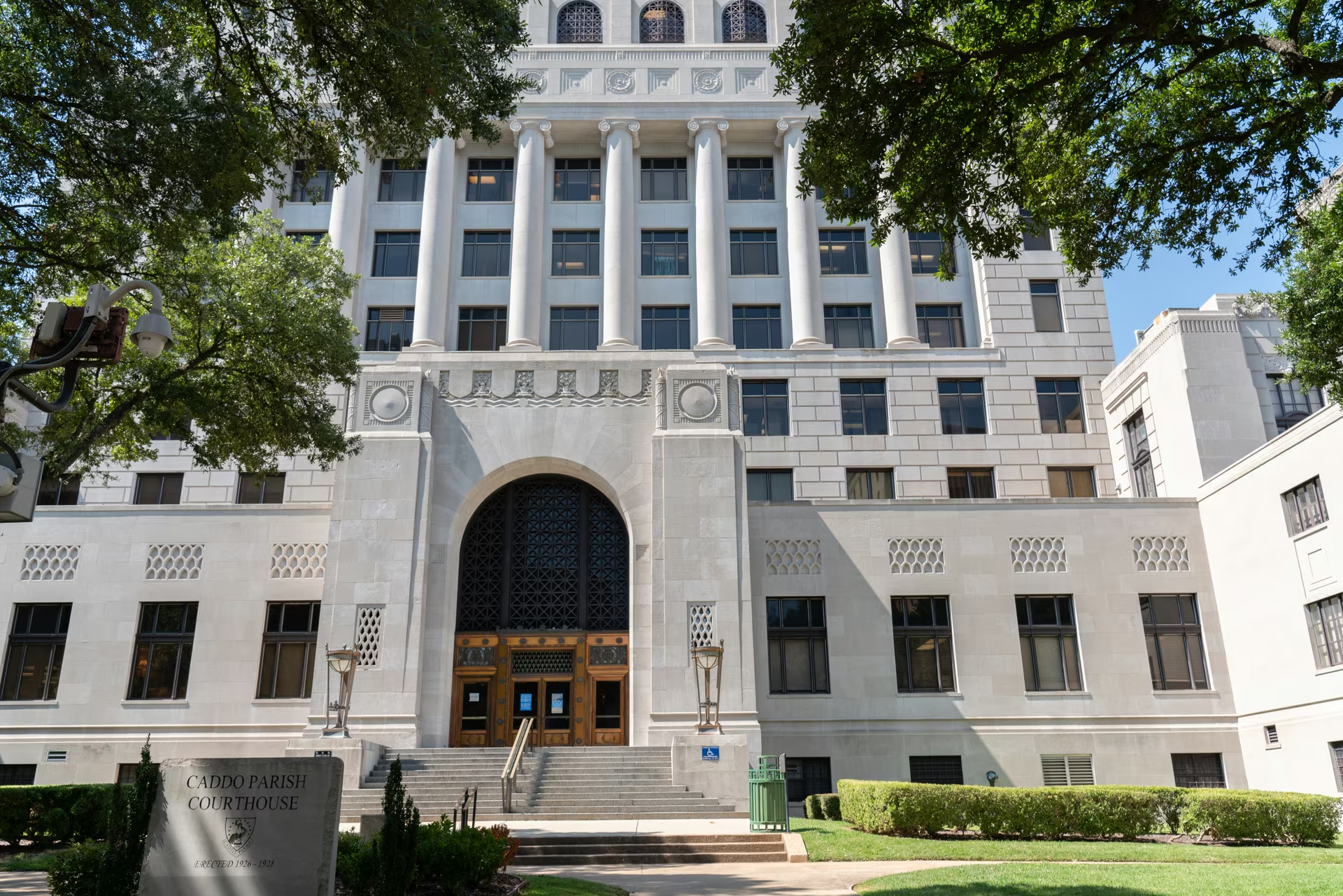
Most Caddo Parish injury cases stay in state court; federal court is the exception, and our guide to filing in Caddo or Bossier explains when a case belongs there. One thing that can trip you up: if you were hurt across the river in Bossier Parish, your case goes to the 26th Judicial District Court at the Bossier Parish Courthouse, 204 Burt Boulevard in Benton, not to Caddo. The federal court does not split at the river the way the state courts do: the U.S. District Court for the Western District of Louisiana sits at the Tom Stagg United States Court House, 300 Fannin Street, and its Shreveport Division serves Caddo and Bossier along with Bienville, Claiborne, DeSoto, Red River, Sabine and Webster parishes.
Local Work and Road Hazards
From 2018 through 2022, Caddo Parish had 46,721 reported crashes, including 208 fatal crashes and 537 crashes with suspected serious injuries, according to the Northwest Louisiana regional safety action plan.
Stretches of I-20 in Caddo Parish, including the stretch from I-49 to Jewella Avenue, are on the parish’s high-injury network in the 2025 Northwest Louisiana regional safety action plan. If someone other than your employer or a co-worker caused your on-the-job injury, you may also have a civil claim against that third party on top of workers’ compensation (La. R.S. 23:1101). When workers’ comp and a third-party claim both apply explains how the two work together.
Shreveport Practice Areas
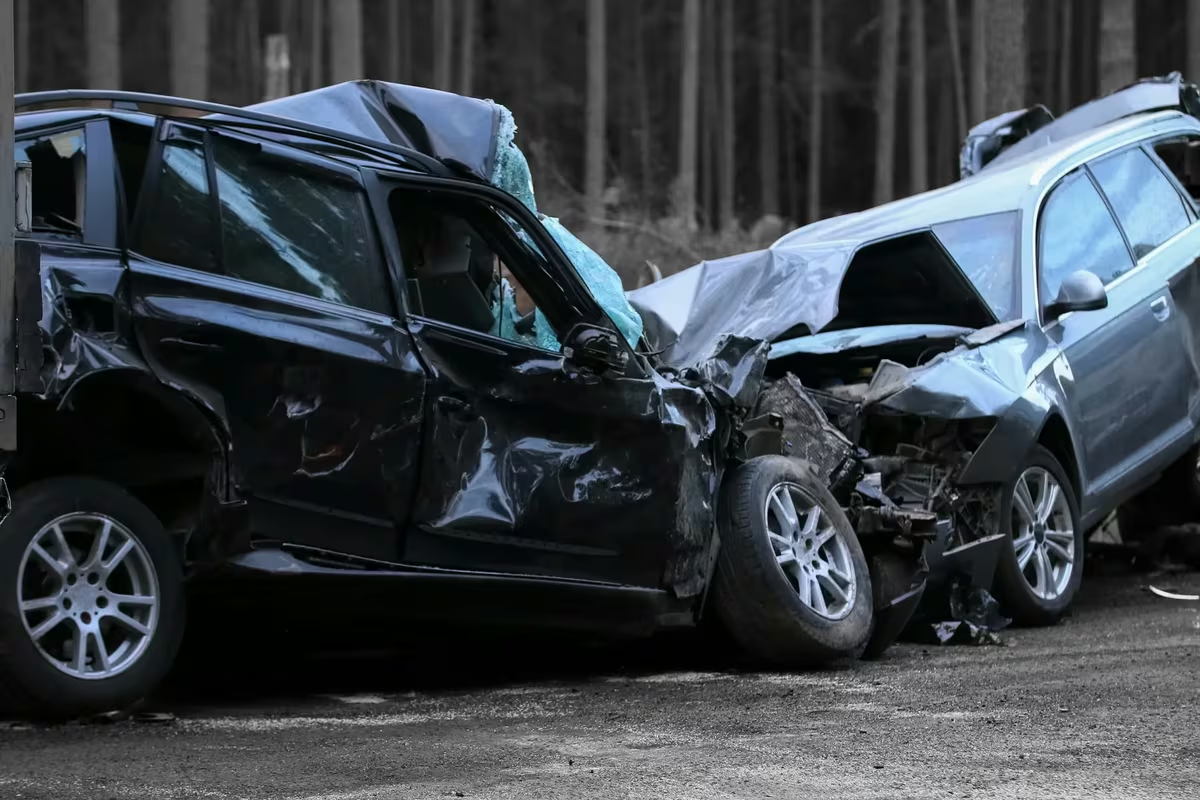 Car AccidentsRear-end, intersection, and highway collisions across Louisiana.
 Truck Accidents18-wheeler and commercial-vehicle wrecks governed by federal trucking rules.
 Catastrophic InjuryBrain, spinal-cord, amputation, and severe-burn injuries that change a life.
 Wrongful DeathClaims brought by families after a fatal accident or act of negligence.
 Premises LiabilitySlip-and-fall and unsafe-property injuries on someone else's premises.
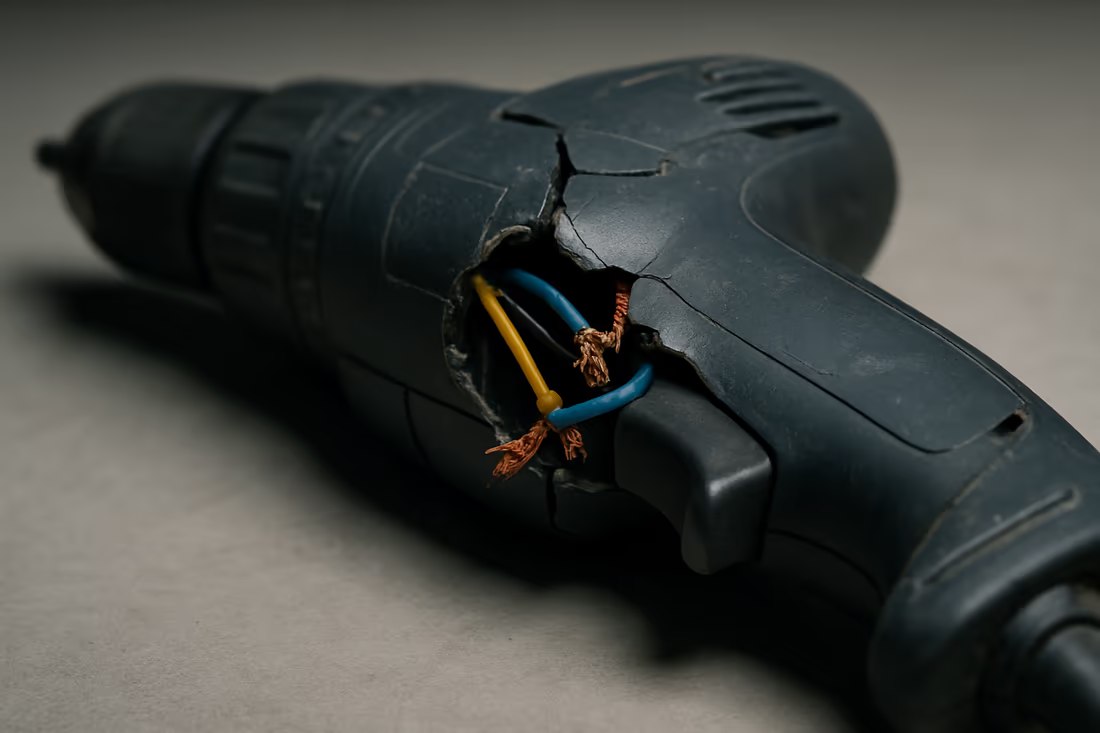 Product LiabilityInjuries caused by defective or unreasonably dangerous products.
 Oilfield AccidentsDrilling, pipeline, and refinery injuries across the energy sector.
 Industrial AccidentsPlant, warehouse, and heavy-equipment injuries in industrial settings.
 Offshore AccidentsRig, platform, and vessel injuries beyond the shoreline.
Proving Negligence
To collect compensation, you have to prove the other side was negligent. Negligence is a plain idea dressed in legal clothes: somebody failed to use reasonable care. There are four pieces to it, and you need all four.
- Duty. The other person owed you a duty of care. A driver owes one to everyone else on the road, from the next car on I-20 to the person in the crosswalk. A store owner owes one to the people walking its aisles.
- Breach. They failed that duty. Running the light at Line Avenue and Kings Highway is a breach. Leaving a wet floor with no sign is a breach.
- Causation. The breach is what hurt you. We have to draw a straight line from what they did to what happened to your body.
- Damages. You actually suffered a loss. No measurable injury, no claim.
When the Other Side Broke a Safety Law
In Louisiana, breaking a safety law, such as running a red light, is not automatic proof of negligence (Faucheaux v. Terrebonne Consol. Gov’t, 615 So.2d 289 (La. 1993)). The law that was broken shows what the other side should have done, but liability still depends on whether that law was meant to prevent the kind of harm you suffered and whether the violation legally caused your injury. Determining fault in a Louisiana truck accident explains how a violation is used.
Intentional Torts
If someone hurt you on purpose, such as an assault or battery, the claim is an intentional tort, and your own carelessness does not reduce what you recover from the person who hurt you on purpose (La. C.C. Art. 2323(C)). What is an intentional tort explains how those claims work.
Louisiana’s Comparative Fault Law
For causes of action arising on or after January 1, 2026, Louisiana applies a modified comparative fault system under La. C.C. Art. 2323. If you are found 51% or more at fault, you collect nothing. If you are 50% or less at fault, your damages are reduced by your share.
If your injury happened before January 1, 2026, the old rule applies. Your damages are reduced by your fault percentage, however high, but you are never barred outright.
Louisiana Tort Reform: What Changed and When
Louisiana rewrote a good chunk of its injury law between 2024 and 2026. These are the changes that touch a Caddo Parish claim.
Filing deadline. For injuries after July 1, 2024, you have two years to file suit (La. C.C. Art. 3493.1). That replaced a one-year deadline that had stood since 1825. Product liability claims get the same two years. If you were hurt on or before July 1, 2024, the one-year deadline still governs you. Being under 18 does not stop the clock for most claims, so a parent or tutor has to file within the same two years (La. C.C. Art. 3468). Louisiana calls this a prescriptive period. Miss it and the case is usually dismissed no matter how clear the fault.
No Pay, No Play. Since August 1, 2025, a driver who was uninsured when hit cannot collect the first $100,000 in bodily injury damages or the first $100,000 in property damage, even when the wreck was entirely the other driver’s doing (La. R.S. 32:866). What the No Pay, No Play rules mean explains who it covers.
Causation standard. For injuries on or after May 28, 2025, the fact that you had no similar symptoms before the accident no longer creates a presumption that the accident caused your injury (La. Code Evid. Art. 306.1). You now need medical or expert testimony to prove it. Getting seen quickly, and going back when the doctor says to, carries more weight than it used to.
Medical expenses. In lawsuits filed on or after January 1, 2026, past medical bills paid by health insurance or Medicare are limited to what was actually paid, plus your own deductibles and co-pays. The old rule that added 40% of the difference between the billed and paid amounts is gone (La. R.S. 9:2800.27). This change turns on when the suit is filed, so it reaches 2025 injuries whose suits are filed in 2026.
Claims Against a City, Parish, or State Agency
Wrecks with city, parish, or state vehicles, and injuries caused by a defect on a public road or public property, follow extra rules. In Caddo Parish, the state transportation system is run by the Louisiana DOTD’s Shreveport District (District 04) in Bossier City.
- Same deadline. A public body gets no shorter clock. The ordinary two-year period applies (La. R.S. 13:5108).
- Service within 90 days. After the suit is filed, service on the public body has to be requested within 90 days, or the case against it is dismissed (La. R.S. 13:5107).
- Damages cap. Total damages other than medical care, lost earnings, and property damage cannot exceed $500,000 per injured person (La. R.S. 13:5106).
- Road and property defects. When a road defect or a hazard on public property causes the injury, such as a broken public sidewalk, a pothole, or a hazard inside a public building, the agency is liable only if it knew, or should have known, about the defect and had a reasonable chance to fix it (La. R.S. 9:2800).
Damages You May Recover
Once negligence is proven, there are two main kinds of damages you can collect.
Economic damages are the losses with a receipt attached: medical bills, repair estimates, and the pay stubs and wage records your employer keeps. Barksdale Air Force Base, Willis Knighton and Ochsner LSU Health Shreveport are the Shreveport-Bossier area’s three largest employers, according to HUD’s 2024 market analysis, and the major-employer list also includes Walmart, the City of Shreveport, Horseshoe Bossier City and CHRISTUS Highland.
- Past and future medical costs
- Rehabilitation costs
- Lost wages and income
- Lost earning capacity
- Property damage
Non-economic damages cover the harm that does not come with an invoice. The pain when you get out of bed. The anxiety at the intersection where it happened. Not being able to hunt, fish, or hold your grandchild the way you did.
- Pain and suffering
- Mental anguish
- Emotional distress
- Loss of enjoyment of life
- Loss of companionship and support
Punitive damages are a separate category meant to punish, not to compensate. Louisiana allows them only when a statute authorizes them (Ross v. Conoco, Inc., 828 So.2d 546 (La. 2002)), so they are not on the table in most claims. The statute injury victims meet most often is La. C.C. Art. 2315.4, for a crash caused by a drunk or impaired driver; when punitive damages apply in a Louisiana crash case explains what it takes.
Claims against private defendants, including most car, truck, and premises cases, have no damages cap in Louisiana. The two common exceptions are claims against a public body, covered in Claims Against a City, Parish, or State Agency above, and medical malpractice claims; Louisiana’s medical malpractice damages cap explains that limit.
What Shreveport Clients Say
- Crystal CeeCee Moore
My family and I rate Trey Morris Injury Lawyers a 10 out of 10.I specifically appreciate their prompt responses and attention to details to ensure permanent resolutions.
- Heather Kanada
Very diligent!The attorney and team stayed on top of our case and always kept us informed on next steps.
- Shannon Warner
Attorney Lane Robinson and His wonderful assistant Erin Talley done a wonderful job assisting me with my injury case.They kept me informed weekly. Erin, called with deep concern of my condition and progress. This meant a lot to me because I've used other's and they didn't care if anything changed. But they were wondering and I'm grateful, Thank so much for you help. Highly recommend 5 stars in my book.
- Suzanna Wilson
They are awesome lawyers!!..They represented my sister with her case.Treated her as family from the beginning to present… Highly Recommend.
- mia white
Great customer service!Everyone there is so helpful and kind. Will definitely be recommending to friends and family.
- Wendy Sloan
We are extremely pleased with our attorney Trey Morris and his associates, shout out to Kylie, we love her.They made our painful time easier to deal with. I highly recommend.
- Baseball for Life
My wife was involved in a car accident.We needed help when the insurance company was not cooperating. Everyone there is great. They told us they would handle everything and they did. It was a relief, not having to worry about anything I highly recommend them.
- Rhonda Snodderly
I'm very happy with them, my lawyer Mr.Robinson is very professional and kind, his assistant Lisa is great. I'm thankful for them.
- Jaime Baker
Very professional, informative, and helpful!A great group of people there to help with anything to the best of their abilities.
- Montrell Ambers
I feel like they are my second family.Since they took my case over it has been a great experience knowing that I get to talk with Mr. Trey Morris personally and anything I have a problem with he is quick to aid and help me with whatever problem. I will recommend anyone to this law firm!!!!
- Amie Baham
I have used the firm a couple of times and the care and support that they provide is beyond outstanding.I would (and do) highly recommend them to friends and family!
- Colton Castilo
Very friendly staff.They handled my case promptly and in a very professional manner. Highly recommended.
Common Injuries
Physical injuries run from soft tissue strains to injuries that change the rest of your life. The ones we see most:
- Traumatic brain injury
- Spinal cord injury
- Neck and back injuries, including herniated discs
- Broken bones
- Amputation
- Severe burns
- Internal injuries
- Scarring and disfigurement
Not every injury shows up at the scene. Concussion symptoms, internal bleeding, and disc injuries can take days to surface.
Psychological injuries count under Louisiana law too. Anxiety, depression, post-traumatic stress disorder, and adjustment disorder all follow serious accidents. To support a claim, they need a diagnosis and documentation, usually from a licensed mental health professional.
What to Do After You Are Hurt in Shreveport
1. Get medical attention
- Get evaluated even if you do not think you were seriously hurt.
- Keep every follow-up appointment and do what the doctor tells you.
Seeing a doctor right away does two things. It protects your health, and it creates a dated record that ties your injuries to the accident. A gap in treatment is one of the first things an adjuster will point to. For the worst injuries, traumatic brain injury, spinal cord damage, severe burns, multiple fractures, the Level I trauma center at Ochsner LSU Health Shreveport on Kings Highway, state-designated for northwest Louisiana, is where you want to be. Recovery can continue at one of the six inpatient rehabilitation facilities Medicare lists in Caddo and Bossier parishes, such as Willis Knighton’s 31-bed rehabilitation hospital at 1111 Line Avenue.
2. Report the incident
- At work, tell your supervisor in writing.
- At a store, casino, or apartment complex, ask the manager to write up an incident report and give you a copy.
- A formal report proves the accident happened.
3. Gather evidence
- Photograph the scene, the hazard or equipment that hurt you, and your injuries if you are able.
- Get the names and numbers of anyone who saw it.
4. Talk to a lawyer before you talk to the other side’s insurance company
- Adjusters call fast, sometimes the same day.
- Their job is to close your claim for as little as possible.
- A recorded statement given before you know how badly you are hurt can be used against you later.
- A lawyer can walk you through that call before it happens.
5. Track deadlines and preserve claim documents
- Put pharmacy receipts, a mileage log for medical visits, and every letter or email from an insurer in one folder.
- Ask your providers for complete records and itemized bills, not just visit summaries.
- Getting organized early helps us value the claim and keeps a deadline from sneaking up on you.
How a Lawyer Helps With an Injury Claim
Most of a plaintiff’s lawyer’s work is evidence, paperwork, and deadlines, and it matters most early, while the proof still exists.
- Preserving evidence. Stores, plants, and trucking companies keep surveillance video, maintenance logs, and incident reports on their own schedules. We send written requests asking them to keep that video and those records. We aim to send those letters once there is a sound basis for one, and we move as fast as the law permits, because that footage and those logs can show how you were hurt and whether the company knew about the danger beforehand.
- Finding everyone responsible. A fall at an apartment complex can involve the owner, the management company, and a contractor. A plant injury can involve a contractor or an equipment maker as well as your employer. Each one carries its own insurance, and missing one can leave part of the claim uncollected.
- Proving what the injury costs. We gather the medical records, itemized bills, and wage records. In serious cases we work with doctors and economists to put a number on future care and lost earning ability.
- Handling the insurers. Calls, letters, and records requests go through us, so you are not trading calls with an adjuster while you recover.
- Watching the deadlines. The two-year filing deadline and the 90-day service rule for public bodies are tracked throughout the case.
Dealing With the Other Side’s Insurer
The person or company that hurt you rarely pays the claim itself. A store’s liability insurer, a trucking company’s carrier, or a contractor’s policy usually handles it, and the adjuster works for that insurer. Two things are worth knowing before the first call:
- An early offer counts only the bills that exist. An offer made while you are still in treatment cannot include the surgery you have not had yet or the work you will miss next month. A low first offer is the opening of the negotiation, not the end of it.
- A medical authorization can reach your whole history. Adjusters often send a broad release form. Signing it can let them collect records that have nothing to do with this injury. We send the records that relate to the claim instead.
How a Shreveport Injury Case Moves
Most claims follow the same path, though not every case reaches every stage:
- Investigation. We gather the incident report, photos, witness names, and records, and send the preservation requests.
- Treatment. You finish treatment, or reach the point where your doctors can say what care you will need going forward. That is when the claim can be valued.
- Demand. We send the insurer a demand package: medical records and bills, lost wages, and the case for fault.
- Negotiation. The insurer responds, and offers go back and forth. Many claims settle here.
- Lawsuit. If the offer does not cover the harm, or the deadline is getting close, we file suit in the court where the case belongs, usually the First Judicial District Court for Caddo Parish.
- Discovery. Both sides exchange documents, answer written questions, and take depositions, including the doctors’. What discovery involves.
- Mediation and trial. Before trial, the two sides often meet with a mediator. A case that does not settle there is tried.
Will Your Case Go to Court?
Most injury claims settle without a trial, and filing suit does not mean a trial will happen. Many cases settle during discovery or at mediation, once both sides have seen the evidence.
If yours is tried, a jury or judge decides fault and what the injuries are worth.
Whether to accept an offer or go to trial is your decision. We tell you what we think the case is worth at trial, the risks, and how long it would take, and you decide. Settling versus going to trial walks through how that choice is usually weighed.
Why Choose Trey Morris Injury Lawyers
We have practiced personal injury law in Shreveport since 2002. Shreveport had about 175,900 residents in 2025, the Census Bureau estimates, nearly all of them in Caddo Parish and a small part across the parish line in Bossier Parish. We handle cases in Caddo Parish, Bossier Parish, and across Northwest Louisiana.
The firm is a member of the Multi-Million Dollar Advocates Forum, a national organization that recognizes trial attorneys for significant case results, and it holds national and statewide recognition for motor vehicle and personal injury verdicts across several consecutive years. Our case results are public, and you should read them before you decide who to call.
Your Shreveport Trial Team
The lawyers who work your file. Every Shreveport case is handled by the firm's own trial attorneys.









How to Request Records in Caddo Parish
The hospitals, police agencies, and courts that touch a Shreveport injury claim are listed in the sidebar.
Accident reports. The Shreveport Police Department lists its crash report fee at $20 per report. Allow about 3 to 10 business days, then buy the report at BuyCrash or at the SPD Information Services Bureau, 1234 Texas Avenue; questions go to (318) 673-7084. If the Louisiana State Police worked the crash, the report is sold at crashreports.dps.la.gov for $11.50 plus a card charge, 10 to 15 business days or more after the crash. If the Caddo Parish Sheriff’s Office worked it, sheriff’s crash reports cost $5.00 for two pages or less, $8.50 for a longer report, and $15.00 for a fatality report, online or at the Criminal Records Division in the Caddo Parish Courthouse. If you are not sure which agency showed up, give us the date, the location, and the names, and we will pull the report.
Court filings. The Caddo Parish Clerk of Court accepts civil lawsuits by e-filing as well as in person.
Driving records. Driving and vehicle registration records come from the Louisiana OMV ExpressLane portal. For license reinstatement or vehicle registration in person, the state Office of Motor Vehicles’ Shreveport office is at 6005 Financial Plaza, Suite 100, phone (318) 688-6807, open weekdays from 8 a.m. to 4 p.m.