






Bossier City wrecks happen on I-20 and I-220, on Airline Drive and Benton Road, on Barksdale Boulevard and East Texas Street through the older part of town, and around Barksdale Air Force Base. Willis Knighton Bossier on Hospital Drive handles the emergency care on this side of the river, and the worst injuries, such as a severe head or spine injury, go across the river to the Level I trauma center at Ochsner LSU Health Shreveport. The Bossier City Police Department writes the report inside the city limits, and the Bossier Parish Sheriff’s Office writes it on parish roads. A suit over a Bossier City crash can be filed in the 26th Judicial District Court, which sits at 204 Burt Boulevard in Benton rather than in Bossier City. Trey Morris Injury Lawyers is at 1815 Benton Road.
Results for Louisiana Clients
- $49 MillionMotor Vehicle Accident
An impaired driver of a stolen vehicle driving the wrong way collided with our client head-on, resulting in brain injury and multiple broken bones.
- $12.1 MillionMotor Vehicle Accident
A commercial vehicle failed to stop at a red light subsequently crashing into our client causing serious brain injury and permanent loss of function.
- $7 MillionMotor Vehicle Accident
When the other vehicle struck our client, the result was a major hemorrhage and a stroke.
- $6.25 MillionMotor Vehicle Accident
A fatigued commercial-vehicle driver fell asleep at the wheel and rear-ended our client, leaving our client with severe neck and back injuries.
- $3.3 MillionMotor Vehicle Accident
Motor vehicle collision. Details not publicly disclosed.
- $3 MillionMotor Vehicle Accident
Out on the highway, the at-fault driver hit our client.
Past results do not guarantee future outcomes; each case is decided on its own facts.
How Trey Morris Injury Lawyers Handles a Bossier City Car Accident Claim
Trey Morris Injury Lawyers has handled injury claims on both sides of the Red River for years, and our case results are public. A consultation should end with you knowing how the claim will run. We name the attorney who works your file instead of handing you a team with no faces, give you a way to reach that person, and set the schedule for updates.
We pull the crash report from the Bossier City Police records division, photograph the vehicles, the scene and its sightlines, and find the witnesses. Once the facts give an honest basis for it, we send a preservation letter. It asks the other driver and the insurer to keep the vehicle and its event data, and asks the businesses facing the intersection to hold their camera video, since together those records show speed, signal timing and who had the right of way. Then we value the claim against the medical records, the fault evidence, and the coverage that is actually reachable.
Nobody can promise you an outcome. Results turn on facts, fault, and coverage that develop as the case goes, and any Louisiana lawyer who guarantees you a number is guessing with your money. The fee agreement is in writing before you commit to anything. We litigate the cases that do not settle and try them in Louisiana courts when an insurer refuses fair value. Trey Morris has a background page you can read before you ever pick up the phone.
Local Office. Statewide Record.
- 26th JDC
Where your case is filed
Bossier City injury suits are filed in the 26th Judicial District Court. We file and try cases there from our Bossier City office.
- 11
Trial attorneys, one team
Your case is handled by the firm's own trial attorneys, and we respond in minutes, 24/7.
- 24/7
We come to you
Hospital, home, or the office at 1815 Benton Rd. Free case review, and no fee unless we win.
- 127
Cases resolved over $1 million
Verdicts and settlements of $1 million or more, won by the same trial team that handles Bossier City cases.
What Does a Bossier City Car Accident Lawyer Actually Do?
A car accident lawyer takes over the parts of a claim you cannot work while you are healing: proving what happened, putting a number on the harm, handling the adjusters, and filing suit when the numbers do not add up.
Investigation and evidence collection
The first job is capturing the crash before it disappears. Skid marks on Airline Drive wash out with one hard rain. The camera at the gas station or the store facing your intersection usually overwrites its video in days or weeks. Witnesses forget the order of events, change phone numbers, and move to Haughton or out of state. The filing deadline is the outer limit, not the plan: the proof degrades long before it runs out.
Local knowledge shortens the distance between the wreck and the proof of how it happened. An attorney who works Bossier City crashes knows which corridors have camera coverage, which businesses along Barksdale Boulevard keep usable footage, and how the Bossier Parish courts and the local carriers handle these claims. Someone close by can stand in your intersection at the same hour the crash happened, photograph the road conditions and the sightlines, and knock on doors in Shady Grove or Golden Meadows while people still remember the noise.
If your wreck was last week, go back to the businesses facing that intersection today, ask whether they still have the footage, and write down the manager’s name.
Insurance negotiation
Most claims here settle with an adjuster rather than in front of a jury. Your lawyer builds a demand package: medical records, billing summaries, wage-loss documentation, and a written explanation of why the claim is worth what it is worth. Adjusters open low, and a demand backed by treatment records and a clean liability story is harder to discount than a phone call from an unrepresented driver. Start a folder now for every bill, every mileage entry, and every day of work you missed.
How long does a car accident settlement take?
A clean liability case with treatment finished can settle in a few months. The biggest driver of timing is your medical care. Cases that need a lawsuit, expert testimony, or a trial run longer, often a year or more.
What Louisiana Laws Affect a Bossier City Car Accident Claim?
Three Louisiana statutes decide most of what a Bossier City crash claim is worth, and each one can shrink or erase what the at-fault driver’s insurer ever pays. Before an adjuster tells you the policy limit is the whole story, Trey Morris Injury Lawyers reads your file against all three.
How comparative fault works under La. C.C. art. 2323
Under La. C.C. art. 2323, everyone involved in the crash is assigned a share of responsibility, and your damages drop by your own share. A driver found 20 percent at fault on a $100,000 claim collects $80,000. For causes of action arising on or after January 1, 2026, the rule has a hard ceiling: a plaintiff who is 51 percent or more at fault collects nothing, while a plaintiff at 50 percent or less has damages reduced by the assigned percentage rather than barred.
Liability minimums under La. R.S. 32:900
Every driver registering a vehicle in Louisiana must carry minimum liability coverage under La. R.S. 32:900, set at $15,000 per person for bodily injury, $30,000 per accident for bodily injury, and $25,000 for property damage. A serious injury treated at Willis Knighton Bossier routinely runs past a $15,000 per-person limit, so the at-fault driver’s policy is often only the first source of payment.
The No Pay, No Play bar under La. R.S. 32:866
Louisiana’s No Pay, No Play law, La. R.S. 32:866, bars a driver who failed to carry required insurance from recovering the first $100,000 in bodily injury damages or the first $100,000 in property damage from the crash, whether from the at-fault driver or that driver’s insurer. In most crashes the bar applies even when the other driver caused the wreck, so an uninsured Bossier City driver hit by a negligent motorist on Benton Road can lose the first $100,000 of a bodily injury award. The statute lifts the bar when the other driver is cited for drunk driving in the crash and then convicted or pleads no contest, caused the crash on purpose, fled the scene, or was in furtherance of a felony when the crash happened, and when your vehicle was not being operated and was not in violation of the state motor vehicle laws at the time.
What Is the Statute of Limitations for Car Accident Claims in Bossier City, Louisiana?
Louisiana measures the deadline to file a car accident lawsuit from the day you were hurt: you have two years from that day to file suit under La. C.C. art. 3493.1. Louisiana calls this deadline a prescriptive period. Two years covers the ordinary Bossier City auto claim, bodily injury and property damage alike. Miss it and the claim is barred, no matter how clear the other driver’s fault was. The date of your crash sets the clock, not the date you hire an attorney.
Deadlines for Claims Against Government Vehicles or Public Entities
A claim involving a government vehicle or a public entity follows procedural steps that a routine driver-versus-driver case does not. If a Bossier City municipal vehicle, a parish vehicle, or a state vehicle was in the wreck, you are pursuing a public defendant, and the path is not identical to a claim against a private motorist. The two-year prescriptive period in La. C.C. art. 3493.1 still sets the outer filing window, but if a marked city, parish, or state vehicle was involved, get your deadlines confirmed now rather than assuming the standard period leaves you room.
What Should You Do Immediately After a Car Accident in Bossier City?
The steps below protect your health first and your claim second, and they work the same whether the wreck happened on Airline Drive, at a light on Barksdale Boulevard, or on a side street in Stockwell Place.
Call 911 and report the crash
Call 911 from the scene if anyone is hurt or if vehicles are blocking traffic. In Louisiana, drivers must report a crash to police when it involves injury, death, or apparent property damage at or above a statutory threshold. When you are unsure, call.
A reported crash produces an official record that locks in the date, the location, and the parties before anyone’s story shifts. Move the cars out of the lane if you can do it safely, but do not leave the scene before officers arrive and clear you to go, and write down the responding officer’s name and the report number before you drive away.
Get medical care even if symptoms seem minor
Get seen the same day when you can, even if you are only sore and rattled. Adrenaline hides pain for hours after a collision, and whiplash, concussions, and soft-tissue injuries often surface the next morning. A same-day or next-day evaluation creates a medical record that starts at the crash.
Gaps in treatment are the first thing an insurer points to when it wants to argue you were not really hurt, or that the injury came from something else. Follow the treatment plan your provider gives you, keep every appointment, and keep your own copies of everything.
Exchange information and document the scene
Get the other driver’s name, license number, license plate, insurance carrier, and policy number. Photograph the vehicles, the damage, the road, the traffic signals, the skid marks, and any injury you can see.
Where Do Car Accidents Commonly Happen in Bossier City?
Bossier City crashes cluster where traffic volume, merging, and speed differences are highest. The Louisiana Traffic Records Summary Report for 2024 counted 4,257 crashes in Bossier Parish, 1,256 of them injury crashes. Knowing where collisions concentrate tells you what an investigation will have to reconstruct about yours.
I-20 and I-220 Crashes
Interstate 20 runs east and west through Bossier City and carries commuter and commercial traffic between Shreveport, the Louisiana-Texas corridor, and points east. High speeds, lane changes bunched near the Red River crossing, and on-ramp merging produce rear-end and sideswipe collisions. Interstate 220 loops to the north and feeds traffic between I-20 and Benton Road, adding more merge points where speed differences turn into contact. Interstate wrecks pull in extra vehicles because traffic moving at highway speed cannot stop once a chain reaction starts.
Airline Drive and Benton Road Accidents
Airline Drive (US 71) and Benton Road (LA 3) are two of the busiest arterials in the city, lined with retail, restaurants, and driveway after driveway. Those curb cuts and the turning movements at commercial entrances are where paths cross. Left-turn and rear-end collisions are the pattern on both corridors, worst at the shopping and commute hours when traffic stacks up behind the signals.
Barksdale Boulevard and East Texas Street Collisions
Barksdale Boulevard and East Texas Street carry traffic through the older, established parts of the city around Downtown Bossier, with closely spaced intersections and cars parked at the curb. Local traffic, people on foot, and drivers pulling into and out of parking make angle and rear-end crashes common. The signalized intersections along both routes are frequent collision points when a driver misjudges a yellow light or turns across traffic without yielding.
Shed Road, Industrial Drive, and High-Traffic Intersections
Shed Road and Industrial Drive tie the commercial and light-industrial areas together, which puts delivery vehicles and work trucks in the same lanes as passenger cars. Where those routes meet the major arterials, you get T-bone collisions from a run signal or a misjudged gap.
Crashes Near Barksdale Air Force Base and Shopping Areas
Traffic near Barksdale Air Force Base surges at shift change, concentrating vehicles at the gates and on the surrounding feeder roads. The shopping districts along the major corridors pull heavy weekend and holiday traffic into parking lots and entrance lanes, where low-speed turning and backing collisions happen constantly. The areas near the casinos and entertainment venues add late-night traffic, which raises the share of impaired-driving crashes on weekends.
These patterns matter because the road, the traffic conditions, and the hour all shape how a collision happened and who answers for it.
What Types of Car Accident Cases Do Bossier City Lawyers Handle?
Car accident attorneys in Bossier City handle everything from a parking lot tap at a shopping center to a pileup at highway speed on I-20. The crash type matters because it decides how fault gets proven, which parties are in the case, and what evidence has to be locked down first.
Rear-End and Intersection Collisions
Rear-end collisions are among the most frequent crashes lawyers here see, usually tied to following too closely, a sudden stop, or distracted driving. The trailing driver is generally presumed at fault, but that presumption can be rebutted, which is why the damage pattern and any sudden lane change get picked apart.
Intersection collisions raise the harder question of who had the right of way. Signal timing, stop sign placement, and what witnesses say about who entered first all carry weight. These cases turn on the two seconds before impact, so photographs of where the cars stopped and what the signals were doing matter immediately.
Head-On and T-Bone Crashes
Head-on collisions produce the worst injuries because the closing speed combines both vehicles. They come from a driver crossing a center line, going the wrong way, or losing control, and the fault analysis focuses on which driver left their lane and why.
T-bone crashes, also called side-impact or broadside collisions, happen at intersections when a driver fails to yield. The point of impact on each vehicle shows the angle of entry and helps establish who had the green light. Side impacts injure the occupants on the struck side, so where you were sitting becomes part of the medical and the liability picture both.
Drunk and Distracted Driving Accidents
When the at-fault driver was impaired or distracted, the conduct can go past ordinary negligence. Under La. C.C. art. 2315.4, exemplary damages are available in Louisiana when an injury is caused by the wanton or reckless disregard of an intoxicated motor vehicle operator whose intoxication was a cause in fact of the injury, and there is no statutory cap on that amount. That makes evidence of intoxication, such as breath test results, arrest records, and bar or casino receipts, worth preserving from day one.
Distracted driving cases usually come down to cell phone records, texting timestamps, and dashcam or surveillance footage. Proving a driver was looking at a screen instead of the road takes data that disappears if nobody requests it quickly.
Hit-and-Run and Multi-Vehicle Pileups
A hit-and-run case starts with identifying a driver who left the scene. Investigators work from partial plate descriptions, traffic camera footage, paint transfer, and video from the businesses nearest the crash. When the driver is never found, your own uninsured motorist coverage usually becomes the path forward.
Multi-vehicle pileups, the kind the interstates produce in fog and hard rain, mean sorting out a chain of impacts and splitting fault among several drivers. Each driver’s account, the sequence of collisions, and the physical evidence at every impact point all factor in. Several insurers end up in one file, which is why early scene documentation carries so much weight.
Commercial Truck Accidents
Commercial truck and 18-wheeler crashes are their own category. They bring in a corporate employer, federal motor carrier regulations, and electronic logging and engine data that has to be preserved before the company’s routine cycle overwrites it. If a commercial truck hit you on I-20 or I-220, bring the carrier name and any truck or trailer number you saw so the preservation letter can name those records.
What Injuries Are Common After Bossier City Car Accidents?
Car crashes produce a predictable range of injuries, from soft-tissue strains that clear up in weeks to permanent brain and spinal damage. The ones below show up most often after wrecks on the interstates and the surface streets around Bossier City. Knowing how they present, and why some take days to surface, keeps you from the most expensive mistake there is: deciding that feeling fine means nothing happened.
Whiplash and neck injuries
Whiplash is what happens when a sudden force snaps your head forward and back, stretching the muscles, ligaments, and tendons of the neck past their normal range. Rear-end collisions are the classic cause, and the pain often does not start until that night or the next day, which is why people skip the emergency room.
Expect neck stiffness, reduced range of motion, headaches that begin at the base of the skull, and shoulder pain. Most whiplash improves with conservative treatment. A portion of cases turn chronic and take months of physical therapy.
Back injuries and herniated discs
The force of a collision can compress or twist the spine hard enough to herniate a disc, the cushioning pad between vertebrae. When the soft center pushes through the outer wall, it can press on nearby nerves and send pain, numbness, or weakness down an arm or a leg. Lower-back and lumbar injuries are common in the higher-speed wrecks on roads like I-20.
Disc injuries run from manageable with rest and therapy to severe enough for steroid injections or surgery. Imaging such as an MRI is what separates a strained muscle from structural disc damage, which is one reason a full diagnostic workup matters more than a quick look.
Traumatic brain injuries and concussions
A traumatic brain injury can happen when your head strikes the window, the steering wheel, or the airbag, and it can happen with no direct blow at all when the brain shifts inside the skull. A concussion is the most frequent form. The dangerous part is how quiet the symptoms are: confusion, gaps in memory, sensitivity to light, mood changes, trouble holding a thought.
Because brain injuries do not always show on a standard scan and can worsen over the following days, anyone who lost consciousness or feels disoriented after a crash needs to be evaluated without waiting. Untreated brain trauma leaves lasting cognitive and emotional effects.
Broken bones and orthopedic injuries
Fractures are the visible crash injuries. Arms, wrists, ribs, collarbones, and legs break under the force of impact, and where your body sat at the moment of collision usually decides which bones take the load. Hip and pelvic fractures turn up in side impacts and high-speed wrecks.
Some fractures heal with a cast and time. Others require surgical hardware, long rehabilitation, and leave permanent limits on how far you can walk or how much you can lift. Orthopedic injuries drive the largest medical bills in most car accident cases because of the surgery and the healing timeline.
PTSD, anxiety, and emotional trauma
Not every crash injury is physical. Post-traumatic stress, anxiety, and depression are recognized consequences of serious collisions. The symptoms are flashbacks, broken sleep, panic when driving or riding in a vehicle, and avoiding the road where the crash happened. People quietly stop taking their usual route down Benton Road and add fifteen minutes to every trip.
These conditions are real and treatable, and documented psychological care from a qualified provider is what establishes the harm. If you have been white-knuckling the drive since the wreck, say so at your next appointment and let it go in the chart.
Who Can Be Held Liable in a Bossier City Car Accident?
More than one party can owe you money after a Bossier City crash. The driver who hit you is the obvious defendant, but the law often reaches past that car. An employer, a road authority, a business that served alcohol to an underage driver, or a rideshare company’s insurer can each carry a share of the responsibility. Identifying every liable party early matters, because each one may bring separate insurance to the table.
Negligent and impaired drivers
Start with the at-fault driver. A motorist who ran a red light at Benton Road, followed too closely on I-20, or was texting behind the wheel can answer for the harm that careless conduct caused. A careful claim sorts out who was actually driving, what they were doing, and whether their conduct created an unreasonable risk. Those same facts decide which other parties get pulled into the case.
Employer and vicarious liability for commercial vehicles
When the at-fault driver was working at the time of the crash, the employer is frequently on the hook too. Under La. C.C. art. 2320, an employer answers for the negligent acts of an employee committed within the course and scope of employment. A delivery van, a service truck, or a company sedan running an errand for the business all fit the pattern. That matters because a commercial employer usually carries far higher liability limits than an individual driver. Proving the driver was on the clock at the moment of impact means pulling employment records, dispatch logs, and routing data before that evidence disappears. If the vehicle that hit you had a company name on the door, photograph the door.
Government entities for dangerous road conditions
Sometimes the road itself is part of the problem. A missing stop sign, a poorly designed intersection, standing water from a broken drain, or a pothole nobody repaired can contribute to a wreck. When a public body controlled the roadway and the defect sat there long enough to be noticed and fixed, its role becomes a focus of the investigation rather than an add-on to the driver claim. A lawyer who handles these matters photographs the hazard before conditions change, requests maintenance records, and confirms which entity controlled that stretch of Bossier City street or state highway. That groundwork is what tells you whether a claim against a governmental body is worth bringing at all.
Alcohol sellers and drunk-driving crashes near the casinos
When a drunk driver causes a collision, the focus lands on that driver and on the conduct that caused the wreck. A bar, restaurant or store with an alcohol permit is not liable for injuries a customer of legal drinking age causes off the premises because of intoxication, even if the customer was visibly drunk when served (La. R.S. 9:2800.1). The protection does not apply to a seller that forced the drinking or falsely said a drink had no alcohol, and it does not cover serving someone under the legal drinking age.
Rideshare and delivery driver liability
Rides ordered through Uber or Lyft and meals brought by app-based delivery services put a layer of corporate coverage behind the individual driver. The driver’s status at the moment of the crash drives the analysis. Whether the driver was logged in and waiting for a request, on the way to a pickup, or carrying a passenger decides which policy applies and how much coverage is available, and the coverage is lower while a driver is only waiting for a request. The same course-and-scope principle under La. C.C. art. 2320 can reach delivery drivers working for a company. Pinning down the app data, the trip status, and the employment relationship determines which insurer pays and how much is on the table. If you have a ride receipt or a delivery confirmation, save the screenshot.
How Do Bossier City Car Accident Lawyers Prove Liability and Recover Compensation?
A Louisiana car accident claim comes down to proof. Your attorney has to show that another driver did something a careful driver would not have done, and that the conduct caused the injuries that followed. Every piece of that story needs evidence.
Securing police reports, witness statements, and crash photos
The first layer of proof is the contemporaneous record. The crash report prepared by the responding officers documents the location, the vehicles, the reported sequence of events, and any citations issued at the scene. Witness statements catch what bystanders saw before memories soften and phone numbers go dead. Photographs of vehicle damage, skid marks, debris fields, and roadway conditions freeze the physical scene in time.
Demonstrating breach of duty: drunk, distracted, and texting driving
Breach means showing the other driver did something a reasonable driver would not. Running a red light, following too closely, drifting across a center line, driving while impaired: any one of them can establish it. The proof changes with the conduct. A distracted-driving claim leans on phone records and the driver’s own admissions. An impaired-driving claim leans on field sobriety results, chemical testing, and the officer’s observations.
Tying the conduct to the crash is a separate job. Showing that a driver was texting or had been drinking is not enough by itself. The proof has to run in a chain from the behavior to the impact to the injury.
Black box and cell phone data
Modern vehicles record themselves. An event data recorder, often called a black box, can log speed, braking, throttle position, and seatbelt use in the seconds before impact, and that data either confirms a driver’s account or contradicts it. Cell phone records and app logs can show whether a driver was texting or scrolling at the moment of the crash. A lawyer who knows the data exists asks for it by name.
Accident reconstruction and expert testimony
When fault is disputed or the physics of the crash matter, an accident reconstruction expert rebuilds the event from skid measurements, vehicle damage, road geometry, and recorded data, and calculates speeds, angles, and points of impact. That analysis can establish how the crash happened when the other side denies responsibility.
Medical and economic experts carry their own weight. A treating physician or a retained specialist explains how the crash produced the injury. A vocational or economic expert puts a number on lost earning capacity and the cost of future care. Reconstruction and expert work is expensive, and firms that rarely try cases tend to skip it.
Medical records connecting injuries to the crash
Damages have to be tied to the collision, and medical records do that work. They document the diagnosis, the treatment, the prognosis, and the timeline that runs back to the impact. A consistent record from the date of the crash forward is hard to dispute. The records connect the conduct to a dollar figure, covering both the cost of treatment and the harder things, like not being able to lift your child or sit through a full shift. Request a complete copy of your records from every provider you have seen and keep them in one place.
How Much Is a Bossier City Car Accident Case Worth?
A case is worth what the crash actually cost you, measured across hard expenses and human harm, then adjusted for your share of fault and the coverage you can reach. Two crashes that look identical on a police report settle for very different amounts because the injuries, the treatment, and the long-term effects differ.
Economic Damages: Medical Bills, Lost Wages, Future Care
Economic damages are the costs with a receipt behind them: emergency treatment, hospital stays, surgery, physical therapy, imaging, prescriptions, and the mileage back and forth to appointments. They also cover the wages you lost while you could not work and the earning capacity you lose if an injury keeps you out of your old job.
Future care is often the largest piece and the easiest to underestimate.
Non-Economic Damages: Pain and Suffering
Non-economic damages compensate the harm with no invoice: physical pain, mental anguish, loss of enjoyment of life, disfigurement, and the strain an injury puts on ordinary days. Louisiana refers to these as general damages, and in a serious-injury claim they are often the larger part of the case.
Wrongful Death and Punitive Damages
When a crash kills someone, Louisiana allows certain surviving family members to bring a wrongful death claim for their own losses, including loss of companionship and support, alongside a survival action for what the deceased endured before death. These are distinct claims with distinct damages, and they reach harms an ordinary injury claim does not.
Punitive-type damages are the exception rather than the rule in car accident cases. Most crashes produce compensatory damages only, because punitive awards are not available for ordinary negligence by a careless driver. Whether any punitive-type claim fits a given crash depends on the specific facts and the law that applies to those facts.
How Comparative Fault and Pre-Existing Conditions Affect Payout
Two factors regularly pull a case value down. The first is your share of fault, which reduces the award under Louisiana’s fault rules; for accidents on or after January 1, 2026, a share of 51 percent or more bars recovery. The second is a pre-existing condition. Insurers argue that a degenerative back or an old shoulder injury, not the crash, explains the symptoms. Aggravating a prior condition can be compensable, but proving the crash worsened it requires before-and-after medical evidence.
The strength of the documentation drives this part of the value. A clean record of consistent treatment after the crash, set next to prior records showing the earlier baseline, separates the new harm from the old.
Settlement Value vs. Trial Value
A claim has two numbers. Settlement value is what an insurer will pay to close the file without a verdict, discounted for the time, cost, and risk both sides avoid by staying out of court. Trial value is what a jury might award after hearing the full evidence, which carries the upside of a larger verdict and the risk of a smaller one or none at all.
How Do Insurance Claims Work After a Bossier City Car Accident?
Most Bossier City crash claims start and end with insurance, not a courtroom. You file with the at-fault driver’s liability insurer, your own coverages back you up when theirs falls short, and an adjuster decides what the claim is worth. Knowing how each step works is how you tell a fair offer from a low one.
Filing a Claim With the At-Fault Driver’s Insurer
After a crash, you report the loss to the at-fault driver’s bodily injury liability insurer. That carrier investigates fault, reviews your medical bills and property damage, and makes an offer. The adjuster’s job is to close the file for as little as possible, so the claim moves on their timeline until somebody pushes it.
One point trips up many Louisiana drivers: you usually cannot sue the insurer by name. Louisiana’s direct action statute, La. R.S. 22:1269, allows a lawsuit directly against the at-fault party’s insurance company only in limited situations, such as when the insured is bankrupt, insolvent, or deceased, cannot be served, or when the claim is against your own uninsured motorist carrier. In most cases the suit names the at-fault driver, and the insurer stays out of the caption.
Using Your Own UM/UIM Coverage
When the at-fault driver has no insurance or not enough to cover your injuries, your own uninsured and underinsured motorist coverage steps in. Louisiana requires UM/UIM coverage in every auto policy unless the named insured rejects it in writing on the form prescribed by the Commissioner of Insurance, under La. R.S. 22:1295.
A UM claim runs against your own insurer, one of the defined situations where a carrier can be named directly.
Should You Talk to the Insurance Adjuster?
You will report the basic facts of the crash to open the claim. You do have to cooperate with your own insurer under the terms of your policy, but you can keep your account factual and brief. You are not required to give the other driver’s insurance company a recorded statement. Adjusters use recorded statements to lock in your earliest description of the injuries and the fault, then quote it back when you ask for full damages. Ask whether the call is being recorded, and decline to give a statement until you have legal advice.
Why Quick Settlement Offers May Undervalue the Claim
A fast offer in the first weeks rarely matches the true cost of an injury. Future medical care, lost earning capacity, and pain and suffering are still unknown while you are treating. Once you sign the release, the claim is closed even if your condition worsens.
When a Lawsuit Becomes Necessary
A lawsuit becomes necessary when the insurer disputes fault, denies the claim, or refuses to offer fair value. Filing suit stops the prescription clock and forces formal discovery, where the other side must produce documents and answer questions under oath. Litigation means drafting the petition, conducting discovery, taking and defending depositions, retaining the experts the case actually needs, and preparing the matter for trial.
Filing does not mean the case goes to trial, and the filing itself is often what moves a stalled claim. A firm that files and tries cases carries more weight in negotiation because the insurer knows the threat is real.
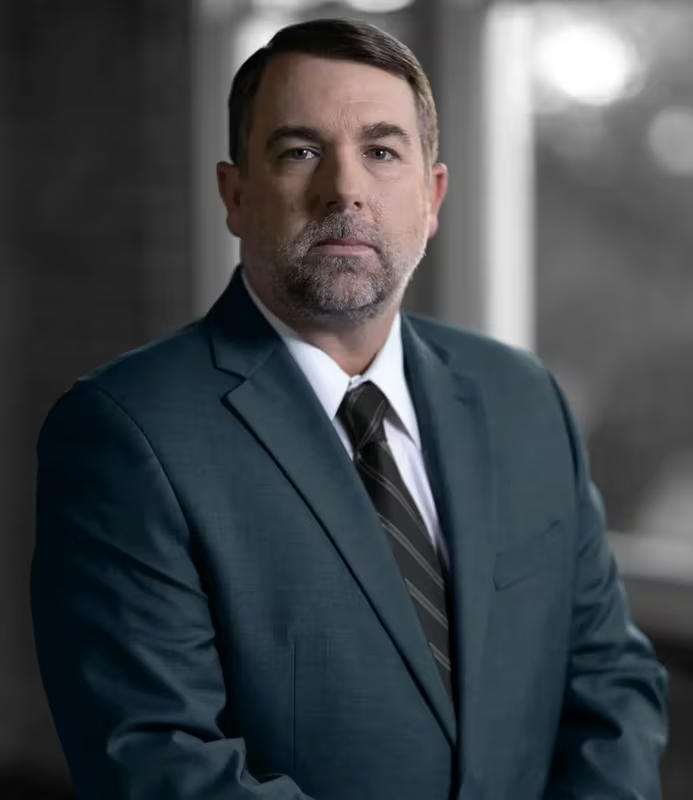
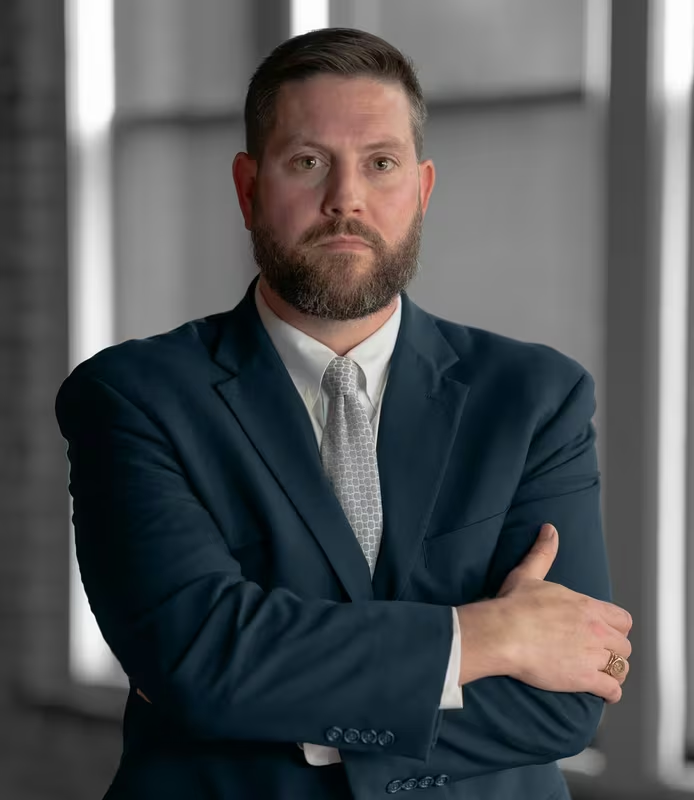
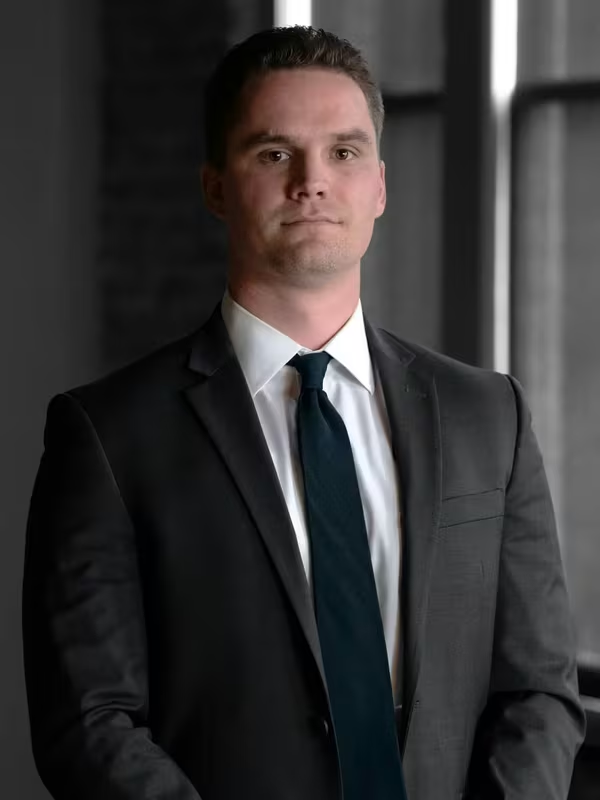
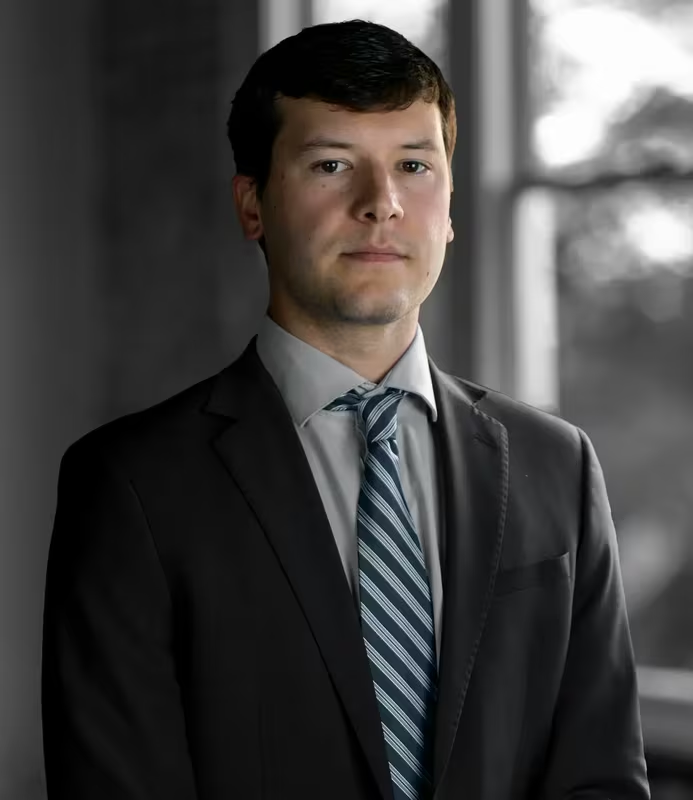
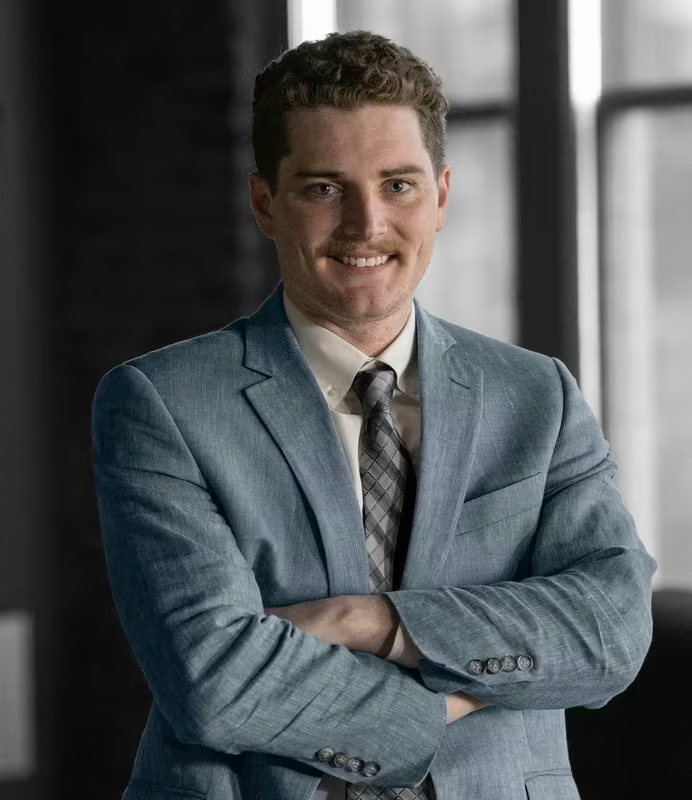
Your Bossier City Trial Team
The lawyers who work your file. Every Bossier City case is handled by the firm's own trial attorneys.






How Much Does a Bossier City Car Accident Lawyer Cost?
Most car accident lawyers in Bossier City charge nothing upfront and take a percentage of the result instead of an hourly rate. That is the contingency fee model.
Contingency Fee Model: No Win, No Fee
A contingency fee means the lawyer gets paid out of what they obtain for you. No settlement and no verdict in your favor means no attorney fee. That structure exists because almost nobody hurt in a wreck can pay a lawyer by the hour while they are out of work and driving to physical therapy twice a week.
The fee comes out of the gross compensation when the case resolves. You do not write a check at the start, and you do not get a monthly invoice. The firm only gets paid when you do.
Typical Contingency Percentages
Contingency percentages in personal injury cases fall inside a common range, and the exact figure depends on the firm and on the stage at which the case resolves. Many agreements set one percentage if the case settles before a lawsuit is filed and a higher percentage if it proceeds into litigation or trial, because a filed lawsuit requires substantially more work.
Case Costs and Reimbursement
Attorney fees and case costs are two separate things. Costs are the out-of-pocket expenses of building the case: filing fees at the Bossier Parish Clerk of Court, certified medical records, deposition transcripts, accident reconstruction experts, and similar items. They add up, particularly when expert testimony is needed.
Most firms advance those costs during the case and then deduct them from the settlement at the end, on top of the attorney fee. Some firms absorb the costs of a case that does not succeed and some do not.
What the Fee Agreement Spells Out
The fee agreement is a contract, and the terms that decide what you take home belong in writing rather than in an assumption. Trey Morris Injury Lawyers states the contingency percentage and whether it increases once a lawsuit is filed, sets out whether the fee comes out before or after case costs are deducted (a single detail that changes what you take home), identifies who carries the costs if the case does not succeed, and names the attorney who will handle the file. Each of those terms is written into the agreement before a client signs it.
Free Consultation: What to Bring and Expect
A free consultation is a no-obligation meeting where a lawyer evaluates your situation and tells you whether you have a viable claim. Bring what lets the lawyer assess the case quickly: the crash report, photos of the vehicles and scene, the names and insurers of the other drivers, your own insurance declarations page, and any medical records or bills you already have.
Expect to be asked how the crash happened, what injuries you sustained, and what treatment you have received. The lawyer should explain the fee structure plainly and give you a realistic picture of the claim rather than a promised outcome.