


Trey Morris Injury Lawyers represents people with a brain injury from a wreck or fall across Louisiana, from six offices in Shreveport, Bossier City, Minden, Ruston, Covington, and Lake Charles. A Louisiana brain-injury claim is a two-year filing under La. C.C. art. 3493.1, and for injuries on or after January 1, 2026 a 51% fault finding under art. 2323 ends recovery. Trey Morris Injury Lawyers proves the TBI from GCS scores, treating records, and causation evidence before a defense expert treats a normal CT as no injury. GCS means the Glasgow Coma Scale, a 15-point check of how well you open your eyes (1 to 4 points), speak (1 to 5 points), and move (1 to 6 points). A score of 13 to 15 means a mild brain injury, 9 to 12 means moderate, and 3 to 8 means severe.
TBI Classification and the Glasgow Coma Scale
Louisiana courts, insurers, and medical experts classify traumatic brain injury as mild, moderate, or severe using the GCS. The score recorded by EMS at the scene and by the emergency department on admission is primary causation evidence in your case.
Mild TBI and Concussion
Mild TBI, commonly called concussion, often produces no visible abnormality on a standard CT scan. That does not mean the injury is insignificant. Symptoms including headache, cognitive fog, memory gaps, and irritability are real, documented, and compensable.
Moderate and Severe TBI
Moderate TBI involves loss of consciousness from 30 minutes to 24 hours. CT or MRI findings are more likely at this severity level. The risk of post-traumatic epilepsy rises substantially. Post-traumatic epilepsy is a seizure disorder caused by the brain injury that affects 5 to 20 percent of people with moderate or severe TBI, and it can start weeks or months later. It usually means long-term seizure medication and can affect your driving, your job, and living on your own. Severe TBI, defined by a GCS score of 3-8, typically involves DAI, extended unconsciousness, and permanent cognitive or physical impairment. DAI stands for diffuse axonal injury, which is widespread tearing of the nerve fibers inside the brain when the head is twisted or whipped around, and it is behind many cases of severe disability after TBI. Standard CT scans often miss it entirely.
Other TBI Categories
Two additional injury categories are worth understanding. Penetrating TBI, or open-head injury, occurs when an object enters the skull and brain tissue. This can result from high-speed collisions where vehicle components intrude into the passenger compartment, gunshots, or industrial projectiles. Non-traumatic acquired brain injury results from internal causes such as stroke, oxygen deprivation (anoxia), or infection. When a non-traumatic brain injury results from a medical provider’s failure to act, a medical malpractice framework applies.
Trey Morris Injury Lawyers handles the full range of Louisiana catastrophic injury cases, including all TBI severity levels.
Does a Normal CT Scan Rule Out a Brain Injury?
No. CT scans are fast and available at every Level I and Level II trauma center in Louisiana. They reliably detect acute bleeds, skull fractures, and large contusions. They do not detect axonal damage, which is the mechanism behind many of the most debilitating TBI symptoms.
Where a Standard MRI Falls Short
Standard MRI improves on CT for soft tissue resolution. But even a conventional MRI misses diffuse axonal injury in many mild-to-moderate cases. The structures being damaged are the white matter tracts, which require specialized protocols to visualize.
DTI and SWI: The Scans That Show the Injury
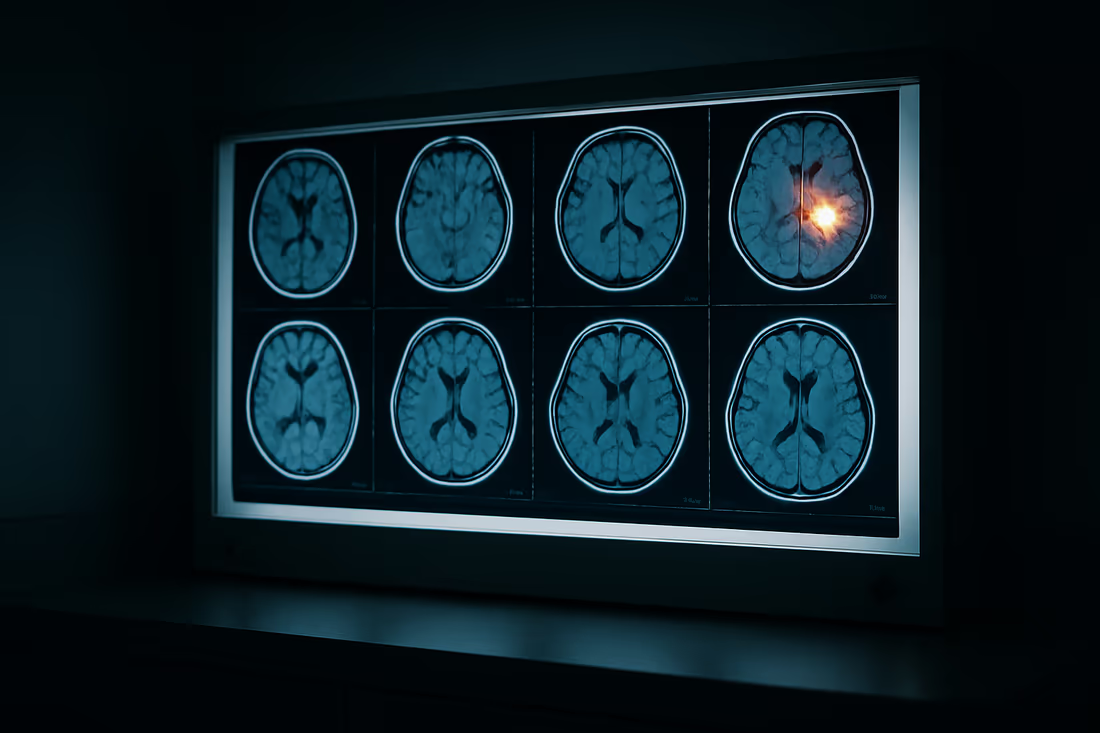
Insurance companies will cite the absence of findings on a standard CT as grounds to deny or minimize a TBI claim. This is a predictable tactic. DTI (Diffusion Tensor Imaging) is a special MRI scan that tracks how water moves along the brain’s wiring, so it can show torn nerve fibers that a standard MRI cannot see. SWI (Susceptibility-Weighted Imaging) is another special MRI scan that finds tiny traces of blood left behind when torn nerve fibers cause small bleeds. DTI and SWI findings provide specific, documentable evidence that defeats it.
Why TBI Symptoms Are Often Delayed
TBI symptoms do not always appear at the moment of impact. Brain inflammation, neurochemical disruption, and white matter tract injury produce symptoms that develop over hours, days, and sometimes weeks after the accident. This is documented in medical literature. It is not unusual. But it creates a predictable litigation problem.
The absence of immediate emergency room findings does not rule it out.
How the Defense Uses the Gap
Insurance companies and defense attorneys treat the gap between the accident and symptom onset as an opportunity. The argument is that symptoms appearing days or weeks later must be pre-existing or caused by something else. This argument has no medical basis. It is a litigation tactic, not a clinical conclusion.
Documentation Is the Counter
The counter is documentation. Every symptom must be reported to a treating physician as it appears, and the physician’s notes must connect the symptoms to the injury mechanism. Gaps in medical treatment are gaps in your case.
Cognitive Deficits and Behavioral Changes After TBI
Traumatic brain injury produces cognitive and behavioral consequences that are often more disruptive to daily life than the physical injuries and harder to document without specialized testing.
Memory, Processing Speed and Executive Function
Post-TBI cognitive deficits include memory impairment, slowed processing speed, and executive function loss covering planning, sequencing, and impulse control. These affect job performance, relationships, and the ability to manage daily tasks. Personality changes, including impulsivity, emotional dysregulation, depression, and aggression, are direct neurological consequences of brain injury. They are not character flaws. They are documented sequelae with established neurological mechanisms.
Post-Traumatic Epilepsy
Post-Traumatic Epilepsy represents a separate long-term consequence that adds ongoing medical costs and functional limitations to the damages calculation.
Why These Injuries Are Called Invisible
These injuries are called “invisible” because they do not appear on imaging that non-specialist reviewers consider routine. Defense IME doctors (an IME is an independent medical examination, an exam by a doctor the insurer picks rather than your own) routinely dismiss cognitive and behavioral TBI sequelae as exaggerated or unrelated. Neuropsychological testing is the primary documentary counter to this tactic.
Neuropsychological Testing as Evidence
A neuropsychologist is not a psychiatrist. A neuropsychologist is a licensed psychologist with specialized doctoral-level training in brain-behavior relationships. They do not prescribe medications. They administer and interpret standardized test batteries that quantify how brain function has changed.
The Standard Test Batteries
The standard test batteries used in TBI litigation include the WAIS-IV (intellectual function and processing speed), WMS-IV (memory across multiple modalities), Trail Making Test A and B (processing speed and cognitive flexibility), and the Delis-Kaplan Executive Function System (planning, sequencing, inhibition, and problem solving). Each test has population norms and statistical thresholds. The results are not subjective. They are numbers.
The neuropsychologist compares your test results against population norms and against your estimated pre-injury intellectual functioning. The deficit documented is specific, quantified, and tied to a particular cognitive domain. The report states whether those deficits are consistent with the known injury mechanism. This is the document that turns “she seems fine” into a measurable, compensable impairment.
Performance Validity Tests and the Defense Challenge
Defense neuropsychologists challenge test validity using PVTs. PVTs, or Performance Validity Tests, are tests built into the testing or given as separate tests that show whether you were giving real effort. If you fail many of them, the defense uses that to argue your memory and thinking problems are exaggerated. An experienced plaintiff’s neuropsychologist addresses this directly in their report by documenting consistency indicators across the entire battery.
Expert Qualifications
Expert qualifications matter, and the defense will challenge them.
Brain Injuries Across Louisiana
Where the Injuries Come From
The Louisiana Department of Health told the legislature in January 2023 that motor vehicle accidents are the leading cause of both traumatic brain and spinal cord injuries in the state. The crash counts show where that exposure sits. In 2024, 8,198 people were injured in Orleans Parish crashes and 7,979 in East Baton Rouge Parish, according to LSU’s Center for Analytics and Research in Transportation Safety. Lafayette Parish had 4,525 people injured, Calcasieu Parish 2,487 and St. Tammany Parish 2,241, and Caddo Parish recorded 2,015 injury crashes. A share of every one of those columns is a head injury that did not show on the first CT scan.
Where They Are Treated
The level of the trauma center that received you is part of your medical record and part of your case. University Medical Center New Orleans is a state-designated Level I trauma center. Ochsner LSU Health Shreveport is the only American College of Surgeons-verified Level I center in north Louisiana; the nearest others are in Dallas and Little Rock. Lake Charles Memorial Hospital is a Level III center, so a severe brain injury in southwest Louisiana is often stabilized there and transferred. The transfer records, the first Glasgow Coma Scale score and the imaging from each hospital are the earliest evidence of how serious the injury was.
Find brain injury information near you.
Trey Morris Injury Lawyers handles brain injury cases in every part of the state. Each city page carries the local facts for that community, from the parish's crash record to its hospitals and courthouse.
Long-Term Care Needs and Life Care Planning
The full economic cost of a severe TBI case is not known at the time of the accident. It is not known at the time of the initial settlement offer. It becomes known through a structured process of medical evaluation, vocational analysis, and financial projection.
The Lifetime Care Team
Severe TBI survivors typically require a coordinated team of providers over their lifetime: neuropsychology follow-up, occupational therapy to rebuild daily living skills, speech-language pathology for cognitive-communication deficits, and physical therapy for motor impairment. Home modifications, assistive technology, and personal care attendants add to the long-term picture.
The Life Care Plan
A certified life care planner (CLCP) builds the formal documentation of future medical needs. The life care plan is a line-item document specifying each type of care, frequency, cost, and duration over the survivor’s projected lifetime. It is prepared by a credentialed specialist, not estimated by the attorney. This document is required to support a full future damages claim.
Lost Earning Capacity
Lost earning capacity is calculated separately. A vocational rehabilitation expert assesses the difference between pre-injury work capacity and post-injury work capacity. An economist converts that difference to present value using actuarial methods. Together, these form the economic damages foundation of a severe TBI case.
Louisiana’s TBI Trust Fund Program
Louisiana’s Traumatic Brain and Spinal Cord Injury Trust Fund Program, managed through the Louisiana Department of Health, provides ongoing services to qualifying Louisiana TBI survivors. This program is a resource for long-term care coordination independent of litigation outcomes.
Why Early Offers Fall Short
Insurance companies make early settlement offers before life care planning is complete. Accepting an early offer on your injury claim ends that claim against the people you settle with, for everything the settlement covers (La. C.C. art. 3080). Once you settle, you cannot return for additional compensation if the true extent of long-term care needs becomes clear later.
How Insurance Companies Minimize TBI Claims
TBI cases produce predictable defense tactics. Understanding them in advance reduces their effectiveness.
Recorded Statements
Early recorded statements are the most damaging. An insurance adjuster contacts the injured person within days of the accident and asks open-ended questions about symptoms. TBI symptoms often have not fully manifested yet. The injured person says they feel “okay” or “not that bad.” That statement is recorded. It is later used to contradict claims of ongoing cognitive impairment. The standard practice at Trey Morris Injury Lawyers is to require all communications to go through counsel once we are retained. We do not allow adjusters direct access to our clients on catastrophic cases.
Insurer Medical Exams
IME reports frequently conclude TBI symptoms are exaggerated, pre-existing, or unrelated to the accident. They are contestable through the treating physician’s longitudinal records, neuropsychological testing, and advanced imaging.
Timeline Attacks
Timeline attacks argue that symptoms appearing weeks or months after the accident are not related to it. Thorough treating physician records that document the progression of symptoms from injury date forward defeat this argument.
Louisiana Law and TBI Claims: What Changed From 2024 Through 2026
Louisiana’s personal injury law changed substantially from 2024 through 2026, and the changes do not all apply to every claim.
The End of the Housley Presumption
The 2025 tort reform package eliminated the Housley v. Cerise presumption. Under the old rule, a plaintiff who was healthy before an accident and developed symptoms after it benefited from a presumption that the accident caused the symptoms. The defense had to overcome that presumption. Under La. Code Evid. art. 306.1 (effective May 28, 2025), that presumption is gone for causes of action arising on or after that date. You must prove causation affirmatively. This shifts the burden and makes thorough medical documentation and expert testimony more important, not less.
Medical Bills Paid by Insurance
In lawsuits filed on or after January 1, 2026, past medical bills paid by health insurance or Medicare are limited to what was actually paid, plus your deductibles and co-pays, not the billed amount (La. R.S. 9:2800.27). TBI medical bills are often substantial. This change requires careful analysis of what was billed versus what was paid when calculating economic damages.
Comparative Fault and the 51% Bar
Comparative fault under La. C.C. Art. 2323 applies the 51% bar to causes of action arising on or after January 1, 2026. Comparative fault means that if you were partly to blame for the accident, the money you can get is cut by your share of the blame. Insurance defense strategies routinely include efforts to push fault attribution to or past 51%. In TBI cases where the accident mechanism is disputed, comparative fault analysis requires accident reconstruction evidence.
The Two-Year Filing Deadline
The prescriptive period for personal injury in Louisiana is two years from the date of injury under La. C.C. Art. 3493.1. This is Louisiana’s name for the statute of limitations, the legal deadline to file a lawsuit. If you miss it, you lose your claim for good. A later TBI diagnosis delays the start only in narrow circumstances, so count from the date of the accident.
The Evidence Timeline: What Must Be Preserved
Evidence in a TBI case has a natural decay rate. Some of it can be gone within days of the accident. Building a complete evidence record is time-sensitive.
First Responder and EMS Records
First responder and EMS records document the GCS score at the scene, the initial neurological assessment, and transport decisions. These are often among the most important documents in the case because they establish baseline neurological status at the moment closest to the injury. Emergency department records, CT and MRI imaging, and radiology reports document the initial clinical picture.
Surveillance Footage and the Preservation Letter
Surveillance footage from traffic cameras, commercial properties, and dashcams is often recorded over on a short cycle. Employment records establish pre-injury work capacity and salary history. These form the baseline for the earning capacity calculation.
Once the facts give an honest basis for one, a preservation letter tells the at-fault party and its insurer to keep the vehicle data, surveillance footage, and communications records. It is a formal legal demand to hold on to all evidence tied to the accident, and it puts them on notice that a lawsuit may be coming. If they destroy evidence after they get the letter, they can be held responsible for that.
Reconstruction and the Later Neuropsychological Evaluation
Accident reconstruction reports become important in cases where the crash mechanics are disputed. The forces involved in the collision directly relate to the biomechanical plausibility of the claimed injury. This is especially relevant in mild TBI cases where the defense argues the collision was too minor to cause brain injury.
Neuropsychological evaluations completed after sufficient time post-injury, typically at three to six months, document the stabilized cognitive picture. Employment and academic records from before the injury establish the pre-injury baseline for comparison.
Why Early Involvement Matters
The practical implication is that the attorney needs to be involved early. The window for preserving time-sensitive evidence closes quickly.
The Trey Morris Injury Lawyers TBI Practice in Louisiana
Trey Morris Injury Lawyers has handled catastrophic injury cases across Louisiana for over 20 years. Our attorneys hold AV Preeminent ratings from Martindale-Hubbell and have been recognized by Super Lawyers. We work with board-certified neuropsychologists, neuroradiologists who read advanced imaging studies, and life care planners with Louisiana-specific cost data. We have taken cases to verdict.
Trey Morris Injury Lawyers operates on a contingency fee basis. You pay no attorney fees unless there is a recovery.
Your attorneys
Your Injury Attorneys
Founder Trey Morris leads the firm's injury practice with a team of 10 attorneys, and every case has a named attorney on it from the first call.











What clients say
What clients say
- ★★★★★
This firm worked with me in a very timely matter and got my case settled in less than 30 days.
The attorney was very honest and upfront, if he told me he was working on something he did just what he said. His assistants are the best and they all are very understanding and patient and attended my every need. This firm was God sent.
- ★★★★★
Appreciate the team at Trey Morris helping me get everything resolved smoothly.
Would definitely recommend them!
- ★★★★★
From day one I told Colby [my attorney] and Star that I would leave everything up to them with no hassle on my end.
They are very professional and stayed in contact with me for the whole experience. I would highly recommend Colby [my attorney] as your attorney. He will fight to get wha is owed to you.
- ★★★★★
Trey Morris what a great experience if I ever have to suggest a lawyer's office Morris is my first choice will be suggesting to friends and family
- ★★★★★
Great experience overall.
Seth and Jessica were always there to help and I could tell they truly had my best interest in mind. I was overwhelmed after my incident and they walked me through every step of the way and provided a lot of relief.
- ★★★★★
I hired [Trey Morris Injury Lawyers] to represent me with my case.
Mr. Lane Robinson, Jessica, and Yadira has been with me every step of the way, making sure I received the proper care I needed to get well. They always called emailed and text to make sure I was doing OK. I would recommend the firm to anyone. They have an amazing team. I couldn’t have made a better choice. Thank you all for everything you have done for me and my family.
Testimonials do not constitute a guarantee, warranty, or prediction regarding the outcome of your legal matter. Past results do not guarantee future outcomes.
Past results do not guarantee future outcomes; each case is decided on its own facts. See our full case results.
Start with what you want to know.
The questions injured people ask us first.
How long do I have to file a brain injury lawsuit in Louisiana?
Two years from the date of injury under La. C.C. Art. 3493.1, and a later diagnosis delays the start only in narrow circumstances, so count from the date of the accident. Missing the deadline permanently bars the claim. An attorney should evaluate the specific facts to determine the controlling date.
What is the Glasgow Coma Scale and why does it matter in my case?
The Glasgow Coma Scale (GCS) is a 15-point neurological scoring system measuring eye opening, verbal response, and motor response. First responders and emergency departments document the score at scene and admission. It classifies TBI severity as mild (13-15), moderate (9-12), or severe (3-8). In litigation, the GCS score is primary evidence establishing the severity of the brain injury at the moment of the accident, before any treatment or recovery.
Can I still recover damages if my CT scan came back normal?
Yes. A normal CT scan does not rule out TBI. CT scans detect acute bleeds and fractures but miss diffuse axonal injury and many forms of white matter damage. Standard MRI also misses axonal shearing in many cases. Advanced imaging protocols, specifically diffusion tensor imaging (DTI) and susceptibility-weighted imaging (SWI), can detect injury that CT and standard MRI miss. Neuropsychological testing documents cognitive deficits independent of imaging findings.
What does a neuropsychologist do in a TBI case?
A neuropsychologist administers standardized test batteries that measure cognitive function across multiple domains: intellectual processing, memory, processing speed, and executive function. The results are compared against population norms and the patient's estimated pre-injury baseline to document specific deficits. The neuropsychologist's report identifies which cognitive domains are impaired, by how much, and whether the pattern is consistent with the known injury mechanism. In Louisiana courts, this testing can be used as evidence of cognitive TBI effects, but the judge decides under La. C.E. art. 702 whether the neuropsychologist's testimony comes in.
What is diffuse axonal injury and is it detectable?
Diffuse axonal injury (DAI) is widespread tearing of the brain's white matter axons caused by rotational forces from high-speed impacts or sudden deceleration. It is the mechanism behind many cases of persistent vegetative state and severe long-term disability after TBI. Standard CT scans regularly miss DAI. Diffusion tensor imaging (DTI) maps white matter tract integrity and can detect axonal shearing. Susceptibility-weighted imaging (SWI) identifies microhemorrhages from the same mechanism. Both protocols are increasingly accepted in Louisiana litigation.
How does post-traumatic epilepsy affect a TBI claim?
Post-traumatic epilepsy (PTE) is a seizure disorder that develops after TBI, typically in 5-20% of moderate-to-severe cases. Onset can occur weeks to months after the initial injury. PTE requires long-term anticonvulsant medication management, affects driving privileges under Louisiana law, and restricts many forms of employment. It represents a separate ongoing medical condition with its own future treatment costs. A life care plan must account for PTE management costs separately from the primary TBI treatment plan.
What are the first steps I should take after a traumatic brain injury?
Seek emergency medical evaluation immediately, even if symptoms seem minor at first. Report all symptoms to the treating physician at every visit, including symptoms that develop in the days and weeks after the accident. Follow all medical recommendations and do not miss appointments. Do not provide recorded statements to any insurance adjuster before consulting an attorney. Contact an attorney as early as possible to preserve time-sensitive evidence before surveillance footage is overwritten and other records are lost.
How does the 2025 tort reform affect my TBI case?
The 2025 Louisiana tort reform, under La. Code Evid. art. 306.1 (Acts 2025 No. 18, effective May 28, 2025), eliminated the Housley v. Cerise presumption for causes of action arising on or after that date. Previously, a plaintiff who was healthy before an accident and developed symptoms after it benefited from a legal presumption that the accident caused those symptoms. That presumption is gone. You now must prove causation affirmatively through medical records, expert testimony, and imaging. Continuous treating physician documentation and neuropsychological testing are more important under the new standard than they were before.
Can I sue if my brain injury symptoms only appeared weeks after the accident?
Yes. Delayed symptom onset is medically documented and legally recognized in Louisiana. Brain inflammation and neurochemical disruption produce symptoms over time, not all at once. The key is continuous medical documentation starting at the time of the accident, with each new symptom recorded and connected to the injury mechanism by the treating physician. Insurance companies argue that delayed symptoms are unrelated to the accident. A documented medical record from injury date forward defeats that argument.
How does Louisiana's 2026 law limit my medical expense recovery in a TBI case?
In lawsuits filed on or after January 1, 2026, past medical bills paid by health insurance or Medicare are limited to what was actually paid, plus your deductibles and co-pays, not the billed amount (La. R.S. 9:2800.27). The difference between billed charges and paid amounts can be substantial in TBI cases involving hospitalization and specialized care. Out-of-pocket expenses not covered by insurance remain fully recoverable. This change requires careful analysis of what was actually paid versus billed when calculating your economic damages.
What is an independent medical examination and can I refuse it?
An independent medical examination (IME) is a medical evaluation requested by the opposing party or their insurer, usually with a doctor they propose. In Louisiana personal injury litigation, a defendant may ask the court to order an IME under La. C.C.P. Art. 1464. Filing a lawsuit does not by itself require you to attend one. The court can order the exam only after the defendant files a motion showing good cause and you are given notice. The court's order sets who does the exam and its time, place, conditions and scope. Your attorney can oppose the motion, propose a different examiner, and ask the court to limit the scope. Once the court orders the exam, you must attend. The IME doctor's conclusions should be countered by your treating physician's longitudinal records and your independent neuropsychological evaluation.
How do I prove negligence in a brain injury case in Louisiana?
To prove negligence in Louisiana, you establish four elements under La. C.C. Art. 2315: duty (the defendant owed a duty to act reasonably), breach (they failed to meet that duty), causation (the breach caused your injury), and damages (you suffered compensable harm). In TBI cases, causation is typically the most contested element. If you were hurt on or after May 28, 2025, the Housley presumption no longer applies, so having no history of the condition before the accident does not on its own lead the court to presume that the accident caused it (La. Code Evid. art. 306.1). If you were hurt before that date, you can still rely on that presumption. Medical records, expert testimony, advanced imaging, and neuropsychological testing together establish that the accident caused the documented brain injury.
Last updated October 30, 2026