Slip and fall accidents in Louisiana cluster in predictable places: busy businesses where liquids hit the floor, aging residential properties, and outdoor surfaces worn down by heat and storms. Where you fell matters because it shapes who controls the property, what kind of records exist about the hazard, and how the investigation proceeds. A fall in a supermarket produces a different evidence trail than a fall on a buckled city sidewalk, even when the injuries look the same.
Grocery Stores and Supermarkets
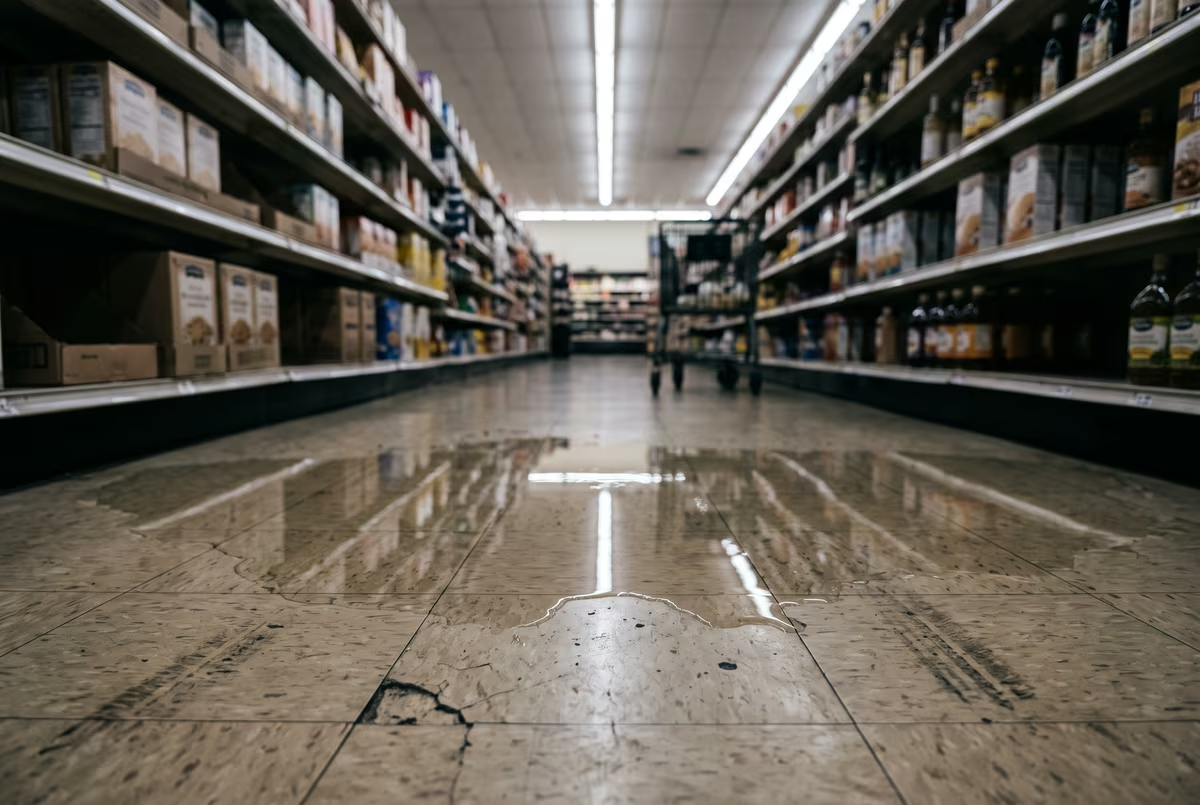
Grocery stores combine constant foot traffic with conditions that put liquid on hard flooring all day. Spilled drinks, dropped produce, leaking coolers and freezer cases, and freshly mopped aisles without warning cones all create slick surfaces. Store layouts compound the risk by keeping customers looking at shelves instead of the ground.
Restaurants and Bars
Restaurants and bars combine several hazards in one building. Grease migrates from kitchens onto dining room tile. Drinks spill and stay wet in dim lighting. Entryways collect rainwater tracked in from Louisiana downpours, and air conditioning condensation pools near doorways and windows during humid months.
Crowded walkways make these hazards harder to see and harder for staff to catch. The investigation in a restaurant fall looks at cleaning routines between table turns, floor mat placement at entrances, and how the staff responded to wet spots in the dining area.
Apartment Complexes
Apartment falls tend to involve structural conditions rather than spills. Broken exterior stairs, loose or missing handrails, unlit breezeways and walkways, cracked pool decks, and water intrusion from roof or plumbing leaks are the recurring culprits at Louisiana complexes.
These conditions often exist for weeks or months before someone gets hurt, which means a paper trail often exists. Tenant maintenance requests, prior complaints to management, and work orders document the history of the condition. Those records describe the hazard as it existed before repairs erase it.
Sidewalks, Parking Lots, and Hurricane-Damaged Surfaces
Outdoor falls in Louisiana have their own character. Tree roots heave sidewalk slabs in older neighborhoods. Parking lots develop potholes and crumbling wheel stops. Hurricanes and tropical storms leave behind cracked pavement, displaced drainage grates, and debris that lingers long after the storm passes.
Who maintains the surface is the first question in any outdoor fall. A parking lot usually belongs to a business or commercial landlord, while many sidewalks and roadways belong to a city, parish, or the state. That ownership question, and what it means for your claim, is taken up in the section on who can be held liable.
Falls at Work and in Public Across the State
Falls, slips and trips were the leading cause among Louisiana's most common workers' compensation lost-wage claims from 2022 to 2025, 3,840 of 16,417. A disputed claim is filed with the Office of Workers' Compensation Administration and heard in one of its ten district courts, in Shreveport, Monroe, Alexandria, Lake Charles, Lafayette, Baton Rouge, Covington, Harahan, New Orleans and Houma, and in 2022 the Baton Rouge, Lafayette, Covington and Lake Charles offices each received more disputed claims than Shreveport. Weather adds a seasonal hazard in the north: the January 2026 ice storm left three inches of sleet in Caddo Parish and four and a half in Bossier Parish, and the frozen layer stayed on surfaces for days. For older adults, Louisiana's 2023 unintentional fall death rate for people 65 and over was 45.6 per 100,000, among the five lowest state rates, which does not make any one fall less serious.
Across Louisiana Find slip and fall information near you.
Trey Morris Injury Lawyers handles slip and fall cases in every part of the state. Each city page carries the local facts for that community, from the parish's crash record to its hospitals and courthouse.
Casinos and Hotels
Louisiana's casinos and hotels, from Lake Charles and Shreveport-Bossier to New Orleans, see constant foot traffic across polished lobby floors, buffet areas, pool decks, and parking garages. Guest room bathrooms add slick tile to the mix. Polished stone and tile look impressive and hold water invisibly, and a spilled drink on a casino floor can sit through a shift change before anyone cleans it.
One practical feature works in an injured guest's favor: casinos and hotels run some of the most extensive surveillance systems of any Louisiana business. Footage of the fall and the hour before it often exists, but retention windows at these properties are short, so the footage does not survive indefinitely.