How Does Poor Road Lighting Cause Car Accidents?
Claims against a Louisiana political subdivision for failed road lighting need no pre-suit notice and carry the same filing deadline as other injury claims (La. R.S. 13:5108): two years from the date of injury under La. C.C. Art. 3493.1 for injuries after July 1, 2024. Parishes establish road lighting districts that are responsible for maintaining streetlights on public roads.
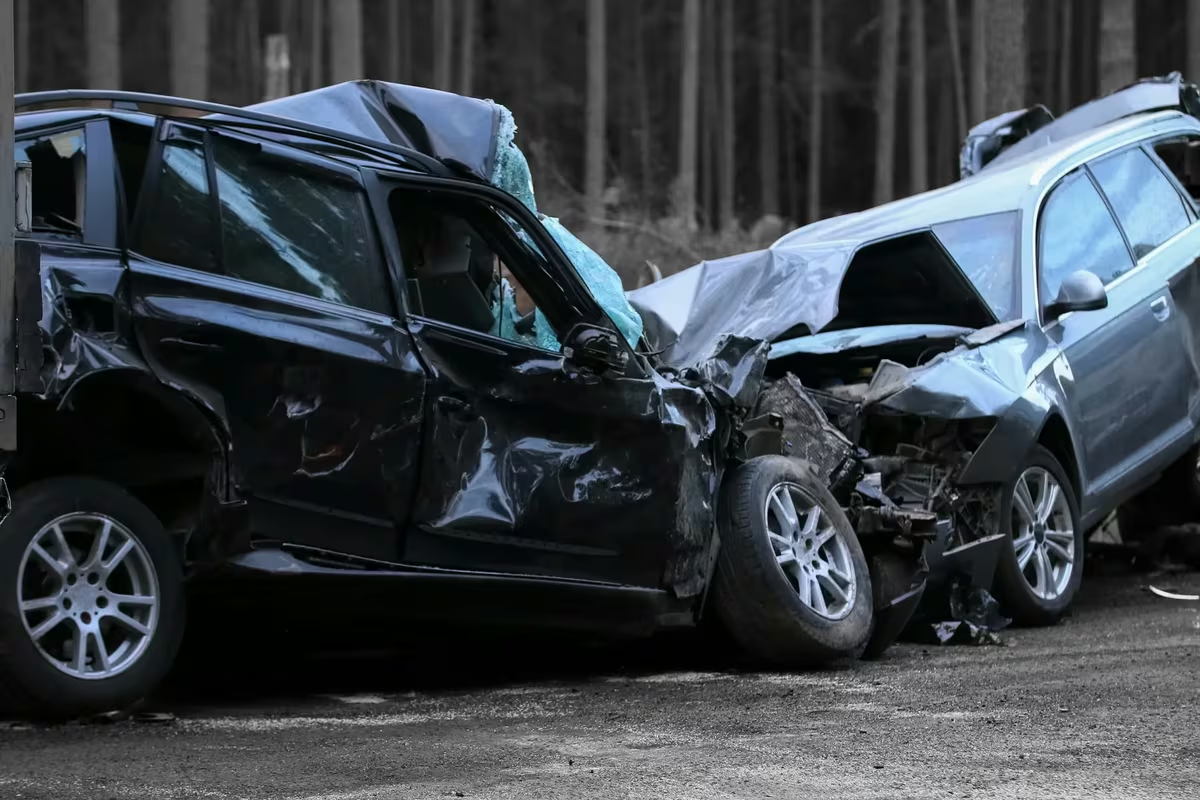
Inadequate road lighting directly causes crashes by removing the visual information drivers need to react in time. Night driving accounts for about 25% of all miles traveled in the United States but accounts for more than 50% of deadly crashes. Darkness limits what drivers can perceive and how quickly they can respond.
Inadequate streetlights prevent drivers from seeing road curves, traffic signs, lane markings, pedestrians, cyclists, and stopped vehicles in time to avoid a collision. The problem is not always a missing light. Dim or flickering fixtures, lights placed too far apart, and lights positioned to create glare rather than illuminate can all reduce visibility below safe levels. Complete absence of lighting at intersections and crosswalks is among the most dangerous conditions.
The Louisiana Highway Safety Commission reports approximately 1,400 pedestrian crashes statewide each year, with low visibility identified as a common contributing factor. Baton Rouge ranks among the top three Louisiana cities for pedestrian crashes per capita, recording roughly 100 such crashes annually. Many involve low-visibility conditions. Research on roadway safety engineering consistently shows that improving lighting in high-crash corridors can reduce accident frequency by as much as 35%.
High-risk lighting locations in Louisiana include rural two-lane highways without shoulder lighting, unlit freeway on-ramps and off-ramps, commercial parking lots with failed or inadequate fixtures, and pedestrian crosswalks at unlit intersections. If your crash happened in any of these settings, documenting the lighting conditions immediately is critical.
Filing a Claim Against a Louisiana Government Entity
Government liability claims in Louisiana follow different rules than standard personal injury claims. Getting these steps wrong can eliminate your right to recover entirely.
Prescriptive Period
Louisiana's term for statute of limitations. The legal deadline to file a lawsuit.
The Prescriptive Period for personal injury in Louisiana is two years from the date of injury under La. C.C. Art. 3493.1, for injuries after July 1, 2024. Earlier injuries fell under the prior one-year period. Government claims have an additional layer.
Claims against Louisiana political subdivisions do not require a pre-suit notice, and the filing deadline is the same as for private defendants (La. R.S. 13:5108). What they do require is prompt service: once suit is filed, service on the entity must be requested within 90 days (La. R.S. 13:5107), or the case against it is dismissed regardless of how strong the underlying case is. For a road-condition claim, you also have to show the entity knew or should have known about the defect (La. R.S. 9:2800). This is one area where early legal consultation is not optional.
Constructive Notice
Legal knowledge imputed to a party because the condition was discoverable through reasonable inspection, even if the party did not have actual knowledge of it.
Constructive Notice is the central factual issue in most government lighting cases. The plaintiff must show that the government entity knew about the lighting failure or should have known with reasonable diligence. Prior maintenance complaints, repair logs, and prior crash reports at the same location are the primary evidence. Louisiana's Public Records Act allows attorneys to request these records.
Louisiana tort reform changes from 2024 and 2025 also affect these cases. The 51% bar that took effect January 1, 2026 applies to claims against government defendants as well. In a wrongful death claim where the government argues the deceased was partly at fault, that share reduces the recovery, and for crashes on or after January 1, 2026 a share of 51% or more bars it (La. C.C. Art. 2323).
Trey Morris Injury Lawyers has handled claims against Louisiana government entities where road conditions were the primary liability theory. Missing the 90-day service deadline after filing can destroy an otherwise strong case.
Evidence That Wins Poor Lighting Accident Cases
The first hours after a poor lighting crash are the most important for evidence collection. Government entities and municipalities repair failed lighting quickly. Once the fixture is repaired, the physical evidence of the failure is gone.
Photographs and video taken at the scene immediately after the crash are the most direct evidence of lighting conditions. That includes dashcam footage from your vehicle and footage from other vehicles nearby. Surveillance video from adjacent businesses may have captured the intersection at the time of the crash. A preservation demand must be sent quickly to any commercial property with cameras near the scene. Surveillance recordings overwrite automatically on a rolling schedule.
The police crash report is essential. Louisiana State Police and parish sheriff reports note road conditions, including lighting, at the time of the incident. The officer's notation that lighting was inadequate is credible third-party documentation. Request the full narrative report, not just the brief statistical form.
Maintenance records from the road lighting district document the history of the specific fixture. Repair logs show when complaints were made, when the fixture was inspected, and when it was repaired. If the fixture had a prior complaint history that went unaddressed, those records establish constructive notice. Prior crash reports at the same location do the same: they show the government knew the intersection was dangerous.
Spoliation
The destruction or alteration of evidence after a party has notice of pending litigation. Courts can instruct juries to assume the destroyed evidence was unfavorable to the party that destroyed it.
Spoliation is a real risk when government entities repair the lighting before your attorney can document the condition. A formal preservation demand sent to the municipality or parish shortly after the crash is the mechanism to prevent this. Crash data from LaDOTD can help identify whether the corridor had documented lighting deficiencies before your crash.
Expert testimony from traffic engineers can address adequacy of lighting relative to roadway design speed, traffic volume, and road geometry. This is particularly useful when the government defends by arguing the lighting met minimum standards. Trey Morris Injury Lawyers works with traffic safety experts in these cases.
For context on related Shreveport-area bad street lighting claims, that page covers similar issues with specific local highway and intersection data.