











Thibodaux wrecks happen on LA-1, where oilfield trucks running toward Port Fourchon share two lanes with everyone else, on LA-308 across Bayou Lafourche, and on US-90 toward Houma, and the people hurt in them are taken to Thibodaux Regional Medical Center on North Acadia Road. The Thibodaux Police Department on Canal Boulevard writes the report inside city limits. Suits are filed at the Lafourche Parish Courthouse on Green Street, and the record is kept by the Lafourche Parish Clerk of Court on West 3rd Street. Trey Morris Injury Lawyers requests the police report, sends preservation letters to any carrier or employer whose vehicle was involved, and collects the Thibodaux Regional emergency room records.
The law that governs the claim is Louisiana law, and it is the same in Lafourche Parish as anywhere else in the state. If you were hurt in Thibodaux, your case is filed in the 17th Judicial District Court in Lafourche Parish, and the clock is two years for injuries after July 1, 2024 under La. C.C. Art. 3493.1. We build the fault evidence that answers an adjuster who reaches for the 51% bar under La. C.C. Art. 2323 or La. R.S. 32:866, the No Pay, No Play statute.
Results for Louisiana Clients
- $409 MillionWrongful Death
A tragic case where an impaired driver of a commercial vehicle ran a red light, then collided with our client, causing serious bodily injury to the mother and the loss of life of her daughter.
- $49 MillionMotor Vehicle Accident
An impaired driver of a stolen vehicle driving the wrong way collided with our client head-on, resulting in brain injury and multiple broken bones.
- $32.2 MillionIndustrial / Workplace
Failure to maintain proper safety protocols led to an explosion at an industrial plant causing a series of catastrophic injuries from broken bones, burns, spinal injury, and mental anguish.
- $31.5 MillionIndustrial / Workplace
Brain and spinal injuries followed an oil-field company failing to maintain equipment and provide a safe work site.
- $17.2 MillionCommercial Vehicle Accident
Client was struck head-on by a disconnected load of an 18-wheeler that crossed the median causing broken bones and amputation.
- $13 MillionCommercial Vehicle Accident
On the interstate, an 18-wheeler failed to yield right of way then made an unsafe lane change causing the accident which resulted in major bone breaks, damaged organs, and ultimately a leg amputation.
Past results do not guarantee future outcomes; each case is decided on its own facts.
Thibodaux sits at the top of Bayou Lafourche, where sugarcane fields meet the oilfield corridor that runs south to the Gulf of Mexico. The people who live here work in industries that carry real physical risk. Offshore platforms. Sugarcane mills. Fabrication yards. LA-1 itself, where oilfield trucks share two lanes with everyone else.
No one reads lawyer websites until they need one. Something happened. This page explains how injury claims work in Thibodaux and Lafourche Parish. It covers the 2024 and 2025 Louisiana law changes and how offshore and industrial claims differ from standard accident cases. Trey Morris Injury Lawyers has handled personal injury cases across Louisiana for over 20 years. Read this page. Compare us to other firms. Make the decision that is right for your situation.
LA-1 and US-90 Corridor Crash Patterns in Lafourche Parish
LA-1 is the primary north-south highway through Lafourche Parish. It connects Thibodaux to the communities along Bayou Lafourche, including Larose, Cut Off, Galliano, and Golden Meadow, before terminating near Grand Isle. This road is the only major artery between Thibodaux and Port Fourchon. Every oilfield service vehicle, equipment hauler, and supply truck heading to the Gulf uses it.
US-90 runs east-west, connecting Thibodaux to Houma and the broader interstate system. LA-308 parallels Bayou Lafourche through Thibodaux as a secondary corridor. Together, these three roads carry the bulk of Lafourche Parish’s daily traffic.
The commercial traffic on LA-1 is heavier than its two-lane design can safely accommodate. South of Thibodaux, LA-1 narrows to two lanes through stretches with no median barrier. Oilfield service vehicles and cane haulers share these sections with passenger cars. The result is head-on collision risk that does not exist on divided highways. Inattentive driving, failure to yield, and following too closely are the leading crash causes in Lafourche Parish.
Sugarcane harvest season runs from October through January. During these months, slow-moving agricultural equipment shares parish roads with regular traffic. Cane haulers, tractors pulling wagons, and field equipment create speed differentials that lead to rear-end collisions, especially on LA-308 and parish roads near processing facilities. These are seasonal patterns that attorneys unfamiliar with Lafourche Parish do not account for.
Truck accidents on the LA-1 corridor involve a distinct set of defendants. The truck driver, the trucking company, the oilfield service company that contracted the haul, and the equipment manufacturer may all carry liability. Ask any attorney you are considering whether they have handled truck accident cases involving oilfield service vehicles on LA-1. The evidence requirements and liable parties differ from a standard car accident on an interstate.
Local Coverage. Statewide Record.
- $1 Billion+
Outcomes for Louisiana clients
Verdicts and settlements won across the state by the same trial team that handles Thibodaux cases.
- 11
Trial attorneys, one team
Your case is handled by the firm's own trial attorneys, and we respond in minutes, 24/7.
- 24/7
We come to you
An attorney travels to you in Thibodaux, at home or at the hospital, or meets by video the same day. Free case review, and no fee unless we win.
- 125
Cases resolved over $1 million
Verdicts and settlements of $1 million or more, won by the same trial team that handles Thibodaux cases.
Offshore and Oilfield Worker Injuries in the Lafourche Parish Corridor
Lafourche Parish is the primary staging corridor for deepwater Gulf of Mexico operations. Port Fourchon, located at the southern tip of the parish, services approximately 90% of deepwater Gulf oil production. Workers commute from Thibodaux south on LA-1 through Larose, Cut Off, and Galliano to reach crew boat launches, heliports, and dock facilities that transfer them to offshore platforms.
The commute itself is a major injury risk. LA-1 between Thibodaux and Port Fourchon carries heavy commercial traffic on a two-lane road that floods during storms. Oilfield workers traveling to and from crew changes are involved in vehicle accidents on this corridor regularly. Whether that commute accident falls under state law or maritime law depends on the worker’s employment relationship and where the injury occurred.
Jones Act
A federal statute (46 U.S.C. 30104) that gives seamen the right to sue their employers for negligence. It applies to workers who spend a significant portion of their work time on vessels in navigation. Jones Act claims allow recovery for medical expenses, lost wages, pain and suffering, and future earning capacity.
Maintenance and cure
A maritime remedy requiring the vessel owner to pay an injured seaman’s daily living expenses (maintenance) and medical treatment costs (cure) until the seaman reaches maximum medical improvement. This obligation exists regardless of fault.
The Jones Act covers injured seamen. If you qualify as a seaman under federal law, you can bring a negligence claim against your employer. You can also claim maintenance and cure. This remedy requires the vessel owner to pay your living expenses and medical costs until you reach maximum medical improvement. A separate unseaworthiness claim holds the vessel owner responsible if the vessel or its equipment was not reasonably fit for its intended purpose.
These are three distinct legal theories. A competent maritime injury attorney will evaluate which ones apply to your situation. Ask any attorney you are considering to explain the difference between a Jones Act negligence claim and an unseaworthiness claim. If they cannot distinguish these theories, they do not handle maritime cases regularly.
LHWCA and OCSLA Coverage
The LHWCA covers dock workers, ship repairers, and maritime construction workers who do not qualify as seamen. It provides medical benefits and disability compensation without requiring proof of employer negligence. However, it limits your right to sue your employer directly. Third-party claims against equipment manufacturers or other contractors remain available.
The OCSLA extends legal coverage to workers on fixed platforms on the Outer Continental Shelf. For workers leaving from Lafourche Parish, Louisiana law typically applies, but the analysis depends on the platform’s location and the worker’s employment relationship. Trey Morris Injury Lawyers has handled offshore injury claims involving platform injuries, vessel accidents, and dock-side incidents throughout the Gulf region.
Evidence Preservation in Maritime Cases
Maritime employers and vessel operators maintain safety records, vessel logs, and crew manifests. After an injury, this evidence can disappear. Vessel logs get overwritten. Safety inspection records get archived on schedules that favor the company. Your attorney sends written preservation demands to every responsible party. Our aim is to send them once the facts give us an honest basis, because moving as early as the rules permit is what keeps the most useful records within reach. These demands cover vessel logs, black box data, safety records, and crew documentation, the records that show what the vessel was doing, whether its equipment was fit for the job, and who was on duty when you were hurt, and they put the company on notice not to alter or destroy them.
Thibodaux Practice Areas
 Car AccidentsRear-end, intersection, and highway collisions across Louisiana.
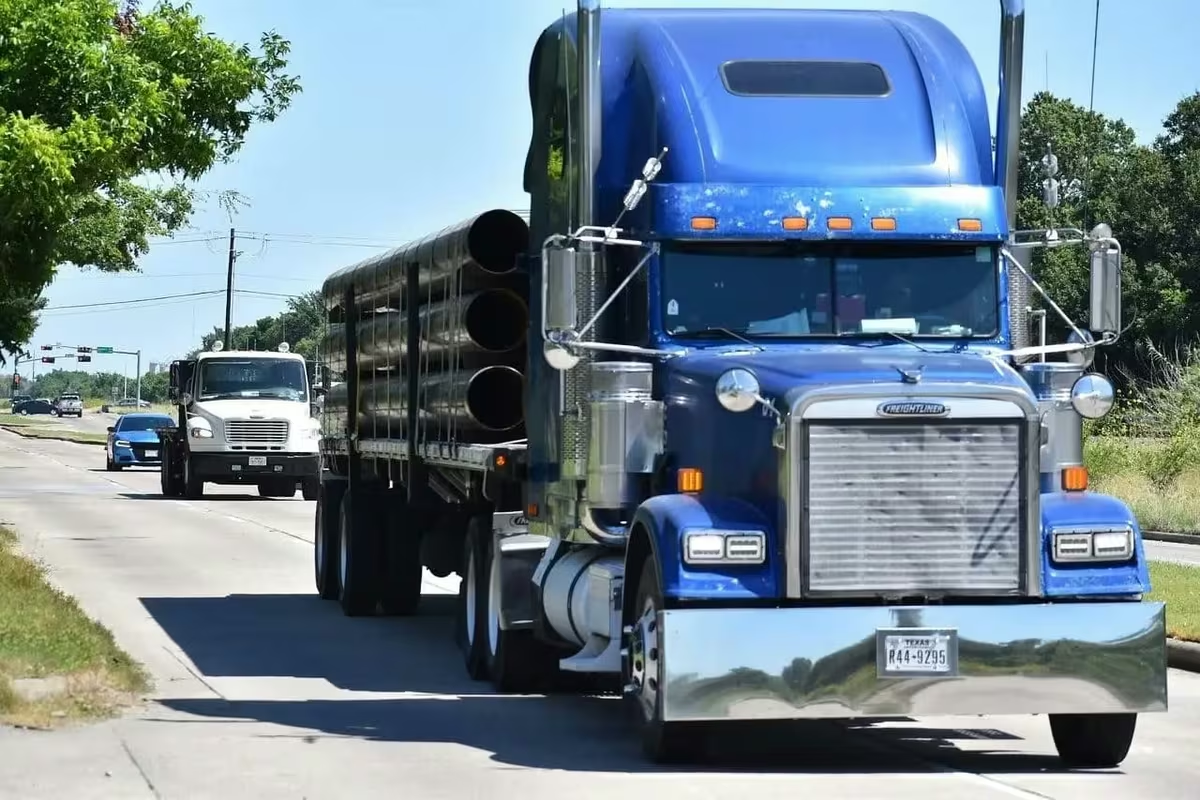 Truck Accidents18-wheeler and commercial-vehicle wrecks governed by federal trucking rules.
 Catastrophic InjuryBrain, spinal-cord, amputation, and severe-burn injuries that change a life.
 Wrongful DeathClaims brought by families after a fatal accident or act of negligence.
 Premises LiabilitySlip-and-fall and unsafe-property injuries on someone else's premises.
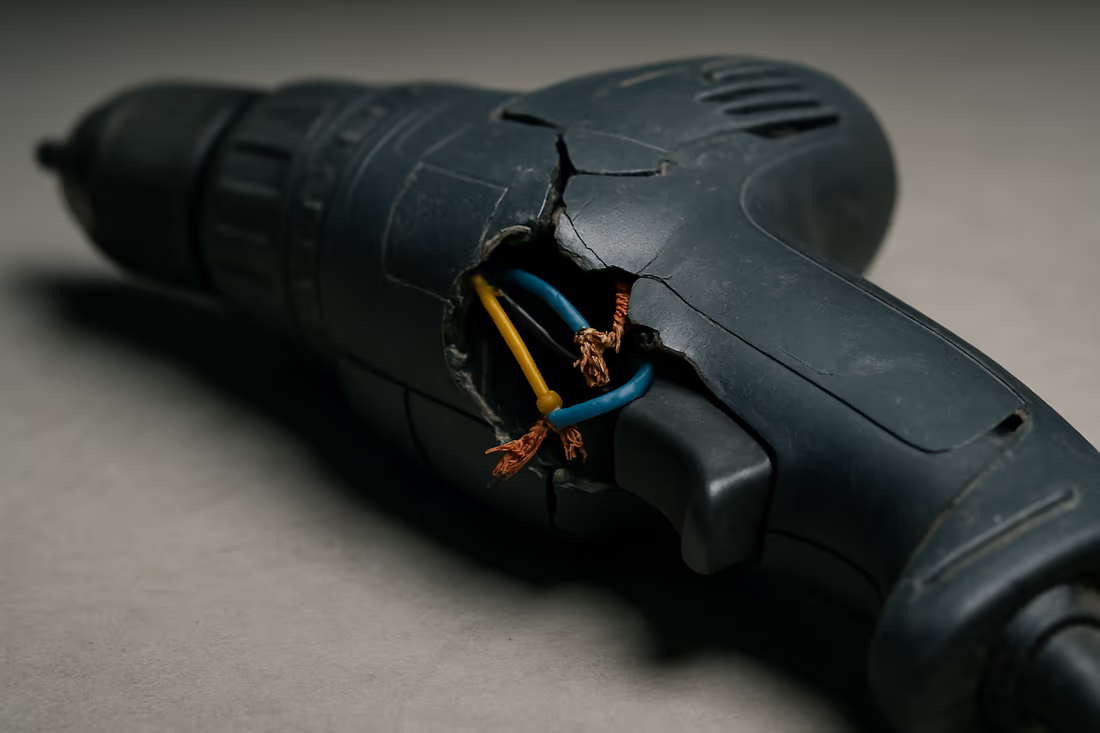 Product LiabilityInjuries caused by defective or unreasonably dangerous products.
 Oilfield AccidentsDrilling, pipeline, and refinery injuries across the energy sector.
 Industrial AccidentsPlant, warehouse, and heavy-equipment injuries in industrial settings.
 Offshore AccidentsRig, platform, and vessel injuries beyond the shoreline.
Industrial and Agricultural Workplace Injuries in Thibodaux
Sugarcane agriculture defines Lafourche Parish. The land between Thibodaux and the Gulf is planted in cane fields that require heavy machinery to harvest and process. During harvest season, sugarcane mills run continuous operations. Workers operate cane cutters, conveyor systems, and mill processing equipment under conditions that create serious injury risk.
Agricultural equipment injuries in Lafourche Parish include tractor rollovers, entanglement in cane cutting machinery, burns from mill processing equipment, and crush injuries from conveyor systems. These injuries often involve questions about equipment maintenance, safety guard removal, and training adequacy. When an equipment manufacturer sold a defective machine or an employer removed safety guards, a third-party liability claim exists alongside workers’ compensation.
Beyond agriculture, Lafourche Parish has fabrication yards, marine service companies, and energy support operations. Common industrial injuries include falls from scaffolding and elevated platforms, crush injuries from heavy equipment, chemical exposure, and electrocutions.
Workers’ Compensation Versus Third-Party Claims
Louisiana workers’ compensation covers medical expenses and a portion of lost wages when you are injured on the job. It does not require you to prove your employer was negligent. But it also limits your recovery. You cannot sue your employer directly for a workplace injury in most situations.
Third-party liability claims are different. If someone other than your employer caused your injury, you can file a negligence claim against that third party. In Lafourche Parish workplaces, third parties often include equipment manufacturers, subcontractors, property owners, and companies that provided defective tools. These claims are separate from workers’ compensation and can recover damages that comp does not cover, including pain and suffering.
Ask any attorney you are considering whether they pursue third-party claims alongside workers’ compensation. Many workers’ compensation attorneys do not litigate negligence claims. Many personal injury attorneys do not understand the interaction between comp benefits and tort damages. You need someone who handles both. Trey Morris Injury Lawyers evaluates every industrial injury case for both workers’ compensation benefits and third-party liability.
OSHA Standards in Agricultural and Industrial Settings
The Occupational Safety and Health Administration sets workplace safety standards that apply to Lafourche Parish industrial facilities and agricultural operations. Employers must provide safety training, maintain equipment, and follow industry-specific regulations for hazards like confined spaces, fall protection, and chemical handling. When an employer violates OSHA standards and a worker is injured, that violation is evidence of negligence.
OSHA inspection records and citation history are public information. Your attorney can obtain the safety record of any oilfield or industrial facility in Lafourche Parish. A history of violations for the same hazard that caused your injury strengthens your case.
Nicholls State University is a major employer in Thibodaux and an anchor of the community. While not an industrial setting, campus-related injuries from premises conditions, vehicle accidents, or construction projects on university property create their own category of claims.
Types of Injury Cases in Thibodaux and Lafourche Parish
Beyond offshore, oilfield, and agricultural claims, Thibodaux and Lafourche Parish generate the full range of personal injury cases. The types of claims that arise here reflect the area’s bayou geography, road infrastructure, and traffic patterns.
Motorcycle crashes occur on bayou corridor roads with limited shoulders and no separation from vehicle traffic. Louisiana’s warm climate means motorcycles share the road year-round. Helmet use is a factor in every motorcycle case because Louisiana law requires helmets and defense attorneys use helmet compliance to argue comparative fault.
Pedestrian accidents happen in central Thibodaux and along the LA-1 commercial corridor. The lack of sidewalks and pedestrian infrastructure on major parish roads contributes to these incidents. Bicycle accidents occur on parish roads without dedicated bike infrastructure.
Boat accidents occur on Bayou Lafourche, inland waterways, and Gulf waters accessible from Lafourche Parish. Premises liability claims arise from slip-and-fall injuries, inadequate security, and dog bites at commercial and residential properties. Product liability cases involve defective vehicles, equipment, and consumer goods with design defects, manufacturing defects, or inadequate warnings.
Survival Action
When an injury results in death, Louisiana allows surviving family members to file a wrongful death claim under La. C.C. Art. 2315.2. A separate survival action is brought under La. C.C. Art. 2315.1. These are two distinct claims.
How Louisiana Tort Reform Changes Affect Lafourche Parish Injury Cases
Louisiana’s 2024 and 2025 tort reform legislation changed filing deadlines, fault thresholds, and damage calculations for every injury case in Lafourche Parish. If you were injured in Thibodaux or anywhere in Lafourche Parish, you need to understand what changed.
The Two-Year Filing Deadline
For injuries after July 1, 2024, you have two years to file suit under La. C.C. Art. 3493.1. If you were hurt on or before July 1, 2024, the one-year deadline under La. C.C. Art. 3492 still governs you. Product liability claims get the same two years.
Your attorney should know this deadline without hesitation. If someone tells you that you have three years to file, they are wrong: Louisiana’s old deadline was one year, and the current one is two. That is not the attorney for your case.
The 51% Comparative Fault Bar
For causes of action arising on or after January 1, 2026, Louisiana applies a modified comparative fault system under La. C.C. Art. 2323, as amended by Act 15 of the 2025 Regular Session (HB 431). If you are found 51% or more at fault, you collect nothing. If you are 50% or less at fault, your damages are reduced by your share. Accidents before January 1, 2026 remain under pure comparative fault, where recovery is reduced by your percentage of fault but never barred outright.
Insurance adjusters build their defense strategy around pushing your fault percentage above 50%. Every statement you make after an accident, every social media post, every gap in medical treatment becomes ammunition for this argument. Ask any attorney you are considering how they handle comparative fault disputes. Trey Morris Injury Lawyers works with accident reconstructionists to establish fault percentages.
Collateral Source Rule Changes
The collateral source rule determines whether the jury hears about insurance payments or other benefits you received. Louisiana’s tort reform modified this rule to allow evidence of collateral source payments in certain circumstances. This can reduce the damages a jury awards. Your attorney needs a strategy for addressing collateral source arguments at trial.
Direct Action Statute
Louisiana’s direct action statute, La. R.S. 22:1269, now allows a lawsuit directly against the at-fault party’s insurance company only in limited situations, such as when the insured is bankrupt, insolvent, or deceased, cannot be served, or when the claim is against your own uninsured motorist carrier. In most cases the suit names the at-fault party, the insurer stays out of the caption, and the jury is not told about the insurance. Which situation applies shapes how an injury claim in Louisiana is filed.
Note that maritime claims filed in federal court operate under different procedural rules. The direct action statute applies to state law claims, but admiralty cases have their own jurisdictional framework. Your attorney should be able to explain which rules govern your specific claim.
Where Do You File an Injury Claim in Lafourche Parish?
The 17th Judicial District Court serves Lafourche Parish, Terrebonne Parish, and Assumption Parish. The Thibodaux courthouse is located at 303 West Third Street in Thibodaux. If you were injured in Lafourche Parish, this is where your state court case will be filed.
Venue rules in Louisiana generally require filing where the accident occurred or where the defendant is domiciled. For motor vehicle accidents and premises liability cases in Thibodaux, the 17th JDC is the appropriate venue. If the defendant is an out-of-state corporation, federal court may have jurisdiction under diversity rules when the amount in controversy exceeds $75,000.
Maritime injury claims create a different jurisdictional question. Jones Act cases can be filed in state or federal court. LHWCA claims go through the Department of Labor. Unseaworthiness claims are admiralty matters that typically proceed in federal court. The choice of forum affects which procedural rules apply and can influence the outcome. Ask your attorney which court is best for your specific claim and why.
The litigation process in the 17th JDC follows a standard timeline. After filing a petition, the discovery phase allows both sides to gather evidence through depositions, interrogatories, and document requests. Discovery typically takes 6 to 12 months depending on case complexity. Mediation is often required before trial. If mediation does not produce a settlement, the case proceeds to a jury trial. Trey Morris Injury Lawyers has handled cases in the 17th JDC and understands the local scheduling preferences and procedural expectations of this court.
What Compensation Does Louisiana Law Allow After a Thibodaux Injury?
Louisiana law allows recovery for medical expenses, lost wages, pain and suffering, and other damages after an injury caused by negligence. Understanding these categories helps you evaluate whether a settlement offer is fair.
Economic Damages
Economic damages cover measurable financial losses. Medical expenses include emergency treatment at Thibodaux Regional Health System, surgery, hospitalization, physical therapy, prescription medications, and future medical care. Lost wages cover income you missed while recovering.
Non-Economic Damages
Non-economic damages compensate for losses that do not have a receipt. Pain and suffering, emotional distress, and loss of consortium are the primary categories. Loss of enjoyment of life covers activities you can no longer do because of your injuries.
Maritime-Specific Damages
Maritime cases have additional damage categories. Under the Jones Act, injured seamen can recover maintenance and cure regardless of who caused the injury. Maintenance covers daily living expenses while you are unable to work. Cure covers all medical expenses until you reach maximum medical improvement. That is the point where your treating physician determines your condition has stabilized. If the vessel owner unreasonably denies or delays maintenance and cure, courts can award punitive damages for that denial.
Unseaworthiness claims allow recovery for the full range of compensatory damages. The standard is lower than negligence. You do not need to prove the vessel owner knew about the unsafe condition. You only need to prove the vessel or its equipment was not reasonably fit for its intended purpose.
Future Damages and Life Care Plans
Serious injuries require long-term medical care. A life care plan, prepared by a medical professional, outlines all future treatment you will need and its cost. An economist converts those future costs to present value. These calculations are technical and require expert testimony. Ask any attorney you are considering whether they work with life care planners and economists. If they do not, they may leave significant value on the table.
What Our Clients Say
- Victoria M.
Very professional and very easy to work with throughout the whole case!Lane and Men helped make the whole process go smonthly with no stress
- Sarah S.
First time being injured and needing a lawyer they where very helpful.They answered my questions Id have very well. Highly recommend them.
- Boudreaux W.
Very professional Ms Brooke is a very understanding and Hard working attorney she listened to our case along with personal problems and gave us the best advice anyone could ask for if I ever need an attorney in the future you guys are number one on the list keep up the great work The [W.] Family
- Cesar M.
I am very grateful to attorney Lane Robinson and his assistant for their constant support in my accident case.They have always been attentive and provided me with excellent assistance. We are now reaching the final stages of this process, and I am very satisfied with their professionalism. 💪✍️
- Luke D.
Great experience.Highly recommend. They made the whole process very easy. Settlement came faster then expected.
- Madison M.
[Trey Morris Injury Lawyers] were so amazing to my step mom Kimberly Kerry!They took very good care of her and went above and beyond to make sure she was taken care of!!!
- Marlon M.
[Trey Morris Injury Lawyers] firm was a great experience...they staff and lawyers are amazing.If you are looking for someone that's dependable and honest choose [Trey Morris Injury Lawyers]
- Nathan Y.
[Trey Morris Injury Lawyers] helped my wife receive compensation after an auto accident.They got the auto insurance companies to fully compensate for all her expenses. Things couldn’t have been easier and their rates were reasonable. Would recommend!
- Phat T.
I’m very happy with [Trey Morris Injury Lawyers].Thank you for taking care of me like we’re family. I will recommend anybody if you had an accident you need to call [Trey Morris Injury Lawyers]. They’re very Professional and they’ll take good care you like you’re their family. Thank again [Trey Morris Injury Lawyers].
- Mandy T.
After my auto accident the attorneys along with everyone in their office was nice and professional helping me get everything I needed with getting my car fixed
- Jillian E.
[Trey Morris Injury Lawyers] are the best personal injury lawyers!They helped me with my car accident and were professional from beginning to end.
- Connie B.
Great lawyers when you need someone you can count on!!They always make you feel like you're their TOP priority, they listen to every details and explain what's next to do. Thanks for your help.
Testimonials do not constitute a guarantee, warranty, or prediction regarding the outcome of your legal matter. Past results do not guarantee future outcomes.
Your Thibodaux Trial Team
The lawyers who work your file. Every Thibodaux case is handled by the firm's own trial attorneys.




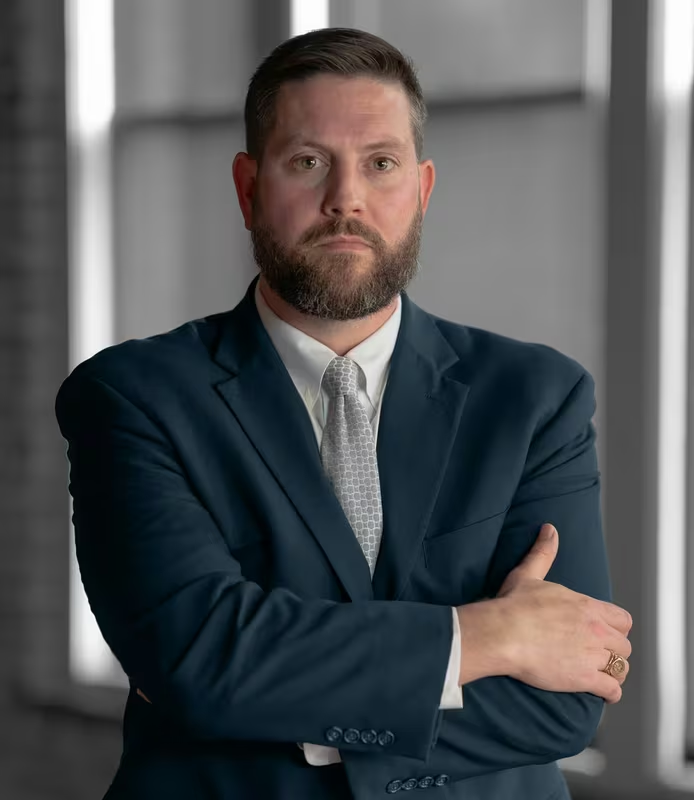






Trey Morris Injury Lawyers in the Thibodaux and Lafourche Parish Community
Trey Morris Injury Lawyers has handled personal injury cases across Louisiana for over 20 years, with more than 5,000 cases completed. The firm holds an AV Preeminent rating from Martindale-Hubbell, the highest peer review rating available. Multiple attorneys at the firm have been recognized by Super Lawyers. The firm has accumulated more than 2,791 five-star Google reviews from clients across Louisiana.
Maritime, offshore, industrial, and agricultural injury cases require specific experience. The legal theories, federal statutes, and procedural frameworks are different from standard personal injury litigation. Trey Morris Injury Lawyers handles Jones Act claims, LHWCA cases, and state-law industrial and agricultural injury claims for workers throughout the Gulf Coast region, including Lafourche Parish.
Local knowledge matters. Understanding the LA-1 oilfield corridor, knowing which stretches generate the most serious commercial vehicle crashes, and having experience in the 17th Judicial District Court all affect case outcomes. The firm has handled cases involving LA-1 truck collisions, Lafourche Parish industrial facility injuries, and offshore worker claims originating from the Thibodaux area.
Contingency Fee
A fee arrangement where the attorney is paid a percentage of the recovery and only if there is a recovery. The client pays nothing upfront and owes no attorney fees if the case is unsuccessful.
The firm operates on a contingency fee basis. You pay nothing unless the firm recovers compensation for you. There is no upfront cost and no hourly billing. View our case results and client reviews to evaluate our track record. Reach out when you are ready.