










Washington Parish wrecks happen on US-11 through Bogalusa, on Highway 21, Highway 25, and Highway 10, and on the log-truck routes that feed the timber industry, and the people hurt in them are taken to Our Lady of the Angels Hospital on Plaza Street in Bogalusa or Riverside Medical Center on Main Street in Franklinton. The Washington Parish Sheriff’s Office writes the report on the parish roads and the Franklinton Police Department writes it inside Franklinton. Suits are filed at the Washington Parish Courthouse on Washington Street in Franklinton. Trey Morris Injury Lawyers handles Washington Parish cases from our Covington office on River Highland Boulevard. We request the report, send preservation letters to the timber hauler and its insurer when a log truck is involved, and collect the emergency room records, because fault and insurance coverage get contested early in this parish. Those letters go out once the facts give us a sound basis to send them, and we move as promptly as the law permits because that is how the proof behind a claim gets kept and gathered. In a log truck case, the letter asks the hauler to keep the truck’s engine control module and electronic logging device data, the driver’s qualification file, and the maintenance and inspection records, which show the truck’s speed and braking, the driver’s hours on duty, and whether the company knew the driver or the truck was unsafe.
The law that governs the claim is Louisiana law and it does not change from parish to parish. Washington Parish injury claims are filed in the 22nd Judicial District Court in Franklinton, and for injuries after July 1, 2024 you have two years to file suit under La. C.C. Art. 3493.1. That two-year window is the outer limit, not the schedule.
Results for Louisiana Clients
- $409 MillionWrongful Death
A tragic case where an impaired driver of a commercial vehicle ran a red light, then collided with our client, causing serious bodily injury to the mother and the loss of life of her daughter.
- $49 MillionMotor Vehicle Accident
An impaired driver of a stolen vehicle driving the wrong way collided with our client head-on, resulting in brain injury and multiple broken bones.
- $32,195,000Industrial / Workplace
Failure to maintain proper safety protocols led to an explosion at an industrial plant causing a series of catastrophic injuries from broken bones, burns, spinal injury, and mental anguish.
- $31.5 MillionIndustrial / Workplace
Brain and spinal injuries followed an oil-field company failing to maintain equipment and provide a safe work site.
- $17.25 MillionCommercial Vehicle Accident
Client was struck head-on by a disconnected load of an 18-wheeler that crossed the median causing broken bones and amputation.
- $13 MillionCommercial Vehicle Accident
On the interstate, an 18-wheeler failed to yield right of way then made an unsafe lane change causing the accident which resulted in major bone breaks, damaged organs, and ultimately a leg amputation.
Past results do not guarantee future outcomes; each case is decided on its own facts.
What Types of Injury Cases Does a Washington Parish Lawyer Handle?
A Washington Parish injury lawyer handles civil claims where someone was hurt because another person, company, or driver failed to act with reasonable care. The case categories below track the patterns that move through the 22nd Judicial District Court in Franklinton and the kinds of incidents that happen on the roads, job sites, and properties across the parish. If your situation fits one of these categories, the underlying legal questions are familiar territory for an injury practice.
Motor Vehicle Collisions
Car wrecks are the most common injury matter in the parish. That includes rear-end collisions on US-11 through Bogalusa, intersection crashes in Franklinton, single-vehicle wrecks on rural roads like LA-10 and LA-25, and hit-and-runs. The legal questions are who had the right of way, who violated a traffic rule, and what each driver’s insurance covers.
Commercial Truck and 18-Wheeler Wrecks
Washington Parish sits along log-truck routes feeding the timber industry and along corridors that carry tractor-trailers between I-12 and southern Mississippi. Truck cases are different from car cases. Multiple parties can share fault: the driver, the trucking company, the maintenance contractor, the broker, the shipper. Federal motor-carrier rules layer on top of Louisiana traffic law, and the evidence (driver logs, electronic control module data, maintenance records) starts disappearing fast.
Motorcycle and Bicycle Crashes
Riders take the worst of any collision physics. The injury patterns are heavier, the insurance disputes are sharper, and the bias against riders shows up in how adjusters value the claim. The legal analysis is the same negligence framework as a car wreck, but the proof burden on damages is heavier.
Pedestrian Injuries
Pedestrian cases come out of parking lots, crosswalks, and shoulder-of-the-road incidents. Liability often turns on whether the driver was paying attention and whether the pedestrian had the right of way under the local traffic configuration.
Workplace and Industrial Accidents
The parish economy includes timber, paper, agriculture, and construction. Workplace injury cases split into two tracks. Louisiana workers’ compensation covers medical bills and a portion of lost wages regardless of fault. A separate third-party claim may exist when someone other than the direct employer (a contractor, an equipment manufacturer, a property owner) caused or contributed to the injury. Both tracks can run in parallel.
Premises Liability and Slip and Fall
These are claims against a property owner or business for an unreasonably dangerous condition. Grocery stores, restaurants, gas stations, apartment complexes, and parking lots are the usual settings. Louisiana premises law puts specific proof requirements on the injured person, and the evidence (incident reports, surveillance video, inspection logs) has a short shelf life.
Wrongful Death
When a death is caused by another party’s negligence, Louisiana law gives surviving family members a claim. The categories of who can bring the claim and what damages are compensable are defined by statute, and the analysis is more involved than a survival or injury claim alone.
Catastrophic Injury
Traumatic brain injuries, spinal cord injuries, severe burns, and amputations belong in their own category because the medical proof, the life-care planning, and the future-damages analysis are substantially more complex than a soft-tissue case. The case type that produced the injury (auto, truck, workplace, premises) drives the liability theory, but the damages workup is a different exercise.
Defective Products
When a product failure causes injury (a tire blowout, a defective machine guard, a malfunctioning consumer product), the claim runs against the manufacturer or seller under Louisiana product-liability law, not against the driver or property owner.
What This Means for Your Situation
The category your case falls into shapes everything that comes next: who the defendants are, what insurance policies apply, what evidence has to be preserved, and which deadlines matter. When you talk to any lawyer about a Washington Parish injury, ask them to name the case category, name the likely defendants, and explain why. A lawyer who can do that in the first conversation is working from the facts. A lawyer who cannot is guessing.
Local Coverage. Statewide Record.
- $1 Billion+
Outcomes for Louisiana clients
Verdicts and settlements won across the state by the same trial team that handles Washington Parish cases.
- 11
Trial attorneys, one team
Your case is handled by the firm's own trial attorneys, and we respond in minutes, 24/7.
- 24/7
We come to you
An attorney travels to you in Washington Parish, at home or at the hospital, or meets by video the same day. Free case review, and no fee unless we win.
- 127
Cases resolved over $1 million
Verdicts and settlements of $1 million or more, won by the same trial team that handles Washington Parish cases.
What Should You Do Immediately After an Accident in Washington Parish?
The minutes and hours after a crash or injury shape the rest of the claim. The goal is simple: protect your health, document what happened, and avoid statements that get used against you later. The steps below apply to wrecks on Highway 21, Highway 25, Highway 10, and the rural parish roads that connect Bogalusa, Franklinton, Angie, and Varnado.
Call 911 and Get a Crash Report
Call 911 from the scene, even if the other driver suggests handling it without police. In Washington Parish, the responding agency is usually the Louisiana State Police, the Washington Parish Sheriff’s Office, or Bogalusa or Franklinton police, depending on where the crash occurred. The officer writes the crash report that insurers will read first. If you can speak, give a clear, factual statement about what happened. Do not guess about speed, distance, or fault. Ask the officer for the report number before you leave.
Get Medical Care the Same Day
Get evaluated the same day, even if you think you can walk it off. Adrenaline masks soft-tissue and head injuries for hours. In Washington Parish, that usually means the Riverside Medical Center emergency department in Franklinton or Our Lady of the Angels Hospital in Bogalusa. If symptoms appear overnight, go in the morning. A gap between the crash date and the first medical visit is the single most common reason insurers discount a claim. Tell the provider every body part that hurts. Undocumented pain is treated as if it did not exist.
Document the Scene Before You Leave
If you are physically able, take photos before vehicles are moved. Capture the position of each vehicle, all four corners of every car involved, license plates, debris, skid marks, traffic signals, and any visible injuries. Photograph the other driver’s insurance card and driver’s license. Get names and phone numbers from any witnesses. Witnesses leave, and they are hard to find later.
Be Careful What You Say and Sign
Do not apologize at the scene, and do not speculate about fault to the other driver, the police, or anyone with a camera. Within a day or two, an adjuster from the other driver’s insurer will call asking for a recorded statement. You are not required to give one. Recorded statements are taken to pin down a version of events before you have seen a doctor or reviewed the crash report. The same caution applies to signed medical authorizations. A broad authorization lets the insurer pull years of unrelated medical history to argue your injuries are pre-existing.
Preserve Evidence That Disappears Fast
Some evidence has a short shelf life. Surveillance footage from gas stations, businesses along Columbia Street in Bogalusa, or intersections in Franklinton is typically overwritten within seven to thirty days. Commercial truck data, including electronic logging device records and onboard camera footage, can be erased on a routine cycle if no one sends a preservation letter. Keep the damaged vehicle, your clothing, and any broken equipment until someone has inspected them. Do not authorize the insurer to total and dispose of the vehicle until the file is documented.
Write Down What You Remember
Within twenty-four hours, write a private timeline of the day, the crash, and the symptoms that followed. Memory degrades quickly. A contemporaneous note made the same day carries more weight than a recollection given months later in a deposition.
These steps do not require hiring anyone. They are what a careful person does to keep options open. The decision about whether a lawyer belongs in the picture is a separate question, addressed in the sections that follow.
Washington Parish Practice Areas
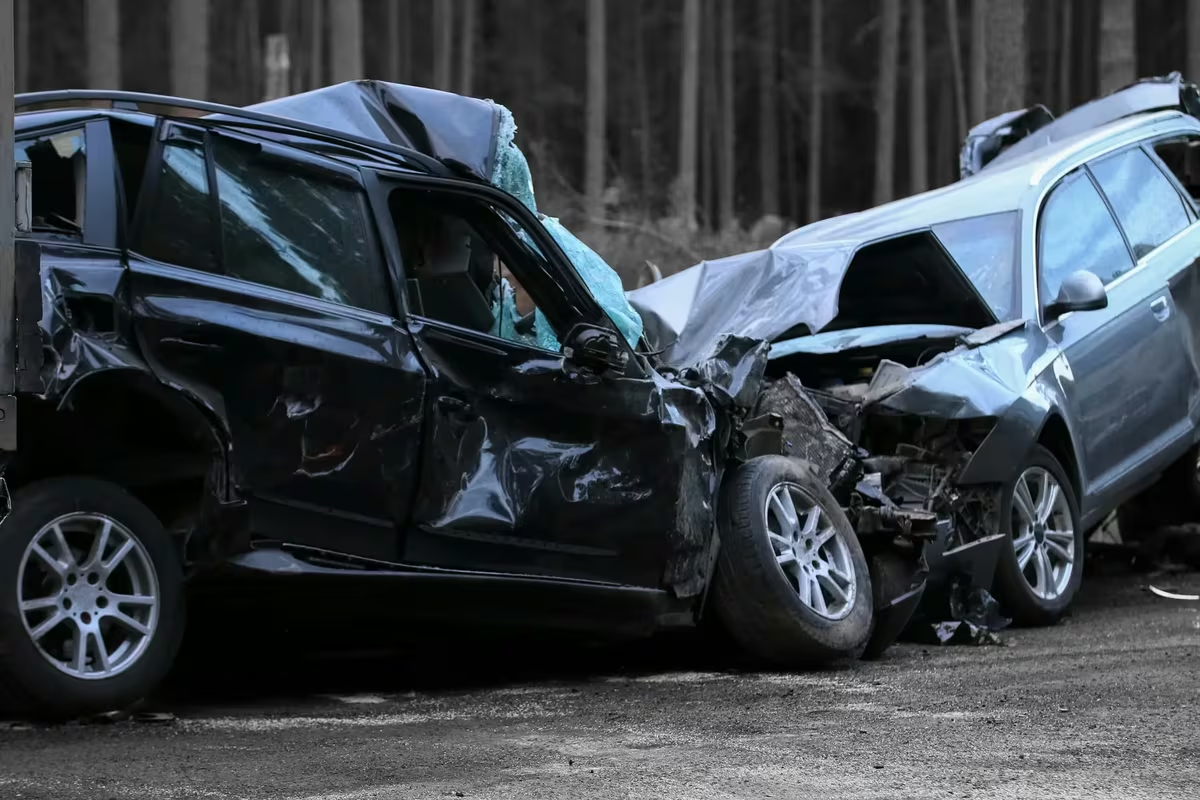 Car AccidentsRear-end, intersection, and highway collisions across Louisiana.
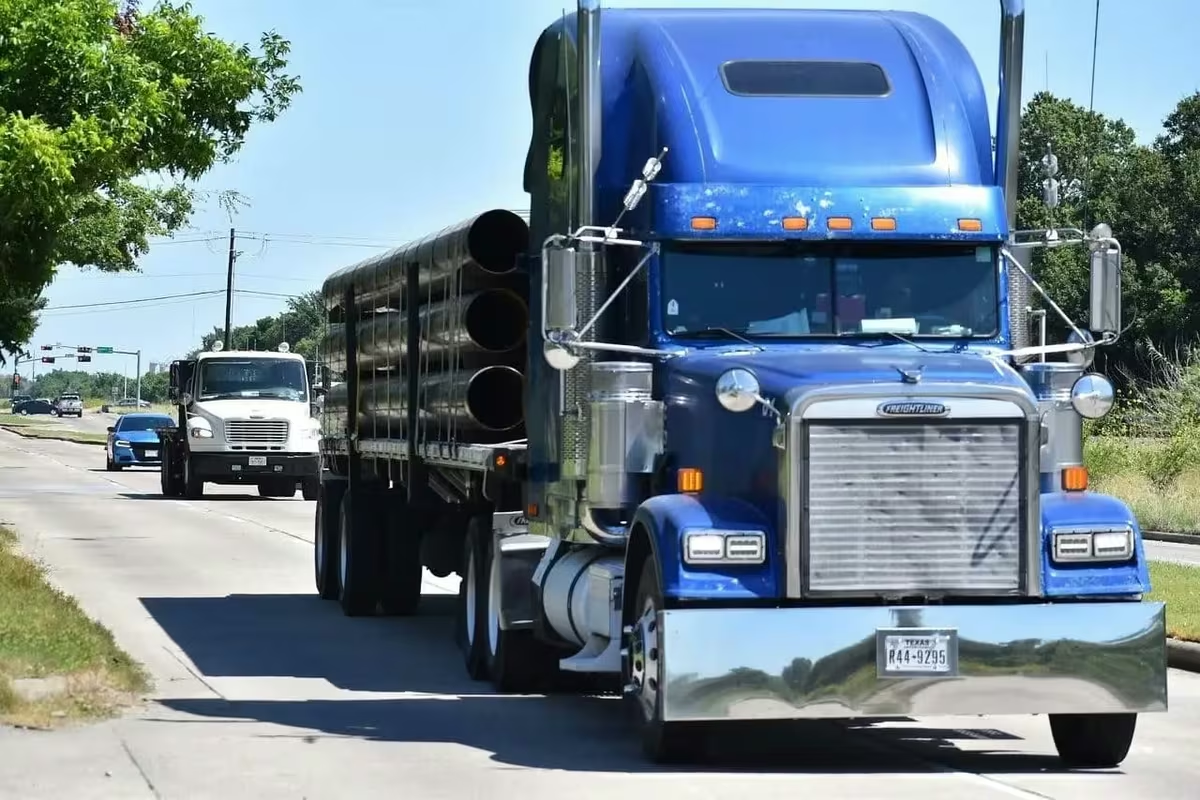 Truck Accidents18-wheeler and commercial-vehicle wrecks governed by federal trucking rules.
 Catastrophic InjuryBrain, spinal-cord, amputation, and severe-burn injuries that change a life.
 Wrongful DeathClaims brought by families after a fatal accident or act of negligence.
 Premises LiabilitySlip-and-fall and unsafe-property injuries on someone else's premises.
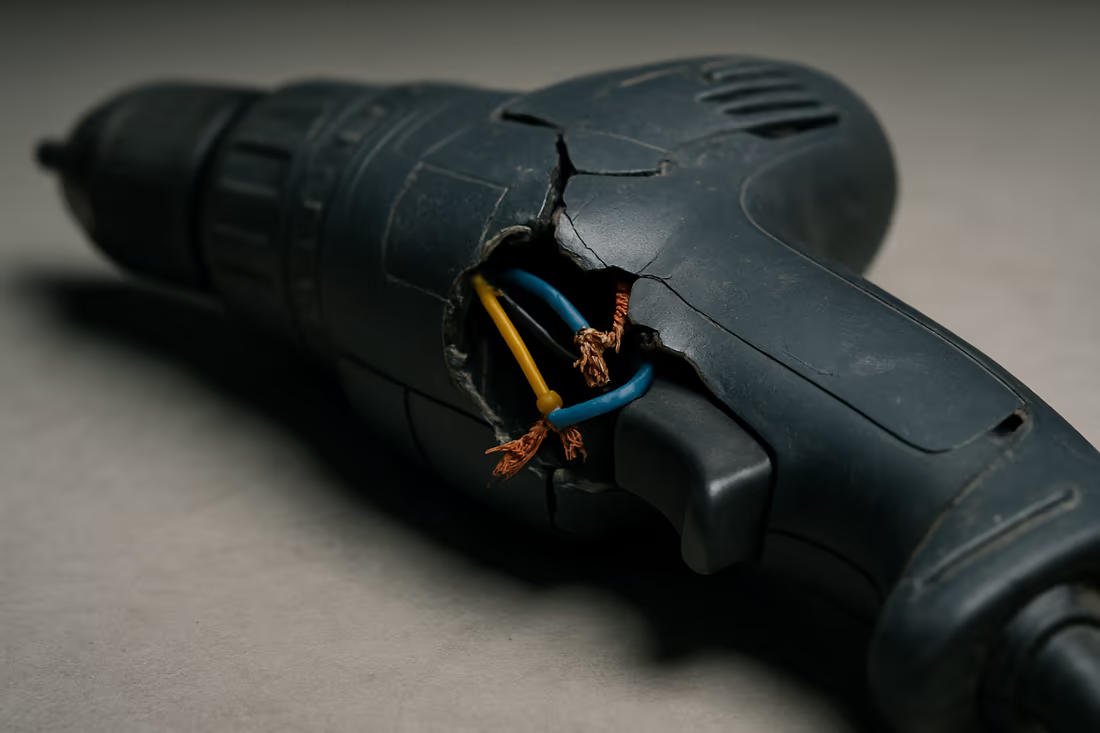 Product LiabilityInjuries caused by defective or unreasonably dangerous products.
 Oilfield AccidentsDrilling, pipeline, and refinery injuries across the energy sector.
 Industrial AccidentsPlant, warehouse, and heavy-equipment injuries in industrial settings.
 Offshore AccidentsRig, platform, and vessel injuries beyond the shoreline.
Do You Need a Washington Parish Injury Lawyer After an Accident?
Not every accident requires a lawyer. A minor fender-bender with no injuries, a clear at-fault driver, and an insurer that pays the property-damage estimate without argument is a claim you can probably handle yourself. The honest answer is: hire a lawyer when the facts of your situation make self-representation a bad trade. Below are the situations where that trade tips, and the questions to ask before signing with anyone.
You are doing research because something happened. Read this, then compare. The point is to give you a framework for deciding, not to push you toward a signed contract.
When You Probably Do Not Need a Lawyer
Some claims resolve cleanly on their own. If you walked away from the crash, the other driver admitted fault, their insurer accepted liability, and the only loss is a repair estimate, you can usually negotiate that directly. The same is true for very small medical claims where treatment was a single urgent-care visit and the insurer offers to pay the bill plus a modest amount for inconvenience.
The test is whether the numbers and the facts are simple enough that a lawyer’s fee would eat most of what a lawyer could add. Ask yourself: is liability disputed, are injuries ongoing, or is the insurer pushing a number that does not cover your actual bills? If the answer to all three is no, you may not need counsel.
When Hiring a Lawyer Usually Makes Sense
The calculation changes when any of these are true:
- You went to the emergency room, were admitted, or are still treating weeks later.
- A commercial vehicle, 18-wheeler, delivery van, or company-owned truck was involved.
- The other driver was uninsured, underinsured, or fled the scene.
- The insurer is delaying, denying, blaming you, or asking for a recorded statement before you have talked to a lawyer.
- More than one vehicle or more than one possible at-fault party is involved.
- You missed work, lost income, or cannot return to your old job.
- The crash happened on the job, on a job site, or in connection with work.
- A loved one died.
These situations involve disputed facts, multiple insurance layers, or damages that are hard to value without medical and economic records lined up against the law. An adjuster’s first offer in cases like these is almost always built around what the carrier hopes you will accept, not what the claim is actually worth on the evidence.
What a Lawyer Actually Does in a Washington Parish Claim
It helps to know what you are paying for. An injury lawyer in a Washington Parish case typically handles four things: investigating the crash and preserving evidence, dealing with every insurance carrier so you are not on the phone with adjusters during treatment, coordinating medical records and bills so the full picture of your injuries is documented, and either negotiating a settlement or filing suit in the 22nd Judicial District Court when the insurer will not pay a fair number.
Ask any attorney you interview how they handle each of those four. The answers tell you whether they will personally work the file or hand it to a case manager. Ask how often they actually file suit versus settle, and ask what their plan is if the insurer refuses to move. A lawyer who cannot answer those questions in plain English is not the right hire, and that goes for our firm too.
Acting Quickly Matters, Even If You Do Not Sign Right Away
Evidence in a Washington Parish crash starts disappearing within days. Surveillance video at intersections in Bogalusa and Franklinton overwrites on short cycles. Skid marks fade. Witnesses move on. Vehicle damage gets repaired. Commercial carriers can move trucks, drivers, and electronic data once the immediate scene is cleared.
You do not have to hire a lawyer the day after a crash. But waiting weeks to even ask questions costs you proof you cannot get back. A short conversation with an attorney soon after the accident, even if you decide to handle the claim yourself, is usually free and helps you protect the file you may need later.
What Louisiana Laws Affect Washington Parish Injury Claims?
Louisiana is a civil-law state, and that changes how an injury claim reads on paper. The rules that matter most to a Washington Parish case sit in the Louisiana Civil Code and the Louisiana Revised Statutes, not in common-law cases borrowed from Texas or Mississippi. Ask any attorney you interview to walk you through which Louisiana provisions apply to your facts. If they answer with general personal-injury talk and no code articles, that tells you something.
This section explains the framework. Filing deadlines, the specific claim process, settlement math, and what happens when the other driver has no insurance are covered in other sections of this page.
How Does Louisiana Assign Fault in an Injury Claim?
Louisiana uses a comparative-fault system. The court (or the adjuster, when the case settles) assigns a percentage of fault to each party involved, and damages are reduced by the injured party’s share. A driver found 20% at fault for a Bogalusa intersection wreck still has a claim, but the award is cut by that 20%. This is different from the strict bar that applies in some neighboring states.
The duty-risk analysis Louisiana courts use asks whether the defendant owed a duty, whether the duty was breached, whether the breach caused the harm, and whether the harm was within the scope of the duty. A competent attorney can show you, on your facts, how each element gets proved. Ask them to do that with your file in front of them.
What Damages Can a Washington Parish Plaintiff Pursue?
Louisiana law recognizes economic damages (medical bills, lost wages, future earning capacity, property damage) and non-economic damages (pain and suffering, mental anguish, loss of enjoyment of life). In cases involving a death, surviving family members may bring claims under the wrongful-death and survival-action articles of the Civil Code. Punitive damages exist only in narrow categories the legislature has specifically authorized, such as certain drunk-driving cases.
Which Courts Hear Washington Parish Injury Cases?
Most civil injury suits filed in Washington Parish go to the 22nd Judicial District Court, which also covers St. Tammany Parish. Appeals from that court go to the Louisiana First Circuit Court of Appeal in Baton Rouge. Smaller-dollar matters may proceed in justice of the peace or city court depending on the amount in controversy and where the incident occurred. Federal court in the Eastern District of Louisiana can come into play when the parties are from different states and the amount in controversy supports diversity jurisdiction.
Ask a prospective attorney how often they appear in the 22nd JDC and whether they have tried a case to verdict there. Knowing the courthouse, the judges, and the local jury pool is part of the job in a parish this size.
How Long Do You Have to File a Personal Injury Claim in Louisiana?
Louisiana sets a filing deadline for personal injury claims, and missing it generally ends the claim regardless of how strong the underlying facts are. For a Washington Parish accident, the lawsuit must be filed with the proper court before that deadline expires, even if settlement discussions with an insurance adjuster are still ongoing.
Why the Deadline Date Is Not Always Obvious
The injury date is usually clear in a car wreck or a fall. It is less obvious when symptoms develop later, when the at-fault party is a government entity, when a minor is injured, or when surviving family members bring the claim after a death. Which deadline applies turns on the injury date: two years for injuries after July 1, 2024 under La. C.C. Art. 3493.1, and the shorter deadline that prior law imposed for injuries on or before that date. When the defendant is a government entity, there is no pre-suit notice requirement, but service of citation must be requested within 90 days of filing under La. R.S. 13:5107(D).
The identity of the defendant also matters. Claims involving a public entity, a public hospital, or a public employee acting in an official capacity can carry separate procedural steps and notice requirements that run in parallel with the main filing deadline. Those parallel steps can come due well before the lawsuit deadline itself, which is another reason early review of the facts pays off.
Why Waiting to Call a Lawyer Costs Cases
Evidence has its own clock that runs faster than any legal deadline. Surveillance video from gas stations and businesses along Highway 21 or Highway 25 is often overwritten within 30 to 90 days. Skid marks fade. Vehicles get repaired or scrapped. Witnesses move, change phone numbers, or stop returning calls. By the time someone calls a lawyer six months in, the strongest pieces of the case may already be gone even though the filing deadline is still months away.
How Does the Personal Injury Claim Process Work in Washington Parish?
A personal injury claim in Washington Parish moves through predictable stages: investigation, medical documentation, demand and negotiation, suit if needed, discovery, mediation, and trial or settlement. Most cases resolve before trial, but the work done in the early stages determines what the case is worth at the end. The parish files claims at the Washington Parish Courthouse in Franklinton, and serious injury matters proceed in the 22nd Judicial District Court.
Investigation and Evidence Preservation
The first phase is fact development. That means obtaining the crash report from Louisiana State Police or the local agency that worked the scene, identifying witnesses, photographing the location, and preserving physical evidence.
Medical Treatment and Documentation
The medical record is the spine of the claim. Gaps in treatment, missed appointments, and inconsistent histories are the first things a defense adjuster flags.
The Demand Package
Once treatment reaches a plateau or the injury is well-documented, the attorney assembles a demand package. That includes the liability narrative, medical records and bills, wage-loss documentation, and a damages summary. The demand goes to the at-fault party’s insurer.
Filing Suit and Discovery
If negotiation does not produce a fair number, the lawyer files a petition in the appropriate Louisiana court. Filing protects the claim and opens formal discovery: written questions (interrogatories), document requests, and depositions.
Mediation, Trial, or Settlement
Many Washington Parish cases resolve at mediation, where a neutral helps both sides find a number. If mediation fails, the case proceeds to trial before a judge or jury. Throughout the process, the client makes the call on whether to accept a settlement or proceed.
How Much Is a Washington Parish Injury Claim Worth?
A Washington Parish injury claim is worth the sum of the losses it can prove. The value comes from adding up economic damages, attaching a defensible figure to non-economic damages, and then measuring that total against the insurance coverage and assets actually available to pay.
Economic Damages: The Numbers on Paper
Economic damages are the losses with receipts. Past medical bills, though in lawsuits filed on or after January 1, 2026, past medical expenses are limited to what your health insurer or Medicare actually paid, plus your own deductibles and co-pays. Future medical care your doctors say you will need. Lost wages from time off work. Lost earning capacity if the injury changed what you can do for a living. Property damage to a vehicle. Out-of-pocket costs like medication, mileage to appointments, and home modifications when an injury requires them.
Non-Economic Damages: Pain, Limitation, and Life Change
Non-economic damages cover what the receipts do not. Pain and suffering. Mental anguish. Loss of enjoyment of life. Disfigurement. Loss of consortium for close family. Two people with the same diagnosis can end up with very different numbers because one returned to normal in six months and the other lives with daily limitation a decade later.
The Coverage Ceiling
The damages number is one half of the equation. The other half is what can actually be collected.
Most personal injury claims are paid by an insurance policy, and a policy has limits.
Why Early Settlement Offers Rarely Reflect Value
Insurers often make an offer within weeks of an accident. That offer is built on the medical bills generated to date. Accepting that early offer closes the claim.
What Factors Increase or Reduce a Settlement Value in Washington Parish?
Settlement value is not a number an adjuster pulls from the air. It is the product of specific facts about the injury, the evidence, the defendant, and the conduct of every party before and after the crash. Below are the categories that move the number up or down in a Washington Parish claim.
Severity and permanence of the injury
The most reliable driver of value is the medical record. Objective findings on imaging, surgical intervention, documented permanent impairment, and a treating physician’s written prognosis push value up. Soft-tissue complaints that resolve within a few weeks and leave no objective findings push value down.
Quality and consistency of medical treatment
Continuous, documented care from the date of the crash forward supports the claim. Long gaps between the accident and the first medical visit, gaps in treatment in the middle of care, or noncompliance with referrals all give the insurer arguments to discount the injury or attribute it to something else.
Lost wages and earning capacity
Documented wage loss raises the number. That means pay stubs, employer letters, tax returns, and, when the injury affects future work, a vocational expert or economist who can quantify lost earning capacity.
Liability clarity and comparative fault
A clear-liability rear-end with a police report assigning fault to the other driver settles differently than a contested intersection collision with no independent witnesses. For accidents on or after January 1, 2026, Louisiana applies a modified comparative fault system under the Civil Code comparative fault article as amended by Act 15 of the 2025 Regular Session (HB 431). A person found 51 percent or more at fault recovers nothing, and a person at 50 percent or less has damages reduced by that share. Accidents before January 1, 2026 remain under the older rule, where any share of fault reduced the award without barring recovery. Insurers know this and will press for a fault allocation whenever the facts allow.
Available insurance coverage
A claim is worth what can actually be collected. A catastrophic injury caused by a driver carrying minimum limits is constrained by those limits unless additional coverage exists (uninsured/underinsured motorist coverage on the injured person’s own policy, an employer’s policy if the at-fault driver was on the job, an umbrella policy, or a separately liable party).
Venue and jury expectations
Washington Parish claims that proceed in the 22nd Judicial District Court are evaluated against what local juries have historically done with similar facts. Defense counsel and insurers run the same analysis.
Conduct of the defendant
Aggravating conduct increases value. Conduct that supports punitive or exemplary damages under Louisiana law (such as La. C.C. art. 2315.4 for intoxicated drivers) shifts the negotiation entirely.
Conduct of the claimant
Social media posts inconsistent with claimed injuries, prior similar injuries that were not disclosed, recorded statements given without counsel, and surveillance footage of physical activity beyond stated restrictions all reduce value.
Strength of the documentary record
Claims with organized medical chronologies, complete billing, employment records, photographs, expert reports, and a clean demand package settle higher than claims presented with gaps.
What If the At-Fault Driver Has No Insurance in Washington Parish?
If the driver who hit you has no insurance, your own auto policy is usually the first place to look for compensation. The path runs through uninsured motorist coverage, underinsured motorist coverage, or a direct claim against the at-fault driver’s personal assets.
How Uninsured and Underinsured Motorist Coverage Works
Uninsured motorist (UM) coverage pays when the at-fault driver has no liability insurance at all. Underinsured motorist (UIM) coverage pays when the at-fault driver has insurance, but the limits are too low to cover the harm. Both are optional coverages on your own auto policy and they apply to you, household members, and passengers in your vehicle.
If you don’t remember whether you carry UM or UIM, pull your declarations page or call your agent before you talk to anyone else. The single most important question to ask an attorney early on is whether they’ve checked every available policy for UM coverage. A lawyer who answers that question with a process, not a guess, is paying attention.
When the Driver Flees or Can’t Be Identified
A hit-and-run is treated as an uninsured motorist situation for purposes of your own policy. If a driver leaves the scene and is never identified, UM coverage on your vehicle is often the only realistic source of compensation.
Phantom-vehicle claims, where another vehicle caused the wreck without physical contact, follow stricter proof rules under most policies.
Pursuing the At-Fault Driver Directly
Filing suit against an uninsured driver personally is an option, but it is rarely the answer by itself. Suing the driver may still be necessary procedurally to access your own UM coverage, since most policies require you to establish the other driver’s fault and the amount of damages.
Can You Still Recover Compensation If You Were Partly at Fault?
Yes, and the answer depends on the accident date. For accidents on or after January 1, 2026, Louisiana applies a modified comparative fault system under the Civil Code comparative fault article as amended by Act 15 of the 2025 Regular Session (HB 431), so a person found 51 percent or more at fault recovers nothing, while a person at 50 percent or less has damages reduced by the assigned share. For accidents before January 1, 2026, a partly responsible person could still pursue damages from any other at-fault party, with the award reduced by the percentage of fault assigned. Because the accident date now controls the outcome, the fault percentage an insurer proposes deserves close attention.
The practical question in a Washington Parish claim is rarely “can you file?” It is “how will fault be apportioned?” That apportionment drives the math on the final number.
How Louisiana’s Comparative Fault Rule Works
Under Louisiana’s comparative fault framework, a fact-finder (judge or jury) assigns a percentage of fault to each party whose conduct contributed to the harm. Damages are then reduced by the injured party’s share. A claimant found 20 percent at fault who suffers $100,000 in proven damages would see the award reduced to $80,000. A claimant found 60 percent at fault on the same damages would still be entitled to $40,000. Louisiana does not cut off the claim at 50 percent the way some other states do.
Common Situations Where Shared Fault Comes Up
Shared fault arguments appear in most contested cases. Insurance adjusters routinely raise comparative fault early because each percentage point shifted onto the claimant reduces what the carrier pays.
What This Means For Evaluating a Claim
Partial fault changes the size of the claim. It does not, by itself, end it.
How Much Does a Washington Parish Injury Lawyer Cost?
Most personal injury lawyers in Washington Parish, including Trey Morris Injury Lawyers, work on a contingency fee. You pay no hourly rate and no upfront retainer. The lawyer is paid a percentage of the settlement or judgment, and only if money is collected for you. If the case ends with no compensation, you owe no attorney’s fee.
That structure shifts the financial risk of the claim onto the law firm. The firm advances the cost of the investigation, expert witnesses, medical record requests, court filings, depositions, and trial preparation. Those costs are reimbursed at the end of the case out of the settlement, separate from the attorney’s fee. Before you sign, ask exactly how case costs are handled if the claim does not settle, and get the answer in writing.
Contingency Fee Basics
A contingency fee is a percentage agreed to in writing at the start of representation. In Louisiana personal injury work, the fee is commonly stated as one tier if the case settles before suit is filed and a higher tier if a lawsuit becomes necessary. The exact percentages and the breakpoint belong in the written fee agreement, not in conversation. Ask the lawyer to walk you through a sample settlement statement so you can see how the fee, case costs, medical liens, and your net payment are calculated.
The Free Consultation
The initial consultation with a Washington Parish injury lawyer is free. You can describe what happened, share photos and records, and get a candid read on whether the claim is worth pursuing. There is no obligation to hire the firm after the meeting, and nothing you share in the consultation creates a fee.
Ask any attorney you interview three direct questions: what percentage they charge before and after suit is filed, who pays case costs if the claim loses, and how medical bills and health insurance liens are handled at settlement. A lawyer who answers those clearly is treating you like a client. A lawyer who dodges them is treating you like a signature.
What You Pay Out of Pocket
Under a standard contingency arrangement, you pay nothing out of pocket while the case is pending. No filing fees, no expert fees, no deposition costs. Medical treatment is often handled on a letter of protection or through your own health coverage, with the balances resolved at settlement. The goal is straightforward: the cost of hiring a lawyer should never be the reason an injured person in Washington Parish goes without one.
Where Does a Washington Parish Injury Lawyer Serve — From Bogalusa to Franklinton?
Washington Parish sits in the southeastern corner of Louisiana, bordered by Mississippi to the north and east. A lawyer who serves the parish covers the entire footprint, from the population centers along U.S. 11 to the rural roads that wind through pine country. The 22nd Judicial District Court in Franklinton is the courthouse where civil injury claims arising in the parish are filed and tried.
Bogalusa
Bogalusa is the largest city in Washington Parish and the historic mill town along the Pearl River near the Mississippi line. Injury claims that arise inside the city limits, including collisions on Columbia Street, Avenue B, and the surrounding state highway connectors, still get filed in the parish seat at Franklinton. A lawyer serving Bogalusa clients handles intake, document signing, and witness meetings locally and travels to the courthouse when the case requires it.
Franklinton
Franklinton is the parish seat and the location of the 22nd Judicial District courthouse. Personal injury suits filed in Washington Parish are docketed here, and depositions, hearings, and trials happen in the same building. Living in or near Franklinton means the courthouse is a short drive; living in Bogalusa or the western edge of the parish means a longer trip on Highway 10 or Highway 25. A lawyer who regularly appears in this courthouse already knows the clerks, the judges’ procedures, and the local scheduling rhythm.
Surrounding communities
The parish also includes smaller communities such as Angie, Varnado, Mount Hermon, Pine, and Thomas, along with unincorporated areas that feed Highway 10, Highway 16, Highway 21, and Highway 25. Wrecks on these rural two-lane roads often involve long EMS response times and limited witnesses, which changes how evidence gets preserved. A lawyer serving the parish handles claims from any of these communities and does not require the client to travel to a metropolitan office for a first meeting.
How service actually works
Geography in Washington Parish matters less than it used to. Initial consultations happen by phone or video. Documents move by secure electronic signature. Medical records, crash reports, and 911 audio are requested in writing and arrive by mail or portal. The lawyer comes to the client for in-person meetings when distance, injury, or transportation makes that the right call. Court appearances, mediations, and trial happen where the rules require, which for a Washington Parish claim almost always means the courthouse in Franklinton.
Ask any lawyer you interview where they would file your case and how often they appear in that courthouse. The answer tells you whether they know the venue or are guessing.
What Our Clients Say
- Victoria M.
Very professional and very easy to work with throughout the whole case!Lane and Men helped make the whole process go smonthly with no stress
- Sarah S.
First time being injured and needing a lawyer they where very helpful.They answered my questions Id have very well. Highly recommend them.
- Dawn H.
Very professional, informed me of every step that was taken with the case and was always letting me know the status.Very nice people and was very respectful. Thanks a whole lot for the service Erin, Chelsea, and Morgan!!!
- Yamileth L.
Jessica has been great helping throughout our whole process at [Trey Morris Injury Lawyers]!She has been great with communication and making everything so easy!
- Sarah S.
Awesome people, they truly care about their clients.Give them a call today if you want to be taken care of the way you deserve to be.
- Kim K.
I have nothing but positive things to say about [Trey Morris Injury Lawyers].This firm went above and beyond to help me and I couldn’t have asked for a better outcome!!!
- Debra L.
They were extremely courteous, helpful and informative all along the process of our wrongful death suit.I recommend you talk to them if you need lawyer
- Nathan Y.
[Trey Morris Injury Lawyers] helped my wife receive compensation after an auto accident.They got the auto insurance companies to fully compensate for all her expenses. Things couldn’t have been easier and their rates were reasonable. Would recommend!
- Phat T.
I’m very happy with [Trey Morris Injury Lawyers].Thank you for taking care of me like we’re family. I will recommend anybody if you had an accident you need to call [Trey Morris Injury Lawyers]. They’re very Professional and they’ll take good care you like you’re their family. Thank again [Trey Morris Injury Lawyers].
- Jordyn L.
Hired them for an automobile accident and absolutely loved them.Very professional and reliable. Highly recommend!
- Jillian E.
[Trey Morris Injury Lawyers] are the best personal injury lawyers!They helped me with my car accident and were professional from beginning to end.
- Connie B.
Great lawyers when you need someone you can count on!!They always make you feel like you're their TOP priority, they listen to every details and explain what's next to do. Thanks for your help.
Testimonials do not constitute a guarantee, warranty, or prediction regarding the outcome of your legal matter. Past results do not guarantee future outcomes.
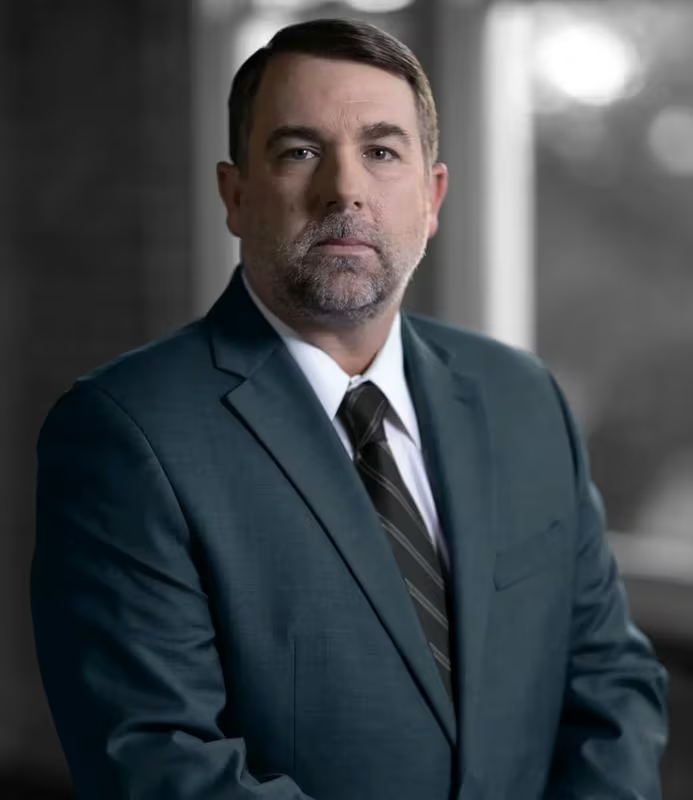
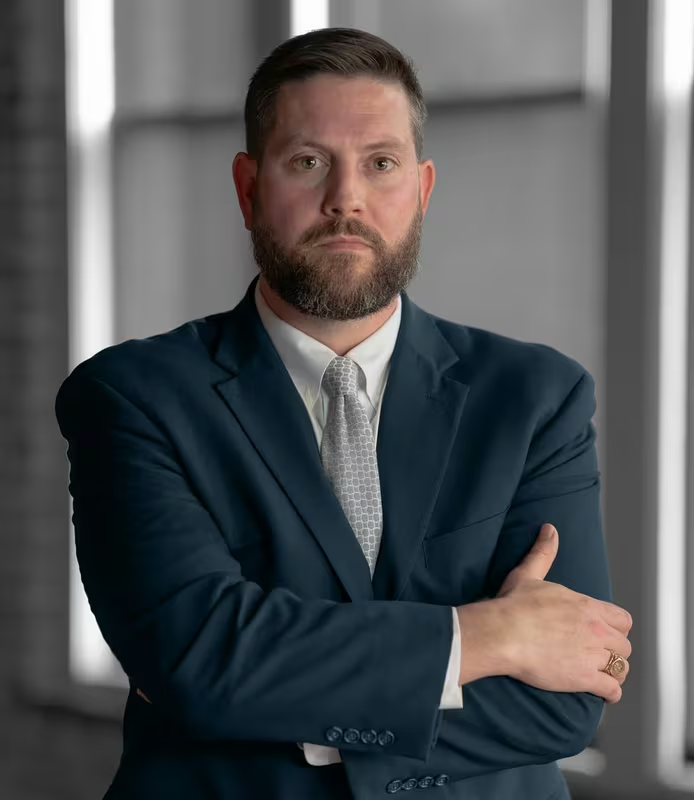
Your Washington Parish Trial Team
The lawyers who work your file. Every Washington Parish case is handled by the firm's own trial attorneys.









How Do You Choose the Right Injury Lawyer in Washington Parish?
Choosing an injury lawyer is a hiring decision. You are interviewing for a role that affects your medical bills, your lost income, and how the next year or two of your life goes. Treat it that way. Ask direct questions. Listen to how the answers come back. The right lawyer for a Washington Parish claim will give you specific answers about Louisiana procedure, named courts, and how the case actually moves. The wrong one will give you a pitch.
This section walks through what to look for, what to ask, and how to read the answers.
Questions to Ask in the First Conversation
A first call should leave you with information, not pressure. Ask these:
- Have you handled injury cases in the 22nd Judicial District Court? How many?
- Who at the firm will be the day-to-day point of contact on my file?
- How do you communicate with clients, and how often?
- If this case does not settle, are you prepared to file suit and try it?
- What is your contingency fee, and what costs come out of the settlement separately from the fee?
- Can you put the fee agreement in writing before I sign anything?
A lawyer who has actually worked Washington Parish files will name the court, describe how scheduling tends to run, and tell you who handles intake versus litigation. A lawyer who hedges every answer is telling you something.
Credentials and Experience Worth Verifying
Louisiana bar status is the floor, not the ceiling. Every lawyer you talk to should be a member in good standing of the Louisiana State Bar Association, and you can verify that on the LSBA website. Beyond that, look for:
- Years actively handling personal injury matters, not general practice.
- Trial experience, not just settlement experience. The credible threat of trial is what moves serious settlement numbers.
- Familiarity with the specific kind of claim you have. A lawyer who tries trucking cases is not the same as one who tries premises cases.
- Disciplinary history. Public discipline is searchable through the LSBA.
Third-party recognitions (Martindale-Hubbell ratings, peer-reviewed listings) are data points, not proof. Read them as one signal among several.
Communication, Access, and Local Reach
The practical question is whether you can reach your lawyer when something happens, because something will happen. An adjuster will call. A medical provider will send a lien. A police report will get amended. You need someone who responds.
Ask how the firm handles client calls. Ask whether you will work directly with the attorney or primarily with a paralegal. Either model can work, but you should know which one you are signing up for. Ask whether the firm travels to clients who cannot easily drive to a downtown office, and how meetings happen if you live closer to Bogalusa or Franklinton than to the firm’s main address.
Reading the Fee Agreement Before You Sign
Contingency fees in Louisiana injury cases are common, but the specific terms vary. Before signing, read for:
- The percentage, and whether it changes if the case is filed in suit or goes to trial.
- How case costs (filing fees, expert witness fees, medical record charges, deposition costs) are handled. Some firms advance costs and deduct them from the settlement; some bill them separately.
- What happens if you discharge the firm or the firm withdraws.
- Whether the firm has authority to settle without your written approval. (It should not. The decision to settle is yours.)
If a lawyer rushes you past the fee agreement, slow down. The agreement is the contract that governs the whole relationship.
When to Walk Away
A short list of signals worth taking seriously:
- Guarantees of a specific dollar outcome. No honest lawyer makes them.
- Pressure to sign on the first call before you have read anything.
- Refusal to put the fee terms in writing in advance.
- Vague answers about who will actually handle your file.
- No clear answer about trial capability if settlement talks fail.
- Heavy reliance on superlatives instead of specifics about procedure, court, and process.
The goal of choosing a lawyer is not to find the one with the loudest billboard. It is to find the one who answers your questions plainly, explains Louisiana procedure without dodging, and gives you a written agreement you understand before you sign it. Do that, and you have done your job as the client.