








Union Parish wrecks happen on US-167 and LA-2 and on the parish roads that tie Farmerville, Bernice, and Marion together, and the people hurt in them are taken to Union General Hospital on James Avenue in Farmerville. The Union Parish Sheriff’s Office or Louisiana State Police writes the report on the highways, and the Farmerville Police Department writes it inside city limits. Suits are filed at the Union Parish Courthouse on East Bayou Street in Farmerville, and the Union Parish Clerk of Court keeps the record in the same building. Trey Morris Injury Lawyers handles Union Parish cases from our Ruston office on North Trenton Street. We request the crash report, send preservation letters for any camera footage along US-167, and collect the Union General emergency room records. We send those letters once the facts give us an honest basis for them, since moving as fast as the law permits helps protect the proof. We ask whoever holds the footage, and the owner of the other vehicle and its event data, to keep them, because they can show each driver’s speed and who had the right of way.
The law that governs the claim is Louisiana law and it does not change from parish to parish. If you were hurt in Union Parish, your claim runs on a two-year clock under La. C.C. Art. 3493.1 when the injury happened after July 1, 2024, and a Union Parish suit is filed in the Third Judicial District Court in Farmerville, the parish seat. For wrecks on or after January 1, 2026, a finding that you were 51% at fault under La. C.C. Art. 2323 ends the case, so we build the fault evidence on wrecks around Farmerville, Bernice, and Marion to answer an adjuster who reaches for that bar or for La. R.S. 32:866, the No Pay, No Play statute.
Results for Louisiana Clients
- $409 MillionWrongful Death
A tragic case where an impaired driver of a commercial vehicle ran a red light, then collided with our client, causing serious bodily injury to the mother and the loss of life of her daughter.
- $49 MillionMotor Vehicle Accident
An impaired driver of a stolen vehicle driving the wrong way collided with our client head-on, resulting in brain injury and multiple broken bones.
- $32,195,000Industrial / Workplace
Failure to maintain proper safety protocols led to an explosion at an industrial plant causing a series of catastrophic injuries from broken bones, burns, spinal injury, and mental anguish.
- $31.5 MillionIndustrial / Workplace
Brain and spinal injuries followed an oil-field company failing to maintain equipment and provide a safe work site.
- $17.25 MillionCommercial Vehicle Accident
Client was struck head-on by a disconnected load of an 18-wheeler that crossed the median causing broken bones and amputation.
- $13 MillionCommercial Vehicle Accident
On the interstate, an 18-wheeler failed to yield right of way then made an unsafe lane change causing the accident which resulted in major bone breaks, damaged organs, and ultimately a leg amputation.
Past results do not guarantee future outcomes; each case is decided on its own facts.
What Does a Union Parish Injury Lawyer Do — and Do You Need One?
A Union Parish injury lawyer represents people hurt by someone else’s carelessness and works to obtain compensation for medical bills, lost income, and other losses tied to the injury. The work is part investigation, part negotiation, and, when the other side refuses to deal fairly, part courtroom litigation. Not every injury needs a lawyer. The ones that do tend to share a few traits: real medical treatment, disputed fault, a defendant with insurance or assets, and an adjuster whose first offer does not reflect the actual harm.
The day-to-day job is less dramatic than television suggests. A lawyer gathers the crash report or incident documentation, pulls medical records, identifies every party who may share responsibility, and calculates what the case is actually worth. They handle the calls and letters from insurance adjusters so the injured person is not negotiating against a trained claims professional while still in treatment. They preserve evidence before it disappears. Vehicles get repaired or scrapped, surveillance footage gets overwritten, witnesses move, and memories fade. When the insurer will not pay a reasonable amount, the lawyer files suit and takes the case through discovery, depositions, mediation, and trial if needed.
Ask any attorney you are considering how they decide whether a case is worth filing suit on, and how often they actually try cases rather than settling on the carrier’s terms. The answer reveals whether you are talking to a trial lawyer or a settlement processor. Both exist. One produces better outcomes when the insurance company digs in.
Whether you need a lawyer turns on a few concrete questions. A fender-bender with no injuries and a cooperative insurer is usually a direct claim, not a legal matter. An injury that sends you to the emergency room, keeps you out of work, or involves a commercial vehicle, a serious permanent injury, or a death is a different situation. So is any claim where fault is contested, where multiple parties may share blame, or where the adjuster is already pushing for a recorded statement or a quick release. In those situations, the gap between what an unrepresented claimant accepts and what a represented claimant obtains is wide enough to justify the conversation.
A consultation with a Union Parish injury lawyer costs nothing. Personal injury work is handled on contingency, meaning the fee comes from the result, not from the client’s pocket. The point of the first meeting is to figure out whether a claim makes sense, what it might be worth, and what the next steps are. The rest of this page walks through how that analysis works.
Local Coverage. Statewide Record.
- $1 Billion+
Outcomes for Louisiana clients
Verdicts and settlements won across the state by the same trial team that handles Union Parish cases.
- 11
Trial attorneys, one team
Your case is handled by the firm's own trial attorneys, and we respond in minutes, 24/7.
- 24/7
We come to you
An attorney travels to you in Union Parish, at home or at the hospital, or meets by video the same day. Free case review, and no fee unless we win.
- 127
Cases resolved over $1 million
Verdicts and settlements of $1 million or more, won by the same trial team that handles Union Parish cases.
What Types of Injury Cases Does a Union Parish Lawyer Handle?
A Union Parish injury lawyer handles civil claims where one party’s negligence or wrongful act caused physical harm, property loss, or death to another. The case categories below are the ones that drive most personal injury filings in rural North Louisiana parishes like Union, where the road network, the timber and agricultural economy, and the mix of highway and rural-route traffic shape what kinds of incidents happen.
The list is not a menu of services. It is a map of the situations a serious injury attorney is built to handle. When you are evaluating any lawyer, ask which of these case types they actually litigate, not just intake. The answer separates a firm that tries cases from a firm that processes them.
Car and Truck Accidents on US 167, LA 2, and Rural Roads
Motor vehicle collisions are the most common injury claims in Union Parish. US 167 runs north-south through Farmerville and connects the parish to Ruston and Bastrop. LA 2 carries east-west traffic across the parish. Add the rural parish roads, log-truck routes, and the stretches around Lake D’Arbonne, and you get a steady volume of rear-end collisions, intersection crashes, head-on impacts, and single-vehicle wrecks involving another driver’s conduct.
Commercial truck cases are their own category. An 18-wheeler crash involves a different set of records than a two-car wreck: driver qualification files, hours-of-service logs, electronic logging device data, maintenance records, and the carrier’s safety history. Ask any attorney how they preserve that evidence in the first thirty days. If the answer is vague, they have not done these cases.
Motorcycle, Bicycle, and Pedestrian Injuries
Motorcyclists, cyclists, and pedestrians absorb the full force of a collision with almost no protection. Injuries skew severe: traumatic brain injury, spinal damage, multiple fractures, road rash that requires grafting. The legal questions are the same as any motor vehicle case, but the medical workup and the defense’s tendency to blame the rider make these claims harder to settle without litigation pressure.
Commercial Vehicle and Log-Truck Collisions
Timber is part of Union Parish’s economy, and log trucks share the same two-lane roads as everyone else. A loaded log truck can weigh 80,000 pounds. Load-securement failures, blown tires, overloaded trailers, and fatigued drivers all show up in these cases. The defendants typically include the driver, the trucking company, and sometimes the timber operation that loaded the trailer. Naming the right defendants early matters because each one carries separate coverage and separate records.
Workplace and Industrial Injuries
Workers hurt on the job in Louisiana usually start inside the workers’ compensation system. That system pays medical and a portion of wages, but it does not pay for pain and suffering and it does not pay full lost earnings. A second claim, called a third-party tort claim, exists when someone other than the direct employer caused the injury: a contractor, a property owner, an equipment manufacturer, or a vehicle driver who hit the worker on the job. Identifying that second claim is where a personal injury lawyer adds value beyond the comp adjuster.
Oilfield and Heavy-Equipment Incidents
North Louisiana sits on the edge of oil and gas activity, and contract workers move through Union Parish job sites. Cases in this category involve well-site injuries, pipeline work, heavy-equipment rollovers, and crane and rigging failures. The legal frame can include negligence, premises liability against the site operator, and product claims against equipment manufacturers. These cases are document-intensive and expert-intensive.
Premises Liability: Slip, Trip, Falls, and Unsafe Property
Premises liability covers injuries on someone else’s property when the owner failed to keep the property reasonably safe. Grocery store spills, broken stair treads, unlit parking lots, and unsecured swimming pools are typical examples. Louisiana premises law puts specific requirements on what an injured person has to show, including notice of the hazard. Documenting the condition the day it happened, before the property is cleaned or repaired, often decides the case.
Dog Bites and Animal Attacks
Dog-bite injuries in rural parishes range from minor punctures to facial reconstruction in children. Louisiana law assigns liability to dog owners under specific conditions tied to the animal’s behavior and the owner’s knowledge. Homeowner’s insurance is usually the source of compensation, but coverage exclusions for certain breeds and prior-bite history complicate the claim.
Wrongful Death and Survival Claims
When an injury is fatal, Louisiana recognizes two distinct claims that the family can bring: a survival action under La. C.C. Art. 2315.1 for what the person experienced before death, and a wrongful death action under La. C.C. Art. 2315.2 for what the family lost. They are filed together but valued separately, and the class of family members who can recover is defined by statute. These are handled as litigation files from day one, not as intake paperwork.
Catastrophic Injuries
Catastrophic is a description, not a category. It cuts across every case type above and refers to injuries that permanently change the person’s life: traumatic brain injury, spinal cord damage with paralysis, amputations, severe burns, and injuries requiring lifetime care. These cases require life-care planners, vocational economists, and medical experts who can put numbers on a future that has not happened yet. Ask any attorney whether they have retained a life-care planner in the last year. If they have not, they are not trying catastrophic cases.
If your situation does not match any heading above, it does not mean you do not have a case. It means the case needs a conversation rather than a checkbox. The questions a good lawyer asks in that first call are the same questions a jury will eventually ask: what happened, who controlled the conditions that caused it, and what has the injury cost.
Union Parish Practice Areas
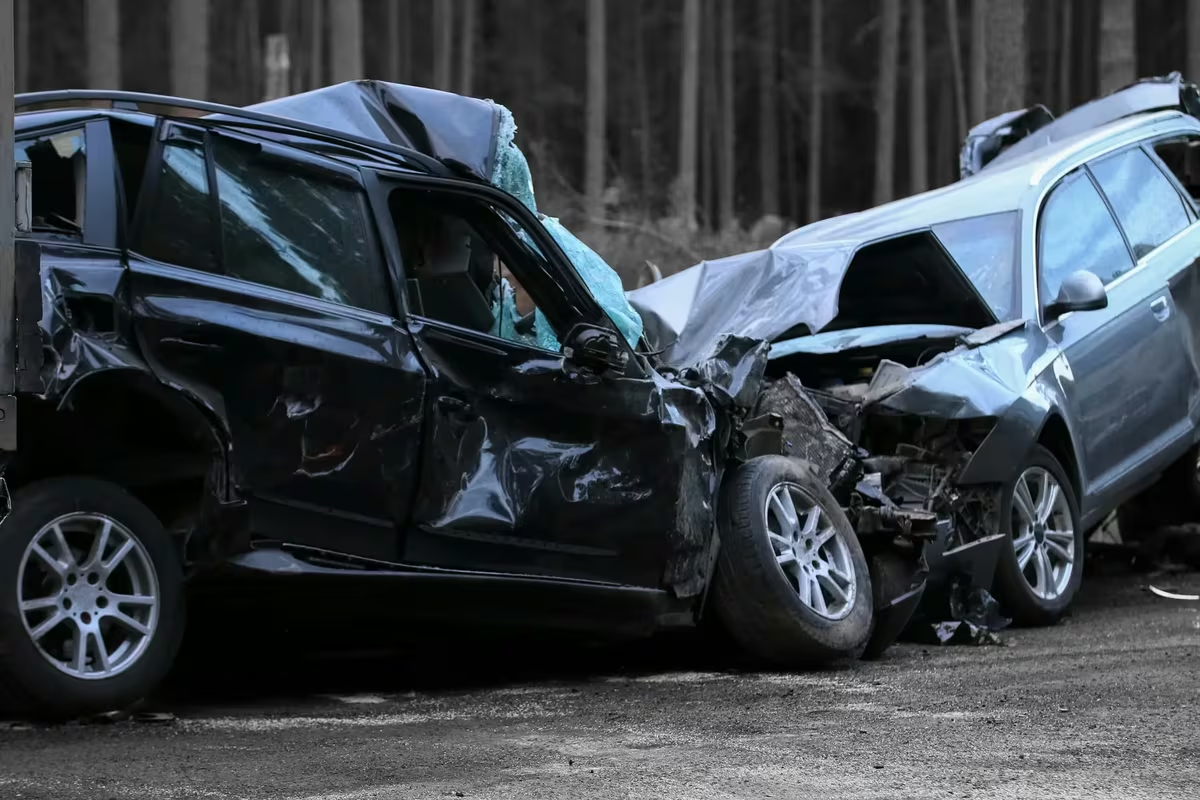 Car AccidentsRear-end, intersection, and highway collisions across Louisiana.
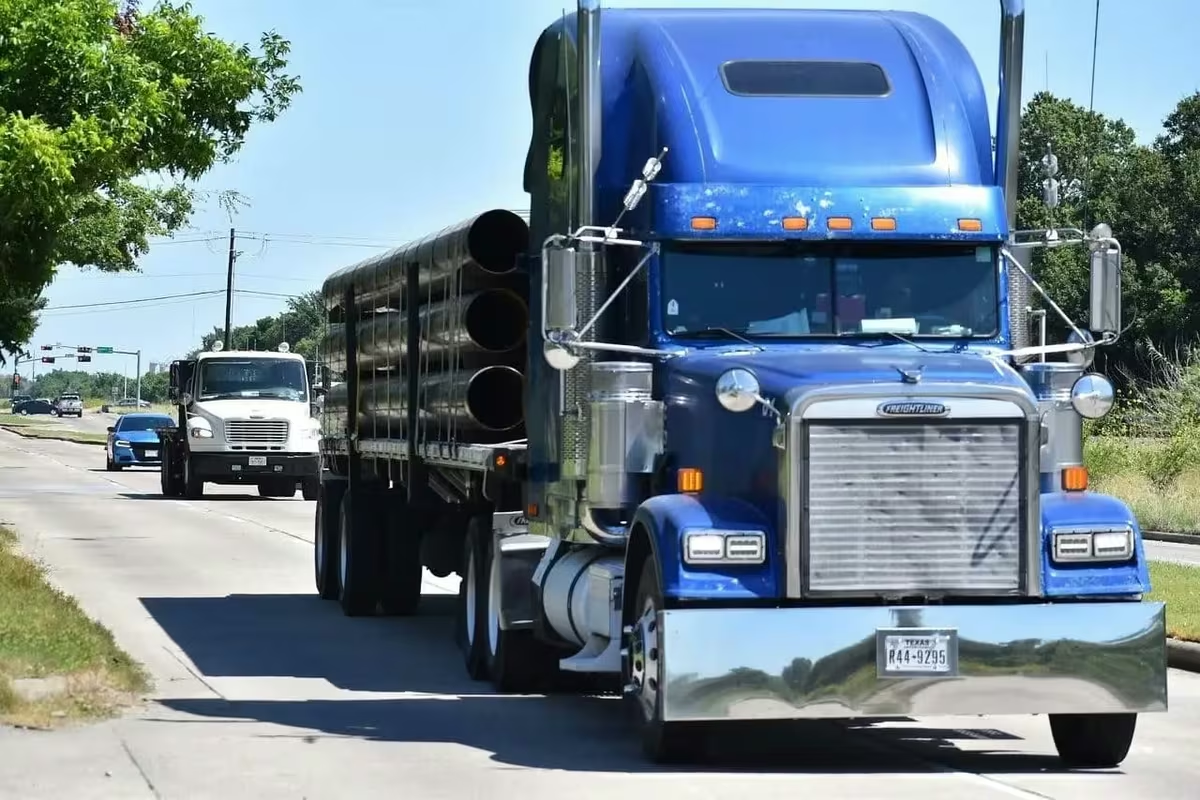 Truck Accidents18-wheeler and commercial-vehicle wrecks governed by federal trucking rules.
 Catastrophic InjuryBrain, spinal-cord, amputation, and severe-burn injuries that change a life.
 Wrongful DeathClaims brought by families after a fatal accident or act of negligence.
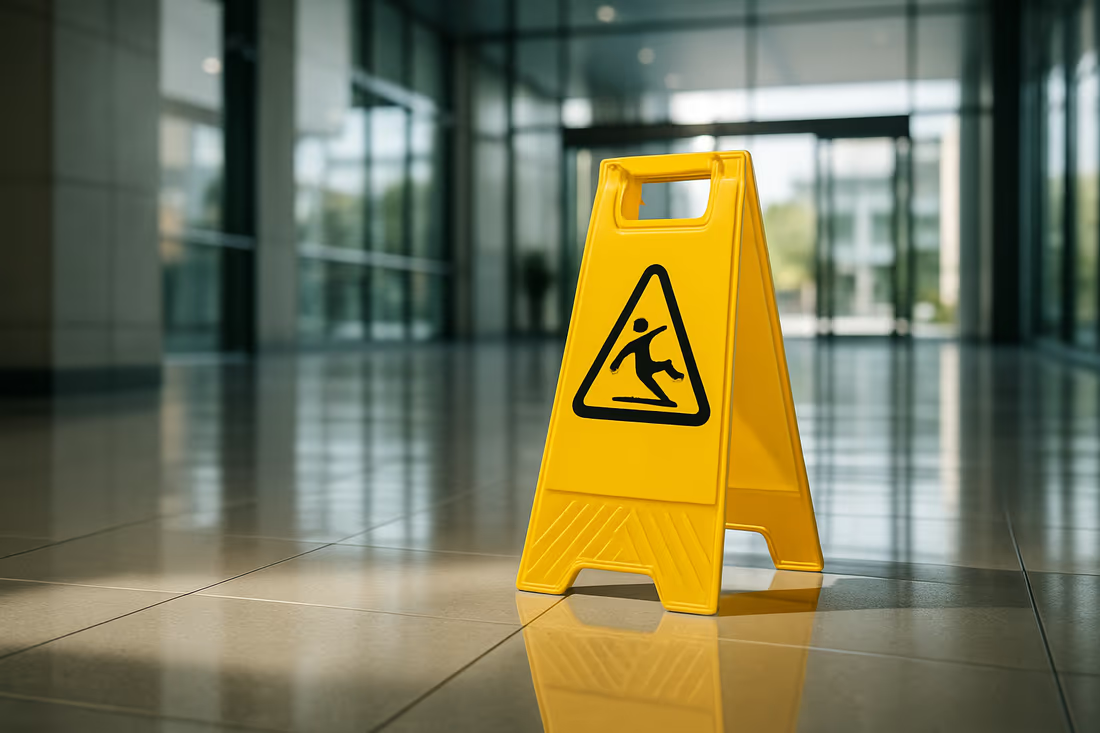 Premises LiabilitySlip-and-fall and unsafe-property injuries on someone else's premises.
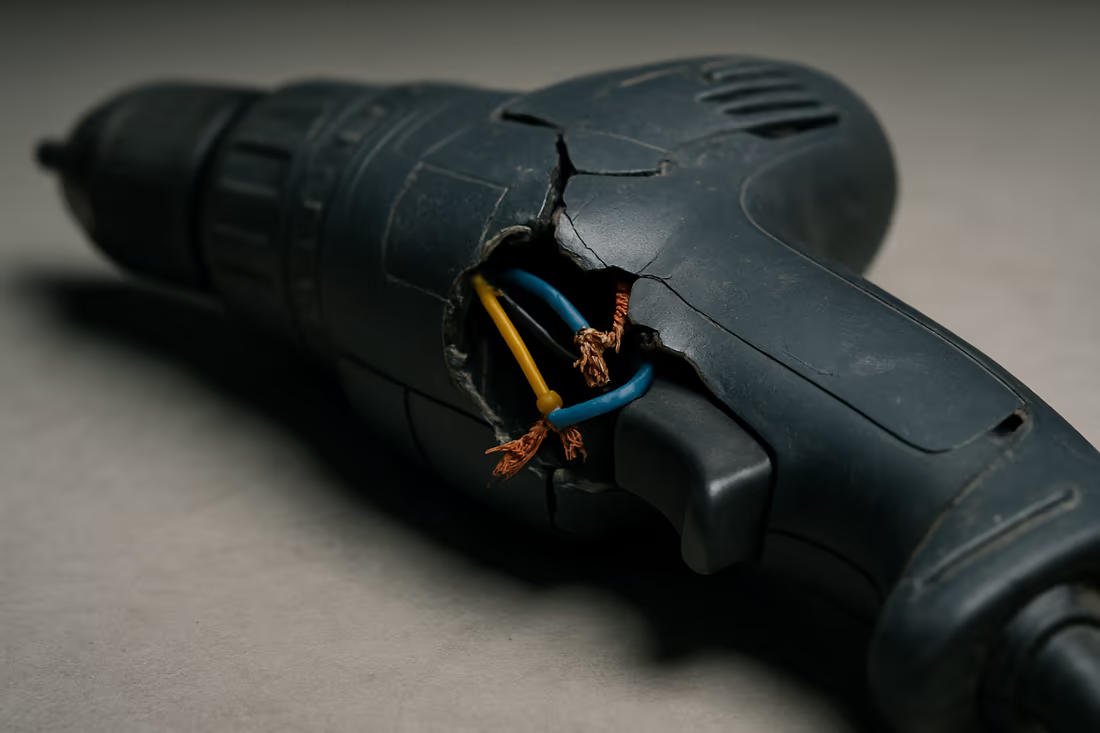 Product LiabilityInjuries caused by defective or unreasonably dangerous products.
 Oilfield AccidentsDrilling, pipeline, and refinery injuries across the energy sector.
 Industrial AccidentsPlant, warehouse, and heavy-equipment injuries in industrial settings.
 Offshore AccidentsRig, platform, and vessel injuries beyond the shoreline.
How Does Louisiana Personal Injury Law Apply to Your Union Parish Case?
A Union Parish injury case is governed by Louisiana civil law, not the common-law rules that apply in most other states. That distinction shapes how fault is decided, what your claim is worth, and how the court in Farmerville handles the file. Understanding the framework before you talk to any attorney lets you measure whether the lawyer across the desk actually knows the rules that will decide your case.
Louisiana Is a Civil-Law Jurisdiction Built on the Civil Code
Louisiana is the only state whose private law traces to the French and Spanish civil codes rather than English common law. Personal injury claims live in the Louisiana Civil Code, not in a patchwork of judge-made tort rules. The foundational provision is the general fault article, which says that every act of a person that causes damage to another obliges the person at fault to repair it. Everything else in a Union Parish injury case, from a car wreck on US 167 to a slip at a Farmerville business, builds on that single principle: prove fault, prove damage, prove the link between them, and the at-fault party owes repair.
That structural difference matters when you hire counsel. A lawyer who treats your case like a generic “tort claim” and reaches for common-law jury instructions is working from the wrong book. Ask any attorney you interview to name the Civil Code article their theory of your case sits under. If the answer is vague, that tells you something useful.
How Fault Is Allocated Under Louisiana’s Comparative Fault Rule
The fault rule depends on the date of the accident. For causes of action arising on or after January 1, 2026, Louisiana applies modified comparative fault under La. C.C. Art. 2323, as amended by Act 15 of the 2025 Regular Session (HB 431). If you are found 51% or more at fault, you collect nothing. If you are 50% or less at fault, your damages are reduced by your share. Accidents before January 1, 2026 remain under pure comparative fault, where the court or jury assigns a percentage of fault to every party whose conduct contributed to the injury, including the injured person, and the award is reduced by that person’s own percentage.
Unlike states with a 50 percent or 51 percent bar, Louisiana does not cut off your claim if you are more at fault than the defendant. A plaintiff who is 70 percent at fault can still collect 30 percent of the damages. That rule cuts both ways. Defense lawyers and insurance adjusters in Union Parish cases work hard to push fault onto the injured person because every percentage point reduces what they pay. Evidence collection in the first days after the incident, photographs, witness statements, scene measurements, and vehicle data, is what keeps that allocation honest.
What Damages Louisiana Law Recognizes
Louisiana law lets an injured person seek repair for both economic and non-economic harm.
In a Union Parish case, the trial court is the Third Judicial District Court in Farmerville, and appeals go to the Louisiana Second Circuit Court of Appeal in Shreveport. That appellate circuit has decades of published decisions on what kinds of injuries support what kinds of awards. A lawyer who handles Union Parish files should be able to talk about how Second Circuit panels have treated cases similar to yours, not just quote general statewide averages.
Why the Local Application Matters
Louisiana personal injury law is statewide on paper, but the way it lands on your case depends on the venue, the judge, the jury pool, and the insurance defense bar that works the Farmerville docket. The rules are the same as in Orleans Parish. The pace, the practical settlement value, and the trial culture are not. An attorney evaluating your Union Parish case should explain how the Civil Code applies to the specific facts, how comparative fault is likely to be argued by the defense, and which damages categories the evidence actually supports. Anything less general than that is marketing, not analysis.
How Long Do You Have to File a Personal Injury Claim in Union Parish, Louisiana?
Louisiana changed its filing deadline for personal injury claims in 2024. If you miss the deadline, the court will not hear your case, no matter how strong the facts are. Union Parish injury victims who wait too long lose the claim entirely.
What is the current filing deadline for a Louisiana injury claim?
Louisiana calls its filing deadline a prescriptive period. For most personal injury claims that arose after July 1, 2024, the prescriptive period is two years from the date of injury under La. C.C. Art. 3493.1. For injuries that happened on or before July 1, 2024, the older one-year prescriptive period under La. C.C. Art. 3492 still applies. Product liability claims follow these same deadlines.
The date of the incident, not the date you hire a lawyer, controls which rule governs.
When does the clock start running?
The deadline starts the day the injury was sustained. For a car wreck on US-167 or LA-2, that is the day of the wreck. For a slip and fall at a store in Farmerville, that is the day of the fall.
There is a narrow exception called the discovery rule. If the injury could not reasonably have been discovered on the date it occurred (some toxic exposure cases, some medical cases), the clock can start when the injury was discovered or should have been discovered through reasonable diligence.
Can the deadline be paused or extended?
Louisiana law allows the prescriptive period to be interrupted or suspended in limited situations. Suspension can apply for minors and for people who are legally incapacitated, where the clock may not run during the period of incapacity. Adjuster discussions do not interrupt prescription.
Do different deadlines or rules apply to some Union Parish cases?
Yes. Several categories of claims follow different rules than the general two-year tort deadline:
- Claims against a state, parish, or municipal government in Louisiana follow the Louisiana Governmental Claims Act. The deadline to sue is the same, but service has to be requested within 90 days of filing suit, and damages are capped. A wreck involving a parish vehicle, a Louisiana State Police unit, or a road defect on a state-maintained highway can fall under these rules.
- Workers’ compensation claims for an on-the-job injury follow a separate notice and filing scheme under Louisiana Revised Statutes title 23 and are not governed by the two-year tort prescription rule.
- Wrongful death and survival claims under Louisiana Civil Code articles 2315.1 and 2315.2 carry their own time limits running from the date of death.
- Medical malpractice claims follow a separate prescriptive scheme under Louisiana Revised Statutes 9:5628 and require a medical review panel before suit can be filed.
If any of these categories might apply to a Union Parish incident, the safe move is to treat the deadline as much shorter than two years until a lawyer confirms which rule governs.
Why two years is shorter than it feels
A two-year window sounds like plenty of time. In practice, the work that has to happen before a lawsuit is filed eats months. If the defendant is a trucking company or a government entity, additional pre-suit steps apply.
What to do if you are not sure how much time you have left
If the incident involves a government entity, a workers’ compensation issue, a death, or a medical provider, treat the deadline as urgent and get the file in front of a Louisiana attorney now. Suits against a government defendant require no pre-suit notice of claim, but service of citation must be requested within 90 days of filing under La. R.S. 13:5107(D).
What Should You Do Immediately After an Injury in Union Parish?
The first hours after an injury shape the case more than almost anything that happens later. Evidence disappears. Witnesses leave. Memories blur. The actions you take at the scene, at the hospital, and in the days that follow either build a record that supports a claim or leave gaps an insurance adjuster will exploit. None of this requires you to know the law. It requires you to document what happened and protect your own health before anyone else’s interests get in the way.
Call 911 and Get a Police or Sheriff Report
Report the incident. In Union Parish, that usually means the Union Parish Sheriff’s Office, Farmerville Police, or Louisiana State Police depending on where the injury happened. A traffic collision on US-167 or LA-2 typically draws state police or the sheriff. A crash inside Farmerville city limits draws the city police. An on-the-job injury at a worksite still warrants a 911 call if anyone is hurt, because the call itself creates a timestamped record.
Wait for the officer. Give a factual statement. Do not guess about speed, fault, or distance if you do not know. Ask for the report number and the responding officer’s name before you leave the scene. The crash report or incident report is the spine of the case file.
Get Medical Attention the Same Day
Go to the emergency room or an urgent care clinic even if you think you are fine. Union General Hospital in Farmerville handles emergency intake for most of the parish. Adrenaline masks pain for hours and sometimes days. Soft-tissue injuries, concussions, and internal bleeding do not always show up at the scene. A same-day medical record ties your injuries to the incident in a way that a visit three weeks later cannot.
Tell the treating provider everything that hurts, not just the worst pain. If your neck, back, knee, and wrist all hurt, say so. Providers chart what you report. A chart that mentions only the broken arm will be used later to argue the back pain came from something else.
Photograph Everything Before It Changes
Use your phone. Photograph vehicle damage from multiple angles, license plates, the position of the vehicles before they are moved, skid marks, debris, road conditions, weather, traffic signals, and any visible injuries. For a premises injury, photograph the hazard itself, the lighting, and the surrounding area. For a workplace injury, photograph the equipment, the location, and any warning signs (or the absence of them).
Rural Union Parish roads change fast. A pothole gets filled. A downed sign gets replaced. A spill gets cleaned up. The photograph you take in the first ten minutes may be the only proof the hazard ever existed.
Identify Witnesses and Get Contact Information
Names, phone numbers, and addresses. A witness who drove away is a witness who is gone. The crash report will sometimes list witnesses, but officers do not always have time to interview everyone who saw what happened. If a bystander stopped to help, ask for their number before they leave. A neutral third-party account often carries more weight with an adjuster or a jury than either driver’s statement.
Do Not Give a Recorded Statement to the Other Side’s Insurer
The at-fault driver’s insurance company will call. They will ask for a recorded statement to “close out the file.” Decline. You are not required to give a recorded statement to another party’s insurer.
Preserve Physical Evidence and Records
Keep the damaged vehicle, the torn clothing, the broken equipment, the receipts. Do not repair the car until it has been photographed and inspected. Do not throw out the shoes you were wearing on a wet floor. Save every medical bill, every prescription receipt, every mileage log to and from appointments, and every pay stub showing missed work.
Start a simple notebook the day of the injury. Date each entry. Write down pain levels, what you could not do that day, missed appointments, and conversations with insurers or employers. Contemporaneous notes are evidence. Reconstructed memory months later is not.
Stay Off Social Media About the Incident
Insurance defense investigators check Facebook, Instagram, and TikTok. A photograph of you smiling at a family gathering becomes Exhibit A in an argument that your injuries are not serious. A post saying “I’m fine, just sore” becomes a quote against you. Lock down privacy settings, stop posting about the injury, and tell family members not to tag you or comment on your condition.
Report Workplace Injuries to Your Employer in Writing
If the injury happened on the job, give written notice to your employer as soon as you physically can. A text message or email creates a record. Verbal notice gets disputed later. Louisiana workers’ compensation has its own notice and filing rules separate from a personal injury claim, and missing the workplace notice window can complicate both tracks.
Write Down What Happened While It Is Fresh
Within 24 to 48 hours, sit down and write a narrative of the incident from your point of view. Where you were going. What you saw. What you heard. What the other party said. What the responding officer said. What hurt and when. Save it somewhere you will not lose it. This document is for your own use and your attorney’s. It will be more accurate today than it will be six months from now when a deposition asks you the same questions.
The steps above protect the case. The next question most people ask is how the claim itself actually moves forward once the immediate scene is behind them.
How Does the Personal Injury Claim Process Work in Union Parish?
A personal injury claim in Union Parish moves through a sequence of stages: investigation, medical treatment and documentation, demand and negotiation with the insurer, suit filing if negotiations stall, discovery, mediation, and trial or settlement. Most claims resolve without a verdict, but the work that controls the outcome happens long before any settlement check. The Third Judicial District Court in Farmerville is where contested cases are filed when the injury occurred in Union Parish.
Investigation and evidence preservation
The first phase is fact development. That means obtaining the crash report or incident report, photographing the scene and vehicles or premises before conditions change, identifying witnesses while memories are fresh, and sending preservation letters to anyone holding evidence.
Medical treatment and documentation
The medical record is the spine of the damages case. The claim does not get evaluated by the insurer in a serious way until treatment is complete or the injured person reaches maximum medical improvement, because the medical specials are not fixed until then.
Demand package and insurer negotiation
Once treatment stabilizes, the lawyer assembles a demand package: liability narrative, medical records and bills, wage loss documentation, photographs, witness statements, and a settlement demand. Several rounds of negotiation are normal.
Filing suit in the Third Judicial District
When the insurer’s number is too low or liability is disputed, the next step is filing a petition for damages in the Third Judicial District Court, which covers Union and Lincoln Parishes. Filing suit changes the dynamic. The defendant now has to answer, hire defense counsel, and respond to formal discovery. The case is also now on a court schedule, which creates pressure that pre-suit negotiation does not.
Discovery, depositions, and mediation
Discovery is the formal exchange of information: written interrogatories, requests for production of documents, requests for admission, and depositions of the parties, witnesses, and experts. Most cases that reach this stage go to mediation before trial.
Trial or settlement
If mediation does not resolve the case, it is set for trial. Personal injury trials in Louisiana state court are tried to a jury when the amount in controversy supports it. The credible threat of trial, backed by a file that is genuinely ready to be tried, is what produces full-value settlements.
What Compensation Can You Recover in a Union Parish Injury Claim?
Louisiana tort law allows an injured person to seek two broad categories of damages: economic damages (the financial losses you can document) and non-economic damages (the human losses that do not come with receipts). A Union Parish claim is built by proving both categories with specific evidence tied to the injury and to the at-fault party’s conduct.
Economic Damages
Economic damages cover the out-of-pocket and future financial cost of the injury. The categories most often documented in a Union Parish file include:
- Past medical expenses, including ER care at Union General Hospital in Farmerville, follow-up care, imaging, surgery, and prescriptions.
Non-Economic Damages
Non-economic damages compensate the human cost of the injury.
Punitive Damages
Louisiana does not award punitive damages in most personal injury cases. They are available only when a specific statute authorizes them. The most common example in injury practice is La. C.C. art. 2315.4, which allows exemplary damages when injuries are caused by a driver whose intoxication was a cause-in-fact of the harm. Outside the narrow statutes that allow them, punitive damages are not on the table in a Union Parish injury case, no matter how reckless the conduct looks.
How Much Is a Union Parish Injury Case Worth?
Case value is the sum of specific facts about a specific injury, not a number pulled from a calculator. The honest range for a given case sits between the floor (what the insurer will pay without a fight) and the ceiling (what a Third Judicial District Court jury in Farmerville might award if the case is tried and won). Most cases resolve somewhere in between.
What Goes Into the Value of a Personal Injury Case?
Medical expenses are the anchor. Lost wages and lost earning capacity are next. Pain and suffering, mental anguish, and loss of enjoyment of life are the general damages. A documented inability to lift a grandchild, sleep through the night, or return to hunting deer on family land in Union Parish is the kind of specific fact that moves a number.
Property damage, out-of-pocket expenses (mileage to medical appointments in Monroe or Ruston, prescription co-pays, medical equipment), and loss of consortium for close family members round out the picture.
What Is the Difference Between Settlement Value and Trial Value?
Settlement value is what an insurance company will pay to avoid the risk and cost of trial. Trial value is what a jury could award if every favorable fact lands and every defense argument fails. Trial value is almost always higher, but it carries risk. A jury in Farmerville could come back lower than the last settlement offer.
Why Range Estimates on Other Websites Are Not Reliable
You will see websites that publish “average settlement” figures for car accidents, slip-and-falls, or truck wrecks. Those numbers are close to useless for your case.
A real valuation looks at your medical records, your wage history, the liability picture, the available insurance coverage, and the venue. In Union Parish, that venue is the Third Judicial District Court, and the available coverage is often the single biggest constraint on what you can actually collect, regardless of what a jury might award on paper.
What Factors Raise or Lower Settlement Value in Union Parish?
Settlement value in a Union Parish injury claim moves up or down based on liability strength, the severity and permanence of the injury, the documentation behind the medical and wage losses, the credibility of the people involved, and the practical realities of collecting from the at-fault party. Two cases with identical diagnoses can settle for very different numbers because these factors line up differently.
Factors That Raise Settlement Value
Clear liability is the single biggest upward driver. A rear-end collision on US 167 with a sober driver who admits fault, a police report assigning the citation, and dashcam footage is a stronger file than a contested intersection wreck with disputed light color. Objective, permanent injury raises value next. Available coverage and collectible defendants raise the practical ceiling.
Factors That Lower Settlement Value
Comparative fault lowers value directly. Gaps in medical treatment lower value. Pre-existing conditions to the same body part lower value unless the treating physician clearly separates the new injury from the old one or applies the aggravation analysis Louisiana recognizes. Credibility problems lower value sharply. Low available coverage lowers the realistic outcome regardless of how strong the case is on paper.
Venue and jury pool affect value in a way local counsel sees clearly. Union Parish juries in the Third Judicial District Court, sitting in Farmerville, evaluate cases differently than juries in larger Louisiana parishes. An attorney who has tried cases in that courthouse can tell you, with specifics, how that affects negotiation posture.
How These Factors Combine
No single factor sets value. Liability strength multiplied by injury severity, supported by documentation, discounted by comparative fault and credibility issues, and capped by available coverage produces the realistic settlement range.
Can You File a Wrongful Death Claim for a Family Member Killed in Union Parish?
Yes, certain surviving family members can file a wrongful death claim in Louisiana under La. C.C. Art. 2315.2 when a person dies because of another party’s fault. That claim is separate from the survival action under La. C.C. Art. 2315.1, which covers the deceased person’s own losses before death. A Union Parish case typically files in the Third Judicial District Court in Farmerville, the parish seat.
The analysis a lawyer works through has three parts: who is allowed to bring the claim, what damages the claim can seek, and how long the family has to file.
Who Can Bring the Claim
Louisiana restricts wrongful death plaintiffs under La. C.C. Art. 2315.2 to a defined list of surviving relatives, taken in order. A surviving spouse and children are the primary class. Only one class brings the claim. A Union Parish lawyer’s first job in a fatal case is identifying the correct class and confirming there is no dispute about who stands in it.
What a Wrongful Death Claim Covers Versus a Survival Action
These are two different claims that often run together in the same lawsuit. A wrongful death claim under La. C.C. Art. 2315.2 compensates the surviving family member for their own losses caused by the death. A survival action under La. C.C. Art. 2315.1 compensates the estate for what the deceased person experienced between the injury and death.
Deadlines and Investigation in a Union Parish Death Case
Wrongful death and survival claims run on their own prescriptive clock. The family has the longer of one year from the death or two years from the injury under La. C.C. Art. 2315.2 and Art. 2315.1, as amended in 2025; before that amendment, the period was one year from the death. The clock generally runs from the date of death for the wrongful death claim.
Death cases also require faster evidence work than ordinary injury claims. In a rural parish, key witnesses may be neighbors or coworkers who are easier to locate in the first weeks than later. Ask any lawyer how quickly they would send an investigator, request preservation of vehicles or equipment, and pull the law-enforcement file from the Union Parish Sheriff’s Office or Louisiana State Police troop covering the area.
How Do You Choose the Right Injury Lawyer in Union Parish?
Choosing an injury lawyer is an evaluation. Plenty of qualified attorneys serve north Louisiana, and your job is to figure out which one actually fits your case. The questions below are the ones a thoughtful client asks. Ask them out loud. Compare the answers.
Ask About Trial Experience, Not Just Settlements
Most injury cases settle. That is true everywhere. But insurance adjusters track which firms try cases and which firms always fold before a courtroom. Ask any lawyer how many jury trials they have handled in the last five years, and in which parishes. A firm that has never tried a case in front of a jury has limited leverage when an adjuster lowballs an offer. The follow-up question is just as important: ask what the typical outcome was, and whether the lawyer was first chair or supporting a senior attorney.
Ask Who Will Actually Handle Your File
Many firms run a marketing intake and then hand the file to a junior associate or a paralegal you never met. That is not inherently bad, but you should know going in. Ask which attorney signs the demand letter, which attorney negotiates with the adjuster, and which attorney shows up at mediation or trial. Ask how often the lead attorney returns calls personally versus through staff. The answer tells you whether the relationship you build during the consultation is the relationship you will have for the next two years.
Ask About Their Track Record With Your Type of Case
A general personal injury lawyer is not the same as a lawyer who regularly handles commercial vehicle wrecks, oilfield injuries, or wrongful death claims. The mechanics differ. The defendants differ. The expert witnesses differ. Ask the lawyer how many cases like yours they have handled, what the issues usually look like, and what the most common defense arguments are. If the lawyer cannot describe the defense playbook in your category, they have not seen enough of those cases.
Ask How They Communicate
This is the question clients regret not asking. Ask how often you will receive updates, whether updates come by phone, email, or text, and what the typical response time is on a question. Ask whether you will get copies of correspondence with the insurance carrier. Ask what happens if you call and the lawyer is in trial. A firm that cannot answer these questions cleanly is a firm where communication will be a problem later.
Ask About the Fee Agreement in Plain Terms
Contingency fees are standard in personal injury work, but the details matter. Ask what percentage the firm takes if the case settles before suit is filed, after suit is filed, and after trial. Ask how case costs are handled and whether costs come out of your share or the firm’s share. Ask for the fee agreement in writing before you sign anything, and read it. A lawyer who rushes you past the fee agreement is showing you something about how they will handle the rest of the case.
Use the Consultation to Evaluate, Not to Decide
Most reputable injury firms offer a free initial consultation. Treat it as a working interview. Bring the police report, the medical records you have, photos, and a written list of questions. Pay attention to whether the lawyer asks about your case in detail or runs through a script. Pay attention to whether they tell you what they do not know yet, or pretend to have answers they cannot have. A lawyer who is honest about uncertainty in the first meeting is a lawyer who will be honest about uncertainty later.
Do your research. Talk to more than one firm. The decision is yours.
Why Does Local Union Parish Representation Matter Compared to Hiring a Baton Rouge or Shreveport Firm?
Location matters less than capability, but it isn’t irrelevant. A firm that regularly handles cases in north Louisiana brings working knowledge of the Third Judicial District Court in Farmerville, the jurors who sit on Union Parish panels, and the adjusters and defense lawyers who staff claims out of Monroe, Ruston, and Shreveport. A firm headquartered four hours south does not pick that up from a file.
Venue knowledge and courtroom familiarity
Union Parish sits in the Third Judicial District along with Lincoln Parish. The courthouse is in Farmerville. The local bench, the clerk’s office procedures, the scheduling rhythm, and the way motions actually move in that division are not learned from a website. A lawyer who has appeared in Farmerville knows the building, knows the staff, and knows which judges run their docket which way.
Baton Rouge and Shreveport firms can certainly handle a Union Parish case. The question to ask is how often they actually do. If the answer is rarely, the firm will be learning the venue on your file.
Access to witnesses, scenes, and treating providers
Most injury cases are won or lost on facts gathered close to the ground. Scene inspections on U.S. 167 or LA 2. Photographs of an intersection before the parish repaves it. Interviews with neighbors, first responders, and bystanders who remember what they saw but won’t drive to Baton Rouge to say it. Medical records and depositions of treating physicians at facilities like Union General Hospital in Farmerville or providers in Monroe and Ruston.
A firm with offices in north Louisiana, including Trey Morris Injury Lawyers’ offices in Shreveport, Minden, Ruston, and Monroe, can put a person on the ground in Union Parish. That matters when evidence is perishable.
Practical logistics for the client
You should not have to drive to south Louisiana to meet your lawyer. You should not have to coordinate around a firm’s travel schedule to get a phone call returned. Local or regional representation means in-person meetings without a half-day on the road, document signings handled at a nearby office, and depositions scheduled in venues you can reach.
Ask any firm pitching your case where their lawyers and paralegals actually sit, how often they appear in Farmerville, and who on the team will be the day-to-day contact. The answers tell you whether the firm treats Union Parish as a home venue or as an occasional referral.
What Our Clients Say
- Dakota R.
Where should I start!?Trey Morris Injury Law Firm was a great fit for me! During this wild time of getting into a car wreck, dealing with insurance, and other third parties, Mrs. Brooke and Mrs. Nerren were extremely helpful! They were there for me through the whole process and never once did I doubt their professionalism. They will fight tooth and nail for you and get you what you deserve. I would recommend them to anyone.
- Janet C.
Best personal injury lawyers ever!!!They did everything they said they would do, and never left me wondering what was going on with my case!
- Michael C.
Lane Robinson and his team were great.When he took the accident case for my wife he was very concerned, friendly, and professional. He never gave up but pushed until she was fully compensated for her injuries. We couldn’t be anymore grateful with the outstanding outcome. Thanks Lane
- Ahmillyah T.
I would like to thank Attorney Coleman Nerren for handling my case.I can honestly say he is the best Attorney I’ve ever had. He is caring and straightforward. I spoke with him on and off with throughout my case and received nothing but the highest respect. They will go above and beyond to satisfy their clients. 10/10 will definitely use again and will highly definitely recommend.
- Denise
Handling my case with care and made a stressful situation much easier.Communication was always clear and timely, and I felt like they genuinely had my best interest in mind. I would recommend them to anyone needing legal help.
- Patty P.
Thanks to Kaden for answering all my questions.He was knowledgeable and very polite. Joe and Jamie were also very helpful.
- Meredith F.
Jaime and the Ruston team were fantastic.They were super knowledgeable and answered all my questions!
- Naasia C.
Jaime is very professional!She is very awesome answer all of questions accurately & professionally. I would recommend this place.
- Willie W.
I would like to share this review to the consumer protection group that took my case thank you very much for helping on my case I knew something could be done about the situation but I did not know how to go about it I really appreciate the service that you rendered to me and I will be glad to recommend you guys to anyone and everyone who needs help again thank you very much and you have a great great day.Sincerely Willie [W.] Jr
- Gracyn J.
I was pretty nervous about everything at first, but Attorney Shavers and my case manager Leanna made the whole process a breeze.They were patient, kept me updated, and explained things in a way that made sense. Really glad I chose them!
- Karessa L.
⭐️⭐️⭐️⭐️⭐️ From start to finish, [Trey Morris Injury Lawyers] exceeded all expectations.Everyone from the front desk to the legal team was professional, kind, and truly helpful. They made a stressful situation so much easier to manage and always kept me informed throughout the process. I felt supported every step of the way. Highly recommend this firm to anyone needing injury law representation
- Maram Z.
I just want to express how pleased I am with [Trey Morris Injury Lawyers].Their caring team made a huge difference in my experience. From the moment I reached out, they were attentive and supportive, guiding me through every step of the process. They truly took the time to listen to my concerns and made me feel valued as a client. I highly recommend their services to anyone in need of a compassionate and dedicated legal team!
Testimonials do not constitute a guarantee, warranty, or prediction regarding the outcome of your legal matter. Past results do not guarantee future outcomes.
Your Union Parish Trial Team
The lawyers who work your file. Every Union Parish case is handled by the firm's own trial attorneys.









Contact a Union Parish Injury Lawyer for a Free Consultation
If you were hurt in Union Parish and want a straight read on whether you have a case, the next step is a conversation. Trey Morris Injury Lawyers offers a free, no-obligation consultation for injury and wrongful death matters arising in Farmerville, Bernice, Marion, Downsville, Spearsville, Junction City, and the surrounding communities. There is no fee unless we obtain compensation for you.
A consultation is not a commitment to hire anyone. It is a chance to lay out what happened, hear an honest assessment, and ask the questions you should be asking any attorney you interview. Bring what you have: the crash report, photos, the names of anyone who treated you, any letters or calls from an insurance adjuster, and a rough timeline of the incident. If you do not have those things, come anyway. We can help you pull the records.
During the call or meeting, expect a direct conversation. We will ask about how the incident happened, your injuries and medical care so far, what the other side has said or offered, and what your life looked like before this. You should ask who at the firm will actually handle the file, how often you will hear from us, how case expenses are handled, and what the path looks like if the insurer refuses to pay a fair number. Take notes. Compare what you hear from us with what you hear from any other firm you talk to.
Time matters more than most people realize. Evidence walks: vehicles get repaired or scrapped, surveillance footage is overwritten, and witness memories fade. Statements given to an adjuster in the first days can shape the rest of the claim. Talking to a lawyer early does not commit you to filing suit. It protects your ability to make that decision later with better information.
To reach Trey Morris Injury Lawyers, call the office or use the contact form on this website. Consultations are available by phone, video, or in person. If travel or injury makes it hard to come to us, we will come to you in Union Parish. Reach out when you are ready, ask hard questions, and make the decision that fits your situation.