








Livingston Parish wrecks happen on I-12 between the Denham Springs, Juban Road, and Walker exits and on Highway 190 through Denham Springs and Walker, and the people in them are taken to Our Lady of the Lake Livingston in Walker. Louisiana State Police Troop A writes the report on the interstate, the Livingston Parish Sheriff’s Office writes it in the unincorporated parish, and the Denham Springs Police Department writes it inside city limits. A suit is filed at the Livingston Parish Courthouse on Government Boulevard in Livingston, where the 21st Judicial District Court sits. Trey Morris Injury Lawyers handles Livingston Parish cases from our Covington office on River Highland Boulevard. We order the crash report, send preservation letters for dashcam and surveillance footage, and collect the hospital records from Walker. Those letters go out once the facts give us an honest basis to send them, and moving as promptly as the law permits is how we keep that proof within reach. The footage can show each driver’s speed, the color of the signal and who had the right of way, which goes straight to who caused the wreck.
The law that decides the claim is Louisiana law and it does not change from parish to parish. For injuries after July 1, 2024 you have two years to file under La. C.C. Art. 3493.1. For accidents on or after January 1, 2026, a 51 percent fault finding under La. C.C. Art. 2323 ends the claim, which is why we document fault on I-12 and Highway 190 wrecks.
Results for Louisiana Clients
- $409 MillionWrongful Death
A tragic case where an impaired driver of a commercial vehicle ran a red light, then collided with our client, causing serious bodily injury to the mother and the loss of life of her daughter.
- $49 MillionMotor Vehicle Accident
An impaired driver of a stolen vehicle driving the wrong way collided with our client head-on, resulting in brain injury and multiple broken bones.
- $32,195,000Industrial / Workplace
Failure to maintain proper safety protocols led to an explosion at an industrial plant causing a series of catastrophic injuries from broken bones, burns, spinal injury, and mental anguish.
- $31.5 MillionIndustrial / Workplace
Brain and spinal injuries followed an oil-field company failing to maintain equipment and provide a safe work site.
- $17.25 MillionCommercial Vehicle Accident
Client was struck head-on by a disconnected load of an 18-wheeler that crossed the median causing broken bones and amputation.
- $13 MillionCommercial Vehicle Accident
On the interstate, an 18-wheeler failed to yield right of way then made an unsafe lane change causing the accident which resulted in major bone breaks, damaged organs, and ultimately a leg amputation.
Past results do not guarantee future outcomes; each case is decided on its own facts.
What Does a Livingston Parish Injury Lawyer Do?
A Livingston Parish injury lawyer represents people hurt by someone else’s negligence and pursues the financial compensation Louisiana law allows them to claim. The work is part investigation, part negotiation, and part litigation in the 21st Judicial District Court in Livingston. Most cases resolve through a settlement with an insurance carrier. Some require a filed petition and discovery before either side talks numbers that make sense.
The job breaks down into a handful of concrete tasks that run in parallel from the day a client signs a representation agreement.
Investigating Liability and Preserving Evidence
The first task is figuring out who is legally responsible and locking down the proof before it disappears. That means pulling the Louisiana Uniform Motor Vehicle Crash Report, requesting 911 audio, identifying witnesses, photographing the scene, and sending preservation letters to any party that may hold dashcam footage, surveillance video, or commercial vehicle telematics. Skid marks fade. Surveillance systems overwrite in days. A lawyer’s preservation letters keep the evidentiary record intact.
Ask any attorney how they handle spoliation letters and scene inspections. The answer tells you whether they treat investigation as the foundation of the case or as something they get to later.
Building the Damages File
The second task is documenting what the injury cost and what it will keep costing. That includes medical records and billing from every treating provider, wage-loss verification from employers, and, when injuries are serious, life-care plans and economist reports projecting future medical needs and lost earning capacity. Louisiana follows the collateral source rule and recognizes both economic and non-economic damages under La. C.C. art. 2315, so the damages file has to capture the full picture, not just out-of-pocket receipts.
Handling the Insurance Carriers
Once liability and damages are documented, the lawyer manages every communication with the at-fault carrier and any applicable uninsured or underinsured motorist coverage. Adjusters record statements. They send medical authorizations broader than the law requires. They make early offers timed to a client’s financial pressure. A lawyer’s job is to shut down the contact, control what information moves, and present a demand backed by the file rather than by a phone call.
Filing Suit and Litigating When Needed
When the carrier will not pay a fair number, the lawyer files a petition for damages in the 21st Judicial District Court, which sits in Livingston and handles civil cases for Livingston, Tangipahoa, and St. Helena Parishes. From there the case moves through written discovery, depositions, expert disclosures, mediation, and, if necessary, trial. Louisiana abolished civil jury thresholds in the 2020 tort reform, which means more injury cases now go to juries than under the old $50,000 rule. A Livingston Parish lawyer should be prepared to try the case in front of a local jury, not just settle it.
Advising the Client Through the Decision Points
The last piece, and the one clients often undervalue, is counsel. Whether to accept an offer, whether to sue a family member’s insurer on a UM claim, how a workers’ compensation lien interacts with a third-party tort claim, when to push for trial and when to take the number on the table. These are the decisions that determine what a case is actually worth to the person living it. The lawyer’s job is to lay out the tradeoffs and let the client choose with real information in hand.
Local Coverage. Statewide Record.
- $1 Billion+
Outcomes for Louisiana clients
Verdicts and settlements won across the state by the same trial team that handles Livingston Parish cases.
- 11
Trial attorneys, one team
Your case is handled by the firm's own trial attorneys, and we respond in minutes, 24/7.
- 24/7
We come to you
An attorney travels to you in Livingston Parish, at home or at the hospital, or meets by video the same day. Free case review, and no fee unless we win.
- 127
Cases resolved over $1 million
Verdicts and settlements of $1 million or more, won by the same trial team that handles Livingston Parish cases.
What Types of Injury Cases Does a Livingston Parish Lawyer Handle?
Livingston Parish injury practice covers the categories of harm that arise from the geography and economy of the area: an interstate corridor carrying heavy freight, state and parish highways feeding the I-12 belt, construction and industrial work tied to the Baton Rouge and Hammond regions, and residential and retail premises across Denham Springs, Walker, and Livingston. The case categories below are the ones most often pursued under Louisiana tort law. Ask any attorney you interview which of these they have actually tried, and which they refer out.
Motor Vehicle Collisions
Car, truck, SUV, and motorcycle wrecks are the largest category of injury work in the parish. These include rear-end crashes on I-12, intersection collisions on Highway 190 and Highway 16, single-vehicle crashes with phantom or unknown drivers, and rideshare incidents. The legal questions turn on fault allocation, available liability coverage, uninsured and underinsured motorist coverage, and medical causation. Ask the attorney how they investigate fault before the police report is final, and how they preserve vehicle data from modern crash event recorders.
Commercial Vehicle and 18-Wheeler Cases
I-12 through Livingston Parish carries heavy interstate truck traffic between Baton Rouge and the Mississippi line. Commercial vehicle cases involve different parties, different insurance layers, and federal regulatory questions that do not appear in passenger-car claims. Issues include driver hours, equipment maintenance records, electronic logging data, motor carrier liability, and the relationship between the driver, the carrier, and any broker or shipper. These cases require evidence preservation letters and, in many cases, an accident reconstructionist.
Workplace and Industrial Injuries
Livingston Parish workers are employed across construction, logistics, manufacturing, and contract work tied to nearby industrial corridors. When a worker is hurt on the job, two separate tracks can run at the same time: a workers’ compensation claim against the employer, and a third-party tort claim against a non-employer whose negligence contributed to the injury. Common third-party defendants are equipment manufacturers, subcontractors, property owners, and motorists who hit workers on the road. Ask any attorney how they coordinate the comp claim with the third-party case so the worker is not paying back benefits twice.
Premises Liability
Premises cases arise on commercial property, residential property, and public spaces. Categories include slip-and-fall and trip-and-fall injuries at retail stores and restaurants, inadequate security claims where foreseeable criminal acts cause harm, swimming pool and pond drownings, and dog bite injuries. Louisiana premises claims require proof that the property owner knew or should have known of the hazard and failed to address it. The evidence window is short. Surveillance footage is often overwritten in seven to thirty days.
Wrongful Death and Survival Actions
When an injury results in death, Louisiana law allows two separate claims: a survival action under La. C.C. Art. 2315.1 for what the decedent suffered before death, and a wrongful death action under La. C.C. Art. 2315.2 for the losses of the surviving family. These cases require careful handling of the estate, the beneficiary class, and the underlying liability theory, whether that theory is a vehicle wreck, a workplace incident, a premises hazard, or another cause.
Catastrophic Injury
Catastrophic injury is not a separate cause of action; it is a description of harm severity that affects how the case is built. Traumatic brain injuries, spinal cord injuries, severe burns, amputations, and injuries requiring lifetime medical care change the damages model. Life care planners, vocational economists, and treating specialists become central. Ask the attorney whether they retain these experts as a standard practice or only when settlement talks have already broken down.
Livingston Parish Practice Areas
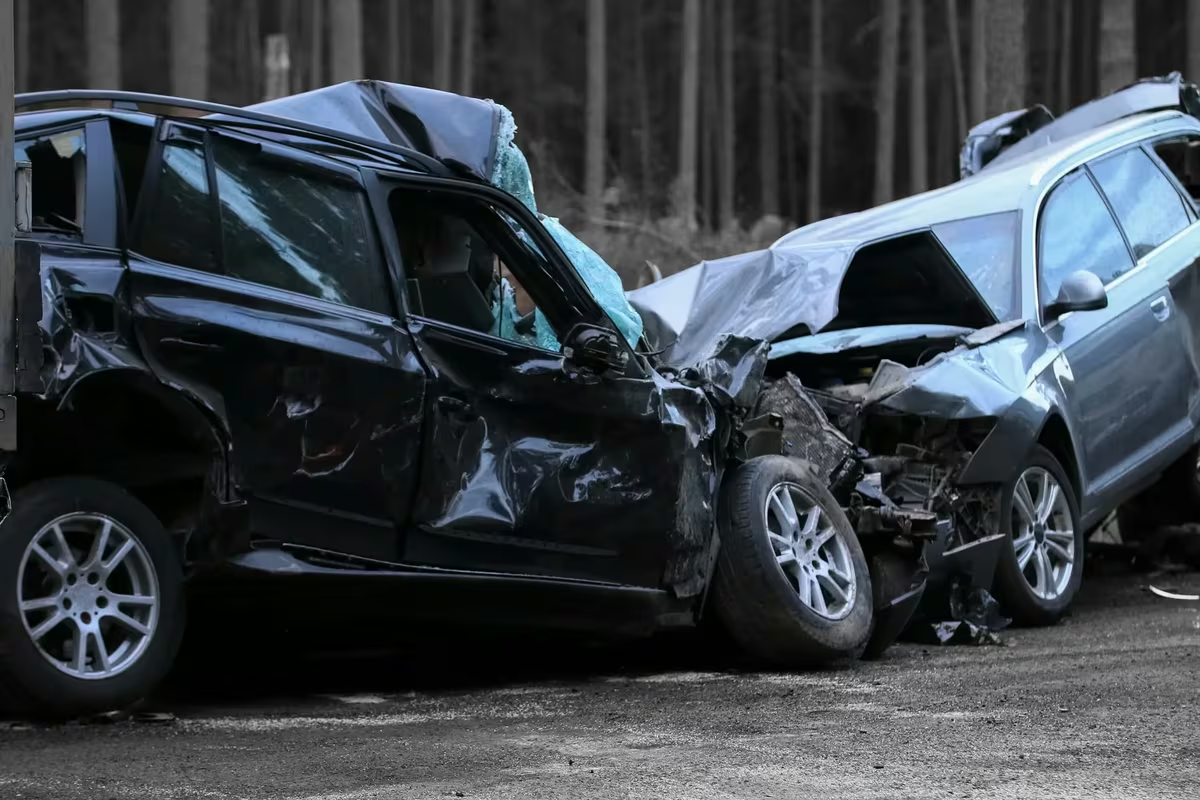 Car AccidentsRear-end, intersection, and highway collisions across Louisiana.
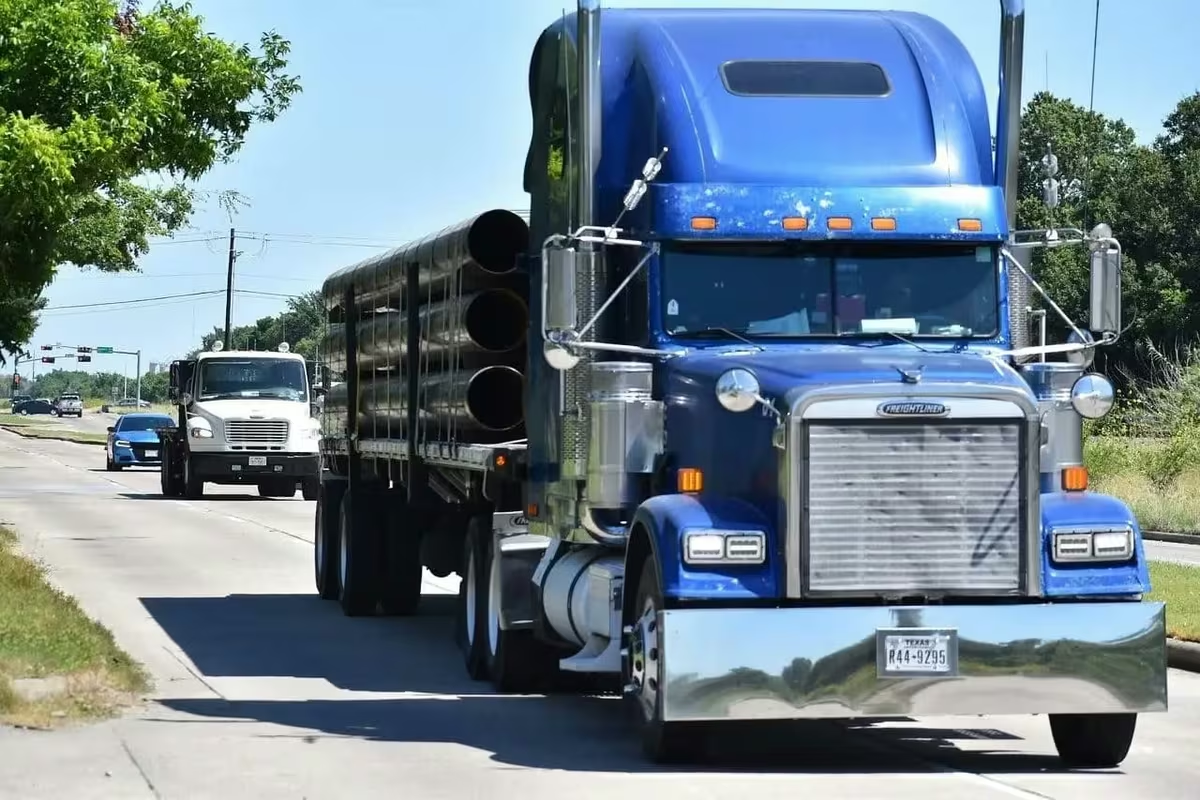 Truck Accidents18-wheeler and commercial-vehicle wrecks governed by federal trucking rules.
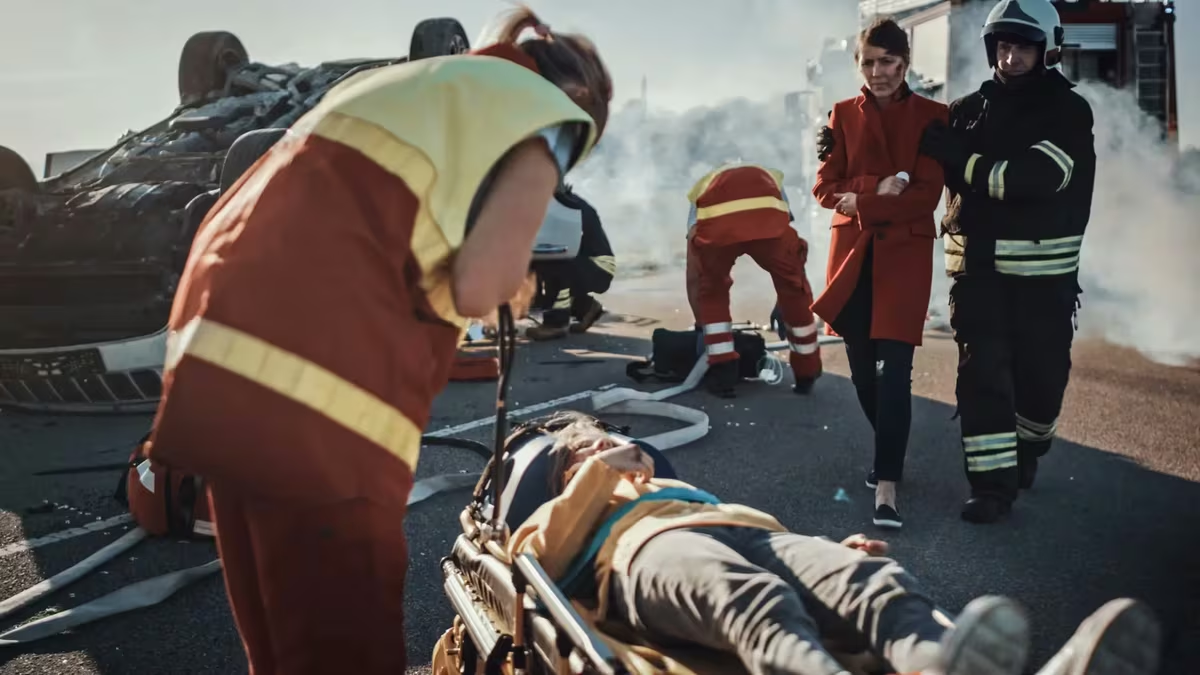 Catastrophic InjuryBrain, spinal-cord, amputation, and severe-burn injuries that change a life.
 Wrongful DeathClaims brought by families after a fatal accident or act of negligence.
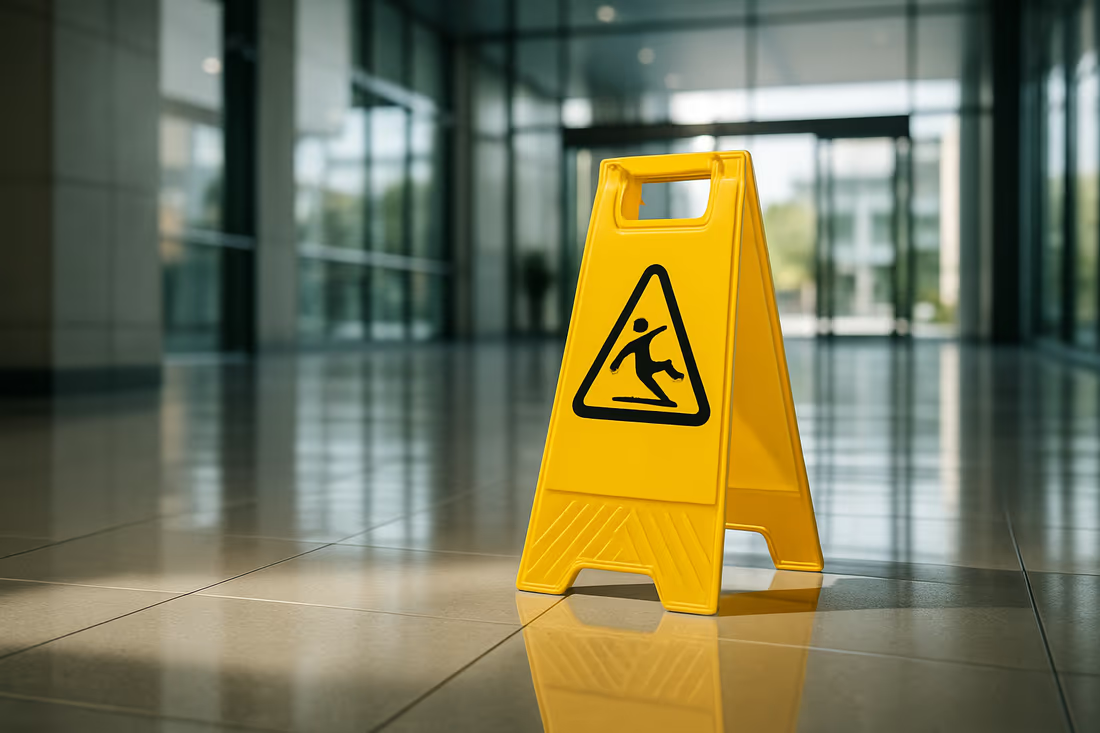 Premises LiabilitySlip-and-fall and unsafe-property injuries on someone else's premises.
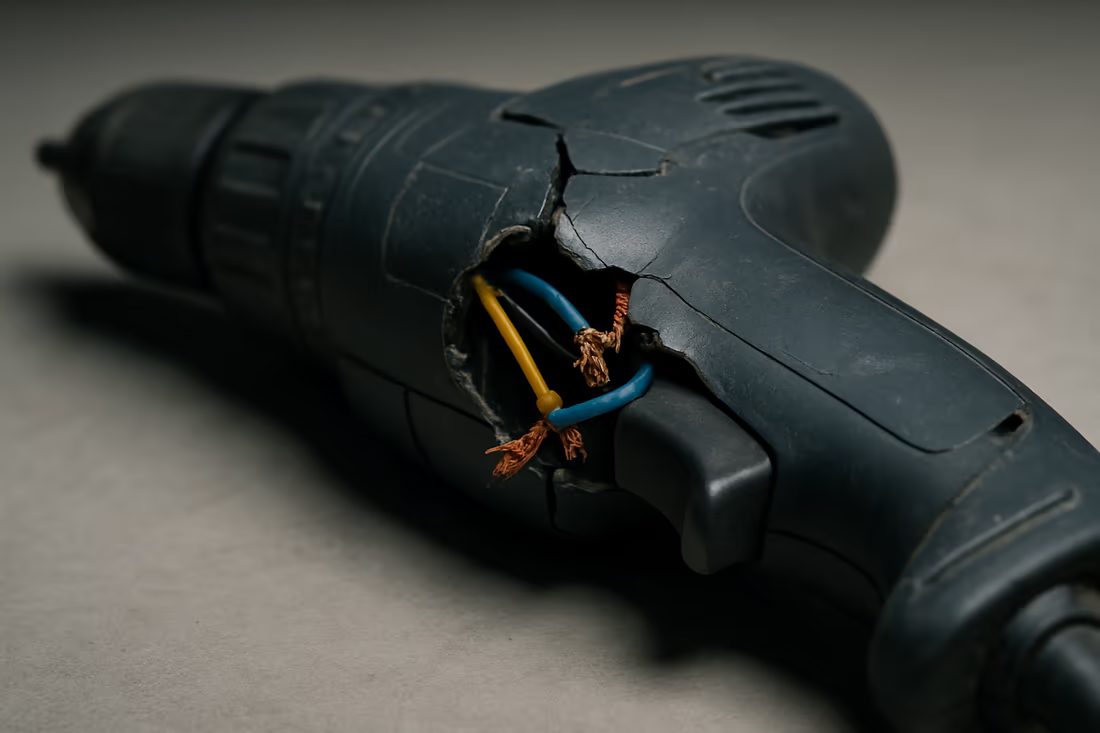 Product LiabilityInjuries caused by defective or unreasonably dangerous products.
 Oilfield AccidentsDrilling, pipeline, and refinery injuries across the energy sector.
 Industrial AccidentsPlant, warehouse, and heavy-equipment injuries in industrial settings.
 Offshore AccidentsRig, platform, and vessel injuries beyond the shoreline.
Do You Need a Lawyer After an Accident in Livingston Parish?
Not every accident requires a lawyer. A minor fender-bender with no injuries, a quick repair estimate, and a cooperative insurer often resolves itself. The honest answer is that hiring an attorney is a judgment call that turns on the size of the medical picture, the clarity of fault, and how the insurance company is behaving. The factors below help you decide whether legal counsel is worth bringing in.
When Handling the Claim Yourself Usually Works
Some claims are clean. You were rear-ended at low speed, the other driver admits fault, you walked away without symptoms, and the property damage is straightforward. The insurer pays for the repair, maybe covers a rental, and the file closes within weeks. Bringing a lawyer into a claim like that adds friction without adding value.
The same is often true for very small soft-tissue claims where you were checked out, released the same day, and felt fine within a week or two. If the total medical bills are a few hundred dollars and you missed no work, the math rarely justifies a contingency fee.
When You Should Strongly Consider Talking to a Lawyer
The calculus changes when any of the following are in the picture:
- You went to the emergency room, were admitted to a hospital, or had imaging that showed something beyond a bruise.
- You have ongoing symptoms more than a few days after the crash, especially neck, back, head, or joint pain.
- A doctor has recommended physical therapy, injections, specialist evaluation, or surgery.
- You missed work, lost income, or cannot perform your normal job duties.
- Fault is disputed, unclear, or the other driver is telling a different story than you are.
- More than two vehicles were involved, or a commercial vehicle, 18-wheeler, or government vehicle was part of the crash.
- The at-fault driver was uninsured, underinsured, or fled the scene.
- The insurance adjuster is pressuring you to give a recorded statement, sign a medical authorization, or accept a quick settlement before you know the extent of your injuries.
- Someone in the vehicle was seriously injured or killed.
Any one of those factors is enough reason to get a free consultation before you sign anything or talk on the record with the other side’s insurer.
What a Lawyer Actually Changes About the Claim
The practical effect of hiring counsel is that the insurance adjuster stops calling you and starts calling the lawyer. Recorded statements are no longer requested from you directly. Medical authorizations are limited to records that relate to the crash, not your entire lifetime history. Settlement offers are evaluated against what similar injuries have resolved for, not against what the adjuster wants to pay this quarter.
There is also a documentation difference. A represented claim is built with medical records, wage-loss verification, photographs, scene evidence, and, where needed, expert input. An unrepresented claim is usually built with whatever the adjuster decides to put in the file.
Honest Trade-Offs to Weigh
Lawyers cost money, even on a contingency arrangement. A portion of any settlement or judgment goes to the fee and to case expenses. That is a real cost. The trade-off question is whether the represented outcome, after fees and expenses, leaves you better off than the unrepresented outcome would have.
For small, clean claims, the honest answer is sometimes no. For claims involving real injuries, disputed fault, commercial defendants, or aggressive insurers, the honest answer is usually yes. A free consultation costs nothing and lets you compare the two paths before you commit to either one.
A Practical Rule of Thumb
If you are reading this page after an accident in Livingston Parish, ask yourself three questions. Did you need medical care beyond a single urgent-care visit? Is the insurance company doing anything that feels rushed, evasive, or unfair? Are you unsure what your claim is worth? If the answer to any of those is yes, a consultation is worth the hour. If all three are clearly no, you may be fine handling it yourself.
What Should You Do Immediately After an Injury Accident in Livingston Parish?
The first hours after a crash or injury shape what your claim looks like months later. The goal is simple: get medical care documented, get the scene documented, and avoid statements that get used against you. The steps below assume a motor-vehicle collision, but most apply to any injury accident in Livingston Parish, whether on I-12, in a Denham Springs parking lot, or at a job site near Walker.
Call 911 and Report the Accident
Louisiana drivers must report any crash involving injury, death, or apparent property damage to law enforcement. Call 911 from the scene. Depending on location, the responding agency will be Louisiana State Police Troop A on the interstate and major highways, the Livingston Parish Sheriff’s Office in unincorporated areas, or a municipal department in Denham Springs, Walker, or Watson. Ask for the report number before the officer leaves. That report becomes the spine of an insurance claim.
Get Medical Attention, Even If You Feel Okay
Adrenaline masks injuries. Soft-tissue damage, concussions, and internal injuries often present hours or days later. Accept EMS evaluation at the scene. If you decline transport, drive to an emergency room or urgent care that same day. Our Lady of the Lake Livingston in Walker, Ochsner Medical Complex in The Grove, and Baton Rouge General are common options. Tell every provider every symptom. A gap in treatment is one of the first arguments an adjuster uses to reduce a claim.
Document the Scene
If you can move safely, use your phone to capture:
- Wide shots of vehicle positions before anything is moved
- Close shots of damage on every vehicle involved
- License plates, VIN plates on the dashboard, and insurance cards
- Skid marks, debris fields, traffic signals, and roadway conditions
- Visible injuries on yourself and any passengers
- Names and phone numbers of witnesses (not just the officer’s note that witnesses were present)
Weather, lighting, and road conditions matter on rural stretches of Highway 16, Highway 1032, and unlit sections of I-12. Capture them while they exist.
Exchange Information, But Limit Conversation
Get the other driver’s name, address, license number, plate number, insurer, and policy number. That is the exchange the law requires. Beyond that, keep it short. Do not apologize, do not speculate about fault, and do not say “I’m fine.” Those phrases reappear in recorded statements and adjuster notes.
Be Careful with the Other Driver’s Insurance Company
The at-fault driver’s insurer often calls within 24 to 48 hours. The adjuster will ask for a recorded statement and may offer a quick check. You are not required to give a recorded statement to the other driver’s insurer, and early offers are typically made before the full medical picture is known. You can decline politely and refer questions to an attorney. Your own insurer is a different matter; your policy generally requires cooperation with your own carrier.
Preserve Evidence Before It Disappears
Some evidence has a short shelf life. Vehicles get repaired or totaled out. Surveillance footage from gas stations along Range Avenue, Florida Boulevard, or truck stops near the I-12 exits is often overwritten within 7 to 30 days. Event data recorder (“black box”) information on newer vehicles and commercial trucks can be lost when the vehicle is moved or repaired. If a commercial truck is involved, federal rules give carriers limited time to preserve driver logs, electronic logging device data, and dashcam footage, and a preservation letter asks the carrier to keep that evidence.
Keep a Written Record
Start a simple file the day of the accident. Include the crash report number, every provider you see, every prescription, every missed day of work, and every out-of-pocket expense. Note pain levels and limitations day by day for the first few weeks. Memory fades. Contemporaneous notes hold up.
Watch What You Post
Assume the other side will see your social media. A photo of you at a child’s birthday party in Springfield, smiling, gets used to argue you are not really hurt, even when you spent the next two days in bed. The safest move is to stop posting about your activities, your injuries, and the accident itself until the claim is resolved.
When to Call a Lawyer
There is no rule that says you must hire counsel. For a minor fender-bender with no injury, you may not need one. When there are injuries, disputed fault, a commercial vehicle, a government vehicle, or an insurer that is already pushing back, the early days are when the most important decisions get made. Talking to a lawyer before giving recorded statements or signing medical authorizations costs nothing and preserves options.
Where Do Serious Accidents Happen in Livingston Parish? I-12, Highway 190, and Local Roads
Serious wrecks in Livingston Parish cluster on a handful of corridors that carry the bulk of commuter, freight, and local traffic. Interstate 12 cuts east to west across the parish from Denham Springs through Walker, Livingston, and Albany toward Hammond. U.S. Highway 190 runs parallel to the south. State highways and parish roads connect the smaller communities. Crash mechanics, evidence, and investigation steps differ by corridor, and the corridor often shapes who the defendants are and what records exist.
I-12 Crashes Through Denham Springs, Walker, Livingston, and Albany
I-12 is the parish’s busiest road and its most dangerous. The interstate moves Baton Rouge commuters east in the morning and home in the afternoon, with heavy 18-wheeler traffic running the I-10 to I-12 corridor between Texas and the Gulf Coast. High speeds, dense merging at the Juban Road, Walker, Satsuma, and Albany exits, and frequent rain create conditions where a single distracted moment turns into a multi-vehicle wreck.
The wreck types we see most on I-12 in Livingston Parish are rear-end collisions in slowed or stopped traffic, lane-change sideswipes, and tractor-trailer crashes involving cargo, fatigue, or following distance. Each pattern needs different evidence. A rear-end at the Walker exit during evening backup is reconstructed from vehicle damage, witness statements, and 911 timing. A commercial truck crash requires the carrier’s hours-of-service logs, electronic logging device data, dashcam footage, post-crash drug and alcohol testing records, and driver qualification files. Ask any attorney what a preservation letter to a trucking company should cover. The answer tells you whether they have handled these cases or only car wrecks dressed up as truck cases.
Louisiana State Police Troop A investigates most fatal and serious-injury crashes on I-12 through the parish. The crash report number, the troopers assigned, and the time the scene was cleared all matter when reconstructing what happened.
U.S. Highway 190 and the Older Commercial Corridor
U.S. 190 runs through Denham Springs, Walker, Livingston, and Albany as a slower, signal-controlled alternative to the interstate. The road carries local commuters, delivery trucks, and traffic moving between businesses on either side. Intersection crashes dominate. Left-turn collisions at signalized intersections, T-bone wrecks where a driver runs a red light or stop sign, and rear-end impacts at signal changes are the recurring patterns.
Intersection cases turn on signal timing, witness placement, and surveillance video from nearby businesses. Gas stations, fast food restaurants, and retail stores along Highway 190 often have exterior cameras that capture the intersection. That footage is typically overwritten within 7 to 30 days. A lawyer who waits 60 days to investigate has already lost the best piece of evidence in the case.
Louisiana 16, 1019, 1032, 447, and the Rural Two-Lane Roads
North of I-12, state highways like LA 16 and LA 1019 run through Watson, French Settlement, and the more rural northern and southern reaches of the parish. These are two-lane roads with narrow shoulders, limited lighting, and long stretches without intersections. The crash patterns shift. Head-on collisions from crossing the centerline, run-off-road wrecks into trees or ditches, and rear-end crashes on drivers slowing to turn into driveways are common.
Rural two-lane crashes are harder to investigate because there are fewer witnesses, fewer cameras, and less infrastructure. Evidence comes from the physical scene: skid marks, gouges in the pavement, debris fields, and final rest positions of the vehicles. If the crash scene is not photographed and measured before it rains or before the road is cleared, that evidence is gone. The investigating agency on these roads is usually the Livingston Parish Sheriff’s Office rather than State Police, which changes who holds the report and the supplemental investigation.
Local Roads in Denham Springs, Walker, Livingston Town, Albany, French Settlement, and Watson
Inside the municipalities and unincorporated communities, the crash pattern shifts again. Lower-speed wrecks in parking lots, residential streets, and school zones generate different injury profiles and different legal questions. Premises issues come up more often here. A wreck in a shopping center parking lot may involve the lot owner, the property manager, and the driver. A crash near a school during pickup or drop-off may involve a school zone speed limit dispute. A collision on a poorly maintained parish road may raise questions about signage, road design, or the parish’s notice of a hazard.
Local-road cases often require pulling records from the relevant city police department, the parish sheriff, or the Department of Transportation and Development depending on who owns and maintains the road. Each agency has different records protocols and different timelines for releasing crash reports. Ask the attorneys you are evaluating how they pull these records. The reader who hires a lawyer that knows the local roads, the local agencies, and the local evidence sources is in a different position than one who hires a generalist who treats every Livingston Parish wreck as if it happened on an interstate.
What Compensation Can Injury Victims Recover in a Livingston Parish Claim?
Louisiana law allows an injured person to seek two broad categories of damages under La. C.C. art. 2315: economic damages (out-of-pocket losses with a dollar receipt attached) and non-economic damages (the human costs that don’t come with a receipt). A Livingston Parish claim against a private at-fault driver, trucking company, or property owner pursues both. Claims involving a public defendant, such as a parish or state entity, carry separate procedural rules that should be screened early.
Economic Damages
Economic damages cover the measurable financial impact of the injury. Economic damages are proved with documents: medical bills, billing records, pay stubs, tax returns, employer statements, repair estimates, and, in serious cases, a life-care plan and a vocational or economic expert report.
Non-Economic Damages
Non-economic damages compensate for the personal harm that doesn’t appear on a billing statement. These include physical pain and suffering, mental anguish, loss of enjoyment of life, disfigurement and scarring, and permanent disability or impairment.
Punitive Damages (Limited Circumstances)
Louisiana doesn’t allow punitive damages in most negligence cases. They are available only when a specific statute authorizes them. The most common example in injury practice is La. C.C. art. 2315.4, which permits exemplary damages when the injury was caused by a defendant’s wanton or reckless disregard for the rights and safety of others through intoxication while operating a motor vehicle. Outside of statutory authority, the case proceeds on compensatory damages only.
How Comparative Fault Affects the Number
Louisiana’s comparative fault rule turns on the date of the accident under La. C.C. Art. 2323. For accidents on or after January 1, 2026, Act 15 of the 2025 Regular Session (HB 431) applies modified comparative fault with a 51 percent bar: a plaintiff found 51 percent or more at fault recovers nothing, and at 50 percent or less damages are reduced by the plaintiff’s share. For accidents before January 1, 2026, the reduction stays proportional with no percentage bar.
Sources of Payment
The damages a jury or adjuster values are one question. What gets actually paid is another. Compensation typically comes from the at-fault party’s liability insurance, the injured person’s own uninsured/underinsured motorist coverage when the at-fault driver has no coverage or not enough, medical payments coverage, and, in some cases, a commercial policy covering a trucking company, employer, or business. Available coverage shapes the practical ceiling of any claim, and identifying every applicable policy is part of the investigation.
How Much Is a Livingston Parish Injury Case Worth?
No honest lawyer can tell you what your case is worth in the first phone call. Anyone who quotes you a number before reviewing the medical records, the police report, and the wage documentation is guessing or selling. Case value in Louisiana is built from specific inputs, and those inputs take weeks to gather. What an honest evaluation looks like is the substance of this section.
The Inputs That Drive Case Value
A Livingston Parish injury claim is valued by adding documented economic losses to a reasoned estimate of non-economic damages, then adjusting for fault, evidence quality, and the defendant’s ability to pay. Comparable Louisiana verdicts and settlements involving similar injuries inform a reasonable range, but the specific facts of how the injury changed daily life carry the number up or down.
How Fault and Evidence Adjust the Number
Louisiana applies comparative fault by accident date under La. C.C. Art. 2323. This is why the evidence work matters: scene photos, the crash report, witness statements, and prompt medical documentation move the fault allocation.
Evidence quality also affects what an insurer will pay before suit.
Ask Any Attorney How They Evaluate a Case
Ask how they build a damages model. The answer should describe pulling complete medical records and bills, getting a treating physician’s opinion on future care, calculating wage loss with pay stubs and tax returns, and benchmarking non-economic damages against Louisiana case law in the same injury category. If the answer is a dollar figure with no inputs, you are talking to someone selling a number rather than building one.
What Is the Statute of Limitations for Injury Claims in Louisiana?
Louisiana law sets a strict filing deadline for personal injury claims. Miss it, and the case ends before it starts.
The Deadline Is Set by Statute and Has Changed in Recent Years
The filing deadline for personal injury claims in Louisiana is set by the Louisiana Civil Code, and the legislature has revised it in recent years. The deadline that applies to your accident depends on when your cause of action arose. The older rule is not automatically replaced by a newer rule for accidents that predate the change.
Special Situations Can Change the Calculation
Some categories of claim follow different rules. Wrongful death and survival actions have their own deadlines tied to events other than the date of the underlying accident. Claims involving minors or people under legal incapacity usually run on the same clock, so a parent, tutor, or curator has to file in time. Claims against governmental entities, including parish bodies and state agencies, use the same deadline but carry stricter procedural steps, such as the 90-day deadline to request service after filing suit.
Why Filing Early Matters More Than the Deadline Suggests
The deadline is the last day to file, not the right day to file. Evidence on Louisiana roads disappears fast. Crash debris on I-12 or Highway 190 is cleared within hours. Surveillance video from gas stations and businesses along Range Avenue or in Walker is overwritten on cycles as short as 72 hours. Witness memories fade. Vehicles are repaired or scrapped. Black box data on commercial trucks can be overwritten when the truck returns to service.
An attorney hired early can send preservation letters to trucking companies, request 911 audio, pull traffic camera footage, and lock down that evidence. Waiting until the final months of the filing window to call a lawyer means the case is built on what survived neglect, not on what actually happened. Ask any attorney how they handle preservation letters after intake. The answer reveals whether they treat the deadline as the goal or as the floor.
How Much Does a Livingston Parish Injury Lawyer Cost?
Trey Morris Injury Lawyers handles Livingston Parish injury cases on a contingency fee. You pay nothing up front, nothing during the case, and nothing if there is no compensation at the end. The fee comes out of the settlement or judgment as a percentage agreed to in writing before the representation starts. If the case produces no compensation, you owe no attorney fee.
The consultation costs nothing. A potential client can call, describe what happened, and get a straight read on whether the claim is worth pursuing. No retainer. No hourly billing. No surprise invoice in the mail.
What Does a Contingency Fee Cover?
The contingency percentage covers the attorney’s work on the case. That includes the investigation, the records collection, the demand package, the negotiation with the insurance carrier, and, if the case has to be filed, the litigation through trial. The percentage is set by the written fee agreement and is disclosed before anything is signed.
Ask any attorney you interview for the fee agreement in writing before you sign. Ask what the percentage is at each stage. The percentage typically steps up if the case has to be filed in court rather than settled pre-suit. That is standard. What is not standard is hidden fees or vague language. A clear fee agreement is a basic test of whether the firm respects the client.
What About Case Costs and Expenses?
Case costs are separate from the attorney fee. Costs are the out-of-pocket expenses a serious injury case generates: medical records, police reports, accident reconstruction, expert witness retainers, deposition transcripts, court filing fees, and trial exhibits. These are real expenses paid to third parties.
Trey Morris Injury Lawyers advances case costs during the representation. The client does not write checks for an expert’s deposition or a court reporter’s invoice. Costs are reimbursed from the settlement or judgment at the end of the case, separate from the attorney fee. If there is no compensation, the firm absorbs the costs.
Ask a potential attorney three questions about costs. Who pays the costs while the case is pending. How are costs reimbursed at the end. What happens to costs if the case loses. The answers tell you whether the firm has the resources to actually work the case or whether the client is going to get nickel-and-dimed every time a record needs to be ordered.
Why Contingency Fees Exist
Contingency fees exist so injury victims can hire competent counsel without writing a check they cannot afford. The person who was hit by a commercial truck on I-12 is not in a position to pay $400 an hour while their medical bills pile up and their paycheck stops. The fee structure aligns the attorney’s compensation with the client’s outcome. The firm gets paid when the client gets paid. If the case does not produce compensation, the firm does not get paid.
That structure matters when you are evaluating attorneys. A firm that takes a case on contingency is staking its own time and money on the merits of the claim. Ask what the firm looks for before it agrees to take a case. The answer should be specific: liability, damages, available coverage, the strength of the medical proof. Vague answers usually mean a volume intake operation that takes everything and works the easy ones.
Why Does Local Knowledge of the 21st Judicial District Court Matter for Your Case?
Injury cases filed in Livingston Parish are heard in the 21st Judicial District Court, which also covers Tangipahoa and St. Helena Parishes. The courthouse sits in Livingston, and the cases handled there follow the same Louisiana Code of Civil Procedure that governs every state district court. What differs is the practical layer underneath those rules. Scheduling habits, judges’ written and unwritten preferences, the rhythm of motion days, and the local defense bar all shape how a case moves. An attorney who appears in this courthouse regularly knows that layer. An attorney who does not has to learn it on your file.
Ask any lawyer you interview a direct question. When did you last try a case or argue a contested motion in the 21st JDC? If the answer is vague or distant, that tells you something about how prepared they will be to navigate a Livingston Parish docket. The same question applies to depositions, mediations, and settlement conferences. Local familiarity is not a sales claim. It is a measurable track record.
How the 21st JDC Handles Civil Injury Cases
The 21st JDC operates with a fixed division structure, and civil injury cases are assigned by random allotment when the petition is filed. Each division sets its own pretrial deadlines, scheduling order conventions, and discovery cutoffs within the framework of La. Code Civ. Proc. art. 1551. Knowing which division you draw matters because that judge’s preferred way of resolving discovery disputes, ruling on summary judgment, and setting trial dates will steer your case for months or years.
The court publishes its docket and contact information through the 21st Judicial District Court website and the Livingston Parish Clerk of Court. Filings go through the clerk’s office in Livingston, and many counsel use Louisiana’s electronic filing system where the division accepts it. A lawyer who files in this court routinely already has accounts, contacts, and a working sense of turnaround times.
What Local Familiarity Changes in Practice
There are concrete places where knowing the court matters. Setting a realistic trial date. Anticipating how a particular division rules on motions to compel medical records or IME requests. Knowing which mediators the defense bar in this region actually uses and which ones move cases. Knowing which adjusters and defense firms staff Livingston Parish files for the major auto and trucking insurers. None of this is in a statute book. It is learned by showing up.
The same applies to jury selection if your case reaches trial. Livingston Parish jury pools draw from a specific community. Voir dire questions, themes that resonate, and the credibility weight jurors give to local witnesses and first responders all carry a regional character. A lawyer who has picked juries here has a feel for that. A lawyer who has not is guessing.
Questions to Ask Any Lawyer About 21st JDC Experience
Ask how many petitions they have filed in the 21st JDC in the last three years. Ask whether they have tried a civil jury trial to verdict in this court. Ask which divisions they have appeared before and how those judges handle pretrial conferences. Ask who they would call to mediate a Livingston Parish injury case and why. Specific answers reflect real experience. General answers reflect distance from the courthouse.
The right answers do not guarantee an outcome. Nothing does. But they tell you whether the lawyer evaluating your case is doing so with the local context that actually drives results, or whether they are reading the same statute book from somewhere else and hoping for the best.
Our Results for Livingston Parish Injury Clients
A results page tells you more than a pitch ever will. Numbers, case types, and outcomes show what a firm actually does, not what it claims. When you evaluate any attorney for a Livingston Parish injury claim, ask to see their results, then ask what those results mean for a case like yours.
Trey Morris Injury Lawyers maintains a public results section that documents outcomes across the practice areas relevant to Livingston Parish residents: motor vehicle collisions, commercial trucking wrecks, catastrophic injury, and wrongful death matters. You can review the documented outcomes on our case results page.
A few honest notes before you click. Past results do not guarantee a similar outcome. Every claim turns on its own facts, the available evidence, the conduct of the parties, and the insurance available to pay a judgment or settlement. A seven-figure outcome in one matter says nothing about what any other matter will be worth. What past results do show is whether a firm has handled cases similar to yours, taken them through the steps required, and produced documented outcomes.
When you read any firm’s results, including ours, look for three things. First, case type. A firm that documents trucking, catastrophic injury, and wrongful death outcomes has handled the kinds of claims that arise from I-12 and Highway 190 collisions. Second, range. A mix of outcomes across different facts shows the firm works the case to where it should land, not to a quick settlement. Third, transparency. Outcomes documented with case type and context are more useful than vague claims of success.
Ask every attorney you interview the same question. Have you handled a case like mine, and what happened. The answer, and how directly they give it, tells you most of what you need to know.
How Long Does a Livingston Parish Injury Case Typically Take?
The honest answer is that timelines vary based on the severity of injuries, the clarity of fault, and whether the case settles or goes to trial. A straightforward soft-tissue claim with cooperative insurers can wrap up in a few months after medical treatment ends. A disputed liability case involving serious injuries can take eighteen months to three years or longer.
Filing suit in the 21st Judicial District Court resets the clock against trial scheduling, discovery, depositions, and possible mediation.
What Our Clients Say
- Victoria M.
Very professional and very easy to work with throughout the whole case!Lane and Men helped make the whole process go smonthly with no stress
- Sarah S.
First time being injured and needing a lawyer they where very helpful.They answered my questions Id have very well. Highly recommend them.
- Dawn H.
Very professional, informed me of every step that was taken with the case and was always letting me know the status.Very nice people and was very respectful. Thanks a whole lot for the service Erin, Chelsea, and Morgan!!!
- Yamileth L.
Jessica has been great helping throughout our whole process at [Trey Morris Injury Lawyers]!She has been great with communication and making everything so easy!
- Sarah S.
Awesome people, they truly care about their clients.Give them a call today if you want to be taken care of the way you deserve to be.
- Kim K.
I have nothing but positive things to say about [Trey Morris Injury Lawyers].This firm went above and beyond to help me and I couldn’t have asked for a better outcome!!!
- Debra L.
They were extremely courteous, helpful and informative all along the process of our wrongful death suit.I recommend you talk to them if you need lawyer
- Nathan Y.
[Trey Morris Injury Lawyers] helped my wife receive compensation after an auto accident.They got the auto insurance companies to fully compensate for all her expenses. Things couldn’t have been easier and their rates were reasonable. Would recommend!
- Phat T.
I’m very happy with [Trey Morris Injury Lawyers].Thank you for taking care of me like we’re family. I will recommend anybody if you had an accident you need to call [Trey Morris Injury Lawyers]. They’re very Professional and they’ll take good care you like you’re their family. Thank again [Trey Morris Injury Lawyers].
- Jordyn L.
Hired them for an automobile accident and absolutely loved them.Very professional and reliable. Highly recommend!
- Jillian E.
[Trey Morris Injury Lawyers] are the best personal injury lawyers!They helped me with my car accident and were professional from beginning to end.
- Connie B.
Great lawyers when you need someone you can count on!!They always make you feel like you're their TOP priority, they listen to every details and explain what's next to do. Thanks for your help.
Testimonials do not constitute a guarantee, warranty, or prediction regarding the outcome of your legal matter. Past results do not guarantee future outcomes.
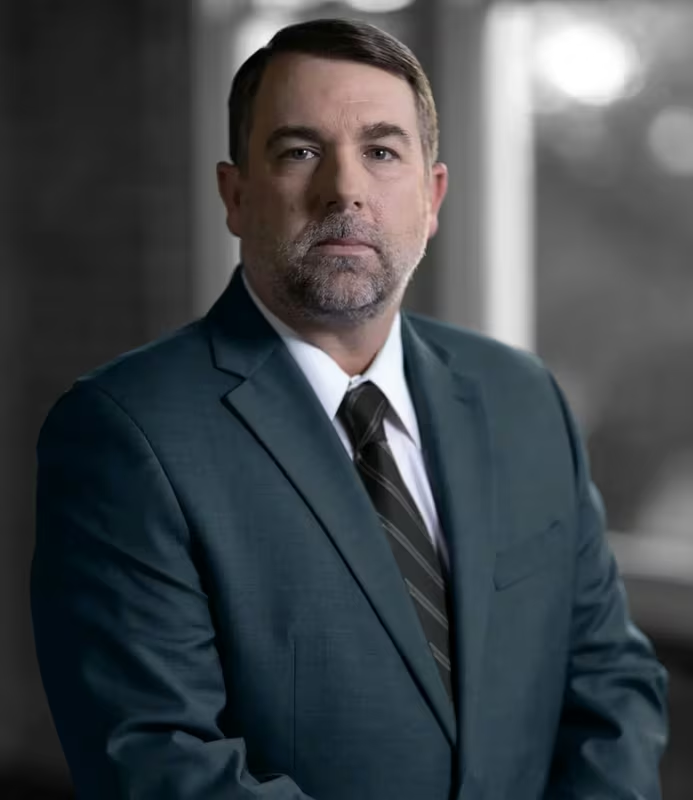
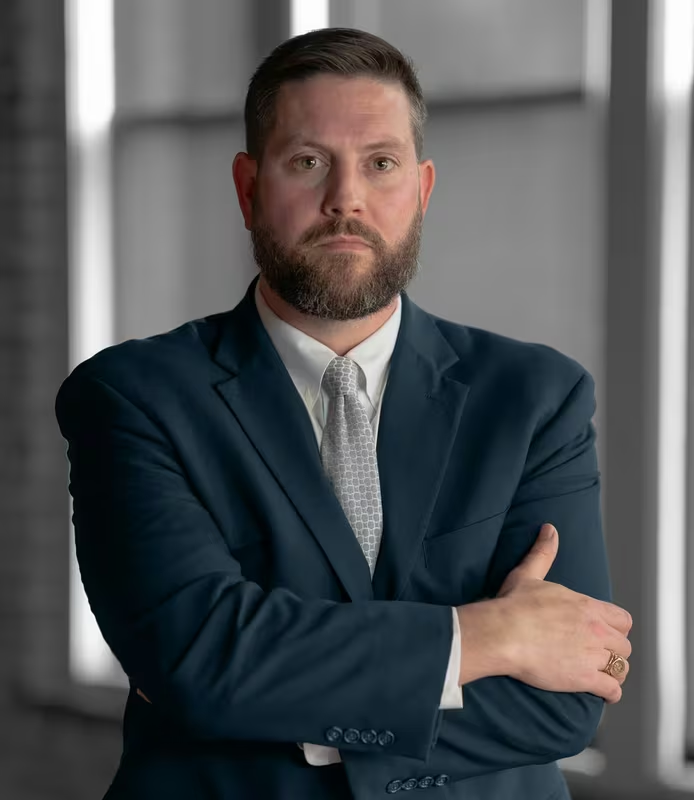
Your Livingston Parish Trial Team
The lawyers who work your file. Every Livingston Parish case is handled by the firm's own trial attorneys.









Contact a Livingston Parish Injury Lawyer for a Free Consultation Today
A free consultation is a conversation, not a commitment. You describe what happened. We listen, ask questions, and tell you what we think. If we can help, we explain how. If we can’t, we say so and point you somewhere useful. Either way, you leave the call with better information than you started with.
Trey Morris Injury Lawyers handles personal injury claims for people hurt in Livingston Parish. Calls are answered around the clock. You can phone us, send a message through the website, or ask for a meeting near Denham Springs, Walker, or Livingston if travel is difficult after an injury. There is no fee to talk and no obligation to hire.
Take the time to research attorneys. Read what each firm says. Compare answers. Ask hard questions. When you are ready, reach out and we will pick up where this page left off.