










Leesville wrecks happen on US-171, which carries heavy traffic through town, and on LA-8, which runs east toward Pitkin and west toward the Texas line, and the traffic in and out of Fort Johnson moves on both. The people hurt in them are taken to Byrd Regional Hospital on Fertitta Boulevard. The Leesville Police Department on West Lee Street writes the report for a crash inside the city; a crash inside the gate at Fort Johnson is a different report and can be a different kind of claim. Vernon Parish suits are filed in the 30th Judicial District Court at the parish courthouse on South Third Street, and the Clerk of Court on South Fourth Street keeps the record. Trey Morris Injury Lawyers orders the report, requests the Byrd Regional records, and identifies whether the other driver was a private motorist, a service member on duty, or a government contractor, because that answer decides who gets the notice letter.
The law that governs the claim is Louisiana law and it is the same in every parish. If you were hurt in Leesville, your case is filed in the 30th Judicial District Court in Vernon Parish, and the deadline turns on your injury date: two years for injuries after July 1, 2024, and the shorter former period under La. C.C. Art. 3492 for injuries before it. Trey Morris Injury Lawyers represents injured people across Vernon Parish, from Leesville at the center of the parish to the communities around Fort Johnson.
Results for Louisiana Clients
- $409 MillionWrongful Death
A tragic case where an impaired driver of a commercial vehicle ran a red light, then collided with our client, causing serious bodily injury to the mother and the loss of life of her daughter.
- $49 MillionMotor Vehicle Accident
An impaired driver of a stolen vehicle driving the wrong way collided with our client head-on, resulting in brain injury and multiple broken bones.
- $32,195,000Industrial / Workplace
Failure to maintain proper safety protocols led to an explosion at an industrial plant causing a series of catastrophic injuries from broken bones, burns, spinal injury, and mental anguish.
- $31.5 MillionIndustrial / Workplace
Brain and spinal injuries followed an oil-field company failing to maintain equipment and provide a safe work site.
- $17.25 MillionCommercial Vehicle Accident
Client was struck head-on by a disconnected load of an 18-wheeler that crossed the median causing broken bones and amputation.
- $13 MillionCommercial Vehicle Accident
On the interstate, an 18-wheeler failed to yield right of way then made an unsafe lane change causing the accident which resulted in major bone breaks, damaged organs, and ultimately a leg amputation.
Past results do not guarantee future outcomes; each case is decided on its own facts.
Who Are the Injury Lawyers Serving Leesville and Fort Johnson, Louisiana?
There are qualified attorneys in and around Vernon Parish who handle injury work, and several firms list services for Leesville and the area around Fort Johnson. You are reading this because something happened and you are deciding who to call. No one researches injury lawyers for entertainment.
The pages that follow lay out who serves this part of Louisiana, what kind of representation is available, and how the consultation works. None of it begs for your case. Read it, compare firms, and decide what fits your situation. Trey Morris Injury Lawyers represents injured people across Louisiana, including Leesville, the communities near Fort Johnson, and the rest of Vernon Parish.
Leesville Personal Injury Representation
Leesville sits at the center of Vernon Parish, and injury claims here run the full range: car and truck collisions, falls on commercial property, and other accidents caused by another party’s carelessness. Local search results show personal injury attorneys actively marketing to Leesville residents, so you have options to weigh.
A useful first test when you interview any firm is whether the attorney explains the governing Louisiana rule by its actual citation and tells you what that rule requires. A lawyer who answers from the statute has read it. One who speaks in generalities has not. We answer those questions directly in later sections so you can measure every firm you talk to, including ours.
Fort Johnson Injury Representation
The installation outside Leesville now operates under the name Fort Johnson, and accidents tied to the base carry questions a routine car-wreck claim does not. Some attorneys in this market focus on military defense and court-martial work rather than civil injury claims, so it matters which kind of representation you actually need.
Injury claims connected to the base can involve different parties, different reporting agencies, and sometimes a different court system than an ordinary Vernon Parish wreck. We handle the civil injury side, and later sections walk through how base-connected claims differ and who is eligible to bring them.
Injury Lawyers Serving Vernon Parish and Nearby Communities
Vernon Parish injury claims do not stop at the Leesville city limits. Crashes happen on the highways that move through the parish, on rural roads, and at businesses and worksites across the region. A firm that serves this area should be ready to gather evidence near the scene and pursue the claim wherever it belongs.
Trey Morris Injury Lawyers was founded in 2002 in Shreveport, Louisiana, and operates five Louisiana offices: Shreveport, Covington, Minden, Ruston, and Lake Charles. The firm handles personal injury, commercial vehicle and 18-wheeler collisions, catastrophic injury, industrial and workplace accidents, and wrongful death claims in Louisiana and Texas courts. That statewide footprint lets Trey Morris Injury Lawyers serve Leesville and Fort Johnson residents while drawing on resources a single-office practice may not have.
Free Case Evaluation, No Fee Unless You Win
The first conversation about your claim costs nothing. A free case evaluation lets you describe what happened, ask questions, and learn how Louisiana law applies before you commit to anything. You leave the call with information whether or not you hire anyone.
Injury cases here are handled on a contingency basis, which means the attorney fee comes from the result rather than from your pocket up front. If there is no compensation, there is no attorney fee. You can also view our case results to see the kinds of matters the firm has handled before you decide.
Local Coverage. Statewide Record.
- $1 Billion+
Outcomes for Louisiana clients
Verdicts and settlements won across the state by the same trial team that handles Leesville cases.
- 11
Trial attorneys, one team
Your case is handled by the firm's own trial attorneys, and we respond in minutes, 24/7.
- 24/7
We come to you
An attorney travels to you in Leesville, at home or at the hospital, or meets by video the same day. Free case review, and no fee unless we win.
- 127
Cases resolved over $1 million
Verdicts and settlements of $1 million or more, won by the same trial team that handles Leesville cases.
Do You Have a Personal Injury Case in Leesville or Fort Johnson?
Not every injury is a case. A case exists when someone else’s careless or wrongful conduct caused you harm, and the law lets you ask that person to pay for it. The sections below explain what that looks like in practical terms, what kinds of accidents qualify, and when an injury needs a lawyer’s eyes right away. Read it, then measure any attorney you talk to against what you learn here.
What Counts as Negligence in Louisiana Injury Claims?
Negligence is the legal name for harm caused by someone failing to act with reasonable care. In plain terms, a claim asks whether the other person owed you care, fell short of it, and caused your injury as a result, leaving you with real losses.
Most claims aim at compensating you for the harm done. Some conduct goes further, and Louisiana law treats it differently. One example sits in the statute books: La. C.C. art. 2315.4 allows additional exemplary damages where a wreck is caused by the wanton or reckless disregard of an intoxicated driver whose intoxication was a cause in fact of the harm, and the article sets no cap on that award.
What Injuries and Accidents Qualify for Compensation?
An injury qualifies when it produces real harm that someone else’s conduct caused. That includes broken bones, spinal injuries, head and brain injuries, soft-tissue damage, burns, and the lasting effects that follow. It also includes the costs that come with treatment: emergency care, surgery, physical therapy, follow-up visits, and time away from work. Common injuries in these claims range from whiplash in a low-speed collision to permanent disability in a serious crash, and the strength of a claim depends far more on the proof than on the label.
The accident itself can take many forms. Vehicle collisions, falls on dangerous property, animal attacks, and on-the-job incidents all give rise to claims when negligence is behind them. What ties them together is the same care question above: someone owed you reasonable care and failed to provide it. If you are unsure whether your situation fits, that uncertainty is exactly what a free case review answers.
When Does a Case Need Immediate Legal Review?
Some situations cannot wait. A case needs prompt legal review when evidence is fading, when a serious or permanent injury is involved, or when the at-fault party is a government body or a large insurer with its own investigators already at work. Crash scenes get cleaned up, vehicles get repaired or scrapped, video is overwritten, and witnesses become hard to find. The sooner someone preserves that proof, the stronger the claim stays.
Quick review also matters because Louisiana sets firm filing deadlines, and the clock starts running from the date of harm. The specific time limits are explained in the section on filing deadlines later on this page. The point here is simple: if you are seriously hurt, or if anyone is already pressuring you for a statement, an early conversation protects your position before choices are made for you.
Fault, Negligence, and Liability in Louisiana Injury Cases
Liability means legal responsibility to pay. In an injury claim, the party whose negligence caused the harm is the one held liable, and more than one party can share that responsibility.
Louisiana assigns fault by percentage, and how that affects what you can collect is a detailed question covered in its own section on this page.
Leesville Practice Areas
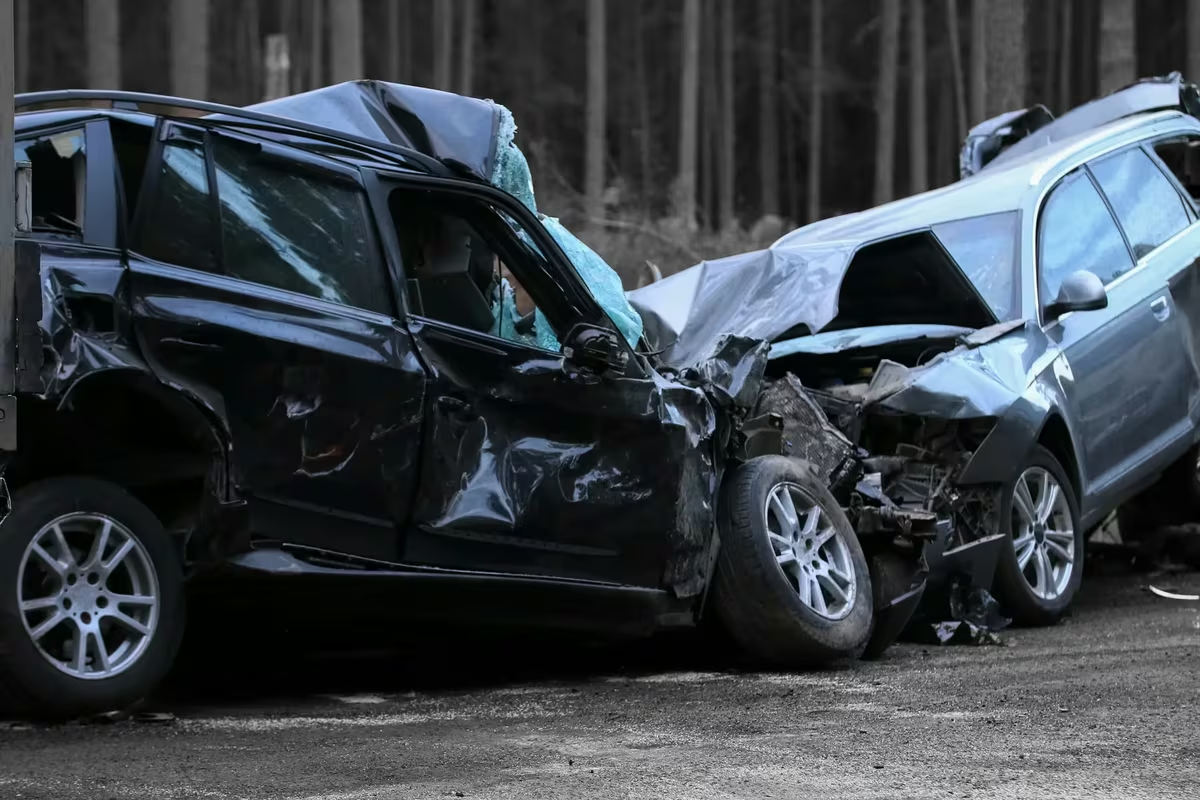 Car AccidentsRear-end, intersection, and highway collisions across Louisiana.
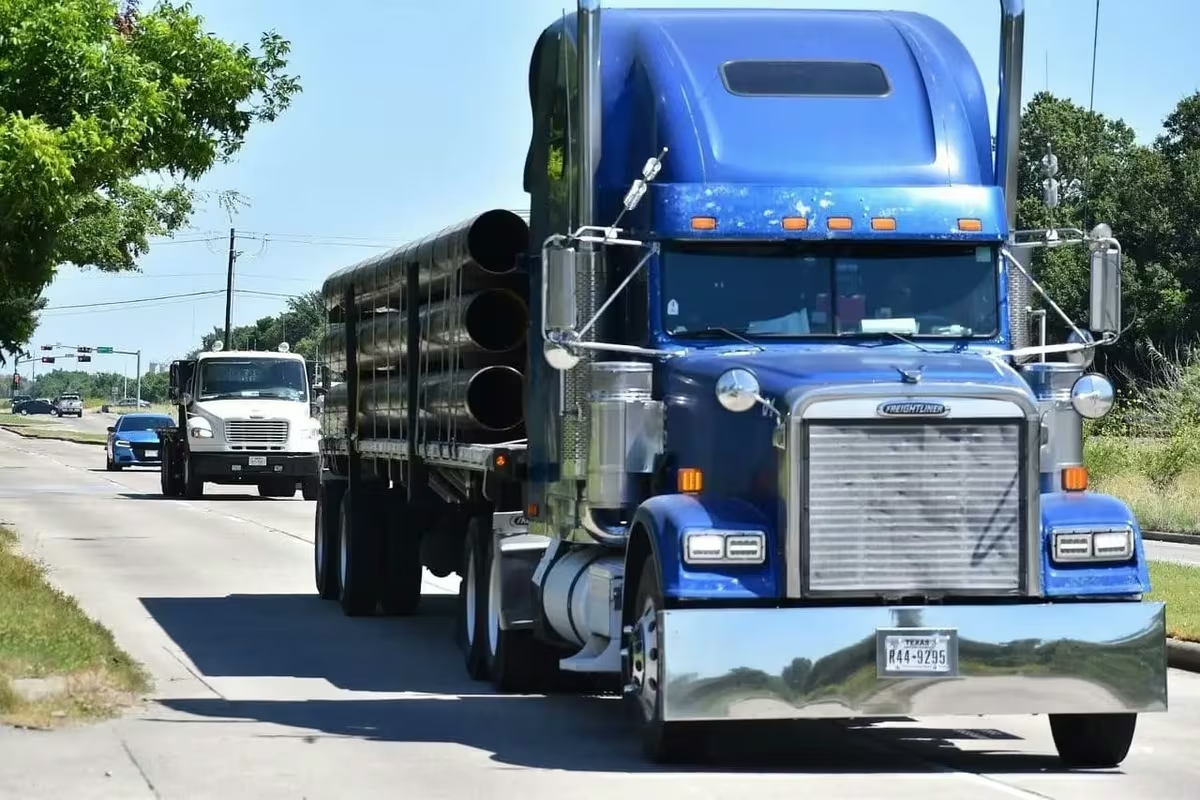 Truck Accidents18-wheeler and commercial-vehicle wrecks governed by federal trucking rules.
 Catastrophic InjuryBrain, spinal-cord, amputation, and severe-burn injuries that change a life.
 Wrongful DeathClaims brought by families after a fatal accident or act of negligence.
 Premises LiabilitySlip-and-fall and unsafe-property injuries on someone else's premises.
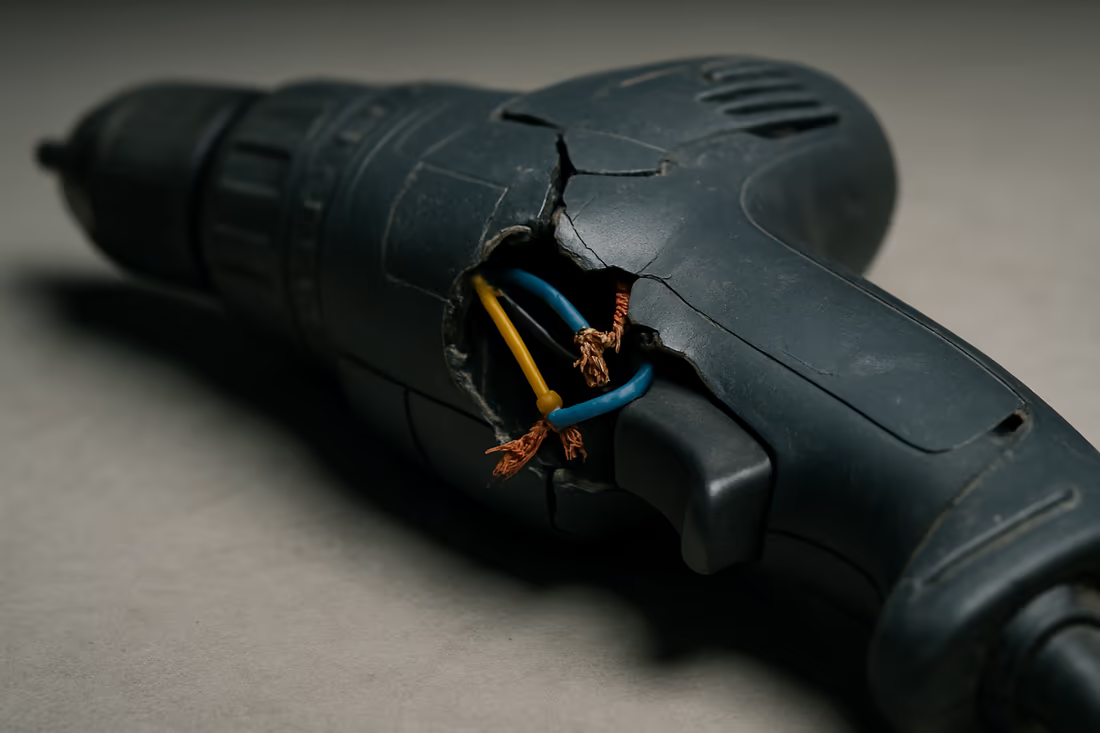 Product LiabilityInjuries caused by defective or unreasonably dangerous products.
 Oilfield AccidentsDrilling, pipeline, and refinery injuries across the energy sector.
 Industrial AccidentsPlant, warehouse, and heavy-equipment injuries in industrial settings.
 Offshore AccidentsRig, platform, and vessel injuries beyond the shoreline.
What Types of Injury Cases Do Leesville and Fort Johnson Lawyers Handle?
Injury lawyers serving Leesville and Fort Johnson handle the range of personal injury claims that arise in Vernon Parish: highway and truck crashes, motorcycle and pedestrian collisions, slips and falls in stores, dog bites, and workplace injuries on job sites and contractor projects. Each type of case turns on a different citation and a different set of records. Knowing which statute applies tells you what to read first, and it tells you what to ask before you hire anyone.
Car and Truck Accidents on US-171 and LA-8
Vehicle crashes are the most common injury claims in the area, and the roads tell the story. US-171 carries heavy traffic through Leesville and north toward DeRidder and Many. LA-8 runs east toward Pitkin and west toward the Texas line. Commercial trucks share both routes with passenger vehicles and military traffic moving to and from the installation.
Truck cases are not just bigger car cases. A commercial carrier brings federal safety regulations, driver logs, maintenance records, and often a corporate insurer with its own investigators on the scene fast. The evidence that decides these cases, such as the electronic control module data and hours-of-service logs, can be overwritten or lost if no one demands its preservation early. Ask any attorney which records their preservation letter demands after a truck crash. The answer tells you whether they have handled these claims before.
Motorcycle, Pedestrian, and Bicycle Injury Claims
Riders, walkers, and cyclists have no steel cage around them, so the same impact that dents a bumper can cause serious injury to a person on a motorcycle or on foot. Insurers know this and frequently argue the rider or pedestrian shared the blame. That argument is a fault dispute, and how Louisiana handles shared fault is its own subject covered elsewhere on this page.
What matters here is the proof. These claims rise or fall on visibility, right-of-way, speed, and the physical evidence at the scene. Skid marks, debris fields, helmet damage, and the resting positions of the vehicles all carry information that fades within days. An attorney who gets to the scene or sends an investigator preserves those facts in photographs and measurements.
Slip and Fall and Premises Liability Claims
For an injury on a merchant’s property in Leesville, the first citation to raise is La. R.S. 9:2800.6, which the Louisiana Legislature publishes on its official site.
Dog Bite and Animal Attack Claims
For a dog bite in Louisiana, the citation to read is La. C.C. art. 2321, which the Louisiana Legislature publishes at that link. This page points you to the article and asks you to read it on the official page. It does not paraphrase the rule for you. Read the published article first, then bring it to the interview.
Ask each attorney whether this article governs your claim, and ask them to point to the words in the published text that answer it. You can check that answer against the text yourself on the published page. The records people use to build these claims, such as medical records, animal control reports, and witness statements about the dog’s prior behavior, map back to the words the Legislature chose. The published article reaches beyond dog bites to other animal attacks, so read the full text on the official page to see its scope.
Workplace, Contractor, and Construction Injury Claims
Injuries on the job in Vernon Parish range from construction-site falls to equipment accidents on contractor projects, including work tied to the installation. These cases sit at the intersection of two systems. Workers’ compensation may cover an injured employee through the employer, while a separate claim may exist against a third party whose negligence caused the harm, such as an equipment maker or another contractor on the site.
Sorting out which path applies takes a careful look at the employment relationship, the cause of the injury, and who controlled the dangerous condition. The choice matters because the two routes offer different remedies and run on different deadlines. An attorney who handles workplace injuries should be able to explain, in plain terms, why your situation is a compensation claim, a third-party claim, or both.
What Should You Do After an Accident in Leesville or Near Fort Johnson?
The steps you take in the first hour after a crash or fall shape the case you can build later. Evidence disappears fast. Skid marks fade, vehicles get towed, hazardous conditions get cleaned up, and memories blur. What you document at the scene in Leesville, on US-171, or near the Fort Johnson gates often decides whether an insurer takes your claim seriously. Here is the order that protects you, and why each step matters.
Call 911 and Report the Accident
Call 911 first, even if the damage looks minor and no one seems badly hurt. A dispatched officer creates an official report with a number, a diagram, and the responding agency’s account of what happened. That report becomes a neutral record you can point to later when an insurer disputes the facts.
Adrenaline hides injuries. People walk away from collisions feeling fine and wake up the next morning unable to turn their neck. Reporting the accident at the scene closes the door on a common insurer argument: that nothing serious happened because you never called it in. If the crash is on a state highway, Louisiana State Police may respond. In town, it may be Leesville Police or the Vernon Parish Sheriff’s Office. Ask which agency is taking the report so you know where to request a copy.
Get Medical Care and Follow Treatment Instructions
See a doctor the same day or as soon as you can, regardless of how you feel. A medical record created close to the accident links your injuries to the crash. A gap between the accident and your first visit gives an adjuster room to argue that something else caused your pain.
Follow the treatment plan you are given. Attend the follow-up appointments, fill the prescriptions, and complete the physical therapy. When you skip care, the insurer reads that as a sign you healed, not that you were busy or wanted to tough it out. Consistent treatment records are one of the strongest pieces of evidence in a personal injury claim. This matters more than it used to, because for injuries on or after May 28, 2025, the absence of similar symptoms before the wreck no longer creates a presumption that the wreck caused the injury (La. Code Evid. Art. 306.1); you now need medical or expert testimony. Ask any attorney you interview how they use medical records and treating physicians to prove the connection between the accident and the injury.
Photograph Vehicles, Injuries, and Hazardous Conditions
Use your phone to photograph everything before anything moves. Capture the position of the vehicles, the damage to each one, the license plates, debris in the road, traffic signals, and the wider scene from several angles. If a slip or fall caused your injury, photograph the spilled liquid, the broken step, the missing handrail, or whatever condition put you on the ground, along with the surrounding area for context.
Photograph your injuries too, then again over the following days as bruising and swelling develop. Hazardous conditions get fixed within hours. A wet floor gets mopped, a pothole gets filled, a broken railing gets repaired. Once it is gone, your photo may be the only proof it ever existed. Time-stamped images from the scene carry weight no later description can match.
Get Names, Insurance Details, Witness Contacts, and Report Numbers
Collect the other driver’s name, address, phone number, insurance company, and policy number. Photograph their insurance card and driver’s license if they will let you. Write down the make, model, and plate of every vehicle involved.
Witnesses matter more than people expect. A neutral bystander who saw the light turn green can settle a fault dispute that would otherwise come down to one driver’s word against another. Get names and phone numbers before witnesses leave, because they rarely stay and you cannot find them later. Note the report number and the agency that responded so you can request the official record. For a crash near Fort Johnson, also note whether military police or gate personnel were involved, because that affects where the incident record lives and who controls access to it.
Avoid Recorded Statements Before Legal Advice
The other driver’s insurance company may call within a day or two, friendly and eager to help, asking for a recorded statement. You are not required to give one. Adjusters are trained to ask questions that produce answers used later to reduce or deny your claim.
Speak with a lawyer before giving any recorded or written statement to the other side.
How Are Fort Johnson and On-Base Accident Claims Different?
An accident on or near a military installation can change who you sue, where you file, and which deadline controls. A crash on US-171 between two private drivers tends to follow ordinary Louisiana procedure. A crash inside the gate, or one involving a government vehicle or a federal employee on duty, can pull the claim onto a different track with its own process and its own clock. Sorting out which track applies early matters, and the sections below explain why and what to do about it.
Identifying the Installation in Your Records
The installation south of Leesville has carried more than one name over the years, so older crash reports, insurance records, and GPS entries may not all match. For a claim, the practical concern is records, not naming. The same federal property, the same gates, and the same roads are involved regardless of which name appears on a document. When you pull records or describe where an incident happened, check whether the paperwork uses different names for the same place, and ask an attorney to track every variant so nothing in the evidence falls through a gap.
On-Base Crashes, Gate Traffic, and Military Vehicle Accidents
Where the collision happened drives the analysis. A wreck between two private drivers on a public road outside the installation is a standard Louisiana claim, even if both drivers are soldiers off duty. The picture shifts when the crash happens inside the gate, in the congested gate-traffic lanes, or involves a tactical or government-owned vehicle driven by someone on duty.
Three questions sort most of these cases. Who owned the vehicle. Who was driving and in what capacity. Where the collision occurred. A civilian rear-ended by another civilian in a commissary parking lot has a different claim than a driver struck by a government truck whose operator was performing official duties. The first looks like an ordinary insurance claim. The second can point toward the federal government as the responsible party, which often changes the procedure.
Claims That Involve the Federal Government
When the at-fault party is a federal employee acting on the job, the claim may not proceed the way an ordinary lawsuit against a private driver would. Claims that name the federal government can run through a separate process with pre-filing steps and a deadline of their own, rather than starting with a routine state-court filing. The exact rules, the agency involved, and the paperwork depend on the facts of the crash, and they are the kind of thing to confirm with an attorney before assuming any one path applies.
The headline for a reader is simple. If the government may be responsible, do not assume an ordinary state-court filing protects the claim. The applicable deadline and pre-filing requirements are addressed in the filing-deadline section of this page. The practical move now is to get the facts of who caused the crash, and in what capacity, in front of an attorney early enough to choose the right track.
Military, Civilian, and Contractor Status Matter
The status of the people involved shapes the claim as much as the location. The same crash can produce different options depending on whether the injured person is a service member, a military family member, a civilian employee, or a contractor, and on the status of whoever caused it. A civilian struck by a government vehicle raises one set of questions. A service member injured in connection with duty raises a separate set. A contractor working on the installation sits in yet another category, where employment relationships and workers’ compensation rules may intersect with any injury claim.
This page addresses how those different parties bring claims in a separate section. The point here is narrower. Before anyone knows which procedure governs, the file needs a clear answer to who each person was and what they were doing at the moment of the crash. That single set of facts often decides whether a claim runs through Louisiana courts, a federal process, or both.
Fort Johnson Accident Reports and Evidence Preservation
On-base incidents generate records that civilian crashes do not. Military police respond to collisions inside the installation, and their reports live in a federal system rather than with a local parish agency. Gate cameras, motor-pool logs, dispatch records, and unit duty rosters can all be relevant, and all of them sit under federal control. These records are not produced by a simple call to a local clerk.
Evidence on a military installation can be harder to reach and faster to disappear than evidence at a roadside in town. Surveillance footage cycles. Vehicles return to service. Personnel transfer. The earlier a written request goes out to preserve military police reports, camera footage, and maintenance logs, the better the chance the material still exists when the claim is reviewed. For anyone injured in a crash connected to the installation, identifying which federal records exist and asking for them in writing is one of the first practical steps a careful claim takes.
Can Active-Duty Service Members, Military Families, or Civilian Contractors Bring Injury Claims?
The answer depends almost entirely on who you are and who caused the harm. A military spouse hurt by a careless driver near the gate stands in a different position than a soldier injured on duty, and a civilian contractor hurt on the job stands in a different position than both. The starting question is never just what happened. It is what your status was, and whose negligence is in play. Those two facts decide which door is open and which is closed.
Claims by Military Spouses and Family Members
Military spouses and dependents are civilians, and their injury claims work like anyone else’s. A spouse rear-ended on US-171, a child hurt in a daycare incident, a dependent injured by a defective product, all of these proceed as ordinary Louisiana injury claims when the at-fault party is a private person or business. The fact that the family is connected to Fort Johnson does not shrink their rights.
The wrinkle appears when the alleged negligence traces back to the federal government, such as a hazardous condition on base or a government employee acting within their job. Claims that point at the federal government run on a different track than a normal lawsuit, and that track has its own requirements and deadlines that an attorney must identify and confirm against current federal sources. Ask any attorney you interview how they handle a family-member claim that crosses onto federal property. The answer shows whether they have actually worked a case that mixes state and federal exposure.
Claims by Civilian Employees and Contractors
Civilian employees and contractors working at or near Fort Johnson have injury rights, but the path turns on the relationship. A worker hurt on the job usually deals first with a workers’ compensation system, which compensates regardless of fault but limits what can be claimed from the employer. Federal contractors and certain on-base workers may fall under specialized federal compensation schemes rather than ordinary state workers’ compensation, and pinning down which one applies is the first real piece of analysis.
Even when a compensation system covers the work injury, a separate claim against a negligent third party often survives. A contractor injured by a careless driver, a defective machine, or another company’s crew on the site may have a claim against that outside party while still drawing compensation benefits. Identifying the at-fault entity, and whether it is the employer, the government, or an unrelated third party, drives everything that follows.
Claims by Visitors to Fort Johnson
Visitors injured on Fort Johnson, whether attending an event, making a delivery, or passing through, can pursue claims, but the defendant’s identity changes the route. If a private business operating on base caused the harm, the claim may proceed against that business under ordinary principles. If a federal employee or a government-controlled hazard caused it, the claim points at the federal government and runs through a separate federal process rather than a routine state lawsuit.
Evidence on a federal installation is controlled by the installation. A visitor who waits to act may find that the incident report, gate camera footage, and on-base witness information are harder to reach. Moving early on preservation matters more here than on a public street.
Active-Duty Injury Claims
Active-duty service members face the hardest threshold question. Whether a particular injury can support a claim against the federal government often turns on how closely the injury connects to military service, and that connection question is frequently contested and fact-specific. The exact scope of the limits that apply to service-connected injuries is a matter of controlling federal law that an attorney must confirm against current authority before relying on any general statement here. This page does not state that rule, and no reader should treat the general framing above as the governing standard for a specific case.
The limits on service-connected claims do not erase every avenue. Injuries with no real connection to military duty, and injuries caused by parties outside the government entirely, can sit on different footing. An attorney evaluating an active-duty claim should be able to walk through where the line tends to fall and why a given set of facts lands on one side of it. That analysis, not a quick yes or no, is what tells you whether an avenue exists.
Third-Party Claims Outside the Military Chain of Command
The most important point for service members and their families is that limits on suing the government do not protect private parties. A drunk driver, a trucking company, a product manufacturer, a property owner off base, none of these can hide behind the military’s protections. When a negligent civilian or company causes the harm, the injured person, active-duty or not, can pursue an ordinary Louisiana injury claim against that party.
Sorting government exposure from private exposure is the core of these cases. When the federal government is a potential defendant, the claim follows a separate federal process with its own filing requirements and deadlines that an attorney must identify, verify against current federal sources, and treat as a priority. The investigation focus is always the same: identify every party whose negligence contributed, separate the federal defendants from the private ones, and pursue each on the track the law actually allows.
How Much Is My Leesville or Fort Johnson Injury Case Worth?
No honest lawyer can quote a number before reviewing your medical records, your bills, and how the crash happened. Case value is the sum of what you lost, what you will lose going forward, and the percentage of fault assigned to each party. Louisiana law sorts those losses into categories, and each category carries its own proof.
One point matters at the outset. Outside of medical malpractice claims and claims against the state, Louisiana does not write a general dollar ceiling into its delict damages provisions. The exemplary damages provision for intoxicated drivers, La. C.C. art. 2315.4, shows the pattern: when an intoxicated driver’s condition was a cause in fact of the crash, exemplary damages are available with no cap stated on the amount. Open that article on the Louisiana Legislature site and read the text for yourself. Your compensatory damages are measured by your actual losses, not by a legislative number.
Economic Damages: Medical Bills, Lost Wages, Future Care Costs
Economic damages are the losses with a paper trail. Emergency room charges, surgery, imaging, physical therapy, prescriptions, and the bills still arriving months later all count. So does the income you lost while you could not work, proven by pay stubs, tax returns, or an employer letter. In lawsuits filed on or after January 1, 2026, past medical expenses are limited to what your health insurer or Medicare actually paid, plus your own deductibles and co-pays (La. R.S. 9:2800.27).
Future costs belong here too, and they often dwarf the bills already paid.
Non-Economic Damages: Pain, Suffering, and Loss of Enjoyment
Non-economic damages compensate the harm with no invoice attached. Physical pain, mental anguish, scarring, disability, and the loss of activities you can no longer do all fall here.
Wrongful Death and Survival Damages in Louisiana
When an injury is fatal, Louisiana splits the claim into two distinct actions. The wrongful death action under La. C.C. Art. 2315.2 compensates surviving family for their own loss, and the survival action under La. C.C. Art. 2315.1 compensates for what the decedent endured before death. These are separate claims, and a fatal-injury case is typically valued as the combination of both.
Property Damage and Out-of-Pocket Expenses
Property damage is the most concrete piece. Vehicle repair or replacement value, a rental while your car is in the shop, and damaged personal property inside the vehicle all belong in the claim. Keep the repair estimates and the rental receipts.
Out-of-pocket expenses round out the economic side. Mileage to and from medical appointments, prescription copays, medical devices, and home modifications after a serious injury are compensable when documented. Small items add up across a long treatment course, so save every receipt.
What Changes Damages in Louisiana?
Several factors move the final figure, and they explain why two crashes with similar injuries settle for very different amounts. The severity and permanence of the injury is the largest driver. A full healing within weeks values differently than a permanent disability.
Available insurance and the number of solvent defendants set a practical ceiling. A catastrophic injury caused by a driver with minimum coverage and no other defendant may be worth far more on paper than what can actually be collected. The strength of your documentation matters next. Gaps in treatment, missing records, or thin proof of lost income all give an adjuster room to discount.
Fault allocation is the final variable, and it can reduce a number sharply. How fault is divided among the parties directly affects what you collect, a question Louisiana’s comparative fault rules govern in detail. The interaction of injury severity, insurance, documentation, and fault is why a real valuation requires the file, not a phone estimate.
How Do Louisiana Comparative Fault Rules Affect Your Recovery?
Being partly at fault does not automatically end your claim in Louisiana, but it does change the math. For causes of action arising on or after January 1, 2026, Louisiana applies a modified comparative fault system with a 51 percent bar under La. C.C. Art. 2323, as amended by Act 15 of the 2025 Regular Session (HB 431). A plaintiff who is 51% or more at fault takes nothing. A plaintiff who is 50% or less at fault still has a claim, but the damages award is reduced by that fault percentage. Accidents before January 1, 2026 remain under the prior rule, which had no percentage bar. That single rule shapes how injury cases near Leesville and Fort Johnson are valued, negotiated, and tried.
What If You Were Partly at Fault?
People often assume that a single mistake at the scene disqualifies them. It does not. For accidents on or after January 1, 2026, La. C.C. Art. 2323 lets you be assigned some share of blame and still pursue damages, as long as your share stays at 50% or below.
The question a court answers is not who made any mistake but what percentage of the total fault belongs to each person.
How Fault Reduces Compensation
Once fault is assigned, the reduction is arithmetic. If a jury values your total damages at a given amount and finds you 20% at fault, your award is reduced by that 20%. The remaining 80% is what you can collect.
Why Insurers Use Fault Arguments
Fault arguments are the most direct tool an insurer has to reduce a payout without disputing your injuries at all. An adjuster can concede that you were hurt, concede the treatment was necessary, and still argue that you share enough blame to slash the bill. Every percentage point of fault they pin on you is a percentage point they do not pay.
How Long Do You Have to File a Personal Injury Claim in Louisiana?
The deadline depends on when your injury happened. For injuries after July 1, 2024, Louisiana gives you two years to file a personal injury lawsuit under La. C.C. Art. 3493.1. For injuries on or before that date, the shorter former period under La. C.C. Art. 3492 applies. This deadline is called a prescriptive period, and it is one of the first things any attorney should check before reviewing the rest of your case. Miss it, and the merits of your claim no longer matter.
What Is the General Louisiana Deadline?
Louisiana changed its filing deadline for injury claims. Under La. C.C. Art. 3493.1, delictual actions are subject to a liberative prescription of two years. That change applies to injuries occurring after July 1, 2024.
The date of your injury controls which rule applies. Product liability claims follow the same two dates, with the same two years for injuries after July 1, 2024.
This split matters in Leesville and across Vernon Parish because an accident from early 2024 and an accident from late 2024 can sit under different deadlines. Ask any attorney you interview which period governs your specific injury date, and watch whether the answer matches the calendar.
When Does the Clock Start?
The two-year period commences to run from the day the injury or damage was sustained. For a car crash on US-171, that is usually the date of the wreck. For an injury that surfaces later, the analysis can be more involved.
The statute carries one built-in exception. Prescription does not run against minors or interdicts in actions involving permanent disability brought under the Louisiana Products Liability Act or comparable product liability law in effect at the time of injury. That is a narrow carve-out, not a general extension. A child’s injury claim and an adult’s injury claim do not automatically share the same start date, so the accrual date is worth confirming early.
Not every injury claim runs on the same track. Claims against a government body follow their own procedures: no pre-suit notice of claim is required, but service of citation must be requested within 90 days of filing under La. R.S. 13:5107(D). Matters involving a federal entity have their own separate procedures. The first task in any of those matters is identifying who the defendant is, because the defendant’s identity often decides which procedure applies. Ask any attorney you interview to tell you which track your facts fall into and to confirm the deadline and service requirement that go with it.
Why Missing the Deadline Bars Your Claim Permanently
Prescription is not a soft guideline. Once the period runs out, the defendant can raise it, and the court will dismiss the claim no matter how strong the underlying facts are. There is no separate damages analysis after that point, because the door to compensation is closed.
How Does the Louisiana Personal Injury Claims Process Work?
A Louisiana personal injury claim moves through predictable stages: preserving evidence, identifying the right forum, building the medical and economic record, negotiating with the insurer or government adjuster, and resolving the case by settlement or trial. A claim from a Leesville or Fort Johnson accident can travel any of three tracks, state court, federal court, or the Federal Tort Claims Act administrative process, and the track depends on who caused the harm. Knowing where your case sits in this sequence tells you what should be happening now and what comes next.
The detail below walks through each stage. Ask any attorney you interview to explain how they handle these steps. The answers reveal whether the lawyer has actually run cases through the Vernon Parish courthouse and the federal courthouses that serve this corner of the state.
Immediate Steps and Evidence Preservation in Vernon Parish
The first stage of any claim is locking down proof before it disappears. Skid marks fade, vehicles get repaired or scrapped, surveillance footage gets overwritten on a 30-day loop, and witnesses move on. The early work is gathering the crash report, photographing the scene and the vehicles, identifying surveillance cameras near the accident, and sending preservation letters to anyone holding relevant footage or records.
Medical documentation starts here too. Consistent treatment creates the record that proves the injury, its severity, and its cause. Gaps in treatment become the insurer’s argument that the injury was minor or unrelated. The strongest cases are the ones where the evidence was secured in the first days, not reconstructed months later from memory.
Filing in State Court, Federal Court, or the FTCA Administrative Process
The forum depends on the defendant. A claim against another driver, a business, or a private property owner generally proceeds in Louisiana state court. A claim that crosses state lines or involves federal questions can land in federal court. A claim against the federal government for negligence on Fort Johnson runs through a separate administrative process before any lawsuit can be filed.
These tracks have different rules, different deadlines, and different procedures. Filing in the wrong forum, or starting a lawsuit when the law requires an administrative claim first, can sink an otherwise valid case. The forum analysis happens early because everything downstream depends on getting it right. The specific deadlines that govern each track are covered separately on this page.
Negotiating with Insurance Companies and Government Adjusters
Most injury claims resolve through negotiation rather than trial. After treatment stabilizes and the damages are documented, the demand goes to the insurer or, in a federal claim, to the government agency’s adjuster. The demand lays out liability, the medical record, lost wages, and other losses, and asks for a specific sum.
Adjusters open low. They look for treatment gaps, prior injuries, and recorded statements they can use to reduce or deny the claim. Government adjusters in a federal claim follow their own internal procedures and timelines that differ from a private carrier. Ask any attorney how they value a claim and how they respond when an adjuster lowballs. A lawyer who has tried these cases negotiates from the credible threat of trial, and adjusters know the difference.
Trial or Settlement in the Western District of Louisiana
When negotiation fails, the case proceeds to litigation. State-court suits arising from Vernon Parish accidents are filed in the parish court system. Federal claims, including those under the Federal Tort Claims Act, are heard in the United States District Court for the Western District of Louisiana, which covers this region.
Litigation involves filing the petition or complaint, exchanging evidence through discovery, taking depositions, and preparing experts. The cases that do not settle go to trial, where a judge or jury decides liability and damages.
How Long Will My Case Take?
There is no single timeline. A straightforward claim with clear liability and completed treatment can resolve in months. A disputed-liability case, a serious injury that requires long-term treatment, or a federal claim with an administrative stage can take a year or more.
Two factors drive the timeline more than any other. First, medical treatment: a case should not settle until the full extent of the injury is known, because settling early can leave future care costs uncompensated. Second, the defendant’s posture: an insurer that disputes fault forces the case deeper into litigation. The honest answer to how long a case takes is that it depends on the injury and the fight, and a lawyer who promises a fast result before knowing either is guessing.
Which Local Courts, Agencies, and Records Matter in Leesville and Fort Johnson Injury Cases?
An injury claim in Vernon Parish is built from records held by separate offices, and knowing which office holds which document shapes how fast a case moves. A state-court lawsuit gets filed in one place. A crash report sits with whichever agency responded. An on-base incident lives in a different records chain entirely. Ask any attorney where the report for your accident is held and how they will get it. The answer tells you whether they understand how cases come together in this corner of Louisiana.
Vernon Parish Courthouse and Clerk of Court
State-court personal injury lawsuits arising in Vernon Parish are filed at the Vernon Parish Courthouse in Leesville. A petition for damages goes to the Vernon Parish Clerk of Court, which maintains the suit record, assigns a docket number, and tracks every filing from the petition through judgment.
The clerk’s office also issues the citations that formally notify defendants of the lawsuit. If your claim is a state-law tort against a private driver, business, or property owner, this is where the case record lives. Knowing the courthouse and clerk matters because filing, service of process, and the handling of the case all run through that office.
Leesville Police Department and Vernon Parish Sheriff Reports
The agency that responded to your accident wrote the report, and which agency that was depends on where the crash happened. Collisions and incidents inside Leesville city limits are typically handled by the Leesville Police Department. Incidents on parish roads outside the city, or that involve calls to a rural address, are usually handled by the Vernon Parish Sheriff’s Office.
Each agency keeps its own incident and crash reports, and you request a copy from the agency that responded, not from the courthouse. These reports carry the responding officer’s narrative, the parties involved, any citations issued, and contact information for witnesses. They are often the first documented account of what happened, which is why getting the correct report number early matters.
Louisiana State Police Troop E Crash Reports
Crashes on state highways and on the higher-speed routes that run through Vernon Parish frequently fall to the Louisiana State Police rather than a local department. Troop E covers this region of central and west-central Louisiana, including the highway corridors that carry traffic into and out of Leesville and the Fort Johnson area.
A State Police crash report is a separate document from a city or parish report and is requested from the State Police, not the local agency. These reports often include detailed diagrams, measurements, and a trooper’s assessment of how the collision occurred. When a crash involves serious injury or a fatality on a state route, the Troop E report can become a central piece of evidence.
Fort Johnson Military Police and On-Base Incident Reports
An accident that happens inside the gates at Fort Johnson does not generate a city or parish police report. The Fort Johnson military police and the installation’s law enforcement handle on-base incidents, and the report stays within the military records system. Getting that record is a different process than requesting a Leesville or sheriff’s report, because it runs through the installation rather than a parish agency.
This distinction matters from the first day. Surveillance footage, gate-camera recordings, and military police narratives are held by the base, and access to them follows military and federal procedures. Identifying early that an accident occurred on federal property, and that the report sits with installation authorities, changes how evidence is requested and preserved.
Medical, Billing, and Lost-Wage Documentation
Beyond the agency reports, the records that prove the value of an injury claim come from medical providers, billing departments, and employers. Treatment records document the diagnosis, the care provided, and the connection between the accident and the injury. Itemized billing statements establish the economic cost of that care.
Lost-wage documentation comes from an employer or payroll records and shows time missed and earnings lost. For service members and military families, treatment may run through on-base or Tricare-network providers, which adds a records source on top of any civilian care. Gathering these documents in an organized chain, from the date of the accident forward, is what turns an account of what happened into a claim that can be measured and supported.
Why Hire a Local Leesville or Fort Johnson Injury Lawyer Instead of a Statewide Firm?
A local injury lawyer brings working knowledge of the specific court, claims process, and people involved in your Vernon Parish case. That knowledge is hard to replicate from an office hours away. A statewide firm may have resources, but the value of an attorney who already knows the local courthouse, the road where you were hurt, and the providers treating you shows up at every stage of the case. Use the points below as questions to ask any attorney you interview. Their answers tell you whether they actually work in this area or just advertise here.
Knowledge of Vernon Parish Judges, Jury Pools, and Court Procedures
State court injury cases from Vernon Parish are heard at the parish courthouse in Leesville. An attorney who appears there regularly knows the local judges, the scheduling habits of the court, and the unwritten procedures that move a case forward. They also understand the jury pool. Who lives in Vernon Parish, how they tend to view injury claims, and what arguments land with a local jury all factor into how a case is valued and tried.
Ask any attorney how often they appear in the parish where your case will be filed. An attorney who tries cases here can answer specifically. The answer separates a firm that knows this venue from one that will be learning it on your case.
Familiarity with the Fort Johnson Claims Process
Cases connected to the installation outside Leesville carry an extra layer most general injury practices rarely touch. An accident on base, at a gate, or involving a federal employee can route a claim through a federal administrative process rather than a standard insurance negotiation. A lawyer who handles cases near the installation understands which incidents trigger that process and how to identify the correct party early.
Ask the attorney how they handle a claim that involves the installation or a federal vehicle. An attorney familiar with these cases can describe the path. One who has never confronted it will say it is the same as any other crash, and it is not.
Relationships with Local Medical Providers and Expert Witnesses
Documenting an injury well requires medical records, treating physicians who will explain their findings, and at times outside experts who reconstruct what happened. A local attorney already knows the hospitals, clinics, and physicians in and around Leesville. That familiarity speeds the gathering of records and the coordination of treatment documentation that proves the injury.
The same applies to expert witnesses. A lawyer who works these cases knows which accident reconstructionists, medical experts, and economists are credible and available in this region. Ask any attorney which local providers they work with. A specific answer reflects a real presence in the community.
Evidence Preservation Near the Accident Scene
Physical evidence at an accident scene does not last. Skid marks fade, vehicles get repaired or scrapped, and surveillance footage from nearby businesses is often overwritten within days. A lawyer based near Leesville can go to the scene, photograph conditions, and send preservation letters to whoever holds the footage, the vehicles, and the records. We send those letters once we have a sound basis for a claim, and we move as fast as the rules permit, because evidence that is kept can still be used to prove what happened. The footage and the vehicles’ event data can show speed, signal timing and who had the right of way, which is often the core of the fault dispute.
Ask whether an attorney will send someone to the scene of your accident and what that person will document. Photographs and measurements taken at the scene preserve evidence that cannot be rebuilt later.
In-Person Consultations in Leesville
Some cases are handled entirely by phone and email, and that works for many clients. Others benefit from sitting across a table from the attorney handling the case, reviewing documents together and asking questions face to face. A lawyer who serves Leesville and the surrounding Vernon Parish communities can meet in person when that matters to you.
Ask whether the attorney you speak with will be the one handling your case, and whether you can meet locally. The answer tells you whether you are hiring a lawyer or an intake operation that will pass your file along.
What Our Clients Say
- Dakota R.
Where should I start!?Trey Morris Injury Law Firm was a great fit for me! During this wild time of getting into a car wreck, dealing with insurance, and other third parties, Mrs. Brooke and Mrs. Nerren were extremely helpful! They were there for me through the whole process and never once did I doubt their professionalism. They will fight tooth and nail for you and get you what you deserve. I would recommend them to anyone.
- Jontiana W.
Brooke and Ms.Shavers did great and helped me so much and I am so grateful. Go see Trey Morris Injury Attorneys!!
- ELvia G.
We are very grateful to [Trey Morris Injury Lawyers] for all their help and support during our car accident case.Ms. Hancock and Ms. Mena were always very kind, professional, and attentive throughout the entire process. Excellent team.
- A client
Great experience working with this Injury law firm.Very professional and helpful team overall , especially Trey Morris. Communication was great throughout my case, and they made the process much less stressful. My case is now over, and I really appreciated how responsive and organized everyone was, from the case manager to their receptionist.
- Taa-Daw S.
Very professional,answers the phone when you call them and answers every question you may have..Highly recommended..
- MIRANDA G.
I spoke with a attorney from this law firm.He was very honest, gave great advice. Then I finally made a appt once I meet Joe Norman I knew he was the one for me. Usually, I don’t trust attorneys but I’m glad I gave Joe Norman with Lee Hoffas group a chance. I feel like I can exhale finally I trust them completely. Miranda [G.]
- Tammy L.
My son and daughter were in an accident and injured.T-Claude Devall was first concerned with their injuries and getting them straight into therapy, then helped us with the legalities of our options. His paralegal Missy is easy to talk to when needed and helpful when we needed things changed up medically. I would recommend them to anyone and if ever needed in the future, will be a return client.
- Michelle C.
The entire staff was professional and courtesy!I could not believe how fast they settled my case and how accommodating they were! Thank you!
- Shanendoah F.
Awesome service with Family Value .Great and friendly people to talk to would recommend to anyone .
- Nicole H.
Thank you to Missy Carter and the staff of people are Hoffoss Duvall, for all the help they are providing in handling my case!!You guys are awesome!!
- Suzanne G.
I highly recommend this firm.The staff displays the utmost professionalism, as a team. They are honest and make you feel welcomed! ☆☆☆☆☆
- Elizabeth A.
Friendly staff!The receptionist (Alecia) was very nice and went beyond her job to make sure we were taken care of fast and effectively.
Testimonials do not constitute a guarantee, warranty, or prediction regarding the outcome of your legal matter. Past results do not guarantee future outcomes.
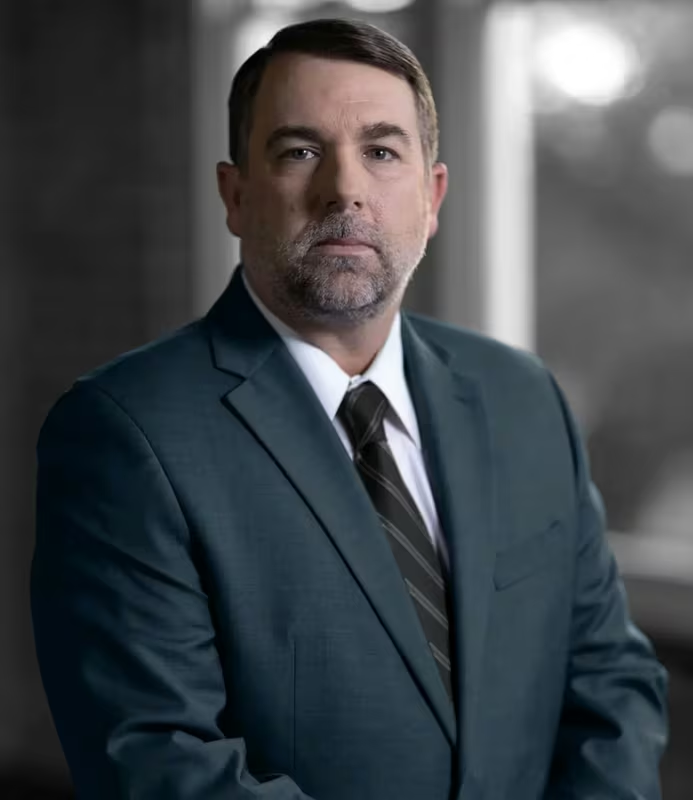
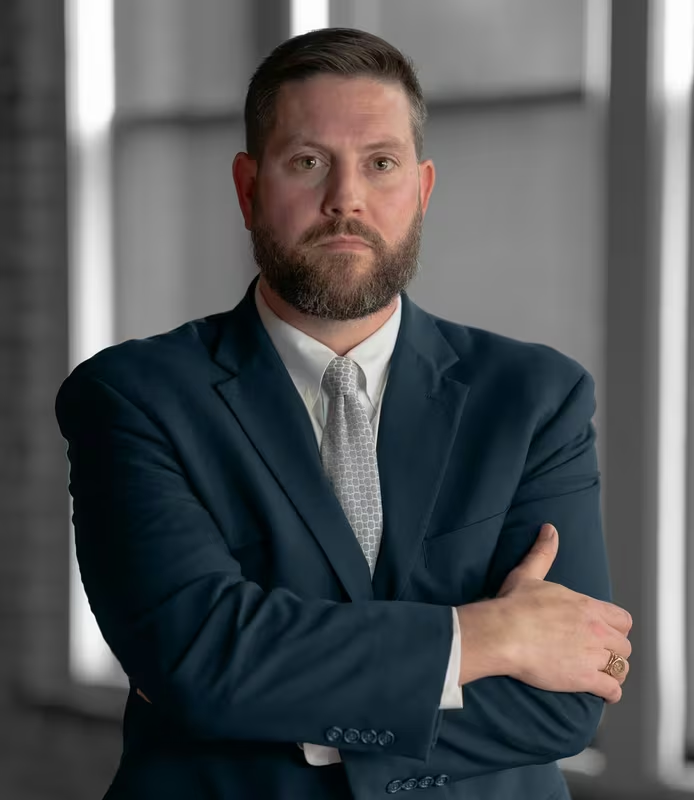
Your Leesville Trial Team
The lawyers who work your file. Every Leesville case is handled by the firm's own trial attorneys.









How Much Does a Leesville Personal Injury Lawyer Cost?
Most personal injury lawyers serving Leesville and the Vernon Parish area work on a contingency fee. You pay no attorney fee up front. The lawyer collects a percentage of the settlement or award only if the case resolves in your favor. If there is no compensation, there is no attorney fee. That structure exists so the price of a lawyer is not the reason an injured person stays out of the claims process.
The number that matters is not an hourly rate. It is the fee percentage, what counts as a case cost, and who pays those costs if the claim does not succeed. Ask any attorney you interview to put all three answers in writing before you sign. An attorney who handles injury work routinely can answer without hesitation.
Contingency Fee Injury Representation
A contingency fee ties the lawyer’s payment to the result. The fee is a set percentage of the amount collected, spelled out in the representation agreement you sign at the start. Read it. The agreement should state the exact percentage, whether it changes if the case is filed in court or goes to trial, and how the fee is calculated against costs.
Get the fee terms in writing. A written agreement is the custom in plaintiff injury practice because it fixes the percentage and the cost-handling rules at the outset, so nothing shifts after the case is underway. Before you sign with anyone, ask how the fee is figured and ask to see the clause that says so. The answer should match the page in front of you, word for word.
No Upfront Attorney Fee for Most Injury Cases
For most car, truck, premises, and other injury claims, you do not write a check to start. The lawyer advances the legal work and waits to be paid from the resolution. That arrangement lets someone hire experienced counsel right after an accident, when paying a retainer would be out of reach.
Two points are worth confirming. First, “no upfront fee” refers to the attorney’s fee, not necessarily every expense. Ask whether case costs are also advanced. Second, ask what happens to costs if the case is lost. The honest answer to both belongs in your written agreement, not in a conversation you have to remember later.
Case Costs, Filing Fees, and Expert Expenses
Attorney fees and case costs are two different things. Costs are the out-of-pocket expenses of building the claim: court filing fees, charges for medical records and police reports, deposition transcripts, accident reconstruction, and fees paid to medical or engineering experts who testify about your injuries or how the crash happened. These add up, and a serious injury case can require several experts.
In most contingency arrangements the firm advances these costs during the case and is reimbursed from the resolution. The question to settle before you sign is what happens if the claim does not succeed. Some agreements have the client repay advanced costs in that situation; others do not. Ask directly, and confirm the answer appears in the written agreement. A lawyer who tries the cases knows exactly which experts a Vernon Parish claim is likely to need and roughly what that costs.
Free Injury Case Review
An initial case review costs nothing. You can describe what happened, learn whether you have a claim worth pursuing, and hear the fee and cost terms before you commit to anything. No fee is owed for that conversation, and you are not obligated to hire the lawyer afterward.
Use the review to compare. Bring your questions about the fee percentage, who advances costs, and what happens if the case is lost, then measure each firm’s answers against the others. When you are ready to talk through a Leesville or Fort Johnson injury claim, you can schedule a free case review.