











Lafayette wrecks happen on I-10, which carries commercial and commuter traffic through the parish every day, on I-49, on US-90 where it runs through town as the Evangeline Thruway, and on Ambassador Caffery Parkway, Johnston Street, and Kaliste Saloom Road, with pedestrian and bicycle crashes around the UL Lafayette campus on University Avenue. Lafayette Parish recorded 30 traffic fatalities and more than 4,000 traffic injuries in 2025. The people hurt are taken to Our Lady of Lourdes Regional Medical Center on Ambassador Caffery or to Ochsner University Hospital and Clinics on West Congress Street. The Lafayette Police Department on East University Avenue writes the report for a crash inside the city, and Lafayette Parish suits are filed in the 15th Judicial District Court at the courthouse on South Buchanan Street. Trey Morris Injury Lawyers handles Lafayette cases from our Lake Charles office on Ihles Road, and we order the report, request the hospital records, and notify the other driver’s insurer that you are represented.
The law that governs the claim is Louisiana law and it is the same in every parish. If you were hurt in Lafayette Parish, your case will be filed in the 15th Judicial District Court, and your deadline is two years under La. C.C. Art. 3493.1 for injuries after July 1, 2024. We confirm the injury date on every Lafayette file first, because that date sets the clock.
Results for Louisiana Clients
- $409 MillionWrongful Death
A tragic case where an impaired driver of a commercial vehicle ran a red light, then collided with our client, causing serious bodily injury to the mother and the loss of life of her daughter.
- $49 MillionMotor Vehicle Accident
An impaired driver of a stolen vehicle driving the wrong way collided with our client head-on, resulting in brain injury and multiple broken bones.
- $32,195,000Industrial / Workplace
Failure to maintain proper safety protocols led to an explosion at an industrial plant causing a series of catastrophic injuries from broken bones, burns, spinal injury, and mental anguish.
- $31.5 MillionIndustrial / Workplace
Brain and spinal injuries followed an oil-field company failing to maintain equipment and provide a safe work site.
- $17.25 MillionCommercial Vehicle Accident
Client was struck head-on by a disconnected load of an 18-wheeler that crossed the median causing broken bones and amputation.
- $13 MillionCommercial Vehicle Accident
On the interstate, an 18-wheeler failed to yield right of way then made an unsafe lane change causing the accident which resulted in major bone breaks, damaged organs, and ultimately a leg amputation.
Past results do not guarantee future outcomes; each case is decided on its own facts.
There are qualified personal injury attorneys in Lafayette Parish. You are doing your research, which means something happened. Something serious enough to look for legal help. No one reads lawyer websites until they need one.
This page explains how injury cases work in Lafayette and what Louisiana’s 2024 and 2026 law changes mean for your claim. It covers how cases move through the 15th Judicial District Court. Trey Morris Injury Lawyers has handled personal injury cases across Louisiana for over 20 years. Read this. Compare us to others. Make the decision that is right for your situation.
High-Traffic Corridors and Crash Patterns in Lafayette Parish
Lafayette Parish recorded 30 traffic fatalities in 2025, including 18 drivers, 5 pedestrians, and 4 bicyclists. Over 4,000 people were injured in traffic crashes across the parish that same year, according to the Louisiana Highway Safety Commission. Those are not abstract numbers. Every one of those injuries created a legal situation.
I-10 runs east-west through Lafayette, connecting Baton Rouge to Lake Charles. This corridor carries heavy commercial and commuter traffic daily. The I-10 stretch between Louisiana Avenue and Grand Point Highway, which runs through the Lafayette metro area and into St. Martin Parish, recorded 14 fatal crashes and 15 deaths. It ranks among the deadliest road segments in Louisiana.
I-49 runs north-south, connecting Lafayette to Opelousas, Alexandria, and Shreveport. US-90, known locally as the Evangeline Thruway, carries traffic south toward New Iberia and the Gulf coast. Both corridors see substantial oilfield service vehicle traffic mixed with commuter vehicles.
Surface streets cause significant problems too. Ambassador Caffery Parkway, Johnston Street, and Kaliste Saloom Road are high-volume corridors with frequent collisions. University Avenue near the UL Lafayette campus sees pedestrian and bicycle accidents regularly.
Acadiana’s geography adds risk factors. Flat terrain, frequent fog, and heavy rain reduce visibility. Alcohol-related crashes in Lafayette Parish in 2025 included 7 fatal crashes and 132 suspected injury crashes. Oil and gas industry trucks add commercial vehicle traffic on corridors not designed for heavy loads.
Ask any attorney you are considering what percentage of their caseload involves car accident claims or truck accident claims on Lafayette corridors. An attorney who handles three accident cases a year approaches evidence preservation differently than one who handles three hundred.
Local Coverage. Statewide Record.
- $1 Billion+
Outcomes for Louisiana clients
Verdicts and settlements won across the state by the same trial team that handles Lafayette cases.
- 11
Trial attorneys, one team
Your case is handled by the firm's own trial attorneys, and we respond in minutes, 24/7.
- 24/7
We come to you
An attorney travels to you in Lafayette, at home or at the hospital, or meets by video the same day. Free case review, and no fee unless we win.
- 127
Cases resolved over $1 million
Verdicts and settlements of $1 million or more, won by the same trial team that handles Lafayette cases.
How Do You Prove Negligence in a Lafayette Injury Case?
Comparative Fault
A legal rule that reduces your recovery by your percentage of fault. In Louisiana, if you are 51% or more at fault, you recover nothing. If you are 50% or less at fault, your damages are reduced proportionally.
Louisiana uses a Comparative Fault system, but proving the other party was negligent requires establishing four elements. You must show the defendant owed you a duty, breached that duty, that the breach caused your injury, and that you suffered actual damages.
Louisiana courts apply the duty-risk analysis.
Police reports filed with the Lafayette Police Department or the Lafayette Parish Sheriff’s Office are the starting point for establishing fault. Witness statements, surveillance footage from nearby businesses, and dashcam recordings build the evidence picture. Traffic camera footage can disappear if not preserved quickly.
Loss of Earning Capacity
The difference between what you could have earned over your working lifetime and what you can earn now after the injury. Calculated by a vocational expert and converted to present value by an economist.
Expert witnesses strengthen complex cases. Accident reconstructionists establish speed, impact angles, and driver behavior from physical evidence. Medical experts connect specific injuries to the accident. Vocational economists calculate Loss of Earning Capacity when injuries affect your ability to work.
Insurance adjusters assign fault internally before you see a number. They look for ways to shift blame onto the injured person. Recorded statements, social media posts, and gaps in medical treatment are the tools they use. Your attorney should know how to counter each tactic before the adjuster deploys it. We send preservation demands once the facts give us a sound basis for them, because moving as fast as the law permits is how evidence gets protected and how more of it comes to light. For a Lafayette crash, the demand asks the other driver and their insurer to keep the vehicle and its event data, and asks nearby businesses to keep their camera video. That record shows speed, braking, signal timing and who had the right of way, which is the answer when an adjuster tries to put the blame on you.
Ask any attorney you are considering how they handle evidence preservation. If they do not have a specific protocol, keep looking. The evidence window closes fast. Read more about Louisiana personal injury law to understand the broader framework.
Lafayette Practice Areas
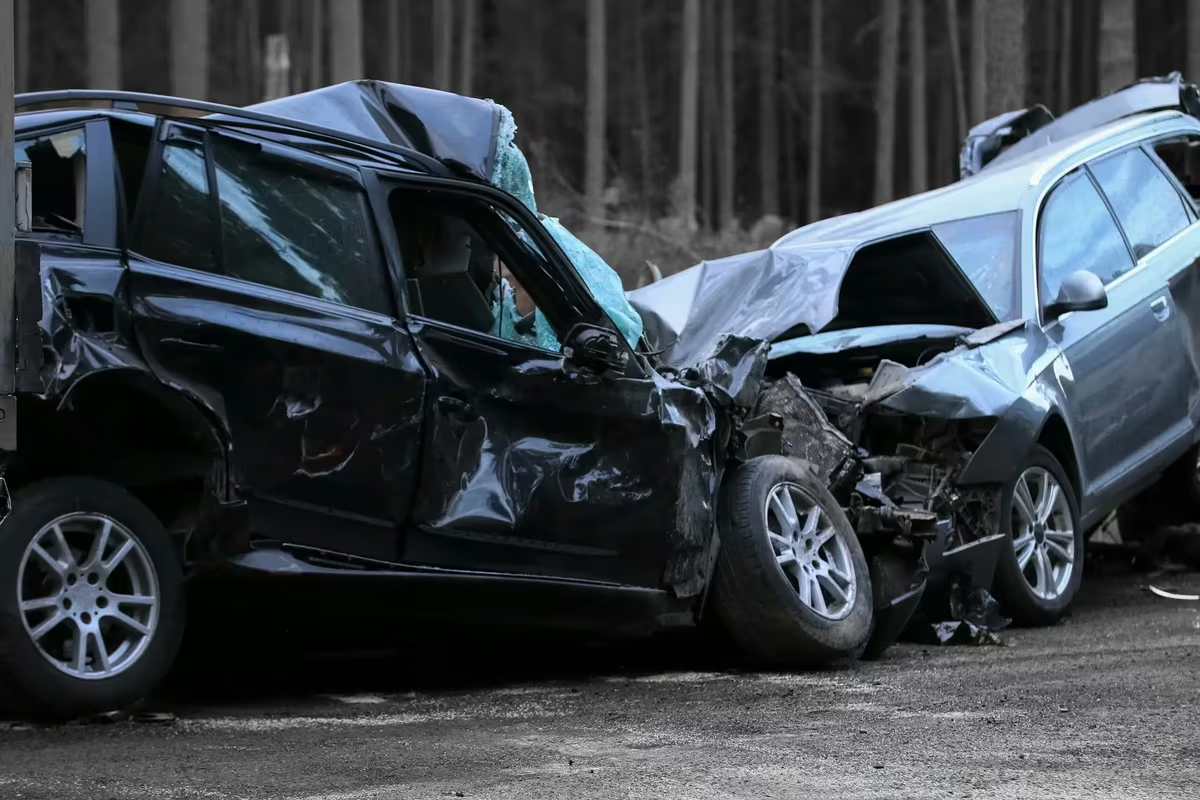 Car AccidentsRear-end, intersection, and highway collisions across Louisiana.
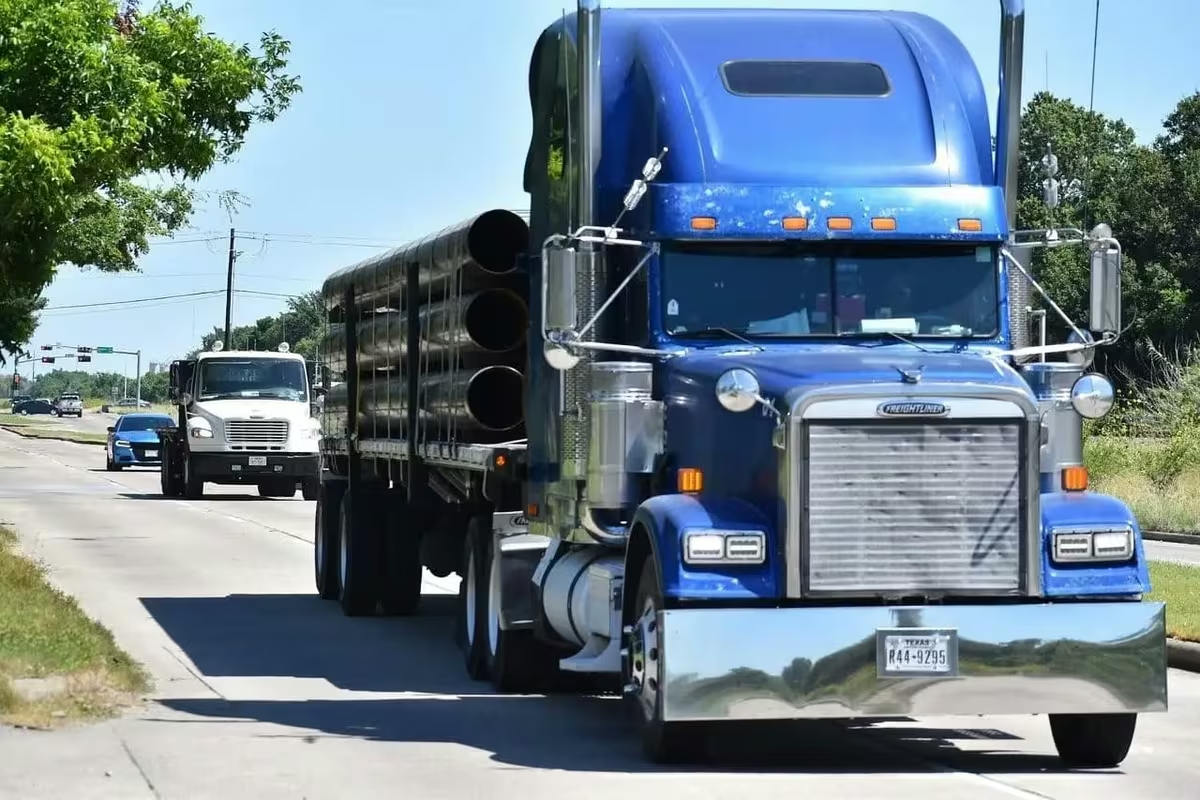 Truck Accidents18-wheeler and commercial-vehicle wrecks governed by federal trucking rules.
 Catastrophic InjuryBrain, spinal-cord, amputation, and severe-burn injuries that change a life.
 Wrongful DeathClaims brought by families after a fatal accident or act of negligence.
 Premises LiabilitySlip-and-fall and unsafe-property injuries on someone else's premises.
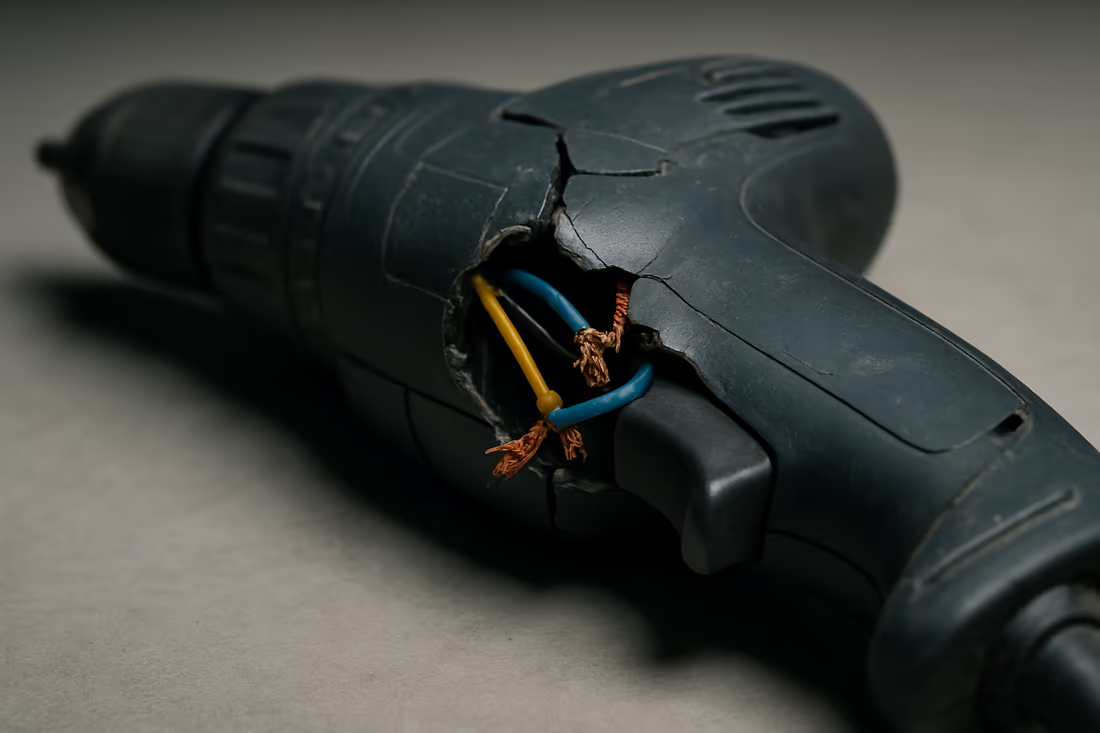 Product LiabilityInjuries caused by defective or unreasonably dangerous products.
 Oilfield AccidentsDrilling, pipeline, and refinery injuries across the energy sector.
 Industrial AccidentsPlant, warehouse, and heavy-equipment injuries in industrial settings.
 Offshore AccidentsRig, platform, and vessel injuries beyond the shoreline.
How Louisiana Tort Reform Changes Affect Lafayette Injury Cases
Prescriptive Period
Louisiana’s term for statute of limitations. The legal deadline to file a lawsuit. For personal injury, it is two years from the date of injury under La. C.C. Art. 3493.1 (effective July 1, 2024).
Louisiana’s Prescriptive Period is now two years, and the comparative fault bar is now 51%. These are the two most significant changes from the 2020-2026 tort reform cycle. They affect every personal injury case filed in the 15th Judicial District Court.
The prescriptive period for personal injury claims is two years from the date of injury under La. C.C. Art. 3493.1, which took effect July 1, 2024. Injuries that occurred on or before that date fall under the shorter deadline in La. C.C. Art. 3492. Product liability claims run on these same deadlines. Missing the deadline that applies to you means your case is barred regardless of its merits.
The comparative fault threshold changed to a 51% bar effective January 1, 2026 under La. C.C. Art. 2323, as amended by Act 15 of the 2025 Regular Session (HB 431). If you are 51% or more at fault, you recover nothing. At 50% or less, you still recover, with damages reduced by your share. This is a hard cutoff. Accidents before January 1, 2026 remain under the older allocation rule, where a plaintiff could recover a reduced amount at any fault percentage.
The collateral source rule also changed under La. R.S. 9:2800.27. In lawsuits filed on or after January 1, 2026, recovery for past medical expenses is limited to what your health insurer or Medicare actually paid, plus your own deductibles and co-pays. The old rule that allowed a percentage above the paid amount is gone. This changes damage calculations significantly.
Louisiana’s direct action statute historically allowed injured people to sue the at-fault party’s insurer directly. La. R.S. 22:1295 now limits this right in certain circumstances. Your attorney needs to know which exceptions still apply.
These changes shift strategy for Lafayette cases filed in the 15th JDC. Ask any attorney you are considering to walk you through how the 2024, 2025, and 2026 changes affect your specific case. If someone quotes you a filing deadline without first asking when your injury occurred, they are not current on Louisiana personal injury law.
Filing a Personal Injury Claim in the 15th Judicial District Court
Most Lafayette personal injury cases are filed in the 15th Judicial District Court. This court handles civil cases for three parishes: Lafayette, Acadia, and Vermilion. If your accident happened in Lafayette Parish, this is where your case goes.
Venue rules determine where your case is filed. You generally file where the accident occurred or where the defendant resides. For accidents on I-10, I-49, or Lafayette surface streets, the 15th JDC is the default venue.
The distinction between pre-suit negotiations and formal litigation matters. Many injury cases settle before a lawsuit is ever filed. Your attorney negotiates directly with the insurance company. If negotiations fail, filing suit in the 15th JDC begins the formal process.
After filing, the case moves through discovery, mediation, and potentially trial. Discovery is where both sides exchange documents and take depositions. Mediation is a settlement conference with a neutral third party. If mediation fails, the case goes to trial before a Lafayette Parish jury. The process typically takes 12 to 24 months from filing to resolution.
Court practices vary by jurisdiction. Ask your attorney whether they have tried cases in the 15th JDC. Knowing the local judges, their procedural preferences, and how Lafayette Parish juries evaluate injury claims matters. Trey Morris Injury Lawyers has handled cases across Louisiana’s district courts, including the 15th JDC, for over 20 years.
What Compensation Does Louisiana Law Allow After an Injury in Lafayette?
Louisiana law divides personal injury compensation into three categories.
Economic damages cover measurable financial losses.
Loss of Consortium
A claim by the injured person’s close family for the loss of companionship, affection, and support caused by the injured person’s condition. Louisiana gives it to the same relatives who could bring a wrongful death claim, starting with the spouse and children. It is a separate damage category from the injured person’s own claims.
Non-economic damages cover losses without a receipt. Pain and suffering, emotional distress, loss of enjoyment of life, and Loss of Consortium fall into this category.
Punitive damages are rare. Louisiana allows them only when the defendant’s conduct was intentional or wanton. Drunk driving cases are the most common example. These damages punish the defendant, not compensate you.
For catastrophic injury claims, calculating future medical costs and lost earning capacity requires life care planners and vocational economists.
Oil and Gas Industry Injuries in the Acadiana Region
Lafayette is the hub of Louisiana’s onshore oil and gas industry. Oilfield service companies, drilling operations, and pipeline work employ thousands of people across Lafayette Parish and the surrounding Acadiana region. This industry creates specific legal situations when workers are injured.
Common oilfield injuries include burns, crush injuries, chemical exposure, falls from drilling platforms, and equipment failures. These injuries tend to be severe. The work environment involves heavy machinery, high pressure systems, and hazardous chemicals.
The legal framework for oilfield injuries depends on where the injury happens. Onshore injuries generally fall under Louisiana workers’ compensation or third-party liability claims. Offshore injuries may trigger the Jones Act, which is federal maritime law. The Jones Act provides different remedies and damage calculations than state law.
Workers’ compensation provides medical benefits and wage replacement but limits what you can recover. If a third party caused your injury, you may have a separate claim against that party in addition to workers’ compensation. Equipment manufacturers, subcontractors, and property owners are common third-party defendants in oilfield cases.
Ask any attorney you are considering whether they understand the difference between Jones Act claims and state tort claims. The answer determines which court your case goes to and what damages you can recover. An attorney who does not handle industrial injury claims regularly may not recognize a Jones Act case when they see one. Trey Morris Injury Lawyers has handled oilfield injury cases throughout Acadiana for over 20 years.
Motor Vehicle Accidents in Lafayette
Motor vehicle accidents are the most common source of personal injury claims in Lafayette Parish. The combination of interstate highways, commercial corridors, and oilfield traffic creates daily collision risk.
Car accidents on I-10, I-49, and surface streets like Ambassador Caffery and Johnston Street make up the largest share. Rear-end collisions, intersection crashes, and sideswipe accidents during lane changes are the most frequent types. Distracted driving and speeding are contributing factors in a significant percentage of these crashes.
Commercial truck accidents involve oilfield service vehicles, 18-wheelers, and delivery trucks. The size and weight difference between a commercial vehicle and a passenger car means injuries tend to be more severe. Truck accidents also involve different liability rules, including federal motor carrier safety regulations.
Motorcycle accidents on Acadiana roads create disproportionate injury risk. Riders have no structural protection. Left-turn intersection accidents are the most dangerous scenario for motorcyclists. Lafayette’s flat, open roads attract riders but also create high-speed collision environments.
Pedestrian accidents occur in downtown Lafayette, the UL Lafayette campus area, and shopping corridors along Johnston Street and Ambassador Caffery. The 5 pedestrian fatalities and 65 pedestrian injuries in Lafayette Parish in 2025 demonstrate this is not a minor category.
UM/UIM
Uninsured/Underinsured Motorist coverage. A provision in your own auto insurance policy that pays you when the at-fault driver has no insurance (UM) or not enough insurance (UIM) to cover your damages. Under La. R.S. 22:1295, a Louisiana auto policy generally includes it unless a named insured rejected it on the form the insurance commissioner prescribes, and its limits do not stack across the vehicles on the policy.
UM/UIM coverage matters in Lafayette.
What Our Clients Say
- Dakota R.
Where should I start!?Trey Morris Injury Law Firm was a great fit for me! During this wild time of getting into a car wreck, dealing with insurance, and other third parties, Mrs. Brooke and Mrs. Nerren were extremely helpful! They were there for me through the whole process and never once did I doubt their professionalism. They will fight tooth and nail for you and get you what you deserve. I would recommend them to anyone.
- Jontiana W.
Brooke and Ms.Shavers did great and helped me so much and I am so grateful. Go see Trey Morris Injury Attorneys!!
- ELvia G.
We are very grateful to [Trey Morris Injury Lawyers] for all their help and support during our car accident case.Ms. Hancock and Ms. Mena were always very kind, professional, and attentive throughout the entire process. Excellent team.
- A client
Great experience working with this Injury law firm.Very professional and helpful team overall , especially Trey Morris. Communication was great throughout my case, and they made the process much less stressful. My case is now over, and I really appreciated how responsive and organized everyone was, from the case manager to their receptionist.
- Taa-Daw S.
Very professional,answers the phone when you call them and answers every question you may have..Highly recommended..
- MIRANDA G.
I spoke with a attorney from this law firm.He was very honest, gave great advice. Then I finally made a appt once I meet Joe Norman I knew he was the one for me. Usually, I don’t trust attorneys but I’m glad I gave Joe Norman with Lee Hoffas group a chance. I feel like I can exhale finally I trust them completely. Miranda [G.]
- Tammy L.
My son and daughter were in an accident and injured.T-Claude Devall was first concerned with their injuries and getting them straight into therapy, then helped us with the legalities of our options. His paralegal Missy is easy to talk to when needed and helpful when we needed things changed up medically. I would recommend them to anyone and if ever needed in the future, will be a return client.
- Michelle C.
The entire staff was professional and courtesy!I could not believe how fast they settled my case and how accommodating they were! Thank you!
- Shanendoah F.
Awesome service with Family Value .Great and friendly people to talk to would recommend to anyone .
- Nicole H.
Thank you to Missy Carter and the staff of people are Hoffoss Duvall, for all the help they are providing in handling my case!!You guys are awesome!!
- Suzanne G.
I highly recommend this firm.The staff displays the utmost professionalism, as a team. They are honest and make you feel welcomed! ☆☆☆☆☆
- Elizabeth A.
Friendly staff!The receptionist (Alecia) was very nice and went beyond her job to make sure we were taken care of fast and effectively.
Testimonials do not constitute a guarantee, warranty, or prediction regarding the outcome of your legal matter. Past results do not guarantee future outcomes.
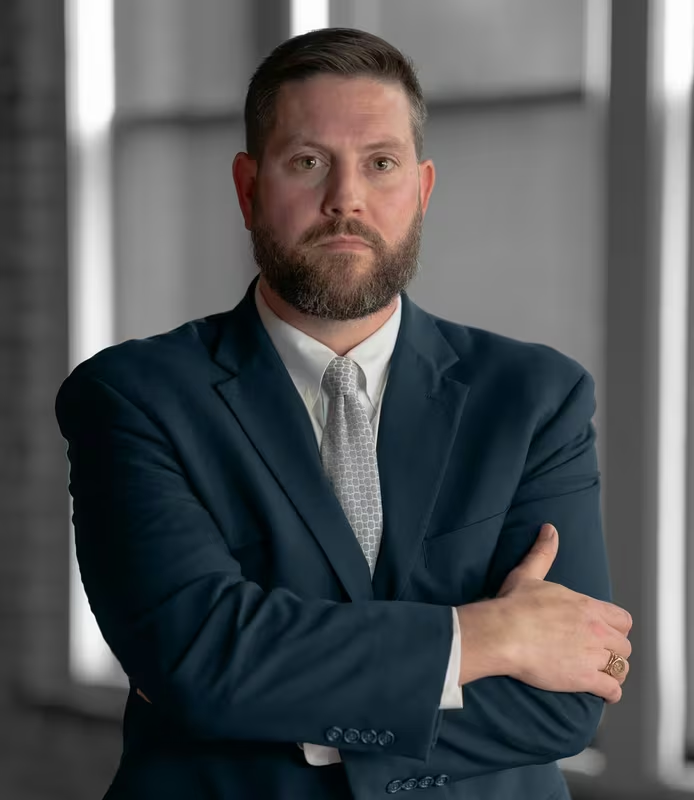
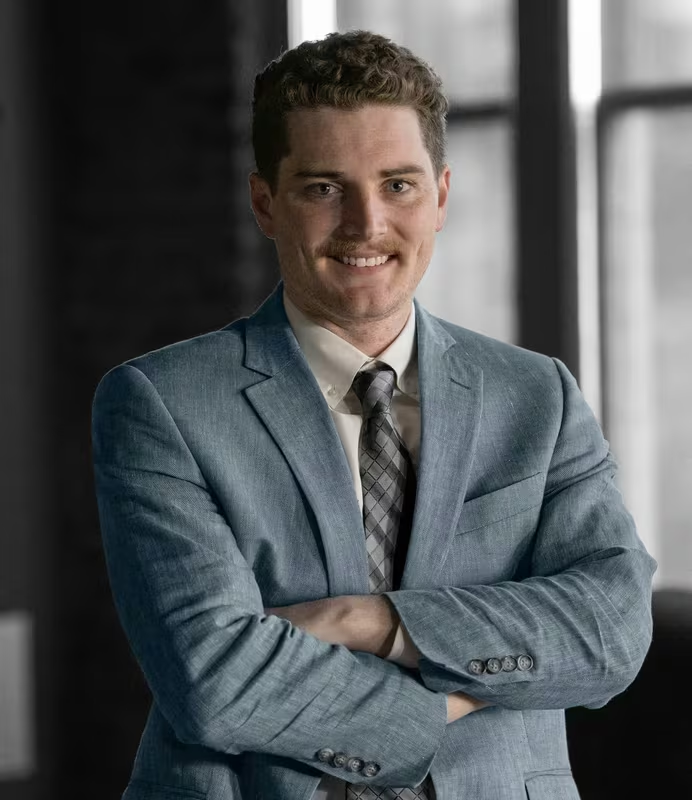
Your Lafayette Trial Team
The lawyers who work your file. Every Lafayette case is handled by the firm's own trial attorneys.








Steps to Take After an Accident in Lafayette
The actions you take immediately after an accident affect your case. Here is what to do.
Call 911 and request a police report. The Lafayette Police Department responds to accidents within city limits. The Lafayette Parish Sheriff’s Office handles accidents in unincorporated areas of the parish. A police report documents the scene, the parties involved, and the officer’s observations about fault.
Seek medical treatment even if your injuries seem minor. Lafayette General Medical Center, Our Lady of Lourdes Regional Medical Center, and University Hospital and Clinics all have emergency departments. Some injuries, particularly soft tissue damage and concussions, do not present symptoms immediately. Going to a doctor creates a medical record that connects your injuries to the accident.
Document everything you can at the scene. Photographs of vehicle damage, road conditions, traffic signals, and visible injuries are valuable evidence. Get contact information for any witnesses. Do not move vehicles unless they are blocking traffic and it is safe.
Do not give a recorded statement to the other party’s insurance company without consulting an attorney. Adjusters are trained to ask questions designed to reduce your claim. Anything you say can be used to argue comparative fault.
Contact an attorney before the two-year prescriptive period under La. C.C. Art. 3493.1 runs, or the shorter Art. 3492 period if you were hurt on or before July 1, 2024. The sooner your attorney gets involved, the sooner evidence preservation demands go out. Stay off social media. Insurance companies monitor social media accounts for posts that contradict injury claims.
Ask any attorney how they handle preservation demands after you sign. Trey Morris Injury Lawyers sends preservation letters to lock down footage and vehicle data.