








Jefferson Davis Parish wrecks happen on I-10 near Welsh and Jennings, on US-90, and on the rural two-lane highways like LA-26 and LA-99 that connect Lake Arthur and Elton to the rest of the parish. The people hurt in them are taken to Ochsner American Legion Hospital on Elton Road in Jennings. The Jennings Police Department on North Broadway writes the report for a crash inside the city; outside it, the Jefferson Davis Parish Sheriff’s Office on US-90 West does. Parish suits are filed in the 31st Judicial District Court at the courthouse on North State Street in Jennings. Trey Morris Injury Lawyers handles Jefferson Davis Parish cases from our Lake Charles office on Ihles Road, and we order the report, request the hospital records, and send preservation letters to the businesses along I-10 whose cameras face the road. We send those letters once the facts give us an honest basis for them, because moving early, within the limits the law sets, is how proof gets kept and found. We also ask the at-fault driver’s insurer to keep the vehicle and its event data; together with the footage, that record can show speed, braking, and who had the right of way.
The law that governs the claim is Louisiana law and it is the same in every parish. A Jefferson Davis Parish injury lawyer gathers the proof behind your claim and files suit in the 31st Judicial District Court when the insurer’s offer does not match the injury in Jennings, Welsh, Lake Arthur, or Elton. If you were hurt after July 1, 2024, you have two years to file under La. C.C. Art. 3493.1, but surveillance footage from businesses along I-10 is often overwritten within days, so the practical deadline arrives much sooner.
Results for Louisiana Clients
- $409 MillionWrongful Death
A tragic case where an impaired driver of a commercial vehicle ran a red light, then collided with our client, causing serious bodily injury to the mother and the loss of life of her daughter.
- $49 MillionMotor Vehicle Accident
An impaired driver of a stolen vehicle driving the wrong way collided with our client head-on, resulting in brain injury and multiple broken bones.
- $32,195,000Industrial / Workplace
Failure to maintain proper safety protocols led to an explosion at an industrial plant causing a series of catastrophic injuries from broken bones, burns, spinal injury, and mental anguish.
- $31.5 MillionIndustrial / Workplace
Brain and spinal injuries followed an oil-field company failing to maintain equipment and provide a safe work site.
- $17.25 MillionCommercial Vehicle Accident
Client was struck head-on by a disconnected load of an 18-wheeler that crossed the median causing broken bones and amputation.
- $13 MillionCommercial Vehicle Accident
On the interstate, an 18-wheeler failed to yield right of way then made an unsafe lane change causing the accident which resulted in major bone breaks, damaged organs, and ultimately a leg amputation.
Past results do not guarantee future outcomes; each case is decided on its own facts.
What Does a Jefferson Davis Parish Injury Lawyer Do — and Do You Need One?
A Jefferson Davis Parish injury lawyer represents people who were hurt by someone else’s negligence in Jennings, Welsh, Lake Arthur, Elton, and the surrounding communities. The work is concrete: gather evidence at the scene, pull medical records, identify every party who shares fault, calculate the full value of the harm, negotiate with the insurance adjuster, and file suit in the 31st Judicial District Court when the offer does not match the injury. The reader hires a lawyer to move a claim from “I was hurt” to “this is what I am owed and here is the proof.”
Not every injury needs an attorney. A fender-bender with no injury and a quick property-damage check from the at-fault driver’s insurer is something most adults can handle alone. The calculus changes when medical treatment continues past a single ER visit, when wages are lost, when the at-fault party disputes liability, or when the insurer’s first offer arrives before the treating doctor has finished diagnosing. At that point the adjuster has a team. The injured person, by default, does not.
Ask any attorney you interview what they actually do on a personal injury file in the first thirty days. The honest answer involves preserving evidence before it disappears, sending spoliation letters to trucking companies and property owners, requesting 911 audio and dashcam footage, locating witnesses while memories are fresh, and getting the client into the right specialists so the medical record reflects the real injury. If the answer is “we send a letter and wait for the adjuster to call,” that tells you something useful about how the case will be handled six months later.
The practical test for whether you need a lawyer in Jefferson Davis Parish is simple. If the injury required more than one medical visit, if you missed work, if more than one vehicle or party was involved, if a commercial vehicle or employer is in the picture, or if the insurer is already asking for a recorded statement, a consultation costs nothing and clarifies what the claim is actually worth. A competent lawyer will tell you when the case does not need representation. That answer is part of the job too.
Local Coverage. Statewide Record.
- $1 Billion+
Outcomes for Louisiana clients
Verdicts and settlements won across the state by the same trial team that handles Jefferson Davis Parish cases.
- 11
Trial attorneys, one team
Your case is handled by the firm's own trial attorneys, and we respond in minutes, 24/7.
- 24/7
We come to you
An attorney travels to you in Jefferson Davis Parish, at home or at the hospital, or meets by video the same day. Free case review, and no fee unless we win.
- 127
Cases resolved over $1 million
Verdicts and settlements of $1 million or more, won by the same trial team that handles Jefferson Davis Parish cases.
What Types of Injury Cases Does a Jefferson Davis Parish Lawyer Handle?
A Jefferson Davis Parish injury lawyer handles civil claims where someone was hurt because another party acted carelessly, broke a safety rule, or sold a defective product. The categories below are the ones that show up most often in a rural Louisiana parish cut by Interstate 10, U.S. 90, the Union Pacific rail corridor, and the agricultural and oilfield economy around Jennings, Welsh, Lake Arthur, and Elton.
Motor vehicle collisions
The single largest category. Passenger-car crashes at parish intersections, rear-end collisions on I-10 between mile markers 54 and 76, head-on wrecks on rural two-lane highways like LA-26 and LA-99, and crashes involving uninsured or underinsured drivers. Investigation focuses on the crash report, scene photos, vehicle data recorder downloads where available, and medical records that tie the injury to the impact.
Commercial truck and 18-wheeler wrecks
I-10 carries heavy freight traffic between Lake Charles and Lafayette, and U.S. 90 runs parallel through the parish. Truck cases are different from car cases. They involve federal motor carrier regulations, driver logs, electronic logging device data, maintenance records, and corporate defendants with their own investigators on scene quickly. Evidence preservation letters name the driver logs, electronic logging device data, and maintenance records the carrier must keep.
Oilfield, refinery, and industrial injuries
Jefferson Davis Parish sits on the edge of the South Louisiana energy corridor. Workers get hurt on drilling sites, workover rigs, gas-processing facilities, and pipeline construction projects. These cases often involve a workers’ compensation claim against the direct employer plus a separate third-party claim against a contractor, equipment manufacturer, or premises owner whose negligence contributed to the incident.
Agricultural and equipment injuries
Rice farming, crawfish operations, and cattle work all involve heavy equipment. Tractor rollovers, PTO entanglements, grain-bin incidents, and chemical exposures generate claims that may involve equipment defects, training failures, or unsafe job-site conditions.
Premises liability
Slip-and-fall and trip-and-fall claims at grocery stores, gas stations along the I-10 corridor, restaurants, casinos, and apartment complexes. Also includes negligent security claims when an assault on a property was foreseeable and the owner failed to take reasonable precautions.
Defective products
Claims against the manufacturer of a vehicle component, industrial tool, medical device, or consumer product that caused injury when used as intended. These are governed by the Louisiana Products Liability Act and require preservation of the product itself as physical evidence.
Wrongful death
When a fatal injury is caused by another party’s fault, surviving family members may bring a survival action under La. C.C. Art. 2315.1 and a wrongful death claim under La. C.C. Art. 2315.2. Which family members may bring each claim, and in what order of priority, is set by those articles.
Other recurring categories
Dog bites, recreational and boating incidents on Lake Arthur and the area waterways, train-crossing collisions along the Union Pacific line, nursing home neglect, and rideshare and delivery-driver crashes. The legal theory and the investigation plan vary, but the underlying question is the same: whose conduct fell below the standard of care, and what evidence proves it.
Jefferson Davis Parish Practice Areas
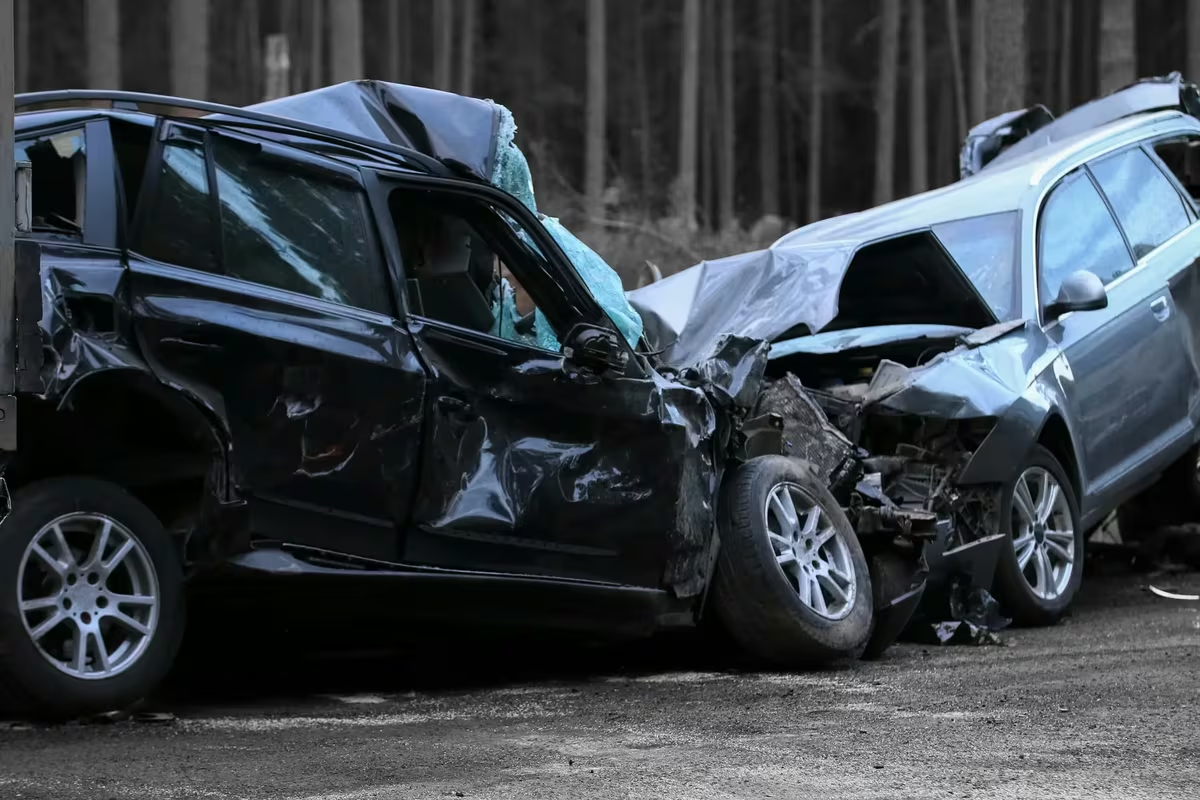 Car AccidentsRear-end, intersection, and highway collisions across Louisiana.
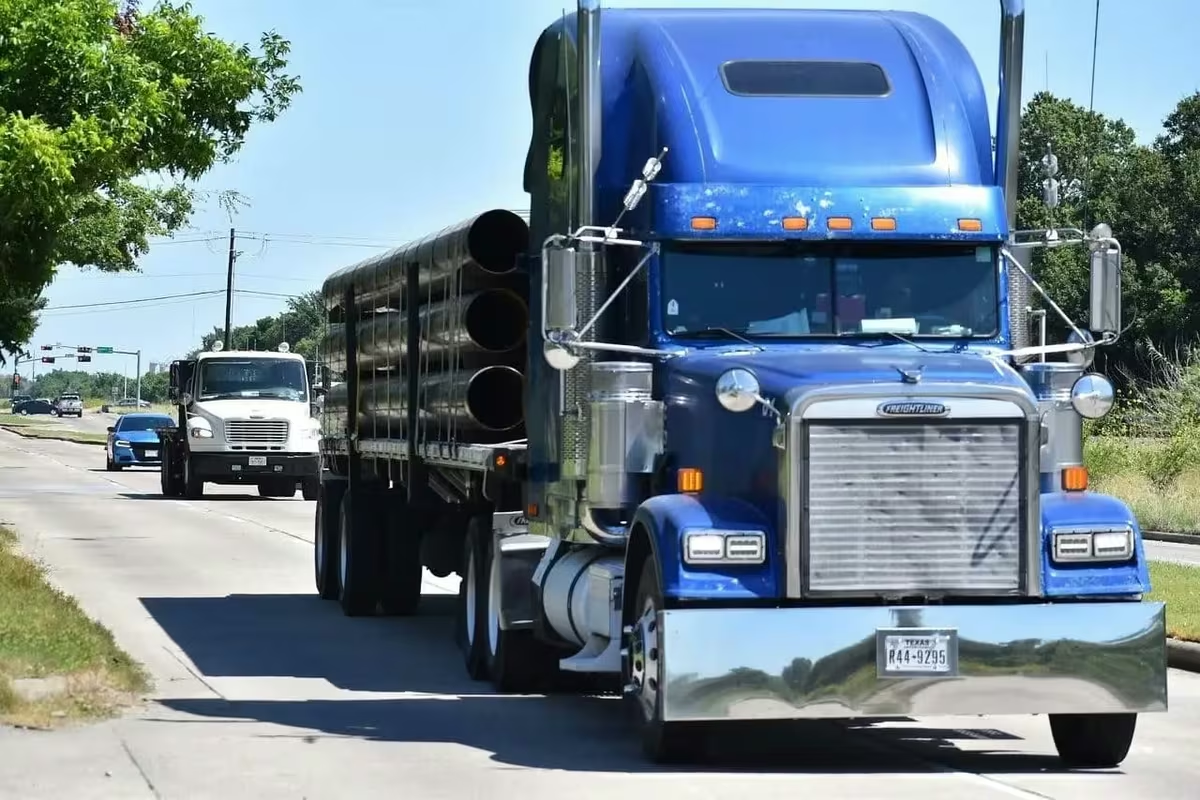 Truck Accidents18-wheeler and commercial-vehicle wrecks governed by federal trucking rules.
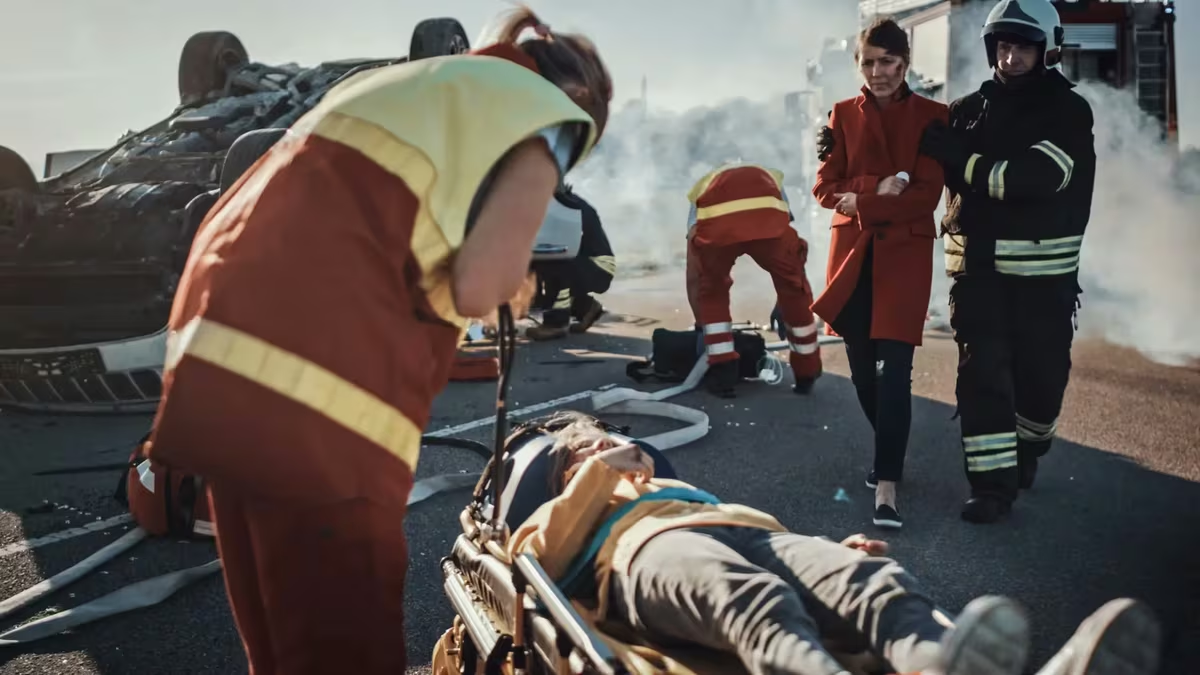 Catastrophic InjuryBrain, spinal-cord, amputation, and severe-burn injuries that change a life.
 Wrongful DeathClaims brought by families after a fatal accident or act of negligence.
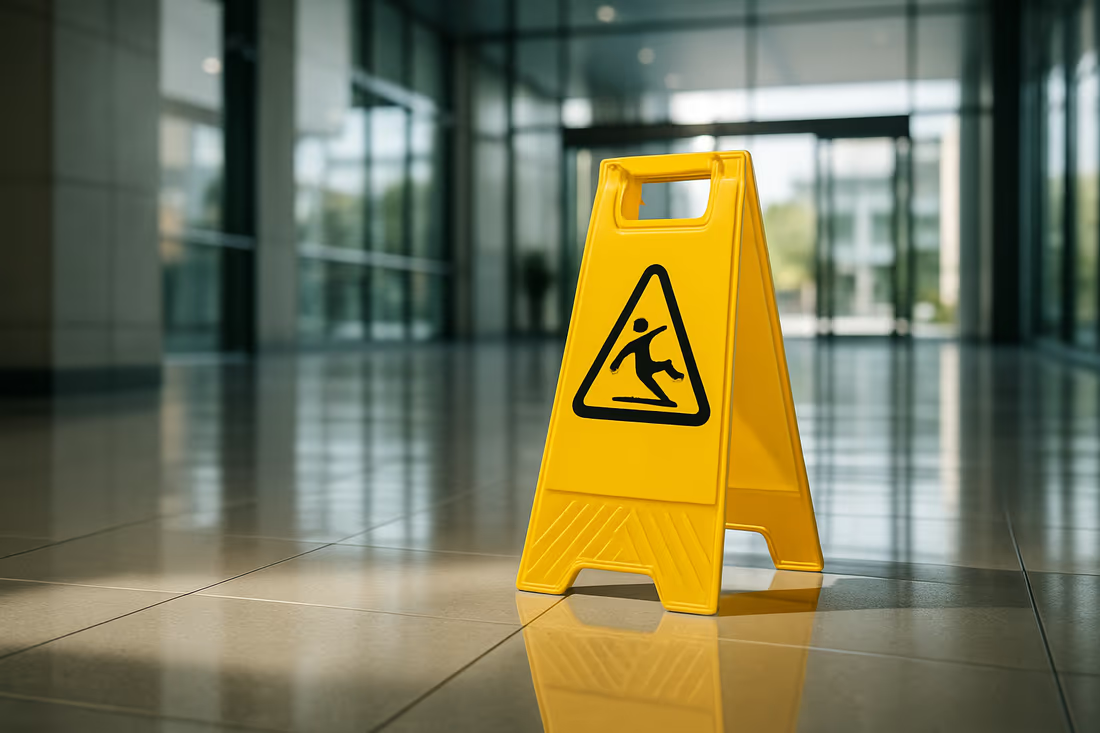 Premises LiabilitySlip-and-fall and unsafe-property injuries on someone else's premises.
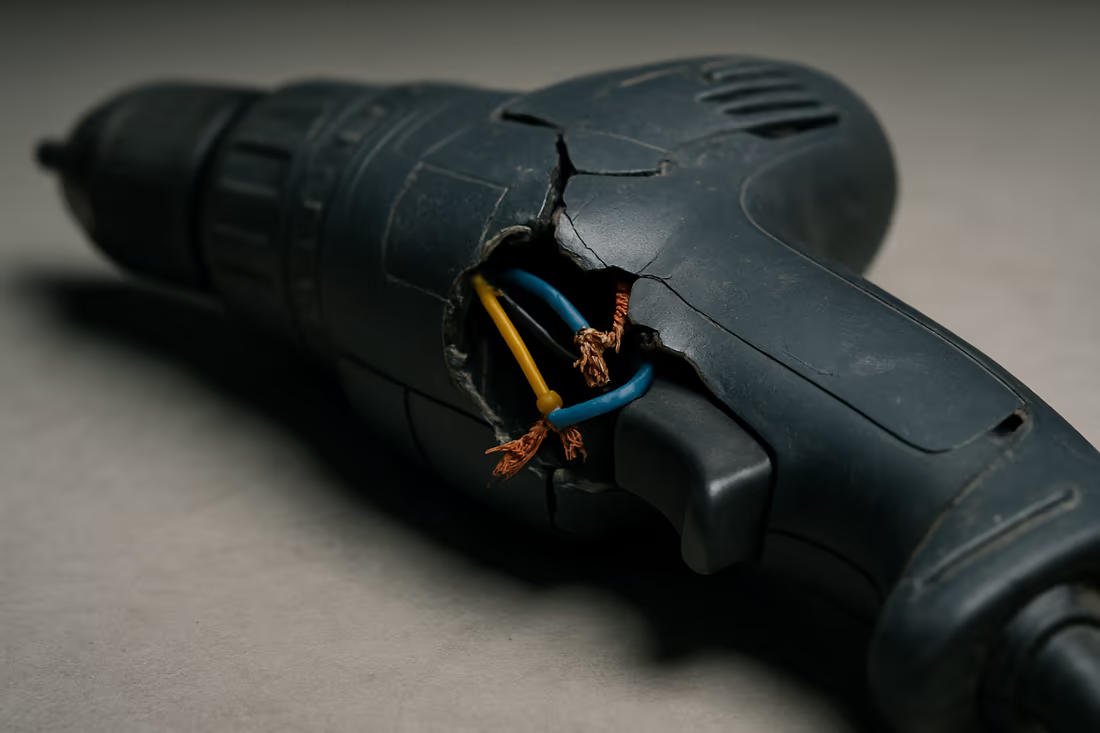 Product LiabilityInjuries caused by defective or unreasonably dangerous products.
 Oilfield AccidentsDrilling, pipeline, and refinery injuries across the energy sector.
 Industrial AccidentsPlant, warehouse, and heavy-equipment injuries in industrial settings.
 Offshore AccidentsRig, platform, and vessel injuries beyond the shoreline.
Why Hire a Local Jefferson Davis Parish Injury Lawyer Instead of a Statewide Firm?
The question is really about access, attention, and familiarity with the place where your case will actually be decided. A statewide or out-of-parish firm can handle the paperwork. The harder question is whether they know the roads where the wreck happened, the adjusters who service this corner of southwest Louisiana, the medical providers your records will come from, and the courthouse in Jennings where any contested motion gets heard. Those things move cases.
Ask any attorney you interview how often they actually appear in Jefferson Davis Parish, how many active files they have in the parish right now, and who at their firm will be the day-to-day contact on your case. The answer separates a firm that will treat your matter as local work from a firm that will treat it as a referral to be processed from a distance.
Proximity to the Evidence
A car wreck on I-10 near Welsh, a logging-truck collision on US 90, a fall at a business in Jennings or Lake Arthur. The physical evidence sits in Jefferson Davis Parish. Skid marks fade. Surveillance footage gets overwritten on a 30 or 60 day loop. Witnesses move. A lawyer who can drive to the scene, pull video before it cycles out, and meet a witness at their kitchen table preserves things a distant firm only sees after they are gone.
Medical records and treating providers are also local. Your orthopedist, your imaging center, your physical therapist. A lawyer who already knows the records custodians and how each provider formats billing requests gets the file built faster.
Familiarity With Local Adjusters and Defense Counsel
Claims involving Jefferson Davis Parish accidents are usually worked by a small group of adjusters and defense firms who handle southwest Louisiana for the carriers. A lawyer who has dealt with those same people across multiple files knows which adjuster moves on a demand and which one waits for suit, which defense counsel tries cases and which one settles on the courthouse steps. That pattern recognition shapes negotiation timing.
Ask a prospective attorney to name the defense firms they have opposed in Jefferson Davis Parish in the last two years. A real local practice can answer without hesitation.
Client Access and Communication
A serious injury case runs 12 to 24 months on the short end. During that time you will need to sign documents, sit for a deposition, attend medical exams, and prepare for mediation or trial. A local lawyer can meet you in person on short notice. A statewide firm operating out of a distant office may offer video calls and a 1-800 number, which works until it does not.
This is also where the size of the firm matters less than the structure of the relationship. Ask who returns your calls, what the response-time expectation is, and whether the attorney whose name is on the sign will actually try your case if it goes to trial. A local firm that cannot answer those questions is no better than a statewide one that cannot.
What a Statewide Firm Can Still Offer
Some cases benefit from resources a small local office may not carry. Catastrophic injury and wrongful death claims, commercial trucking cases with multiple defendants, and product liability matters often require expert witnesses, accident reconstruction, and litigation funding that scale with firm size. The right answer is sometimes a local lawyer working with, or co-counseling alongside, a larger firm that brings those resources to a Jefferson Davis Parish case.
The distinction worth making is not local versus statewide as a slogan. It is whether the lawyer handling your file knows this parish and is staffed to try the case here if the carrier will not pay fair value.
How Does Local Knowledge of the 31st Judicial District Court Affect Your Case?
A personal injury suit filed in Jefferson Davis Parish is heard in the 31st Judicial District Court in Jennings. The judges, clerks, scheduling habits, and local rules of that court shape how a case moves from filing to resolution. An attorney who works in that courthouse regularly knows things that do not appear on a docket sheet.
What Is the 31st Judicial District Court?
The 31st Judicial District Court is the trial court of general jurisdiction for Jefferson Davis Parish. It is the court where civil petitions for personal injury are filed, where motions are argued, and where jury trials are conducted. The clerk of court in Jennings maintains the record, accepts filings, and manages service of process. Cases are assigned to a district judge who controls scheduling and rulings on pretrial motions.
Ask any attorney how often they appear in the 31st JDC. The answer tells you whether you are hiring someone who walks into that courthouse on a regular basis or someone who will be learning its preferences on your case.
How Local Practice Shapes a Case
Every district court has its own rhythm. Filing conventions, preferred motion practice, how strict a judge is about discovery deadlines, how trial dates are set and held, whether a particular section prefers status conferences in chambers or on the record. These are not written in the Louisiana Code of Civil Procedure. They are learned by showing up.
Local jury pools matter too. Jurors in Jefferson Davis Parish are drawn from the parish itself. An attorney who has tried cases in front of Jennings-area juries has a sense of what arguments land and what arguments do not. That informs case valuation, settlement posture, and trial strategy.
Relationships with defense counsel and adjusters who regularly handle Jefferson Davis Parish cases also affect how quickly disputes move. Reasonable opposing counsel know each other. Unreasonable ones get identified. That history compounds.
What to Ask an Attorney About Local Knowledge
Ask whether the attorney has filed and tried cases in the 31st JDC, not just “southwest Louisiana” generally. Ask which judges they have appeared before. Ask whether they have ever picked a jury in Jennings. Ask how they handle a case that gets removed to federal court in the Western District of Louisiana, because some claims with diverse parties or federal questions land there instead of in state court.
A competent answer is specific. A vague answer about “handling cases all over the state” is a different signal. Neither is automatically disqualifying, but the specificity of the answer tells you what you are buying.
Knowing the court is not a substitute for knowing the law. It is a multiplier. An attorney who knows both the substantive law that governs your claim and the local court where your claim will be decided is positioned to move the case efficiently.
What Should You Do Immediately After an Accident in Jefferson Davis Parish?
The hours and days after a crash or injury shape the rest of the claim. What you do at the scene, at the hospital, and on the phone with insurance adjusters either builds your case or quietly damages it. The steps below apply whether the wreck happened on I-10 near Welsh, on a parish road outside Jennings, or in a parking lot in Lake Arthur.
Get safe and call 911
Move out of traffic if you can do so without making injuries worse. Call 911. A law enforcement response, whether from Louisiana State Police, the Jefferson Davis Parish Sheriff’s Office, or Jennings Police, produces an official crash report. That report is the first independent record of what happened, who was driving, and what each driver said at the scene. Without it, you and the other driver are left arguing memory against memory.
If anyone is hurt, tell the dispatcher. Emergency medical services treating you at the scene creates a contemporaneous medical record tied to the wreck. That timestamp matters later when an insurer suggests your injuries came from something else.
Document the scene before it disappears
Use your phone. Photograph every vehicle from multiple angles, including license plates. Photograph the position of the cars before they are moved if it is safe to do so. Capture skid marks, debris fields, traffic signals, stop signs, and the broader intersection or roadway. Get the weather conditions and the lighting.
Get names and phone numbers from every witness before they drive away. Witnesses are the single most volatile category of evidence. They are easy to find in the first hour and nearly impossible to track down a month later. A short voice memo of what a witness saw, recorded with their permission, is worth more than a name on a notepad.
Exchange driver’s license information, insurance information, and license plate numbers with the other driver. Do not discuss fault. Do not apologize. Statements made at the scene get repeated, often inaccurately, in adjuster notes weeks later.
Get checked by a doctor even if you feel fine
Adrenaline masks injury. Soft-tissue injuries, concussions, and disc injuries frequently do not present symptoms for 24 to 72 hours. A same-day or next-day medical evaluation, whether at an emergency room, urgent care, or a primary care physician, does two things. It catches injuries early when treatment outcomes are better, and it creates the medical record that connects the injury to the wreck.
Gaps in treatment are the first thing an insurance adjuster looks for. A two-week delay between the accident and your first doctor visit becomes the adjuster’s argument that you were not really hurt, or that something else caused the injury. Follow through on every referral. If a doctor sends you for imaging, get the imaging. If physical therapy is prescribed, attend the sessions. Ask any attorney you interview how they handle medical-record gaps and treatment continuity. The answer reveals whether they actually work these cases or just intake them.
Be careful what you say to insurance adjusters
The other driver’s insurance company will call quickly, sometimes within hours. They will ask for a recorded statement. You are not required to give one. Adjusters are trained to extract sentences that can be replayed later out of context.
Do not sign medical authorizations sent by the other driver’s insurer.
Preserve evidence and keep records
Keep a single folder, physical or digital, for everything related to the accident. The crash report number and a copy of the report once it is available. Photos. Witness contact information. Names of every medical provider you see and dates of every visit. Receipts for prescriptions, medical devices, mileage to appointments, and out-of-pocket costs. Pay stubs showing missed work and any communication from your employer about time off.
Do not repair or dispose of the vehicle until the damage is fully documented. If the vehicle is a total loss, photograph it again before it leaves the tow yard. Save the clothing and personal items damaged in the wreck. In a serious case, the vehicle itself becomes evidence, and a black box or event data recorder inside the car can confirm speed, braking, and steering inputs in the seconds before impact.
Write down what you remember about the accident while it is fresh, including the sequence of events, what was said, and what you saw. Memory degrades quickly. A handwritten note from the day of the wreck is more credible six months later than a polished narrative reconstructed from memory.
The goal of these steps is simple. Preserve the facts as they actually were, before insurers, opposing counsel, and time have a chance to reshape them.
How Does the Personal Injury Claims Process Work in Jefferson Davis Parish?
A personal injury claim in Jefferson Davis Parish moves through predictable stages: investigation, medical documentation, demand and negotiation with the insurer, and, if needed, filing suit in the 31st Judicial District Court. Most claims resolve before trial. The work that determines value happens early, before any check is offered.
Investigation and Evidence Preservation
The first phase is building the factual record. That means obtaining the crash report, photographing the scene and vehicles, identifying witnesses, preserving electronic data (vehicle event recorders, commercial driver logs, surveillance footage), and sending preservation letters to anyone who controls relevant evidence. Evidence disappears quickly. Skid marks fade, businesses overwrite security video on a 30 to 90 day cycle, and witness memories get fuzzy. Work done in the first weeks is the work that holds up six months later when the insurer disputes liability.
Medical Treatment and Damages Documentation
A claim is worth what the records show. That means consistent treatment with the providers who actually diagnose and treat the injury, complete documentation of how the injury affects work and daily activity, and a clear paper trail tying each symptom to the incident. Gaps in treatment, missed appointments, and inconsistent complaints are the three things insurance adjusters look for first. Lost wage documentation, employer statements, and, in serious cases, life-care plans or vocational reports get built during this phase.
Demand and Negotiation
Once treatment stabilizes or reaches maximum medical improvement, the claim goes to the insurer as a demand package: liability analysis, medical records and bills, wage loss proof, and a settlement number supported by the documented damages. Many claims settle at this stage because both sides can see what a jury would likely do with the file. If the offer is unreasonable or the insurer disputes liability, the claim moves to litigation.
Filing Suit in the 31st Judicial District Court
If settlement fails, the lawsuit is filed in the 31st Judicial District Court in Jennings, which serves Jefferson Davis Parish. Filing starts the formal discovery phase: written questions (interrogatories), document requests, and depositions under oath. Defense counsel appears, the insurer assigns a litigation adjuster, and the case is set on the court’s docket.
Discovery, Mediation, and Trial
Discovery typically runs several months. Most Louisiana civil cases go to mediation before trial. If mediation does not resolve it, the case is tried, either to a judge or a jury depending on the amount in controversy and the parties’ election under Louisiana procedure.
Resolution and Disbursement
After settlement or verdict, funds are paid into the firm’s trust account. Medical liens, health insurance subrogation claims, and outstanding bills are negotiated and paid from the proceeds. The client receives the net amount with a written settlement statement showing every deduction. In cases involving minors or wrongful death heirs, court approval of the settlement is required before disbursement.
Ask any attorney you interview to walk you through these stages on a case like yours and to tell you what they expect each phase to cost in time. An attorney who has actually run cases through the 31st JDC can give you specifics. An attorney who has not will speak in generalities.
What Compensation Can Injury Victims Recover Under Louisiana Law?
Louisiana injury claims compensate for two broad categories of harm: economic losses with a price tag, and non-economic losses that the law treats as real even though no invoice lists them. Talking through these categories with a Jefferson Davis Parish lawyer before you accept any offer is the only reliable way to see what your case actually contains.
Economic damages cover the bills and lost dollars you can document.
Non-economic damages address the parts of an injury that do not arrive as a bill.
Survival claims under La. C.C. Art. 2315.1 and wrongful death claims under La. C.C. Art. 2315.2 belong to specific family members when an injury results in death, and they cover different losses than a personal injury claim by the injured person would. Certain reckless-conduct scenarios, such as injuries caused by an intoxicated driver, can support exemplary damages on top of compensatory damages.
Can You Still Recover Compensation If You Were Partly at Fault in Louisiana?
It depends on the date of the accident. For causes of action arising on or after January 1, 2026, Louisiana applies a modified comparative fault system under La. C.C. Art. 2323, as amended by Act 15 of the 2025 Regular Session (HB 431). A person found 51 percent or more at fault in a Jefferson Davis Parish collision collects nothing. A person found 50 percent or less at fault still recovers, with damages reduced by that share, so a driver found 30 percent at fault can pursue the remaining 70 percent of the damages. Accidents before January 1, 2026 remain under pure comparative fault, where a driver found 80 percent at fault could still pursue the remaining 20 percent.
This is one of the most consequential differences between Louisiana and neighboring Texas. It changes how insurance adjusters value claims, how defense lawyers frame their arguments, and how juries are asked to fill out verdict forms.
How Comparative Fault Works in Practice
The fact-finder, usually a jury, assigns a percentage of fault to every party whose conduct contributed to the injury. Those percentages must add up to 100. The court then reduces the injured person’s total damages by their assigned share.
A simple example. A jury values total damages at $200,000. It assigns 25 percent fault to the injured driver and 75 percent fault to the other driver. The injured driver’s award becomes $150,000, which is $200,000 reduced by the 25 percent share.
The formula does not change as the injured person’s fault rises. At 60 percent fault, that same $200,000 in damages produces an $80,000 award. Some states cut off compensation entirely once an injured person crosses a 50 or 51 percent threshold. Louisiana does not. That is what “pure” comparative fault means.
Where Comparative Fault Comes Up in Jefferson Davis Parish Cases
Fault-sharing arguments appear in almost every contested injury claim. Common scenarios include:
- Intersection collisions where both drivers claim a green light or a missed yield.
- Rear-end crashes where the defense argues the lead driver stopped abruptly or had non-working brake lights.
- Lane-change wrecks on I-10 or US-90 where each driver blames the other for the merge.
- Pedestrian or bicycle injuries where the defense argues the injured person crossed outside a crosswalk or wore dark clothing at night.
- Premises injuries where the property owner argues the visitor ignored a warning, used the wrong entrance, or was distracted.
- Workplace-adjacent injuries where multiple contractors share a site.
In each of these, the insurer’s goal is to push as much fault as possible onto the injured person, because every percentage point shifted reduces the payout.
How Fault Percentages Are Decided
Fault is a factual question. It is built from the same evidence that proves liability in the first place: the crash report, scene photographs, vehicle damage patterns, dashcam or surveillance video, 911 audio, witness statements, cell-phone records, vehicle event-data recorder downloads, and, in serious cases, accident reconstruction.
If the case settles, fault is negotiated. The adjuster will often open with a high comparative-fault figure for the injured person and adjust as evidence is produced. If the case goes to trial in the 31st Judicial District Court, the jury answers a verdict form that lists each party and assigns a percentage to each.
Why the Defense Pushes Comparative Fault Hard
Because Louisiana law caps liability at each defendant’s own share, every percentage point assigned to the injured person, to a phantom non-party, or to a co-defendant directly reduces the defendant’s exposure. Defense lawyers and insurers know this and build their case theories around it from day one.
That is why the early evidence work matters. Vehicles get repaired or scrapped. Surveillance video is overwritten on short cycles. Witnesses move and forget. The version of the facts that survives is the version someone preserved.
Questions Worth Asking Any Attorney You Interview
Ask how the attorney plans to investigate fault, not just liability. Ask whether they send preservation letters to trucking companies, retailers, or municipalities that may hold video. Ask how they handle a case where the insurer’s first offer assumes 40 or 50 percent fault on the injured client. Ask whether they have tried a comparative-fault case to verdict and what the jury did with the percentages.
The answers tell you whether the attorney treats comparative fault as the central battleground that it is, or as an afterthought handled at settlement.
What Is the Deadline to File a Personal Injury Lawsuit in Jefferson Davis Parish?
Louisiana law sets a strict deadline for filing personal injury lawsuits, and Jefferson Davis Parish cases are no exception. The deadline is called a prescriptive period, and once it passes the right to sue is generally lost. For injuries after July 1, 2024, you have two years to file suit (La. C.C. Art. 3493.1), and product liability claims get the same two years. If you were hurt on or before July 1, 2024, the one-year deadline under La. C.C. Art. 3492 still governs your claim.
When does the clock start?
The clock generally starts on the date of the accident or the date the injury was sustained. In car wrecks, truck collisions, and most slip-and-falls in Jennings, Welsh, Lake Arthur, Elton, or anywhere else in the parish, that is usually the day of the incident. In cases where an injury is not immediately apparent, such as certain medical or toxic-exposure claims, Louisiana courts have applied a discovery rule that can delay the start of the clock until the injury is discovered or reasonably should have been discovered.
What happens if you miss the deadline?
If a lawsuit is not filed in the proper court within the prescriptive period, the defendant can file an exception of prescription. If granted, the case is dismissed regardless of how strong the underlying facts are. Insurance adjusters are aware of these deadlines. Settlement talks that drag on past the deadline without a filed suit leave the injured person with little leverage and, in many cases, no claim at all.
Are there situations that change the deadline?
Several situations can shorten, extend, or pause the standard period. Claims against governmental entities, including parish or municipal defendants, do not require a pre-suit notice of claim, but service of citation must be requested within 90 days of filing suit under La. R.S. 13:5107(D). Survival claims under La. C.C. Art. 2315.1 and wrongful death claims under La. C.C. Art. 2315.2 run from dates tied to the death rather than the original injury. Being a minor or interdicted does not by itself pause prescription for most claims (La. C.C. Art. 3468), though certain relationships, such as a claim between a child and a parent or tutor, can suspend it (La. C.C. Art. 3469). Workers’ compensation claims follow their own filing rules separate from tort prescription. These overlays are fact-specific, and the safe assumption is that the shortest possible deadline applies until a lawyer confirms otherwise.
Why waiting hurts the case even before the deadline
Even when the full prescriptive period is available, waiting damages the case. Skid marks fade. Surveillance footage from Jennings businesses and gas stations along I-10 is often overwritten within days or weeks. Witnesses move or forget. Medical records get harder to tie to the incident as time passes. A timely investigation preserves evidence that no lawsuit deadline can bring back. The practical deadline for protecting a claim is almost always sooner than the legal deadline for filing it.
How Much Does a Jefferson Davis Parish Injury Lawyer Cost?
Most personal injury lawyers in Jefferson Davis Parish work on a contingency fee, meaning you pay no attorney’s fee unless the case produces a settlement or judgment. The initial consultation is typically free. If the lawyer takes the case and there is no compensation at the end, you owe no attorney’s fee. That structure is the standard arrangement in Louisiana injury practice, and it shifts the financial risk of pursuing a claim from the injured person to the law firm.
How does a contingency fee work?
Under a contingency agreement, the attorney’s fee is a percentage of the compensation collected. The percentage is set in the written fee agreement you sign before representation begins. The fee is calculated against the gross recovered amount, with case costs and any required liens (such as medical liens or health-insurance subrogation) handled per the terms of that agreement. Read the agreement before signing. Ask the attorney to walk through, line by line, what is taken out and in what order.
Ask any lawyer you interview three direct questions. What is the contingency percentage. Does the percentage change if the case is filed in court or goes to trial. How are case costs handled if the claim does not produce compensation. The answers should be in writing in the fee agreement, not a verbal assurance.
What case costs are separate from the attorney’s fee?
Attorney’s fees and case costs are two different categories. Case costs are the out-of-pocket expenses the firm advances to build the claim. These commonly include filing fees with the Clerk of Court, service of process, medical records requests, accident reconstruction or other expert reports, deposition transcripts, mediation fees, and trial exhibits. The fee agreement spells out whether costs are deducted before or after the attorney’s percentage is calculated. That ordering matters because it changes the net amount that reaches the client.
In a contingency arrangement, the firm usually advances those costs and is reimbursed at the end out of the settlement or judgment. Confirm in writing whether you are responsible for case costs if the claim does not result in compensation. Practices on this point differ between firms.
What should be in your written fee agreement?
Louisiana lawyers are required to put contingency fee agreements in writing. Before you sign, the document should clearly state the percentage, whether the percentage changes at later stages such as filing suit or trial, how case costs are advanced and reimbursed, how medical bills and liens will be addressed, and how settlement funds are distributed. You should receive a copy of the signed agreement.
A cost conversation is not awkward. It is part of evaluating an attorney. A lawyer who walks through the fee structure plainly, in writing, and answers follow-up questions about costs and liens is showing you how the financial side of your case will be handled from intake through disbursement.
How Do You Choose the Right Injury Lawyer in Jefferson Davis Parish?
Choosing an injury lawyer is a hiring decision. You are interviewing a professional you will work with for one to three years, sometimes longer. The right approach is the same as hiring anyone else: ask direct questions, compare answers, and pay attention to what the lawyer says when you press for specifics.
The sections below break the decision into four checks. Use them as a script when you sit down with any attorney, including this firm.
Check the lawyer’s actual trial experience
Most personal injury cases settle. That does not mean trial experience is irrelevant. Insurance carriers track which lawyers try cases and which always settle. A lawyer who never sees a courtroom signals to the adjuster that the file can be closed cheaply.
Ask three questions. How many jury trials have you handled in the last five years? Have you tried a case in the 31st Judicial District Court? When was the last time you took a case past a motion for summary judgment? A lawyer who answers with specifics is showing you the file. A lawyer who pivots to settlement totals is answering a different question than the one you asked.
Ask who will actually work your file
The attorney who signs you up is not always the attorney who handles your case. At larger firms, intake and case management often pass through paralegals and associates. That is not automatically a problem. It is a problem when you cannot get a straight answer about it.
Ask who returns your calls. Ask which attorney will take your deposition prep. Ask who appears at mediation. Ask whether you will meet the trial lawyer before trial, or only at the courthouse. If the answers are vague, the working relationship will be vague.
Confirm contingency-fee terms in writing
Louisiana injury lawyers typically work on contingency, meaning the fee is a percentage of the compensation paid. The percentage, the handling of case expenses, and what happens if the case loses must be spelled out in a written fee agreement before you sign. Read it. Ask about the percentage at each stage. Ask whether expenses come off the top or off your share. Ask what you owe if there is no compensation.
A lawyer who hands you a contract and rushes you to sign is showing you how the rest of the case will go. A lawyer who walks through each paragraph and answers questions is showing you the same thing.
Pay attention to how the consultation feels
The consultation is a two-way interview. You are evaluating the lawyer. The lawyer is evaluating the case. Both sides should leave with a clear sense of whether the fit works.
Good signs: the lawyer listens before talking, asks about medical treatment and prior injuries, explains the prescriptive period and the next procedural steps, and tells you honestly what the case is worth and what it is not. Warning signs: promises of a specific dollar amount, pressure to sign immediately, dismissive answers to your questions, or a refusal to put fee terms in writing. Trust the warning signs. They do not improve after you sign.
What Should You Bring to Your Free Consultation With a Jefferson Davis Parish Injury Lawyer?
The first consultation moves faster, and the attorney gives you better information, when you arrive with documents in hand. You do not need a complete file. Bring what you have. Missing items can be requested later, but anything you bring lets the attorney see the case the way it actually looks instead of relying on your memory under stress.
Gather the items below before the meeting. If something is at the hospital, the police station, or in a desk drawer at home, write down where it is so the attorney knows what exists.
Accident and incident records
- The crash report or incident report, with the report number
- Photos and video from the scene, the vehicles, the property, and your injuries
- Names, phone numbers, and addresses of any witnesses
- The other driver’s insurance information, license plate, and contact details
- Citations issued at the scene to you or anyone else
Medical records and bills
- Discharge paperwork from the emergency room or hospital
- Names and addresses of every doctor, clinic, physical therapist, or specialist you have seen
- Prescriptions and pharmacy receipts tied to the injury
- Medical bills, statements, and any collection notices you have received
- A short written timeline of your symptoms, treatment dates, and missed work
Insurance documents
- Your auto policy declarations page, including liability, uninsured/underinsured motorist, and medical payments coverage
- The other party’s insurance information if you have it
- Any health insurance card and Medicare or Medicaid information, since those plans may assert a lien
- Letters, emails, or recorded-call notices from any insurance adjuster
- Any settlement offer, release form, or medical authorization the insurer has asked you to sign
Income and financial impact
- Recent pay stubs, W-2s, or tax returns if you are claiming lost wages
- A note from your employer confirming missed days and your hourly rate or salary
- Receipts for out-of-pocket costs: rental cars, mileage to appointments, medical equipment, prescription co-pays
- Documentation of property damage estimates or repair invoices
Personal notes and questions
- A written summary of what happened, in your own words, while it is still fresh
- A list of every person you have spoken with about the case, including adjusters, body shops, and other lawyers
- Your questions for the attorney: how they handle Jefferson Davis Parish cases, who will work on your file, how they communicate, and what the next 30 days look like
If you cannot find something, bring the case anyway. The conversation is free, and an experienced attorney can identify what is missing and how to obtain it. Showing up with partial records is far better than waiting until everything is perfect, because deadlines and evidence preservation do not pause while you organize.
What Our Clients Say
- Dakota R.
Where should I start!?Trey Morris Injury Law Firm was a great fit for me! During this wild time of getting into a car wreck, dealing with insurance, and other third parties, Mrs. Brooke and Mrs. Nerren were extremely helpful! They were there for me through the whole process and never once did I doubt their professionalism. They will fight tooth and nail for you and get you what you deserve. I would recommend them to anyone.
- Jontiana W.
Brooke and Ms.Shavers did great and helped me so much and I am so grateful. Go see Trey Morris Injury Attorneys!!
- ELvia G.
We are very grateful to [Trey Morris Injury Lawyers] for all their help and support during our car accident case.Ms. Hancock and Ms. Mena were always very kind, professional, and attentive throughout the entire process. Excellent team.
- A client
Great experience working with this Injury law firm.Very professional and helpful team overall , especially Trey Morris. Communication was great throughout my case, and they made the process much less stressful. My case is now over, and I really appreciated how responsive and organized everyone was, from the case manager to their receptionist.
- Taa-Daw S.
Very professional,answers the phone when you call them and answers every question you may have..Highly recommended..
- MIRANDA G.
I spoke with a attorney from this law firm.He was very honest, gave great advice. Then I finally made a appt once I meet Joe Norman I knew he was the one for me. Usually, I don’t trust attorneys but I’m glad I gave Joe Norman with Lee Hoffas group a chance. I feel like I can exhale finally I trust them completely. Miranda [G.]
- Tammy L.
My son and daughter were in an accident and injured.T-Claude Devall was first concerned with their injuries and getting them straight into therapy, then helped us with the legalities of our options. His paralegal Missy is easy to talk to when needed and helpful when we needed things changed up medically. I would recommend them to anyone and if ever needed in the future, will be a return client.
- Michelle C.
The entire staff was professional and courtesy!I could not believe how fast they settled my case and how accommodating they were! Thank you!
- Shanendoah F.
Awesome service with Family Value .Great and friendly people to talk to would recommend to anyone .
- Nicole H.
Thank you to Missy Carter and the staff of people are Hoffoss Duvall, for all the help they are providing in handling my case!!You guys are awesome!!
- Suzanne G.
I highly recommend this firm.The staff displays the utmost professionalism, as a team. They are honest and make you feel welcomed! ☆☆☆☆☆
- Elizabeth A.
Friendly staff!The receptionist (Alecia) was very nice and went beyond her job to make sure we were taken care of fast and effectively.
Testimonials do not constitute a guarantee, warranty, or prediction regarding the outcome of your legal matter. Past results do not guarantee future outcomes.
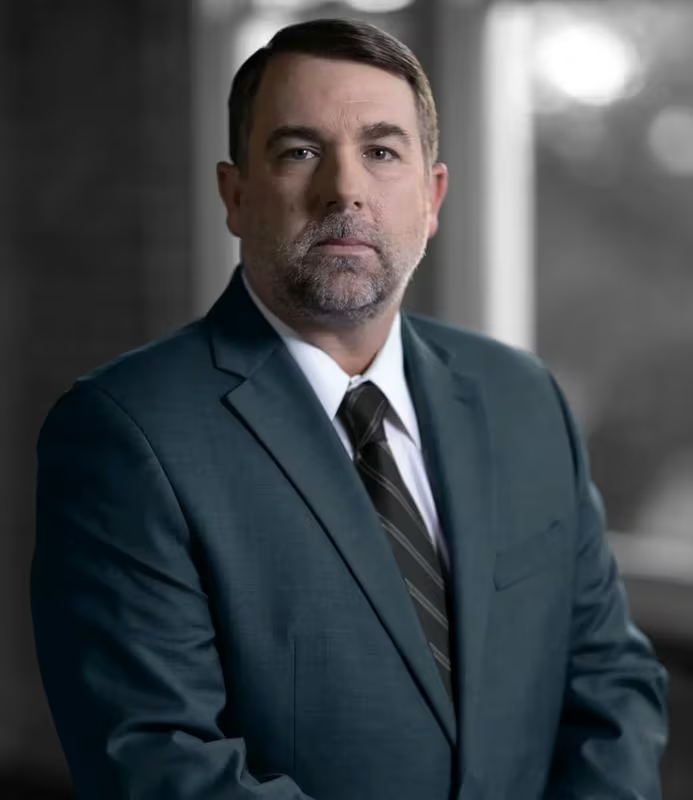
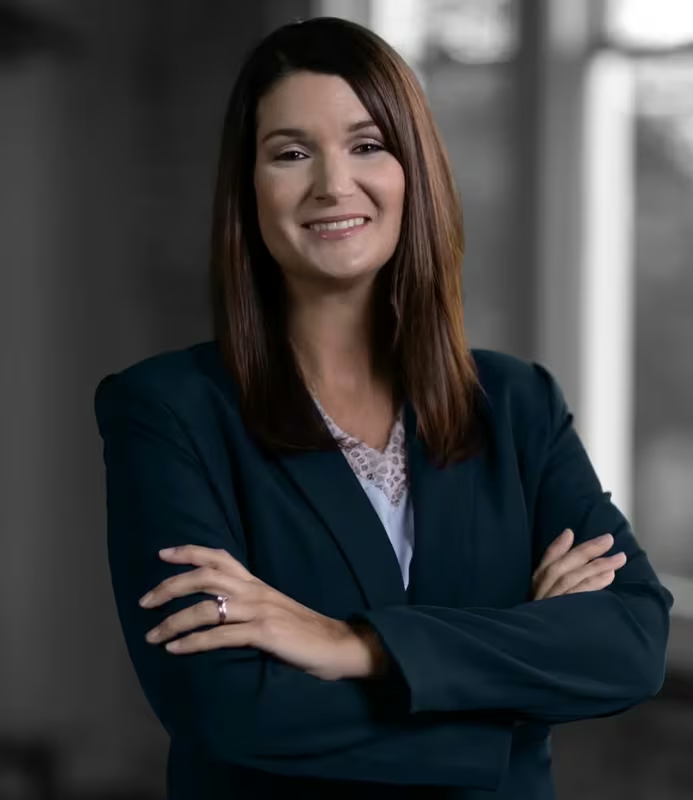
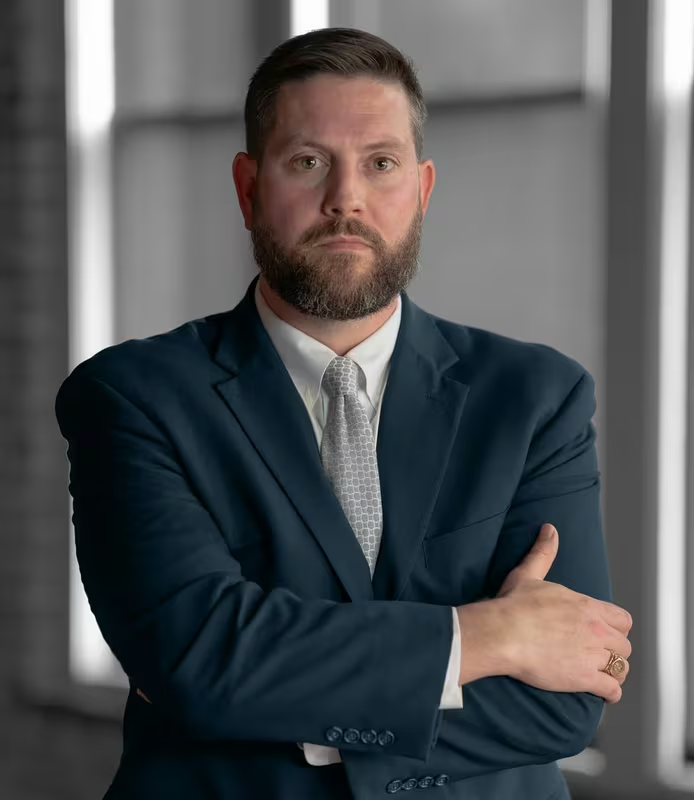
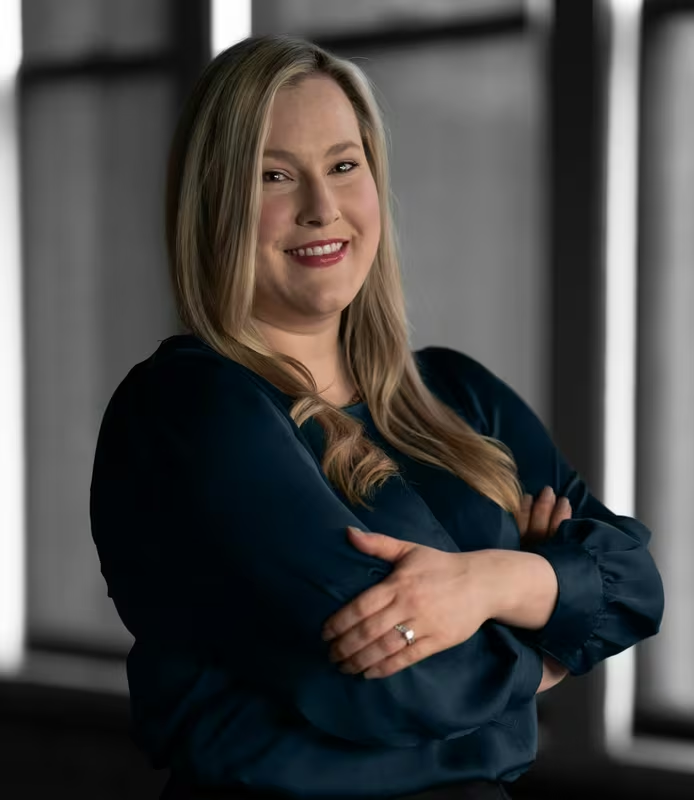
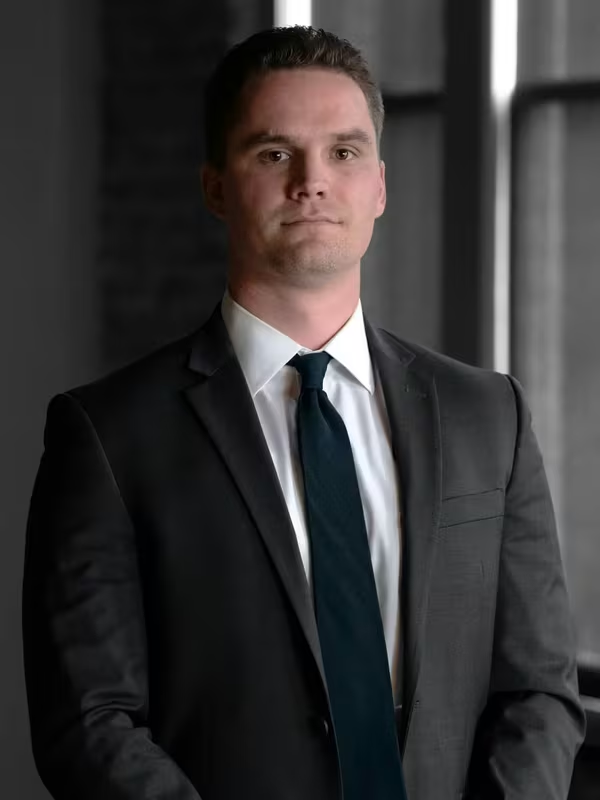
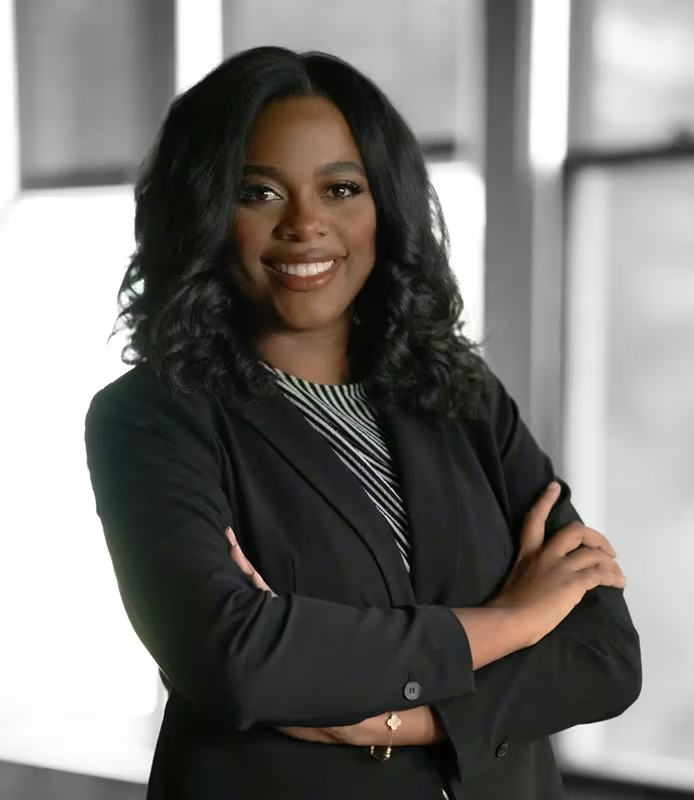
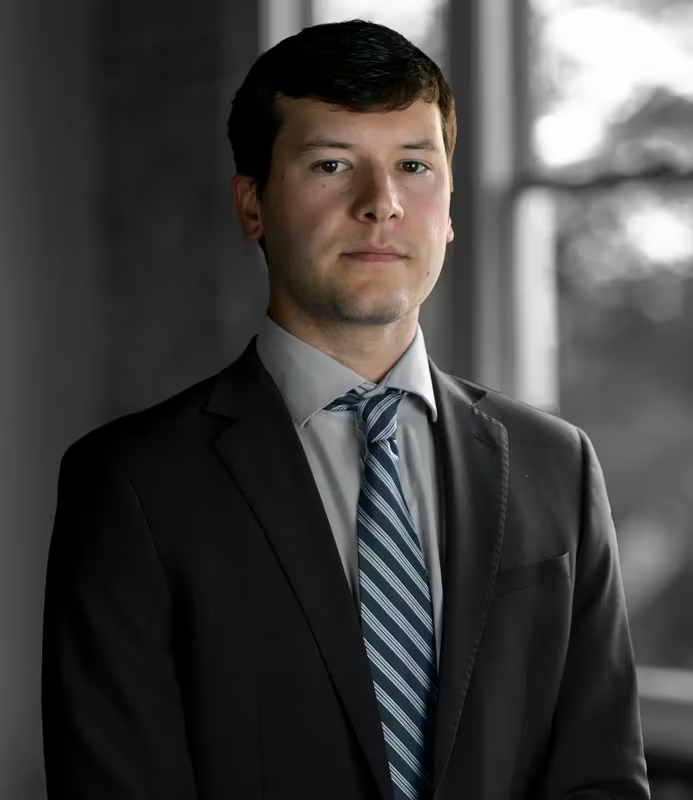
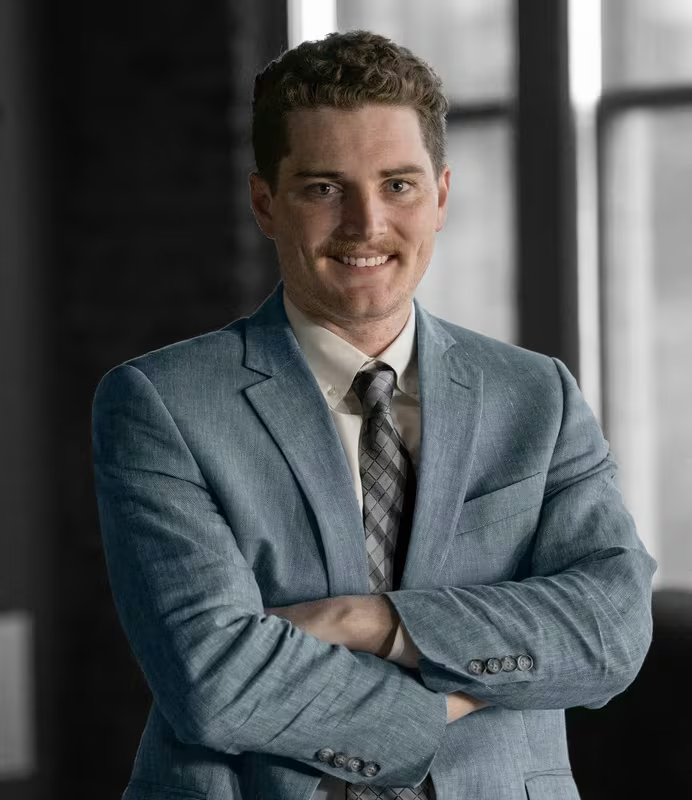
Your Jefferson Davis Parish Trial Team
The lawyers who work your file. Every Jefferson Davis Parish case is handled by the firm's own trial attorneys.



Contact a Jefferson Davis Parish Injury Lawyer — Free Case Evaluation
If you were injured in Jefferson Davis Parish and want a straight read on your situation, Trey Morris Injury Lawyers offers a free case evaluation. No fee to talk. No obligation to hire. You leave the call with a clearer picture of what your claim looks like and what the next step would be.
A case evaluation is a conversation. An attorney listens to what happened, asks about the injuries and medical treatment so far, identifies the likely defendants and insurance coverage, and explains how Louisiana law applies to the facts you describe. If the case fits what the firm handles, the next step is a written representation agreement on a contingency fee basis. If it does not, you get an honest answer and, when possible, a referral to another attorney.
Before the call, gather what you have: the crash report or incident report, photos from the scene, names and contact information for any witnesses, the insurance correspondence you have received, and a list of the medical providers who have treated you. None of that is required to start the conversation. It just makes the first call more useful.
Trey Morris Injury Lawyers serves Jefferson Davis Parish clients in Jennings, Welsh, Lake Arthur, Elton, and the surrounding communities. To request a free case evaluation, call the firm or use the contact form on the website. The firm returns calls and reviews after-hours messages.