










Calcasieu Parish wrecks happen on I-10 and I-210 through Lake Charles, on US-90, and on Ryan Street and Common Street, and they happen in Sulphur, Westlake, Iowa, Vinton, and DeQuincy as well. The people hurt in them are taken to Lake Charles Memorial Hospital on Oak Park Boulevard, the Level III trauma center, to CHRISTUS Ochsner St. Patrick Hospital, or to West Calcasieu Cameron Hospital. The Lake Charles Police Department writes the report inside the city, the Calcasieu Parish Sheriff’s Office writes it in the rest of the parish, and on I-10, I-210, and US-90 it is Louisiana State Police. Suits are filed and tried in the 14th Judicial District Court at 1001 Lakeshore Drive in Lake Charles. Trey Morris Injury Lawyers handles Calcasieu cases from our Lake Charles office on Ihles Road, and we pull the report and send preservation letters asking the gas stations and businesses along Ryan Street, Common Street, and I-10 to keep their footage. We send a letter once the facts give us an honest basis for one. Moving as promptly as the rules permit matters, because that video can show how fast each driver was going, what the signal showed, and who had the right of way.
The law that governs the claim is Louisiana law and it does not change from parish to parish. The clock is two years under La. C.C. Art. 3493.1 for injuries after July 1, 2024 and one year under La. C.C. Art. 3492 for injuries on or before that date. For wrecks on or after January 1, 2026, a finding that you were 51% at fault under La. C.C. Art. 2323 ends the case, which is why fault work matters on claims out of Lake Charles, Sulphur, and Westlake.
Results for Louisiana Clients
- $409 MillionWrongful Death
A tragic case where an impaired driver of a commercial vehicle ran a red light, then collided with our client, causing serious bodily injury to the mother and the loss of life of her daughter.
- $49 MillionMotor Vehicle Accident
An impaired driver of a stolen vehicle driving the wrong way collided with our client head-on, resulting in brain injury and multiple broken bones.
- $32,195,000Industrial / Workplace
Failure to maintain proper safety protocols led to an explosion at an industrial plant causing a series of catastrophic injuries from broken bones, burns, spinal injury, and mental anguish.
- $31.5 MillionIndustrial / Workplace
Brain and spinal injuries followed an oil-field company failing to maintain equipment and provide a safe work site.
- $17.25 MillionCommercial Vehicle Accident
Client was struck head-on by a disconnected load of an 18-wheeler that crossed the median causing broken bones and amputation.
- $13 MillionCommercial Vehicle Accident
On the interstate, an 18-wheeler failed to yield right of way then made an unsafe lane change causing the accident which resulted in major bone breaks, damaged organs, and ultimately a leg amputation.
Past results do not guarantee future outcomes; each case is decided on its own facts.
Do You Need a Calcasieu Parish Injury Lawyer After an Accident?
Not every accident needs a lawyer. A minor fender-bender with no injuries and a cooperative insurance company usually resolves on its own. The honest answer is that hiring counsel makes sense when injuries are real, fault is contested, or an insurer is delaying, denying, or undervaluing what they owe. This section helps you decide whether your situation falls on the do-it-yourself side or the get-a-lawyer side.
You are doing the right thing by researching before you sign anything or give a recorded statement. There are plenty of qualified injury attorneys serving Lake Charles, Sulphur, Westlake, and the rest of Calcasieu Parish. Read this page, compare what we say against what other firms tell you, and make the decision that fits your situation.
Signs You Likely Need an Attorney
Some facts shift a claim out of the casual-resolution category. Consider getting counsel involved when one or more of these is true:
- You went to an emergency room, urgent care, or follow-up appointment, or a doctor has recommended imaging, injections, surgery, or physical therapy.
- The other side is disputing fault, or the police report is wrong, incomplete, or assigns blame in a way you disagree with.
- A commercial vehicle, 18-wheeler, rideshare driver, government vehicle, or on-the-job worker was involved. These cases bring in additional insurance policies and additional defendants.
- The insurance adjuster is asking for a recorded statement, a broad medical authorization, or a quick settlement before you know the extent of your injuries.
- You missed work, lost income, or cannot do the job you held before the accident.
- A family member died.
If any of those apply, an early conversation with an attorney is worth the time. Most injury firms, including ours, do not charge for that conversation.
Signs You May Not Need an Attorney
Not every claim justifies legal fees. You may be fine handling it yourself when all of these are true: there are no injuries beyond a day or two of soreness, property damage is the only real loss, fault is clearly admitted by the other driver and their carrier, and the insurer is paying property damage and any small medical bills without argument. In those situations, a lawyer’s involvement often costs more than it adds.
The trap is assuming you are in that category before you actually are. Soft-tissue injuries can take two to six weeks to fully present. Concussions are routinely missed at the scene. Once you sign a release, the claim is closed even if symptoms appear later. If you are unsure, talk to a lawyer before you sign anything.
Questions to Ask Before You Hire Anyone
The Evaluator Framework: ask any attorney you are considering the following, and listen carefully to the answer.
- How many Calcasieu Parish injury cases have you personally handled, and how many have you tried to verdict in the 14th Judicial District Court?
- Who will actually work on my file, and how often will I hear from that person directly?
- What is your contingency-fee percentage, how do litigation costs work, and what happens to costs if we do not prevail?
- How do you evaluate a case before deciding whether to file suit versus negotiate?
- What is your honest read on the strengths and weaknesses of my situation?
A confident attorney will answer those questions directly. Vague answers, pressure to sign on the first call, or refusal to talk about fees in writing are signals to keep looking. Take notes. Compare answers across two or three firms. The right fit matters more than the fastest pitch.
Local Coverage. Statewide Record.
- $1 Billion+
Outcomes for Louisiana clients
Verdicts and settlements won across the state by the same trial team that handles Calcasieu Parish cases.
- 11
Trial attorneys, one team
Your case is handled by the firm's own trial attorneys, and we respond in minutes, 24/7.
- 24/7
We come to you
An attorney travels to you in Calcasieu Parish, at home or at the hospital, or meets by video the same day. Free case review, and no fee unless we win.
- 127
Cases resolved over $1 million
Verdicts and settlements of $1 million or more, won by the same trial team that handles Calcasieu Parish cases.
What Types of Injury Cases Do Calcasieu Parish Lawyers Handle?
Personal injury practice in Calcasieu Parish covers the same case categories you find across Louisiana, with a local mix shaped by the parish’s geography and economy. The case types below are the ones most often litigated in the 14th Judicial District. The category a case falls into matters because it changes the defendants, the insurance carriers involved, and the evidence that proves the claim. When you talk to any attorney, ask which of these categories they actually handle to verdict, not just intake and settle.
Motor vehicle collisions
Car wrecks are the largest single category in any Louisiana parish injury practice, and Calcasieu is no exception. Interstate 10 runs east-west across the parish through Lake Charles, and Interstate 210 loops the south side of the city. Both corridors generate rear-end collisions, lane-change crashes, and high-speed impacts. The defendants in these cases are usually individual drivers and their auto liability insurers. The evidence is the crash report, scene photographs, vehicle damage analysis, and medical records that tie the injury to the impact.
Commercial truck and 18-wheeler crashes
I-10 through Calcasieu Parish is a primary freight route between Houston and points east, which means heavy commercial truck traffic and the crashes that come with it. These are not large car wrecks. The defendants include the driver, the motor carrier, and often a separate trailer owner or shipper. Federal Motor Carrier Safety Administration regulations on hours-of-service, driver qualification, and vehicle maintenance govern the carrier’s conduct. Evidence preservation matters because electronic logging device data, dashcam footage, and driver qualification files do not stay intact on their own.
Industrial, refinery, and chemical plant injuries
Southwest Louisiana’s industrial corridor along the Calcasieu River and Ship Channel includes refineries, LNG export terminals, and petrochemical facilities. Workers and contractors injured on these sites generally have two parallel tracks. Louisiana workers’ compensation covers medical bills and a portion of lost wages from the direct employer. A third-party tort claim under La. C.C. art. 2315 may be available against a different company on site whose negligence caused the injury. Sorting employer from third party is usually the first analytical question in these cases.
Offshore and maritime injuries
The parish’s proximity to the Gulf, the Calcasieu Ship Channel, and offshore oil and gas operations means a meaningful share of injury matters fall under federal maritime law instead of Louisiana tort law. The Jones Act covers seamen injured in the service of a vessel. The Longshore and Harbor Workers’ Compensation Act covers many dock and shipyard workers. The Outer Continental Shelf Lands Act governs fixed-platform injuries on the federal shelf. The legal framework, available damages, and forum all change once a case crosses into maritime jurisdiction, so the threshold question is whether the worker, the vessel, and the situs trigger one of these statutes.
Premises liability
Slip-and-fall, trip-and-fall, and other property-condition cases run through La. R.S. 9:2800.6 when the defendant is a merchant. The statute requires the plaintiff to prove the condition presented an unreasonable risk of harm, the merchant created the condition or had actual or constructive notice of it, and the merchant failed to exercise reasonable care. Constructive-notice proof is where most of these cases are won or lost. Ask any attorney how they go about establishing how long a spill or hazard existed before the fall, because that is the element that decides the case.
Wrongful death and survival actions
When an injury results in death, Louisiana recognizes two distinct claims: the survival action under La. C.C. Art. 2315.1 and the wrongful death action under La. C.C. Art. 2315.2. The two claims have different plaintiffs, different elements of damage, and different proof. A separate section of this page addresses what families need to know about these claims in Calcasieu Parish.
Other recurring categories
Motorcycle crashes, pedestrian and bicycle strikes, rideshare collisions, dog bites under La. C.C. art. 2321, and product liability claims under the Louisiana Products Liability Act (La. R.S. 9:2800.51 et seq.) round out the docket. Product liability claims run on the same filing deadlines as other injury claims: two years under La. C.C. Art. 3493.1 for injuries after July 1, 2024, and one year under La. C.C. Art. 3492 for injuries on or before that date. There is no separate shorter deadline for product claims. Each of these case types has its own statutory framework and evidentiary playbook, so the right question to ask an attorney is not whether they handle a category in the abstract, but how many of those specific cases they have taken through discovery, motion practice, and trial.
Calcasieu Parish Practice Areas
 Car AccidentsRear-end, intersection, and highway collisions across Louisiana.
 Truck Accidents18-wheeler and commercial-vehicle wrecks governed by federal trucking rules.
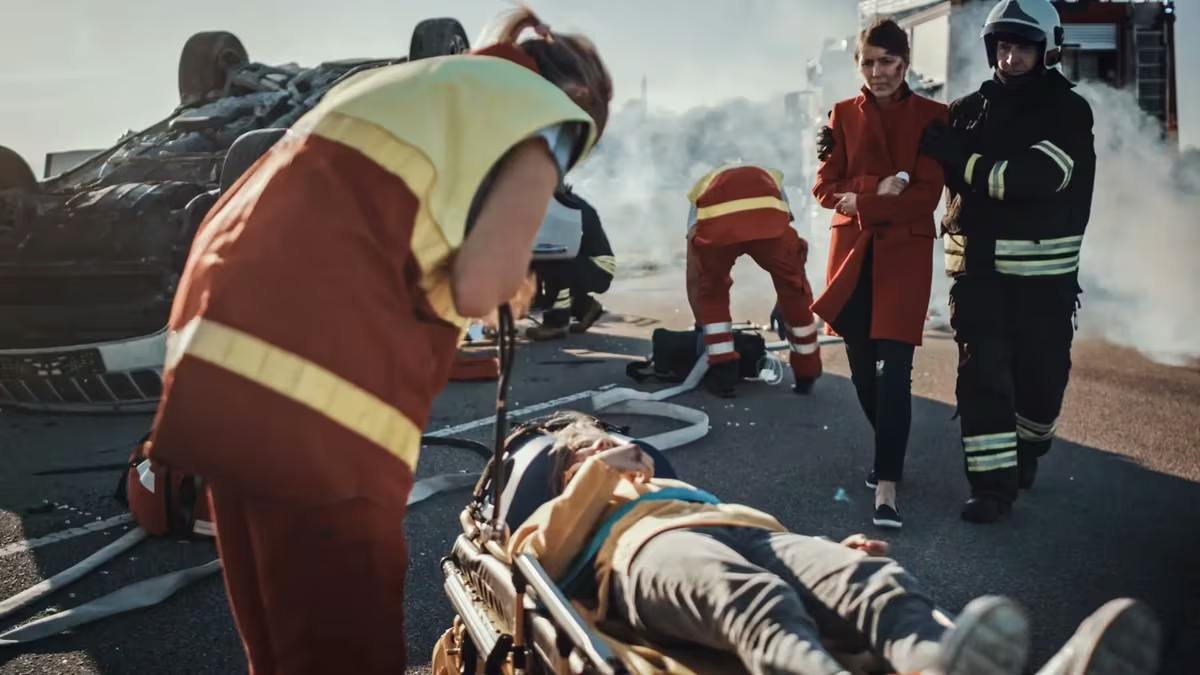 Catastrophic InjuryBrain, spinal-cord, amputation, and severe-burn injuries that change a life.
 Wrongful DeathClaims brought by families after a fatal accident or act of negligence.
 Premises LiabilitySlip-and-fall and unsafe-property injuries on someone else's premises.
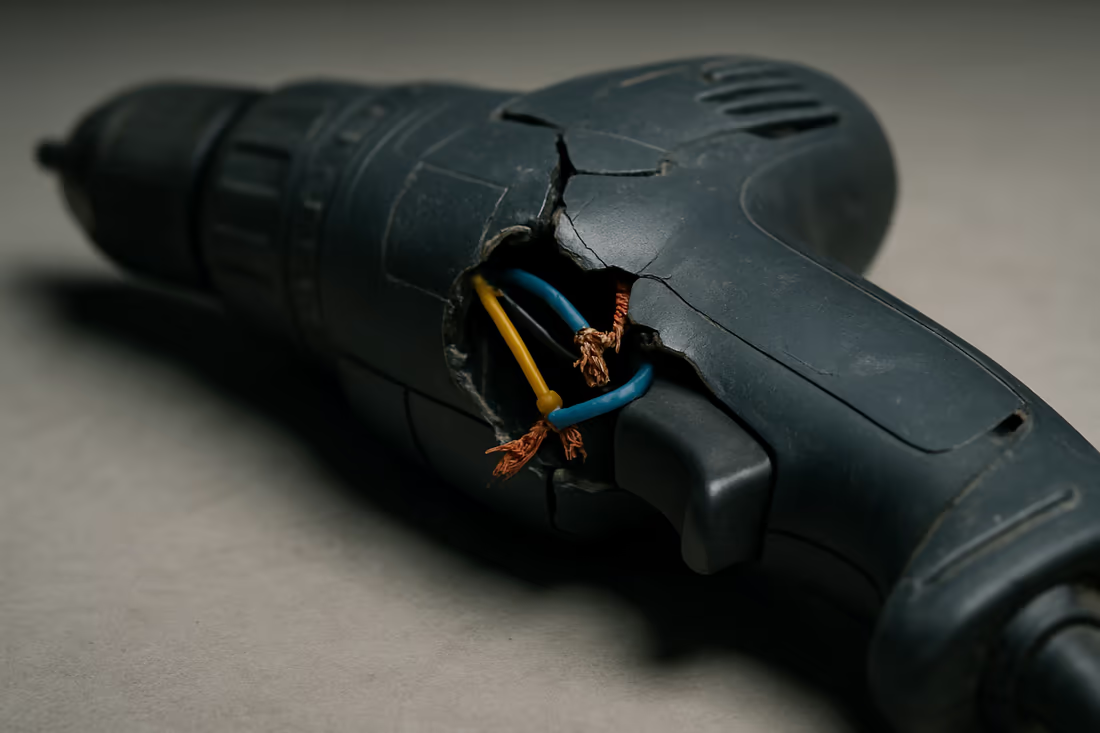 Product LiabilityInjuries caused by defective or unreasonably dangerous products.
 Oilfield AccidentsDrilling, pipeline, and refinery injuries across the energy sector.
 Industrial AccidentsPlant, warehouse, and heavy-equipment injuries in industrial settings.
 Offshore AccidentsRig, platform, and vessel injuries beyond the shoreline.
What Should You Do After an Accident in Calcasieu Parish?
The steps you take in the first hours after a Calcasieu Parish crash or workplace incident shape the claim that follows. The goal in the immediate aftermath is straightforward: protect health, document the scene, and avoid statements that lock you into a version of events before you understand what happened.
Call 911 and Report the Incident
Louisiana drivers involved in a crash with injury, death, or apparent property damage are required to notify law enforcement. In Lake Charles, that means Lake Charles Police Department for incidents inside city limits, the Calcasieu Parish Sheriff’s Office for unincorporated areas, and Louisiana State Police for crashes on I-10, I-210, and US-90.
For a workplace injury at a refinery, petrochemical facility, or construction site, report the incident to a supervisor in writing the same day. Louisiana workers’ compensation rights run from the date the employer is notified.
Get Medical Attention, Even If You Feel Fine
Go to an emergency room or urgent care the same day when possible. CHRISTUS Ochsner Lake Area Hospital, Lake Charles Memorial Hospital, and West Calcasieu Cameron Hospital all serve the parish.
When to Contact a Lawyer
Most attorneys who handle Calcasieu Parish injury cases offer a free initial consultation. Calling early does not commit you to filing a lawsuit. It does mean someone is sending preservation letters, requesting the crash report, and dealing with adjusters while you focus on medical treatment. Ask any attorney you interview how they handle the first 30 days of a case. The answer tells you whether they have a system or are improvising.
How Does the Personal Injury Claim Process Work in Calcasieu Parish, Step by Step?
A Calcasieu Parish injury claim moves through a predictable sequence: medical treatment and evidence preservation, investigation and demand, negotiation, and if needed, litigation in the 14th Judicial District Court. Most cases settle before trial.
-
Investigation and Evidence Gathering
Once an attorney is engaged, the file moves into investigation. Surveillance footage at gas stations and businesses along Ryan Street, Common Street, or I-10 frequently overwrites within 30 to 60 days.
-
Negotiation
Most Calcasieu Parish injury claims resolve here, in a back-and-forth between attorney and adjuster, sometimes over weeks, sometimes longer for serious injuries.
-
Filing Suit in the 14th Judicial District Court
If negotiation stalls or the prescriptive deadline approaches, suit is filed. For Calcasieu Parish injuries, that filing happens in the 14th Judicial District Court in Lake Charles.
-
Trial
A small percentage of personal injury cases actually try. When they do, a Calcasieu Parish jury hears the evidence and decides liability and damages.
How Long Do You Have to File a Personal Injury Claim in Louisiana?
Louisiana changed its filing deadline for personal injury claims in 2024. For causes of action arising after July 1, 2024, you have two years to file suit (La. C.C. Art. 3493.1). Injuries that occurred on or before July 1, 2024 remain governed by the one-year prescriptive period under La. C.C. Art. 3492, the deadline Louisiana had used for decades. The date of your accident controls which clock applies, so the first question any Calcasieu Parish injury claim must answer is when the injury was sustained.
Why Earlier Is Better Than Later
Filing deadlines set the outer wall. The work that actually wins a case happens long before that wall. Evidence at the scene disappears within days. Surveillance footage from nearby businesses is typically overwritten within thirty to ninety days. Witness memories degrade. Medical records become harder to tie cleanly to the accident as time passes and other treatment is layered in. A claim filed on the last possible day is legally timely and practically weaker than the same claim worked from the start.
Situations That Can Change the Calendar
Some facts shift the analysis. Claims brought on behalf of a minor and claims where the injury was not immediately discoverable can carry different timing rules. For government defendants, no pre-suit notice of claim is required, but service of citation must be requested within 90 days of filing under La. R.S. 13:5107(D). Wrongful death and survival actions run on their own period under La. C.C. arts. 2315.1 and 2315.2, the longer of one year from the death or two years from the injury.
How Does Louisiana’s Comparative Fault Rule Affect Your Calcasieu Parish Claim?
The fault rule depends on when the accident happened. For causes of action arising on or after January 1, 2026, Louisiana applies a modified comparative fault system under La. C.C. Art. 2323, as amended by Act 15 of the 2025 Regular Session (HB 431): a plaintiff found 51% or more at fault recovers nothing, and a plaintiff found 50% or less at fault has damages reduced by that share. Accidents before January 1, 2026 remain under pure comparative fault, where a plaintiff found 80% responsible could still collect 20% of proven damages. The applicable rule governs injury cases in Calcasieu Parish the same way it governs cases anywhere else in the state.
Fault is allocated by the fact-finder, usually a jury, across every party whose conduct contributed to the harm. Each defendant then pays in proportion to that defendant’s share, not the full judgment, except in narrow circumstances involving intentional acts.
What the fact-finder actually decides
The jury answers two separate questions. First: what are the total damages, in dollars, suffered by the injured person. Second: what percentage of fault is assigned to each person whose conduct is at issue. The court then multiplies the damages by the percentage assigned to the defendants and enters judgment for that amount. The plaintiff’s percentage reduces the award. It does not bar the claim.
How comparative fault is argued in practice
Defense lawyers and insurance adjusters use comparative fault as a negotiating lever long before trial. The adjuster’s first offer is usually built on an assumption that the injured person carries some percentage of blame.
Why this matters in a Calcasieu Parish case
Many Calcasieu Parish cases involve facts that invite a comparative-fault defense. Rear-end collisions on I-10 where the defense argues sudden stops. Intersection wrecks at signalized crossings in Lake Charles where both drivers claim a green light. Industrial and refinery cases where the employer’s contractor argues the worker ignored a safety procedure. In each pattern, the percentage assigned to the plaintiff is the single largest variable in the outcome.
What Compensation Can You Recover in a Calcasieu Parish Injury Claim?
Louisiana injury claims compensate three broad categories of harm: economic losses you can document with receipts and records, non-economic losses tied to how the injury affected your life, and in rare cases, punitive damages aimed at the defendant’s conduct.
Economic Damages
Economic damages cover out-of-pocket and measurable financial losses. The common categories include past and future medical bills, lost wages, lost earning capacity if the injury limits your ability to return to your prior work, property damage, and out-of-pocket expenses like prescriptions, mileage to medical appointments, and home modifications. In lawsuits filed on or after January 1, 2026, past medical expenses are limited to what your health insurer or Medicare actually paid, plus your own deductibles and co-pays (La. R.S. 9:2800.27).
Non-Economic Damages
Non-economic damages compensate harms that do not arrive with an invoice. The recognized categories in Louisiana include physical pain and suffering, mental anguish, loss of enjoyment of life, disfigurement, scarring, and loss of consortium for a spouse or close family member.
Punitive Damages
Louisiana does not allow punitive damages in most personal injury cases. The legislature has authorized them only in narrow categories specified by statute, most commonly claims involving wanton or reckless disregard for the safety of others while intoxicated.
How Much Is Your Calcasieu Parish Injury Case Worth?
No honest attorney can quote a number for your case in the first phone call. Case value is built from documented facts: medical bills, lost income, the nature of the injury, how clearly fault sits with the other party, and what insurance or assets are available to pay.
What drives value in a Lake Charles or Sulphur injury claim comes down to a handful of inputs that get measured one by one.
The Inputs That Drive Case Value
The core inputs are straightforward to list, harder to develop:
- Medical expenses, past and future. Emergency care, hospital stays, surgery, imaging, physical therapy, and the cost of treatment you still need.
- Lost wages and lost earning capacity. Time missed from work is the easy part. Reduced ability to earn going forward, especially after a serious injury, is where careful documentation and sometimes a vocational expert matter.
- The nature and permanence of the injury. A clean fracture that heals is valued differently than a herniated disc, a traumatic brain injury, or any condition that leaves lasting limitations.
- Pain, suffering, and loss of enjoyment of life. These are real categories of damages in Louisiana.
- Liability clarity. A rear-end collision with a clear-fault driver looks different from a multi-vehicle wreck on I-10 where fault is disputed.
- Available insurance and assets. A case is only worth what can actually be collected.
Why Early Numbers Are Usually Wrong
The biggest mistake injured people make on value is anchoring to the first number they hear, usually from the at-fault driver’s insurance adjuster. Early offers come before the full medical picture is known.
What a Realistic Valuation Looks Like
A realistic valuation is a range, not a single number, and it is tied to documented facts. It accounts for the strength of liability, the medical record, the wage record, the available coverage, and the realistic litigation posture if the insurer refuses to pay fairly.
What Evidence Do You Need to Prove a Personal Injury Claim in Calcasieu Parish?
A personal injury claim is won or lost on the evidence collected in the first days and weeks after the incident. The plaintiff carries the burden of proving duty, breach, causation, and damages. That means documenting what happened, who caused it, and how the injury affected the claimant’s daily activities, work capacity, and medical condition. Evidence that exists on day one often disappears by day thirty, which is why preserving it matters.
Scene and Incident Evidence
The scene tells the story before memories shift. Photographs of vehicle positions, skid marks, debris fields, weather conditions, traffic signals, and surrounding hazards establish how the incident unfolded. In a premises case, photos of the spill, the broken step, or the missing handrail capture the condition before it gets cleaned up or repaired.
Law enforcement reports from the Calcasieu Parish Sheriff’s Office, Lake Charles Police Department, or Louisiana State Police document the officer’s initial findings, any citations issued, and witness statements taken at the scene. For commercial vehicle collisions, the driver’s logbook, electronic logging device data, and post-crash drug and alcohol screens become part of the record. Ask any attorney how quickly they send preservation letters for surveillance footage and electronic data. Footage from gas stations, parking lots, and traffic cameras is routinely overwritten within seven to thirty days.
Medical Documentation
Medical records are the spine of the damages case. Emergency room records from facilities like CHRISTUS Ochsner Lake Area Hospital or Lake Charles Memorial document the injury at its rawest point. Follow-up records from orthopedists, neurologists, and physical therapists track the progression of treatment, the cost of care, and the work the body still has ahead of it.
Gaps in treatment are the single most common attack the defense uses to discount damages. Consistent treatment, with each provider connecting the diagnosis back to the incident, closes that door. Diagnostic imaging (MRI, CT, X-ray) provides objective proof that pairs with the subjective complaints. Future medical expense projections from a treating physician or life-care planner carry weight when the injury is permanent.
Witness and Testimony Evidence
Witness names, phone numbers, and recorded statements taken close to the incident preserve testimony before details fade. A neutral third-party witness who saw the at-fault driver run the red light, or saw the puddle on the floor an hour before the fall, often carries more weight at trial than either party’s testimony.
Expert witnesses fill in the technical gaps. Accident reconstructionists analyze crash dynamics. Biomechanical engineers connect the force of impact to the specific injury. Vocational experts establish lost earning capacity. Economists calculate the present value of future losses. Ask the attorneys under consideration which experts they have working relationships with and how they decide when an expert is necessary. Lawyers who try cases know the answer cold.
Financial and Employment Records
Lost wages require documentation, not estimation. Pay stubs, W-2s, tax returns, and an employer letter confirming missed days and rate of pay establish past wage loss. For self-employed claimants, profit-and-loss statements and prior-year returns build the same picture. When an injury limits future earning capacity, vocational and economic experts translate the limitation into a dollar figure.
Out-of-pocket expenses (prescription co-pays, medical equipment, mileage to appointments, home modifications, hired help for tasks the injury prevents) add up and should be tracked in a single running log with receipts.
Digital and Electronic Evidence
Cell phone records can establish whether the at-fault driver was texting or calling at the moment of impact. Event data recorder (“black box”) downloads from passenger vehicles and commercial trucks capture speed, braking, and steering inputs in the seconds before a crash. Social media posts from both parties get subpoenaed and read at deposition. A claimant who posts photos of a hiking trip while claiming a disabling back injury hands the defense an opening. Anything posted publicly should be assumed visible to an adjuster.
Preservation: The Step That Cannot Wait
Evidence preservation letters are time-sensitive. They go to trucking companies, property owners, manufacturers, and anyone else who controls relevant records. Once a defendant is on written notice to preserve, destruction of that evidence (called spoliation) becomes its own legal problem for them. Ask any attorney under consideration when they send preservation letters in a typical case. If the answer is “after we file suit,” the relevant footage and logs are already gone.
How Much Does a Calcasieu Parish Injury Lawyer Cost?
Most personal injury lawyers in Calcasieu Parish work on a contingency fee. That means no hourly bill, no retainer check, and no fee at all unless the lawyer obtains compensation for you. The fee is a percentage of the settlement or judgment, agreed in writing before representation begins. If the case produces nothing, you owe no attorney fee.
Case costs (filing fees, deposition transcripts, medical records, expert witnesses, accident reconstruction) are separate from the attorney fee. In most contingency agreements the firm advances those costs and is reimbursed from the settlement at the end of the case. Read the engagement letter carefully so you understand which line items are fees, which are costs, and how the math works at distribution.
What Does a Contingency Fee Cover?
The contingency percentage covers the lawyer’s time and labor: investigation, demand letters, negotiation with the insurer, drafting pleadings, discovery, depositions, mediation, and trial if the case goes that far. Ask any attorney you interview to walk you through the fee agreement line by line. A clear answer about how the percentage is calculated, when it changes, and how costs are handled tells you whether the lawyer is used to explaining the math to clients.
How Are Case Costs Handled?
Case costs are the out-of-pocket expenses the case generates. Court filing fees. Records requests from hospitals and providers. Court reporter fees for depositions. Expert reports from physicians, economists, or reconstructionists when liability or damages need expert support. Ask the lawyer how costs are tracked, whether you receive an itemized statement at the end, and what happens to outstanding costs if the case does not produce compensation.
What Happens at the End of the Case?
When a case resolves, the settlement or judgment funds are deposited into the firm’s trust account. From that gross amount, the attorney fee is calculated under the contingency percentage, case costs are reimbursed, and any medical liens or subrogation claims are addressed. The remaining net amount is paid to you. A good closing statement shows every line item so you can see exactly how the gross became the net.
Questions to Ask Before You Sign
Ask the lawyer what the contingency percentage is and whether it changes if the case is filed in court or tried to verdict. Ask who advances the costs. Ask how medical liens and health-insurance subrogation are negotiated, because lien reduction work directly affects the net amount you receive. Ask for a sample closing statement. A lawyer who handles these conversations cleanly at the front end tends to handle the money cleanly at the back end.
Why Should You Hire a Local Calcasieu Parish Injury Lawyer Instead of a Statewide Firm?
The honest answer is that “local” and “statewide” are not opposites. What matters is whether the lawyer handling your case has tried cases in the courthouse where your case will be filed, knows the judges who will rule on motions, and has worked across the table from the defense firms and adjusters who handle Lake Charles claims. Some of that knowledge sits with a solo practitioner two blocks from the courthouse. Some of it sits with a regional firm with a Lake Charles office and a litigation team. The label on the door is not the variable. The trial experience inside Calcasieu Parish is.
When you talk to any firm, the question to ask is direct: who at your firm will actually handle my case, and how many times has that person tried a jury trial in the 14th Judicial District? A firm with a strong statewide reputation and no Lake Charles trial record is not necessarily a better choice than a smaller local firm with twenty 14th JDC trials behind it. The reverse is also true. A long-tenured local name does not guarantee deep current trial practice.
For a researcher comparing options in Calcasieu Parish, the useful evaluator questions are these.
What does courthouse familiarity actually buy you?
A lawyer who regularly appears in the 14th Judicial District Court has working knowledge of how individual judges schedule discovery, how they rule on common motions in limine, and how they handle settlement conferences. That familiarity does not change the law. It changes the realistic timeline, the leverage in mediation, and the risk calculus on whether to push a case to trial. Ask any prospective attorney how many cases they have filed in the 14th JDC in the last five years, and how many of those reached jury verdict. The answer is a verifiable fact.
What does “local” mean when the lawyer drives in from another office?
Many firms that serve Calcasieu Parish are headquartered elsewhere in Louisiana and staff Lake Charles matters out of a satellite office or by sending attorneys in for hearings. That arrangement is not automatically worse. A firm with deeper litigation resources may invest more in expert witnesses, accident reconstruction, and trial preparation than a solo office can. The relevant question is operational: who returns your calls, who appears at your depositions, and who stands up at trial. Ask each firm to identify, by name, the lawyer who will sign pleadings and try the case. Then ask how often that lawyer is physically in Calcasieu Parish.
What should you weigh besides geography?
Trial record in cases like yours matters more than mailing address. A firm that has tried multiple commercial-vehicle cases to verdict will read an 18-wheeler claim differently than a firm whose practice is mostly soft-tissue auto cases, regardless of which parish either firm calls home. The same is true for industrial injury, premises liability, and wrongful death. Ask how many cases of your specific type the firm has resolved in the last three years, how many went to trial, and what role the lawyer you are speaking with played in each. A firm willing to answer those questions in detail is showing you how it operates. A firm that deflects to brochure language is also showing you how it operates.
Trey Morris Injury Lawyers is a Louisiana firm with offices across the state, including a Lake Charles office serving Calcasieu Parish. The firm handles personal injury, commercial vehicle and 18-wheeler collisions, catastrophic injury, industrial and workplace accidents, and wrongful death matters in Louisiana state and federal courts. When you compare firms, hold every option, including this one, to the same questions: who tries the case, where have they tried cases before, and what is their record in matters like yours.
Where Are Personal Injury Lawsuits Filed in Calcasieu Parish — the 14th Judicial District Court?
Personal injury lawsuits arising in Calcasieu Parish are filed in the 14th Judicial District Court, the state district court of general jurisdiction that sits in Lake Charles. The 14th JDC is the trial court that hears civil tort claims, including motor vehicle, premises, industrial, and wrongful death cases, when the amount in controversy or the nature of the relief exceeds the threshold for parish or city court. Knowing which courthouse will hear your case, where to file, and how the local civil docket runs is part of evaluating any attorney who tells you they handle Calcasieu Parish claims.
Which court hears personal injury cases in Calcasieu Parish?
The 14th Judicial District Court is the district court of general civil jurisdiction for Calcasieu Parish. Personal injury suits seeking damages above the small-claims and city-court limits are filed there. The Calcasieu Parish Clerk of Court accepts the petition, assigns a docket number, and routes the case to a division and judge. Smaller disputes, including some minor property damage matters, may be filed in Lake Charles City Court, but injury suits seeking meaningful damages belong in the 14th JDC.
Where is the courthouse and the clerk of court located?
The Calcasieu Parish Courthouse sits in downtown Lake Charles and houses both the courtrooms of the 14th JDC and the office of the Calcasieu Parish Clerk of Court. Petitions, answers, motions, and exhibits are filed with the Clerk, who maintains the suit record. Civil filings in Louisiana follow La. Code Civ. Proc. art. 421 and the related articles on petitions, citation, and service. The Clerk also issues citations that are served by the Calcasieu Parish Sheriff or a private process server on defendants located in the parish.
When is venue proper in Calcasieu Parish?
Venue in a Louisiana tort case is governed primarily by La. Code Civ. Proc. art. 42 (general venue, defendant’s domicile) and La. Code Civ. Proc. art. 74, which allows suit in the parish where the wrongful conduct occurred or where the damages were sustained. For a wreck on I-10 through Lake Charles, a refinery incident in Westlake or Sulphur, or a slip and fall at a Calcasieu Parish business, venue in the 14th JDC is typically proper because the injury was sustained in the parish. When multiple defendants live in different parishes, art. 73 and art. 74 often still permit suit in Calcasieu if the conduct or damage tie there. A defendant who believes venue is improper must raise it through a declinatory exception under La. Code Civ. Proc. art. 925, or the objection is waived.
How does a case move through the 14th JDC after filing?
After the petition is filed and citation is served, the defendant has fifteen days from service to file an answer or exceptions under La. Code Civ. Proc. art. 1001. The case is then assigned to a division and proceeds through written discovery, depositions, motions, and pretrial conferences. Personal injury suits in Louisiana state district court are tried to a jury when a party requests one and the amount in controversy exceeds the threshold in La. Code Civ. Proc. art. 1732, which was lowered to $10,000 by 2020 tort reform legislation. Many cases resolve through mediation or settlement before trial; those that do not are set on the 14th JDC’s civil trial docket.
What should you ask an attorney about practice in the 14th JDC?
Ask how often the lawyer has filed and tried cases in the 14th Judicial District Court. Ask which divisions they have appeared before and how they handle scheduling orders, discovery deadlines, and pretrial motions in that courthouse. Ask whether they will personally appear at hearings in Lake Charles or hand the file to local counsel. A lawyer who handles Calcasieu Parish injury cases should be able to describe the filing process, the Clerk’s procedures, and the way the local civil docket moves without hesitation.
What Our Clients Say
- Dakota R.
Where should I start!?Trey Morris Injury Law Firm was a great fit for me! During this wild time of getting into a car wreck, dealing with insurance, and other third parties, Mrs. Brooke and Mrs. Nerren were extremely helpful! They were there for me through the whole process and never once did I doubt their professionalism. They will fight tooth and nail for you and get you what you deserve. I would recommend them to anyone.
- Jontiana W.
Brooke and Ms.Shavers did great and helped me so much and I am so grateful. Go see Trey Morris Injury Attorneys!!
- ELvia G.
We are very grateful to [Trey Morris Injury Lawyers] for all their help and support during our car accident case.Ms. Hancock and Ms. Mena were always very kind, professional, and attentive throughout the entire process. Excellent team.
- A client
Great experience working with this Injury law firm.Very professional and helpful team overall , especially Trey Morris. Communication was great throughout my case, and they made the process much less stressful. My case is now over, and I really appreciated how responsive and organized everyone was, from the case manager to their receptionist.
- Taa-Daw S.
Very professional,answers the phone when you call them and answers every question you may have..Highly recommended..
- MIRANDA G.
I spoke with a attorney from this law firm.He was very honest, gave great advice. Then I finally made a appt once I meet Joe Norman I knew he was the one for me. Usually, I don’t trust attorneys but I’m glad I gave Joe Norman with Lee Hoffas group a chance. I feel like I can exhale finally I trust them completely. Miranda [G.]
- Tammy L.
My son and daughter were in an accident and injured.T-Claude Devall was first concerned with their injuries and getting them straight into therapy, then helped us with the legalities of our options. His paralegal Missy is easy to talk to when needed and helpful when we needed things changed up medically. I would recommend them to anyone and if ever needed in the future, will be a return client.
- Michelle C.
The entire staff was professional and courtesy!I could not believe how fast they settled my case and how accommodating they were! Thank you!
- Shanendoah F.
Awesome service with Family Value .Great and friendly people to talk to would recommend to anyone .
- Nicole H.
Thank you to Missy Carter and the staff of people are Hoffoss Duvall, for all the help they are providing in handling my case!!You guys are awesome!!
- Suzanne G.
I highly recommend this firm.The staff displays the utmost professionalism, as a team. They are honest and make you feel welcomed! ☆☆☆☆☆
- Elizabeth A.
Friendly staff!The receptionist (Alecia) was very nice and went beyond her job to make sure we were taken care of fast and effectively.
Testimonials do not constitute a guarantee, warranty, or prediction regarding the outcome of your legal matter. Past results do not guarantee future outcomes.
Your Calcasieu Parish Trial Team
The lawyers who work your file. Every Calcasieu Parish case is handled by the firm's own trial attorneys.






What Should Families Know About Wrongful Death Claims in Calcasieu Parish?
When someone dies because of another party’s fault, Louisiana law gives specific family members the right to bring a claim. The case is filed in the 14th Judicial District Court in Lake Charles when the death or the conduct that caused it happened in Calcasieu Parish.
Who Has the Right to Bring a Wrongful Death Claim?
Louisiana does not let any relative file. The right runs in a fixed order of priority set by state law. The surviving spouse and children come first.
How Are Survival Actions Different From Wrongful Death Claims?
Most fatal-incident cases involve two claims, not one. The survival action under La. C.C. Art. 2315.1 belongs to the deceased person’s estate and covers what the deceased experienced between the injury and death, including conscious pain and suffering, medical bills, and lost wages during that interval. The wrongful death claim under La. C.C. Art. 2315.2 belongs to the designated surviving family members in their own right and covers their own losses caused by the death.
What Are the Deadlines for Filing?
Wrongful death and survival claims carry their own prescriptive period under La. C.C. arts. 2315.1 and 2315.2. Each must be filed within the longer of one year from the death or two years from the injury.
What Does Settlement and Court Approval Look Like When Minor Children Are Involved?
When surviving children are minors, any settlement on their behalf typically requires court approval and the appointment of a tutor or a representative to act for the child. The 14th Judicial District Court in Lake Charles handles these approvals for Calcasieu Parish matters. Funds for minors are usually placed in a restricted account or structured so that the child receives them at the age of majority or on a schedule the court approves. A surviving parent does not get to spend a minor child’s wrongful death proceeds at will. Families should ask any attorney they interview how they handle minors’ settlements, whether they have appeared in front of the 14th JDC judges who sign these orders, and what the timeline looks like from settlement to disbursement.