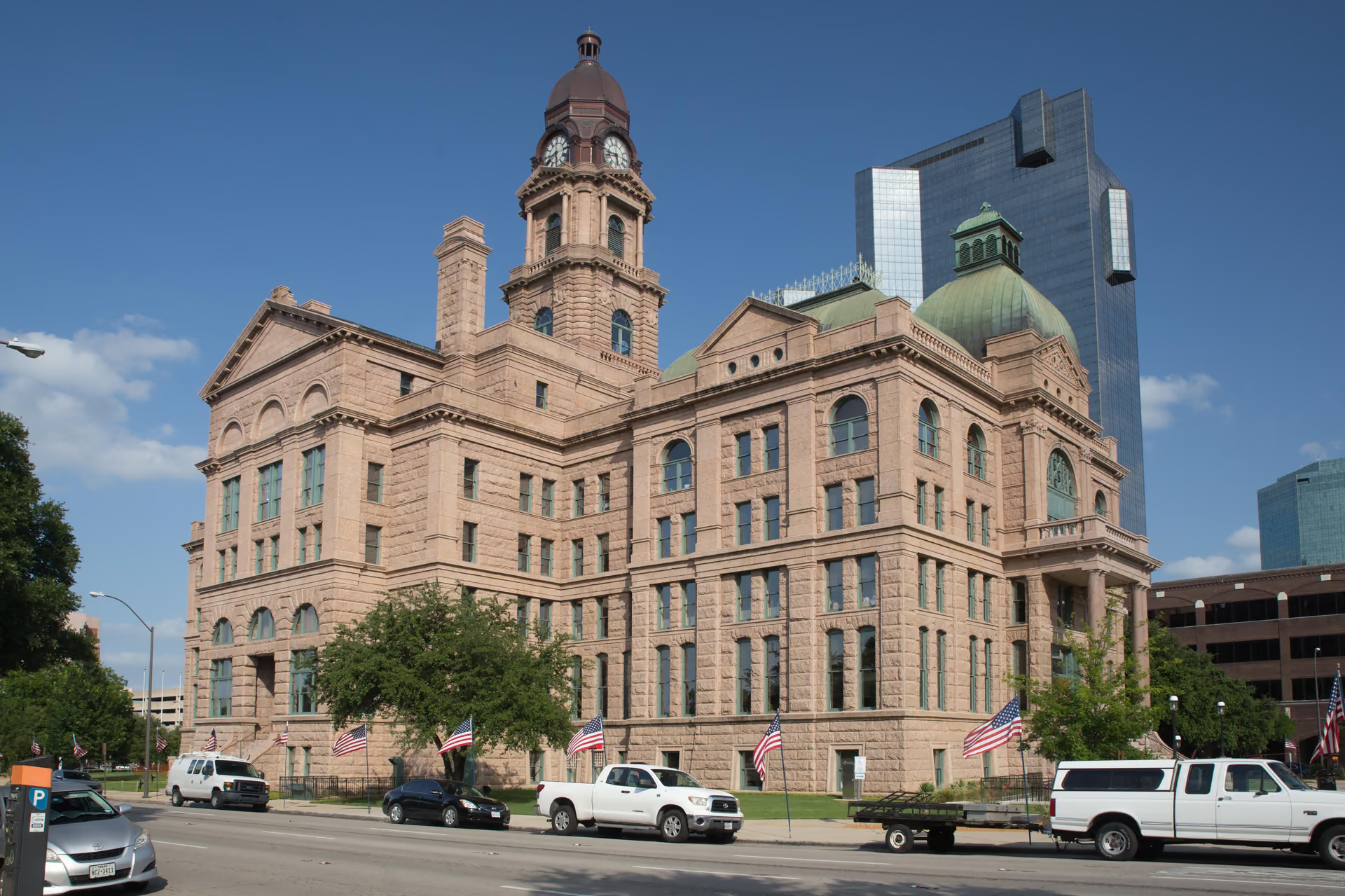
Trey Morris Injury Lawyers represents families in wrongful death claims in Fort Worth and Tarrant County. Fort Worth's fatal wrecks happen on I-30, I-35W, and SH-121, and the people pulled from them are taken to John Peter Smith Hospital on South Main Street or Texas Health Harris Methodist Hospital on Pennsylvania Avenue. When a death follows, the Fort Worth Police Department or the Tarrant County Sheriff's Office writes the crash report, and the medical examiner's report and autopsy findings follow it. A wrongful-death suit is filed in the Tarrant County Civil District Courts in downtown Fort Worth. Trey Morris Injury Lawyers requests the crash report and the medical examiner's file, sends preservation demands for surveillance footage and vehicle data, and identifies the driver, the employer, and any other company whose name belongs in the petition. We send those demands once the facts give us an honest basis for them, because moving as fast as the law permits is how that evidence stays intact and reaches the file. The footage and vehicle data can show speed, braking, and who had the right of way, which is how a family proves who caused the crash that took their loved one.
The law that governs the claim is Texas law and it does not change from county to county. A Fort Worth wrongful-death claim under CPRC Chapter 71 belongs only to the surviving spouse, children, and parents, and it must be filed within two years of the date of death under CPRC Section 16.003(b). Trey Morris Injury Lawyers files that family claim alongside the Section 71.021 survival action before the two-year clock, which runs from death and not from the crash, closes.
wrongful death action
A civil lawsuit brought by surviving family members when someone dies due to another party's negligent, careless, or wrongful conduct. It is separate from any criminal case and recovers the family's own losses caused by the death.
CPRC Chapter 71 defines wrongful death as a death caused by the neglect, carelessness, wrongful act, default, or unskillfulness of another person or company. The statute covers a wide range of conduct. Applying it to a specific death requires examining what happened, what duty existed, and whether it was breached.
A wrongful death claim is a civil matter. It is entirely separate from any criminal charges arising from the same death. Criminal prosecution belongs to the state. The wrongful death lawsuit belongs to the family. Both can proceed simultaneously, and a criminal acquittal does not bar a civil claim. The standards of proof are different.
To establish liability, a claimant must prove four elements: duty, breach, causation, and damages. Evidence driving these cases includes police and accident reports, medical records, autopsy findings, witness accounts, and expert testimony on causation. Fort Worth's major corridors, including I-30, I-35W, and SH-121, generate truck, car, and commercial vehicle deaths with regularity.
Common wrongful death circumstances in Fort Worth include car accidents, commercial truck accidents, construction site deaths, workplace accidents, medical malpractice, premises liability, and defective products. Causation is where most defenses concentrate their effort.